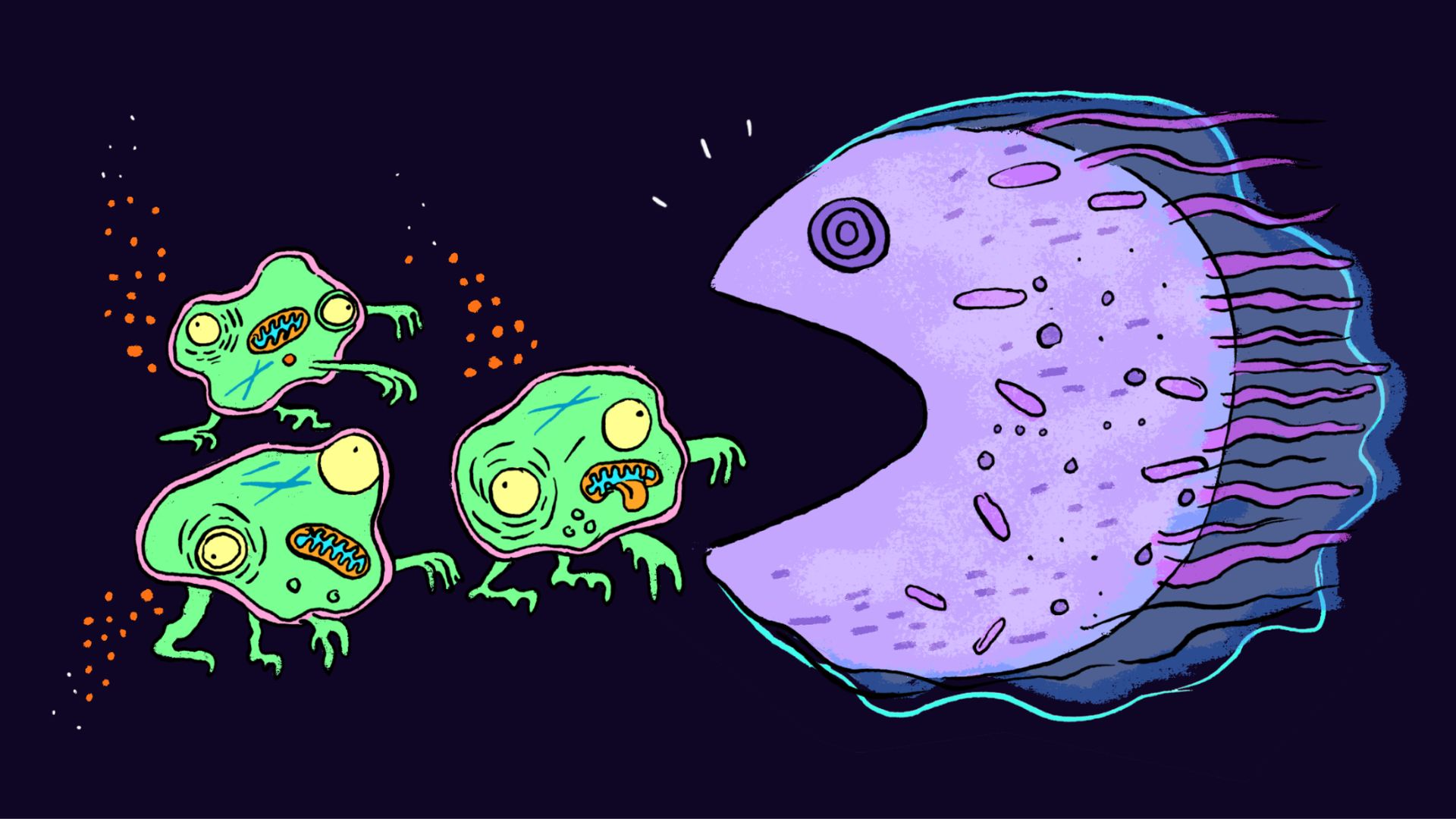
Emerging treatments aim to reverse or stall signs of aging in the body and thus cut the risk of age-related diseases. One of those signs is an accumulation of "zombie cells" — damaged cells that spew harmful substances rather than dying off and getting cleared away by the immune system.
Some scientists are designing treatments aimed at killing those zombies directly. But what if we instead helped the body's cleanup crew get rid of them?
"I think rejuvenating the immune system could rectify a lot of problems," said Roel de Maeyer, an immunologist at the University of Oxford. "We know hospitals are full of older people suffering from infections that younger people don't need to go to [the] hospital for."
The aim of these rejuvenating therapies would be to help people live healthier for longer, he told Live Science.
How do cells turn into zombies?
The immune system constantly gets rid of old, dysfunctional and dead cells to keep tissues healthy, but that cleanup gets less effective with age.
When cells die, they display proteins on their surfaces that act as "eat me" signals for immune cells, called macrophages, to engulf and destroy them. However, some cells refuse to die and instead become senescent. These zombified cells can lurk in tissues for years, releasing chemicals that drive inflammation and damage.
Senescent cells can form due to DNA damage from oxidative stress, radiation, or even normal cell division. Cells lose bits of DNA each time they make copies of themselves, and they have intricate mechanisms to decide when it becomes a "bit too dangerous to keep dividing," de Maeyer said. If a cell can no longer divide, it usually undergoes a process called programmed cell death or becomes senescent, he said.
Senescence can be beneficial in some contexts; it helps heal wounds, for example. But an accumulation of senescent cells is linked to damaging inflammation and impaired organ function.
"If there are many senescent cells in a tissue, that's usually a bad sign," de Maeyer said. The number of senescent cells goes up with age and is linked to many age-related conditions, such as heart disease and dementia.
Slaying zombies
Studies in mice have shown that using drugs to kill senescent cells can reverse inflammation and some signs of cellular aging. These drugs, called senolytics, force senescent cells to enter programmed cell death, thus reducing their numbers, said Jure Povsin, a biochemist at the Max Planck Institute of Biochemistry in Germany. This ultimately reduces inflammation and improves tissue function, he told Live Science.
But while senolytics can help rid the body of zombie cells, it's not clear why the immune system fails to eliminate senescent cells in the first place. To find answers, scientists began looking at macrophages, the cells tasked with devouring dying cells.
Research pointed to a receptor on macrophages called EP2. One study, published in July in the journal Science, found that old macrophages have a greater number of these receptors and cannot eat senescent cells effectively.
Genetically deleting the EP2 receptor in lab mice restored the macrophages' function and reduced the number of senescent cells. Compared with normal mice of the same age, the genetically tweaked mice showed less cognitive decline, muscle loss, cardiac dysfunction and systemic inflammation.
On some of these metrics, such as the ability to remember familiar objects, the modified mice were comparable to younger mice.
Gobbling up cells requires a ton of energy.
Dr. Katrin Andreasson, a neurologist at Stanford University
A problem with energy
Why is the EP2 receptor at the root of this problem? Scientists found a clue in a huge study of older adults.
A molecule called PGE2 plugs into the EP2 receptor. It's a type of prostaglandin — a molecule that helps cells communicate during stress and injury and contributes to fever, pain and swelling. Drugs such as ibuprofen reduce inflammation by blocking prostaglandin production.
In 2001, a large study uncovered a connection between these prostaglandin-blocking drugs and Alzheimer's disease: People ages 55 and older who routinely took the drugs for at least two years had a lower risk of developing Alzheimer's than nonusers did. The study could not prove that the drugs directly prevented the disease, but it added to growing evidence that inflammation related to EP2 activity plays a role in Alzheimer's.
This caught the attention of Dr. Katrin Andreasson, a neurologist at Stanford University and co-author of the recent Science study.
"I thought, 'Wow, this is interesting,'" she told Live Science. "I wondered if there's a connection."
Andreasson and colleagues had an important breakthrough in 2021: They found that aging macrophages had higher levels of the EP2 receptor and that increased EP2 activity disrupted how the cells used their energy. Instead of burning glucose to produce energy like young macrophages do, these cells stashed it away.
As a result, the cells could not do their job properly, as "gobbling up cells requires a ton of energy," Andreasson said. Blocking the EP2 receptor restored normal energy use in the macrophages. In old mice, it also led to reduced inflammation and better scores on cognitive tests, compared with mice in which EP2 activity remained high.
Making senescent cells vulnerable
In their recent study, Andreasson's team uncovered another consequence of aging: Old mice accumulated many senescent neutrophils, a type of short-lived immune cell that acts as the body's first line of defense against germs. Neutrophils normally die within days and are then cleared away, but with age, they become more prone to senescence and accumulate.
"I think that's kind of an odd concept because they're [usually] very short-lived cells," said de Maeyer, who was not involved in the Science study. "Neutrophils are inherently quite inflammatory, so wanting to clear them from tissues is very valuable."
Old mice have too much EP2 activity in their macrophages, and that means they can't get rid of these neutrophils, Andreasson's team found. That may be why deleting EP2 seems to have anti-aging effects in multiple organs, they concluded.
But increased EP2 activity is just one side of the story; some studies suggest that zombie cells actively suppress macrophages' ability to eat them. They do this by using a tricky protein called CD47.
CD47 is a "don't eat me" signal that stops macrophages from destroying cells, Povsin said. "It signals that the cell is healthy, alive and doesn't need to be eaten."
However, that signal gets amplified in senescent cells, Max Planck researchers showed in a 2023 study. That means that, when macrophages interact with senescent cells, macrophages' function becomes impaired. Afterward, they even lose the ability to engulf dying, nonsenescent cells. This allows a ton of cellular debris to accumulate.
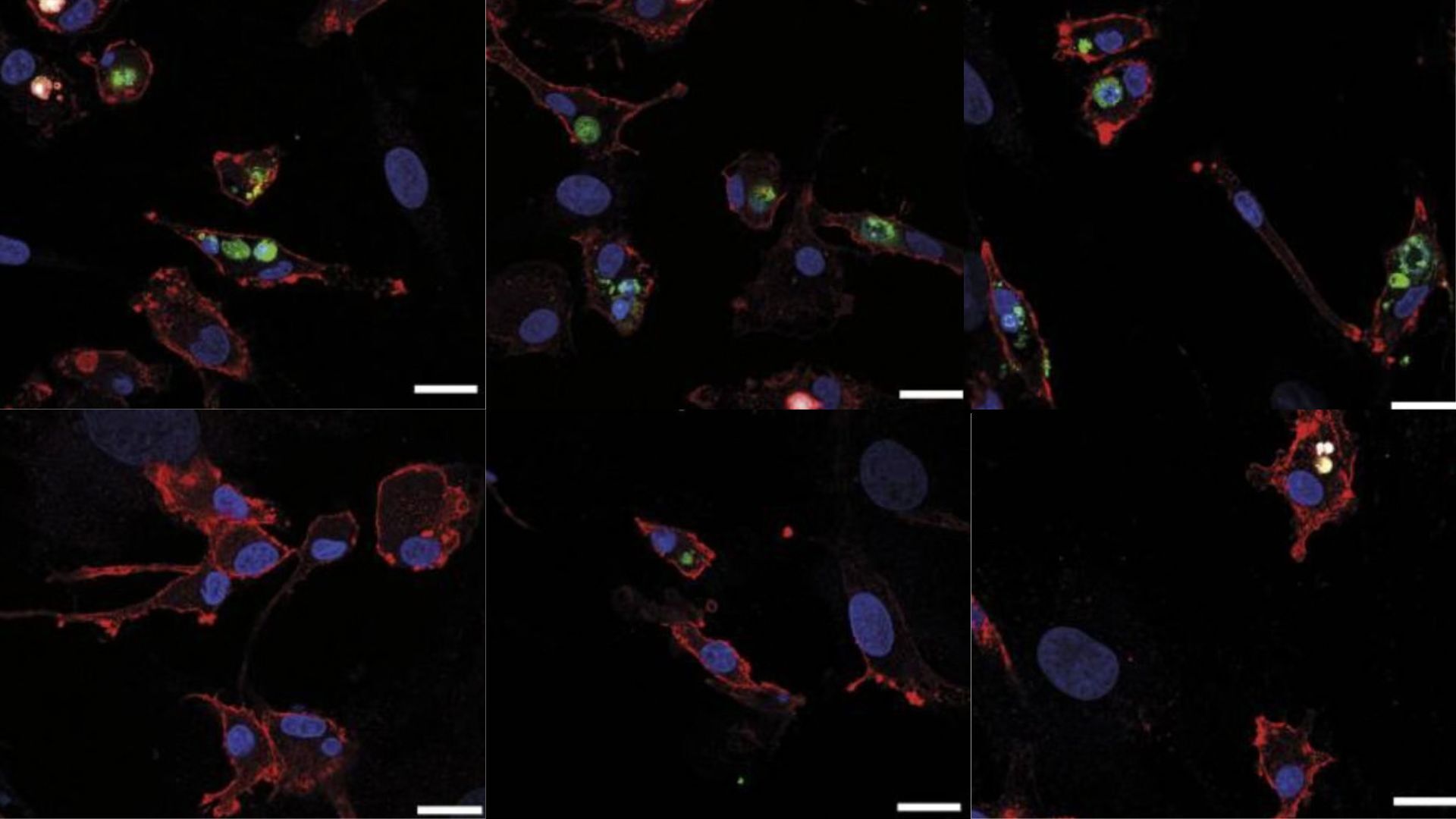
So, rather than just blocking EP2, it could also be beneficial to reduce that "don't eat me" signal in senescent cells, this research hints. But CD47 is found on all living cells, so scientists can't just deplete its numbers across the body.
A specific enzyme modifies CD47 on senescent cells, and in the 2023 study, blocking the enzyme helped spare macrophages from the effects of CD47. Therefore, blocking the enzyme could be a more selective approach to weaken the "don't eat me" signal on senescent cells, Povsin said.
A long road to treatments for people
Translating these ideas into anti-aging treatments for humans would be a major success in the science of aging, but experts say there are significant problems to overcome.
Although blocking EP2 had consistent results in lab mice, the rodents are genetically identical and bred in controlled environments. Humans are inherently more variable in their biology and the environmental factors they're exposed to, introducing confounding factors that would need to be addressed, de Maeyer said.
Additionally, in clinical trials, EP2-blocking drugs have so far been explored as cancer treatments, but they are "underexplored" in the context of aging, he added.
Drugs targeting CD47 are in an even earlier stage of development. In the 2023 research from Max Planck, the team used both human and mouse macrophages in their experiments, but the approach has not been tested as an anti-aging treatment in living mice or humans yet.
In 2020, de Maeyer's team used a different strategy to rejuvenate macrophages in older adults. They blocked a protein called p38, whose activity was high in the macrophages of older adults. Blocking the protein helped macrophages better recognize and eat dying cells in specific tests.
Exclusive to Live Science Pro- 'Every time it gets excited — boom — it collapses': How dogs with narcolepsy helped scientists understand the disorder
- Infectious diseases will seed new ground as the planet warms — here's where they'll spread
- Does estrogen protect against dementia? And if so, who should take it?
In that study, the team gave adults ages 65 and up an experimental drug called losmapimod to block p38. Although it helped restore their immune cell function, it was not suitable for long-term use because it caused liver problems in later trials, de Maeyer said.
In their mouse studies, Andreasson's team was able to block EP2 without causing any negative side effects. But she cautioned that we "really need to drill down on the research and confirm all this stuff in humans."
"The next logical step," she said, "would be to figure out how to inhibit this receptor in a safe way."
This article is for informational purposes only and is not meant to offer medical advice.
Help us improve Live Science Pro: We're always trying to make our content better. Leave us feedback about Pro here.