It's been almost a decade since Apple last sold one of these things.
By Jonny Evans Nov. 29, 2026 2:30 pm EST seeshooteatrepeat/Shutterstock Add Engadget on Google: Preferred Source Google Discover
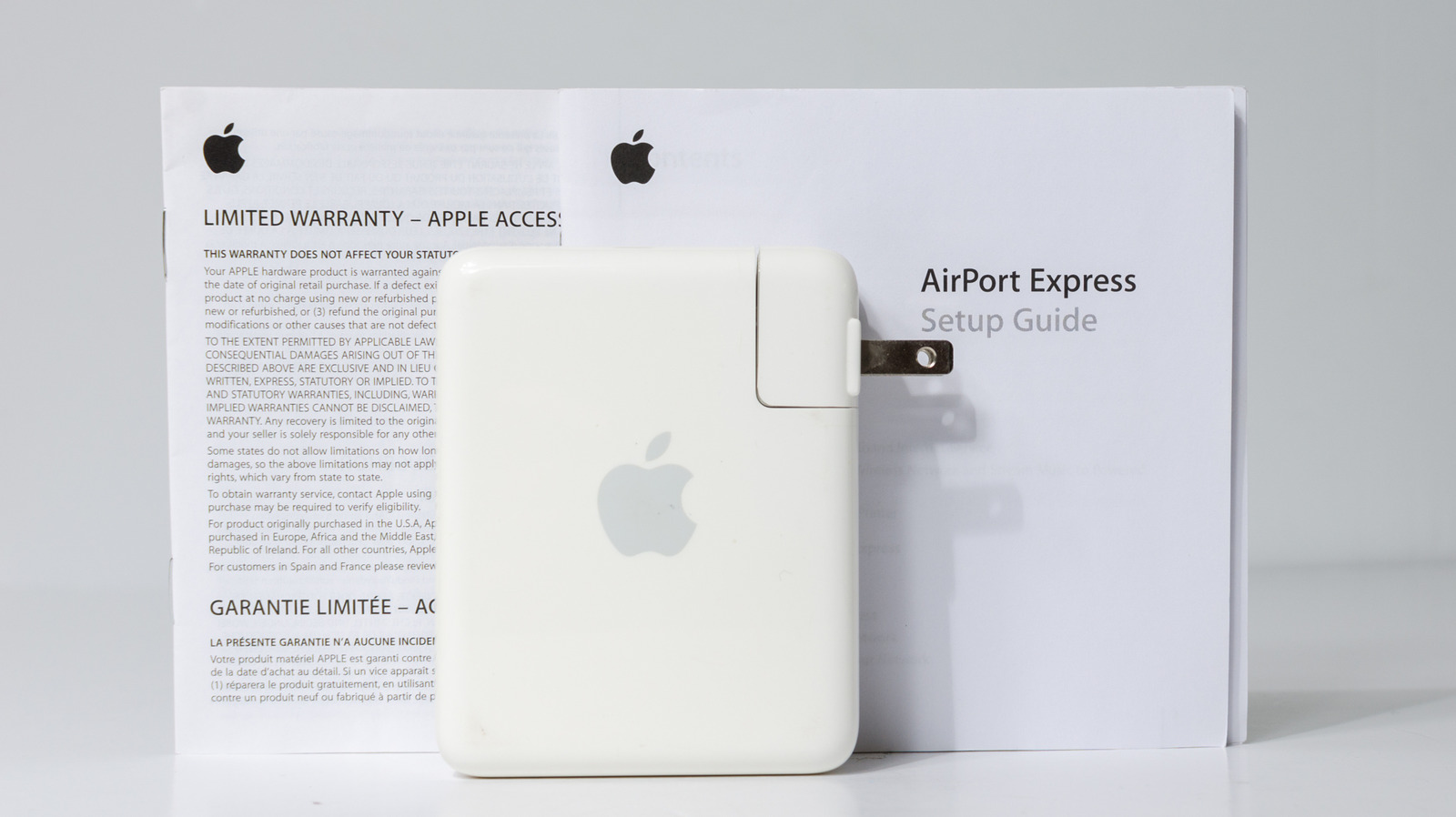
Apple's AirPort Express generated over 80,000 pre-orders when it was introduced in 2004. Shoppers liked the design. They also liked that it combined iTunes music streaming, wireless printing and a portable router/extender into one small and simple white box. "This innovative Apple product will appeal to both notebook users who want wireless freedom in their hotel rooms and to music lovers who want to listen to their iTunes music library on a stereo located anywhere in their home," said former Apple CEO Steve Jobs in a press release back when it was introduced.
Mac users travelled with one to turn hotel Ethernet into a personal Wi-Fi hotspot. Music lovers streamed iTunes music to a stereo using its 3.5mm analog/optical jack at a fraction of the cost of rival systems and it let any home or small office share a printer.
Apple was one of the first to bring Wi-Fi to mainstream consumers with the iBook and AirPort base station (a predecessor of AirPort Express) in July 1999. By 2004 other manufacturers were starting to build-in Wi-Fi, but broadband providers had only just begun adding wireless to their routers. AirPort Express helped Apple's users get online during that transition.
Apple made three models: AirPort Express 802.11g (2004 – 2008), 802.11n 1st Gen (2008 — 2012) and 802.11n 2nd Gen (2012 — 2018, with AirPlay 2 support added to the final model following a 2018 firmware patch).
Think about the risk and pitfalls
 Ian Waldie/Getty Images
Apple discontinued the whole range, including AirPort Express, in 2018. It issued its last firmware patch in 2019, and finally discontinued AirPort Utility, required to manage an AirPort Express, in 2026. Every AirPort Express in use today is eight to 22 years old, hasn't been patched for at least seven years and never will be. You can't even manage them without an old version of macOS, unless you installed the utility before.
The lack of software updates leaves them vulnerable to newer exploits, and the WPA2 encryption the later model uses is weaker than modern standards. The WPA offered by the original Express is not secure at all today.
Speed is the other problem. Even the most recent A1392 (2012 — 2018) model has a 100 Mbps Ethernet port, supports only up to Wi-Fi 4/802.11n, and has shorter range antennas than today's alternatives, so your Wi-Fi will be slow and relatively short range. As an extender it may cause network problems because modern systems aren't built to support such antiques.
Its support for streamed audio and later AirPlay 2 made it popular. Audiophiles used it as an affordable wireless streaming system as AirPlay 2 delivered 16-bit/44.1kHz quality streams. They liked that its combined 3.5mm minijack and a mini-TOSLINK optical digital output could feed an external digital-to-analog converter. It's buffered, burst-shared audio played music more consistently than Bluetooth at that time. Many still use AirPort Express for this today, partly because it's so cheap second-hand.
Can you use AirPort Express safely?
 Sean Anthony Eddy/Getty Images
The AirPort Express played three primary roles on launch. Today it should only perform one of these, and even that is compromised as safer alternatives exist.
As a main router:
As a main router it puts your network at risk while slowing your connection speed. Lack of software patches mean you should never use an old AirPort Express for this purpose.
Wi-Fi Extender:
Apple designed the product to wirelessly extend networks using its proprietary WDS protocol, which non-Apple routers don't support. The only option is to connect it to your router is its slow 100mbps Ethernet port. An unpatched device broadcasting on your network is an attractive target for hackers. Slow, cumbersome, and insecure: don't use it for this.
Speaker streamer or wireless printing:
The one role AirPort Express can still play is compromised because you generally need an Apple device running an older OS to manage it now that AirPort Utility is gone. Even as a client its lack of software support makes it a risk, so the best way to deploy it is to use your router's guest network, or create a new network isolated from everything else purely for music streaming.
Should you even use it for this? We don't recommend it. Missing security updates combined with the disappearance of AirPort Utility means most people should use new, secure wireless streaming systems from brands like Belkin, Sonos, Twelve South and others. Eight years since Apple sold its last AirPort Express, it's time to let it go.