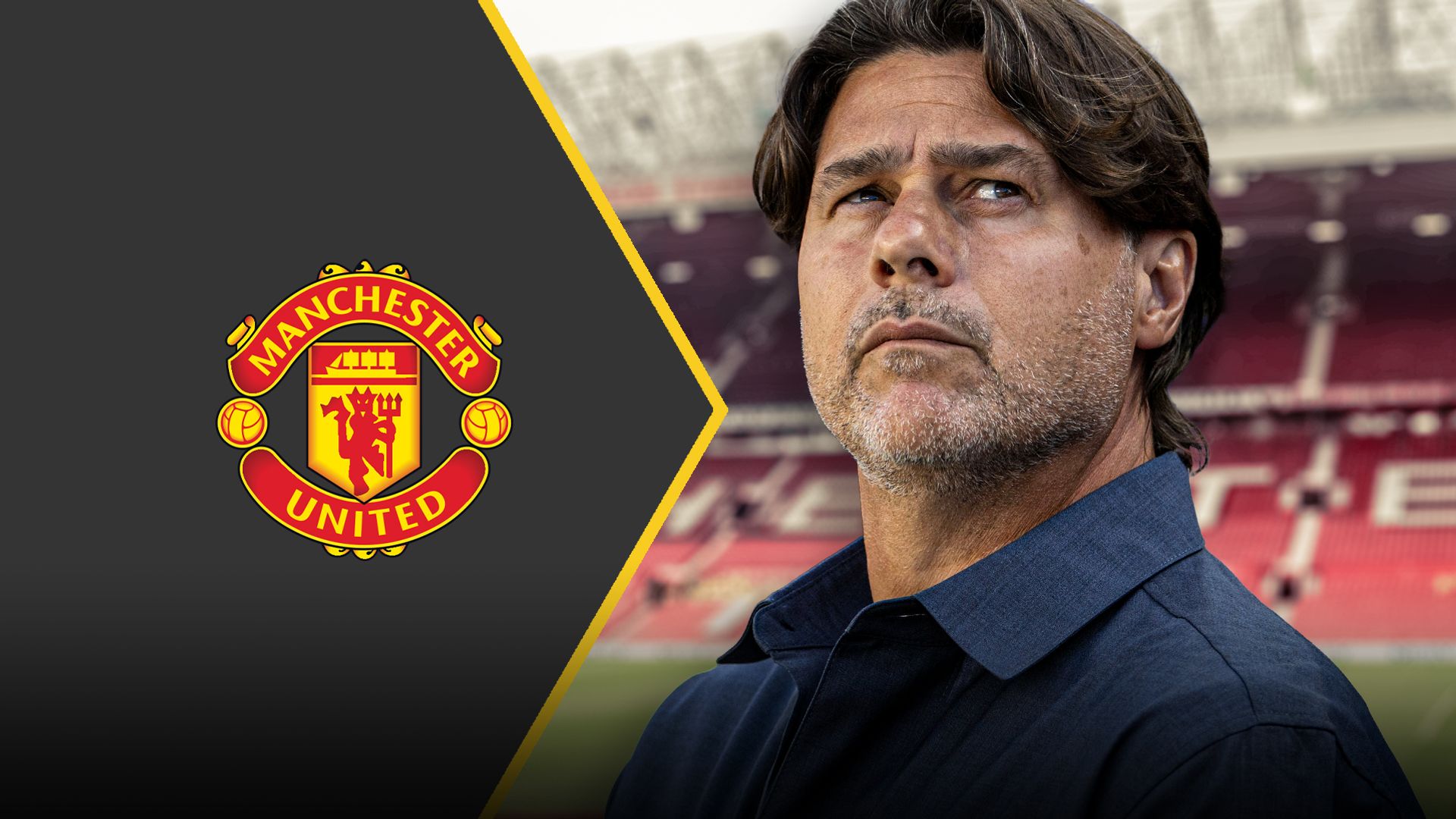
By the time U.S. Soccer confirmed Mauricio Pochettino's departure for Manchester United early Friday morning, the announcement itself was far from a surprise. The press release included the usual formalities – Steve Cherundolo, the U-23 U.S. men's national team head coach, would fill in for the Dec. 13 friendly against Jamaica that falls outside the FIFA international match calendar, and the assurance that the search for Pochettino's USMNT successor would begin shortly. Federation CEO J.T. Batson and COO Dan Helfrich will unsurprisingly lead the search, as will "the soccer leadership team at U.S. Soccer that includes" assistant sporting director Oguchi Onyewu. There was one unique detail tucked into the announcement, though.
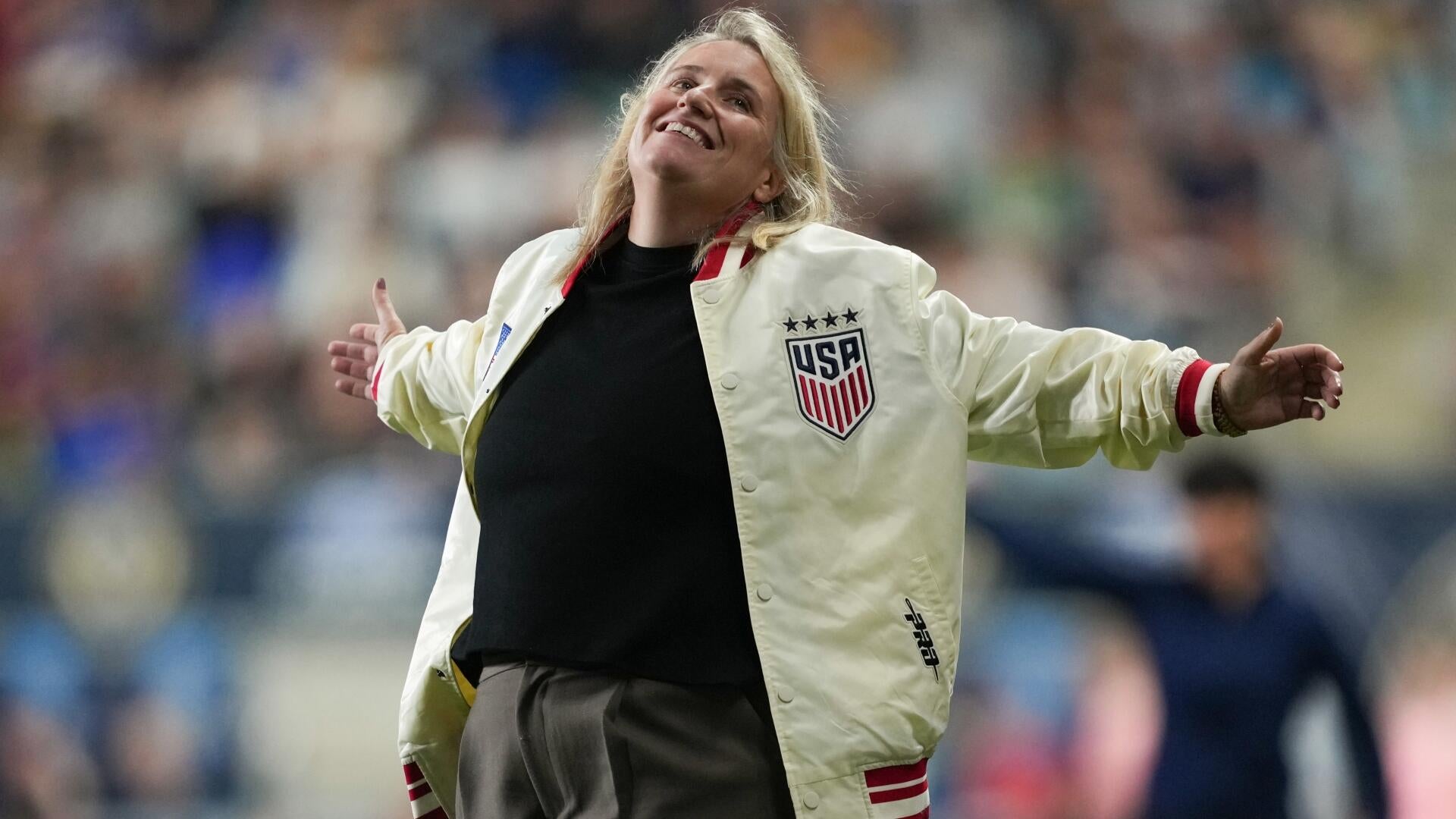
Emma Hayes, the U.S. women's national team head coach, will also have a say in the matter.
Men's and women's national teams rarely overlap at any given federation, largely because there's little need for a crossover event. They operate on different calendars and in the best case scenarios, each team has dedicated members of staff. Hayes' name-drop as news of Pochettino's exit became official, then, is a unicorn-like sighting, even if U.S. Soccer often champions a spirit of collaboration between all of its national teams. It is uncommon for the head coach of one senior national team to help recruit a counterpart but in U.S. Soccer's case, it makes complete sense.
Hayes' coaching career, which spans two decades and two continents, means her inclusion on the federation's soccer leadership team comes as a no-brainer. She is amongst the most respected soccer minds in the game, which easily makes her one of the most important people on U.S. Soccer's payroll no matter how you look at it. That will be especially true in a hiring process that has to conclude with a compelling follow-up act to Pochettino's splashy arrival two years ago. Her perspective might actually be vital in the process, which only adds to the intrigue of what's next for the USMNT.
Hayes' crucial tactical insights
USMNT coaches are rarely style hires; look no further than the list of people to hold the job on a full-time basis this century and the picture paints itself. The only thing Bruce Arena, Bob Bradley, Jurgen Klinsmann, Gregg Berhalter and Pochettino seem to have in common, outside of the job they all once held, is that they were all tasked with some sort of cultural reset depending on the task at hand. That likely will not be the case for Pochettino's successor, though, who will inherit a team with a clear style of play, a healthy mix of veteran players and rising talents and plenty of time on the clock until the next World Cup. The job will be defined in part by continuity, even with the necessary allowance for the new hire to put their unique spin on things.
That's where Hayes' expertise should play a crucial role, and the same goes for Onyewu. Hayes' tactical know-how makes her as qualified as anyone employed by U.S. Soccer to establish the right stylistic profile for the next USMNT coach, especially with the spirit of continuity in mind. Pochettino's track record with the U.S. team was mixed but at its best, his high-intensity, attack-minded approach suited the player pool really well and continues to do so. Hayes, a tactical pragmatist who prioritized attack-minded teams herself with Chelsea and the USWNT, will be more than able to help match candidates to the player pool they will spend the next several years working with.
That's especially true considering the fact that there are very few slam-dunk candidates to replace Pochettino. Pep Guardiola, months into a sabbatical after a decade with Manchester City, is an obvious target for U.S. Soccer but it is entirely unclear how interested he would be in the vacancy. If he's out of the running, the list of contenders with genuine international appeal dwindles quickly but it does not necessarily mean the list of worthy candidates vanishes with Guardiola. The hiring committee will need to be strategic in that case, both in terms of creating a list of contenders and then narrowing them down over the interview process, Hayes providing an important perspective along the way.
Familiarity with the demands of the job
The jobs of the USMNT and the USWNT head coaches are hardly apples-to-apples but even then, one will still have an acute idea of what the other's job entails. There is inherent value in having a coach help in the process of hiring another coach, since they hold such singular positions – they are often treated as the be-all, end-all when it comes to their team's success, fairly or otherwise. She can also speak to the cadence of national teams, which varies greatly from the club game where coaches essentially work with their players every day during a long season.
"Everyone is aware of the major differences between coaching at the club level and international level, and the main difference is just time on the field and time with your players," Hayes told CBS Sports earlier this year when asked about Pochettino. "Every international coach would love to have more time with their team, but that's not the nature of the international calendar and it's something I know we both had to get used to and are still getting used to … I said a few times that it's almost like we are grandparents. We get to see the players for a week or so and then we send them back to their parents, which is their clubs."
Outside of her tactical expertise, though, Hayes represents U.S. Soccer's ambitious turn in recent years as much as Pochettino does. She was hired because of her reputation as a serial winner at Chelsea, where she won eight league titles and seven cups. She continued the trend in short order with the USWNT – two months after officially starting in the role, she won Olympic gold at the Paris Games in 2024. U.S. Soccer has equally ambitious goals for the men's team, though the timeline will understandably be longer for that program. They continue to target the USMNT's first World Cup quarterfinal appearance since 2002 but in between, they also hope to medal in the Olympics' men's soccer event, which is contested by U-23 teams, for the first time when the Games come to Los Angeles in 2028. More than many at the federation, Hayes has experience with the intangibles it takes to reach those heights and that's exactly why she was hired in the first place.
Beyond that, though, Hayes in particular has an idea of what the USMNT job might entail. She is the best of both worlds – she began her coaching career in the U.S. two decades ago and has a deep understanding of the American soccer landscape, but made a name for herself in her native England and can also bring a useful outsider's perspective. There is no perfect equivalent to Hayes waiting for the USMNT job since no coach with experience in the American game has truly broken into the top tiers of the sport just yet, the federation likely to settle for one or the other. Hayes' understanding of both orbits, though, makes her an important guiding force along the way. She might be the only qualified person to answer how much to weigh the insider's perspective with the accomplished outsider's point of view when looking for the next USMNT head coach, in large part because she is the only person who boasts an equal share of it.
The list of contacts
Hayes' expertise alone means she will be as valuable a sounding board as any, to the point that it's hard to minimize her ability to offer input down to one or two straightforward things. There is one more thing Hayes might have that no one at U.S. Soccer does – easy access to some of the most notable coaches in the game.
Over the course of her successful 12-year tenure at Chelsea, Hayes became one of the most respected coaches in England. She became the first woman to win the Football Writers Association's Tribute Award in 2024 shortly before leaving England for the U.S., and has earned the praise of many of her counterparts in the men's game along the way. Out of anyone at U.S. Soccer, Hayes might actually have the most compelling list of phone numbers in her contacts. She has said Sir Alex Ferguson, a coaching legend if there ever was one after his storied 27-year tenure at Manchester United, calls her "from time to time." Hayes has been in touch with a handful of her contemporaries over the years, including those who have been on U.S. Soccer's radar at one point or another. In her 2024 book, "A Completely Different Game," Hayes said she heard from Guardiola and Jurgen Klopp after having an emergency hysterectomy because of endometriosis in 2022. The pair "sent me long messages, expressing deeply felt emotions," as did Graham Potter and David Moyes.
The rolodex is a covetable one, if ex-U.S. Soccer sporting director Matt Crocker can serve as an example. His greatest accomplishments during his three-year spell, which came to an end in April when he took a similar role with the Saudi Arabian Football Federation, were hiring Hayes and Pochettino. He had previously worked with Pochettino at Southampton a decade earlier, which made U.S. Soccer's approach easier when discussions started. Hayes' value exceeds her ability to hand her bosses a phone number but it is unlikely to go unnoticed at U.S. Soccer, who clearly understands the expertise she would bring to the search in a variety of ways.