
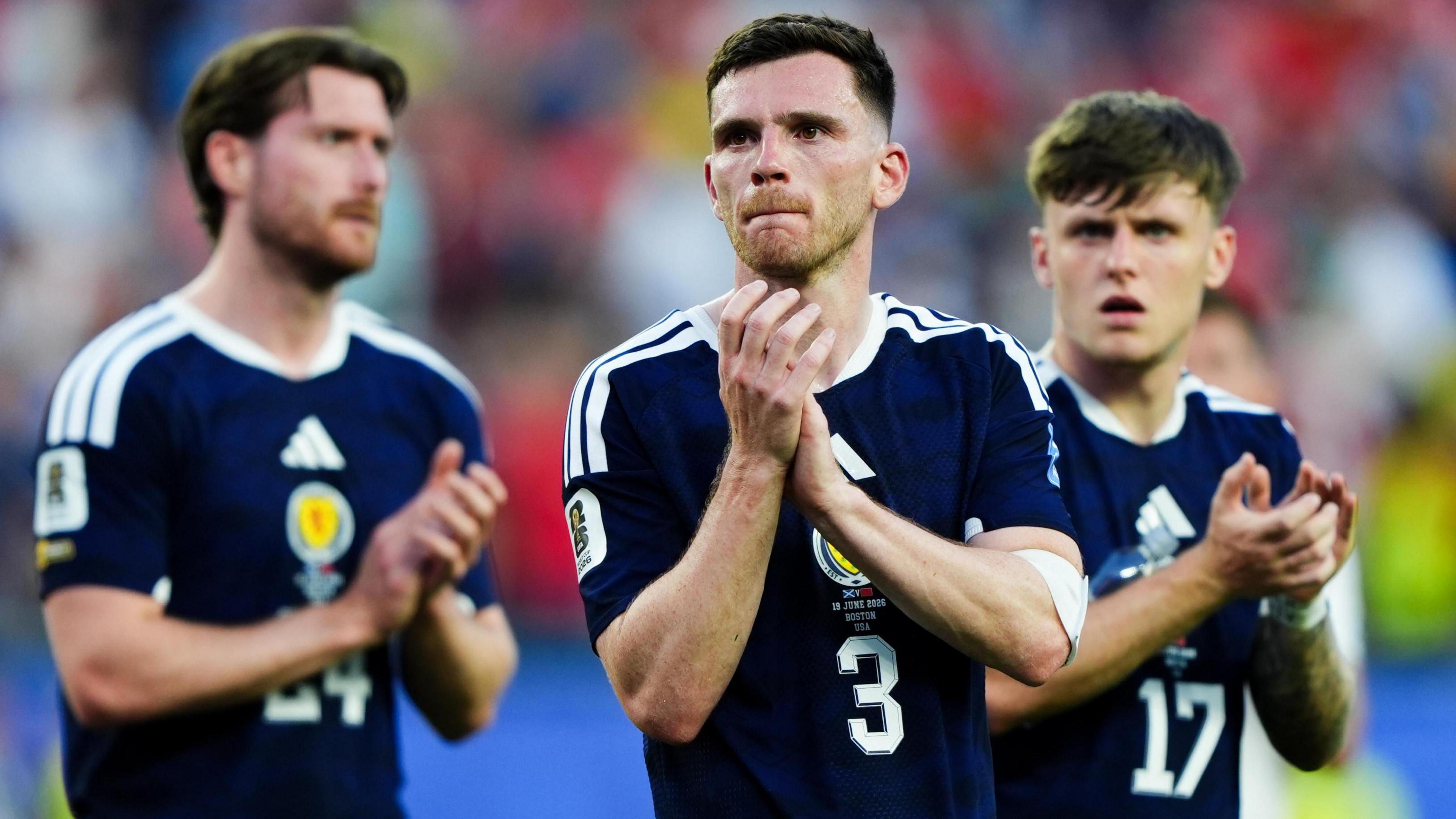
 Image source, PA MediaImage caption,
 Captain Andy Robertson will lead Scotland out against Brazil on Wednesday
ByThomas DuncanBBC Sport Scotland- Published3 hours ago
Scotland v Brazil
Fifa World Cup
24/06/2026 at 23:00 BST
Miami Stadium
Watch on iPlayerLive on BBC One and iPlayer, BBC Radio Scotland and BBC Radio 5 Live. Follow live text updates on BBC Sport app and website.
When Scotland take on the famous yellow shirts of Brazil in Miami, they will know a draw is enough to reach the knockout stage of the World Cup.
Even a narrow loss may well see them through to the last 32 as one of eight best third-place sides.
Scotland fans' new obsession is the table of third-placed teams in the World Cup as everyone tries to work out what exactly would take the national side through for the first time ever.
Head coach Steve Clarke and the players will be asked about their approach given that context, but how easy is it to play simply not to lose?
How sweltering Scotland can handle World Cup heat
- Published1 day ago
Does it matter if Scotland lose and still make history?
- Published1 day ago
The psychology of playing for draw
You can probably scrape through the history of football and struggle to find any coach or player say they will go out to aim for anything but a win.
Those involved with Scotland will do the same in their pre-match media this week - and you can bet your house on it being true.
But, with all the noise and talk outside the camp, might there be a subconscious effect?
As former Scotland player and manager Craig Levein told BBC Scotland: "I don't believe Steve will be playing for a draw because there's a dangerous element to that.
"Because you're in a mode where if you do lose a goal then getting shifted out of that mind space is difficult. I've been in that situation on a number of occasions.
To play this video you need to enable JavaScript in your browser.
This video can not be played
Figure caption,'No problem' - Scotland's Jack Hendry on facing Neymar
"One of them was the Czech Republic game, the 4-6-0 [in 2010], where a draw would have been a really good result. The game wasn't great and neither team threatened, but we lost the goal to a set-piece.
"So you can plan all you want to play for a certain outcome, but football is so random that you're not guaranteed to get that."
Levein believes Clarke's demeanour and approach to training, the gameplan and team selection will be more influential in the players' mindset than outside talk of only needing a point.
The inclusion of winger Ben Gannon-Doak, for example, may send a message Scotland are going to be more aggressive going forward.
"You get a feel as a manager where the players are," Levein said.
"You're looking at it and you're thinking: maybe if we just put another attacking player on, it gives everybody the idea that it's time to take the shackles off and have a go."
Why being passive is not an option
So, rather than Scotland's mentality being affected by their desired outcome, is a cautious gameplan - even when trying to win every game - more of an issue?
Against Haiti, Clarke's side had only 46% of the ball - and that dropped to 40% against Morocco. Scotland have managed just two shots on target so far.
Defensively, they have not often pressed the opposition fiercely, with Scotland taking an average of 25 seconds to recover possession against Morocco, who on average won the ball eight seconds faster.
Former Hibernian and Celtic midfielder Scott Allan told the Scottish Football Podcast: "When you're constantly sat off the game and you're passive, players go into a certain mindset where they start to worry, instead of having that real belief about going and creating and scoring goals.
"You can sit in a low block and still be aggressive. There's a point where once they [the opposition] reach here, when they make a square pass, can we go with real purpose and go and try and get the ball back?"
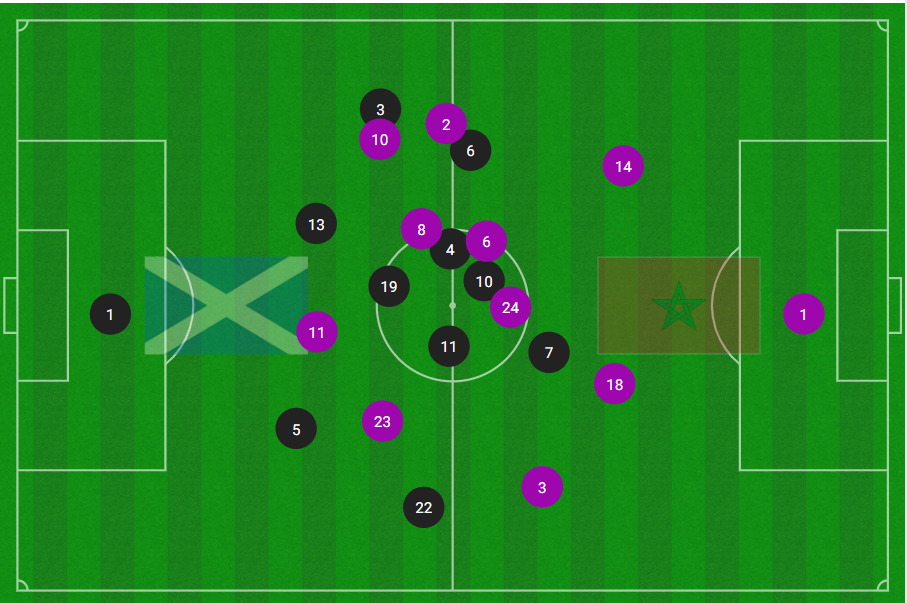 Image source, OptaImage caption,
 Scotland (black) struggled to get players forward against Morocco, as this map of their average positions shows
Former Rangers and Motherwell midfielder Andy Halliday agrees that Scotland need to find more urgency when defending as a team against Brazil.
"When you're going to be this team that wants to sit in and frustrate then try and be as quick as you can on transitions," he said. "I think we need to be a lot more aggressive than we've been off the ball.
"I think every chance we created actually came from us putting pressure on Moroccan players and turning the ball over at the top end of the pitch.
"I'm not expecting a huge difference in possession [against Brazil], but I think, out of possession, we can't just allow these top players time and space on the ball and make it easy for them to just feel their way into the game."
Scottish Football Podcast
22/06/2026
Listen on SoundsKenny Macintyre is joined by Andy Halliday and Scott Allan to ask the big questions after Scotland’s narrow defeat to Morocco. What really went wrong in that performance, and were the tactics too passive?
Related topics
World Cup fixtures and group standings

How to watch the World Cup on the BBC
- Published6 June

Everything you need to know about the World Cup
- Published1 April