 BySangmi HanBBC News Korean, Reporting fromSeoul
- Published3 hours ago
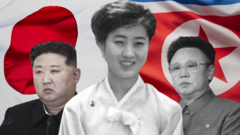
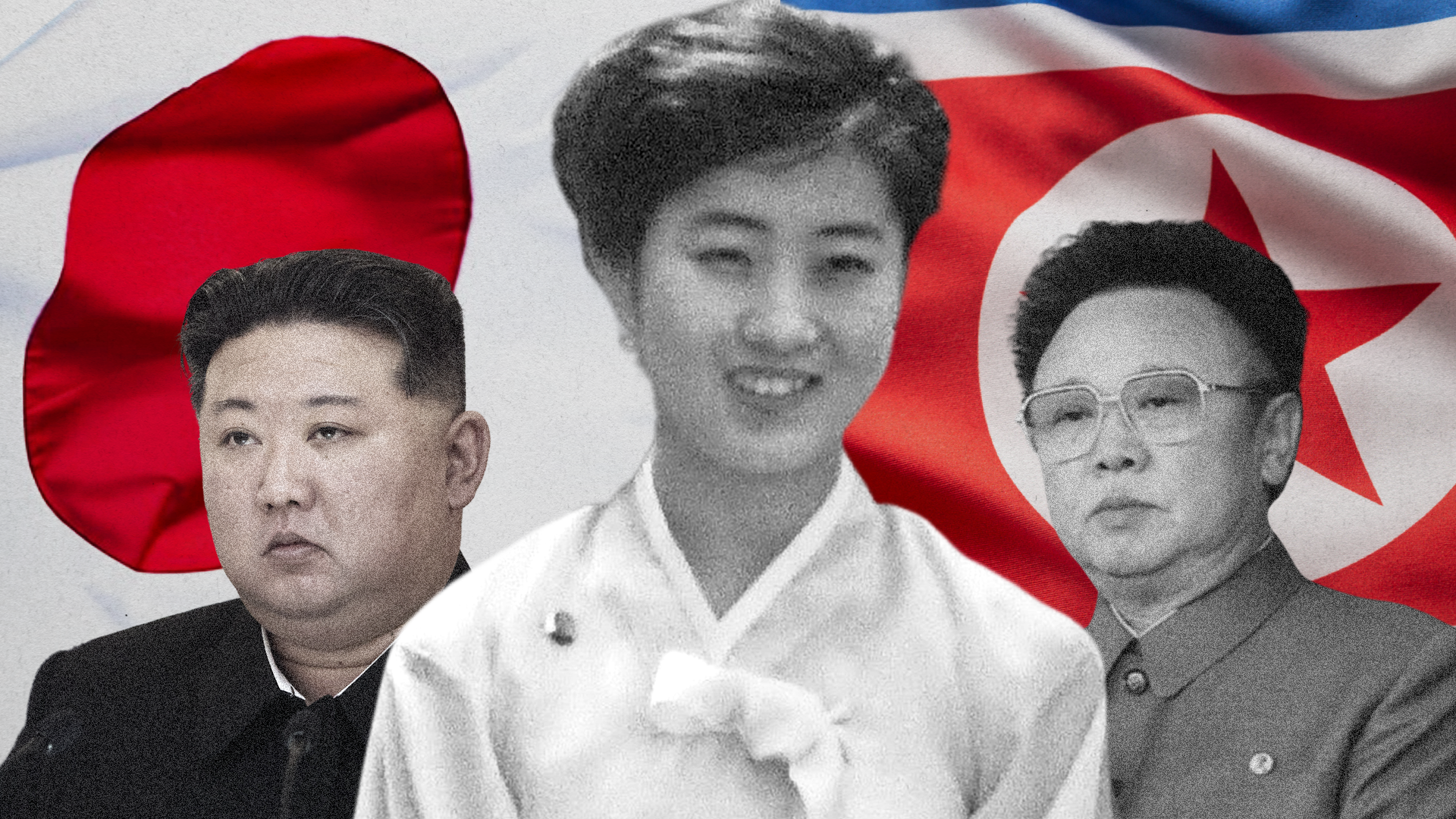
Among the many mysteries shrouding North Korean leader Kim Jong Un, the secrecy around his mother stands out.
In his 15 years of rule, he has never once publicly mentioned her by name.
The legitimacy of Kim's dictatorship rests heavily on his "Mount Paektu" bloodline - a lineage tied to the mythical founder of the Korean people.
And in a country that prides itself on this hereditary purity, the identity of Kim's mother is not just a secret - but a threat to the regime itself.
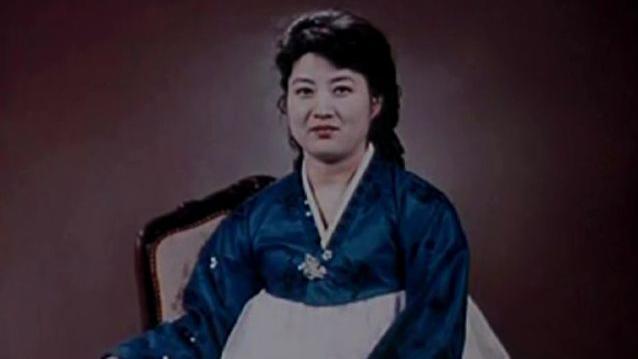 Image source, Cheong Seong-changImage caption,
 Ko Yong Hui has never been mentioned by state media
A mythological birthplace
The story of the Koreas, according to popular belief, begins on Mount Paektu - a mountain located on the China-North Korea border that is said to be the birthplace of Dangun, the mythical founder of what became Korea's first kingdom.
Thousands of years later, Kim Il Sung - the founder of North Korea - reportedly used the mountain as a hideout when fighting against the Japanese. His son, Kim Jong Il, was said to be born on those same sacred slopes - despite reports indicating he was in fact most likely born in Russia - and for decades since the mountain has been used to legitimise the Kim dynasty.
"Kim Jong Un became heir in his 20s despite having no achievements, solely because of the Paektu bloodline," Ryu Hyun-woo, an exiled North Korea diplomat, wrote in his book, Kim Jong Un's Secret Vault.
But the reality of Kim's maternal lineage paints a different picture.
Hundreds of miles away from Mount Paektu lies the city of Osaka: Japan's historical capital, and the place where Kim's mother, Ko Yong Hui, was said to be born.
From what biographers have pieced together, Ko was born in Osaka in 1952 to parents originally from Jeju Island, which sits off the southern coast of what is now South Korea.
As residents of Japan, Ko's family were "Zainichi Koreans": immigrants during Japan's 1910-1945 colonial rule of the peninsula.
But when she was about 10 years old, Ko's family emigrated to North Korea.
They were among the estimated 93,000 Koreans who moved to North Korea between 1959 and 1984, lured by a resettlement scheme that promised an idyllic life of free healthcare, education and jobs.
Migrants to the North were first viewed with envy as they brought cash, clothes and home appliances from the country's capitalist neighbour to the south.
But they were also labelled "jjaepo", a disparaging term for a group considered to be contaminated by foreign, dangerous ideologies.
North Korean society is deeply hierarchical, with some analysts comparing it to a caste system. And in this strict social classification - known as songbun – the jjaepo belong to the "wavering class", somewhere between the core and hostile classes.
They are subjected to heavy state surveillance and often denied admission to good universities or promising jobs.
It is a stark contrast to the Paektu narrative that Kim's family has long promoted.
"The [regime's] Paektu bloodline is seen as sacred," says Kim Hyung-su of the Northern Research Association. "So the idea of the leader being a jjaepo's son is unimaginable."
A Cinderella story
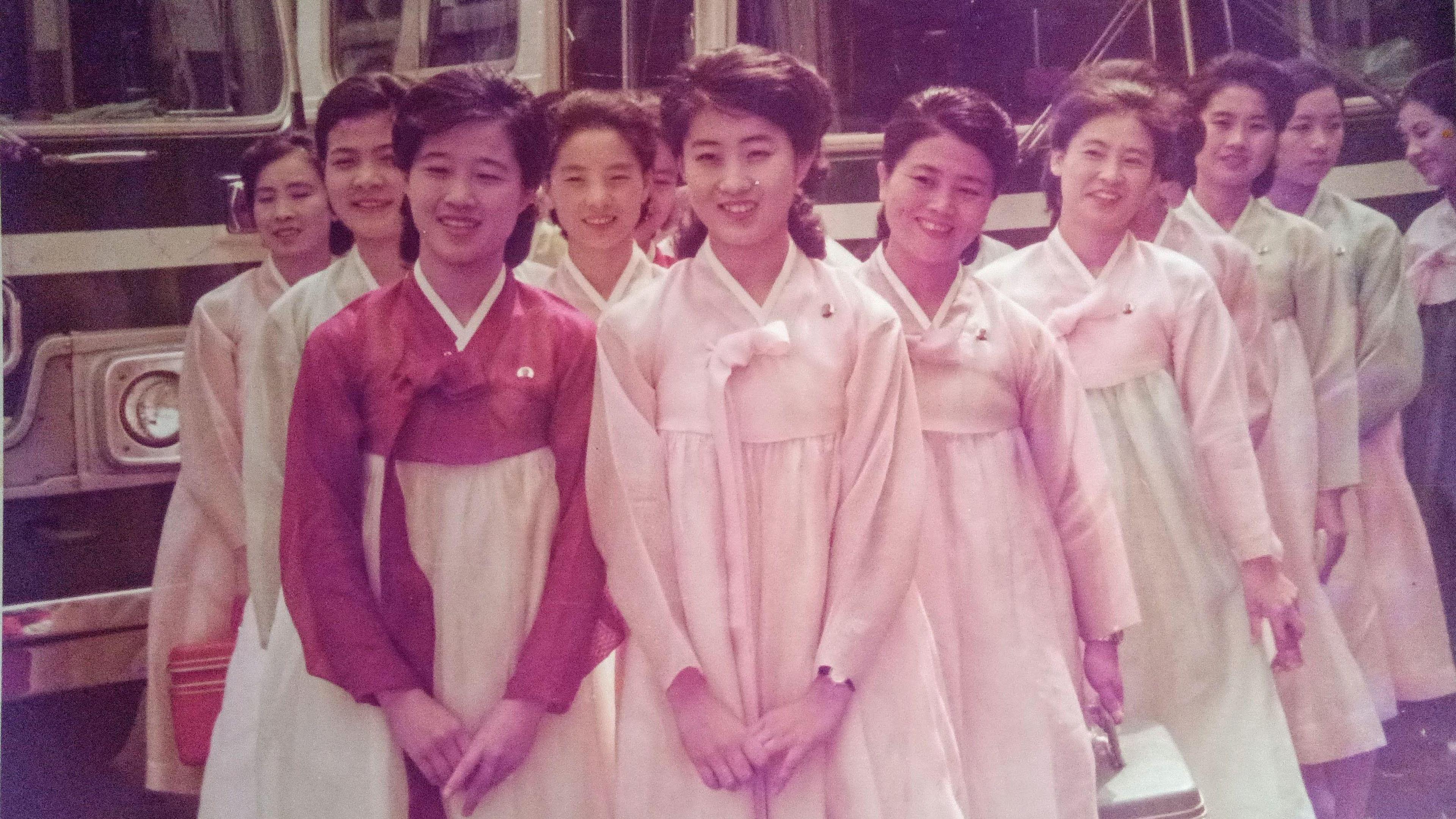 Image source, Yoji GomiImage caption,
 Ko Yong Hui (front, right) was a member of the elite Mansudae Art Troupe
Ko managed to escape the fate of her fellow Zainichi Koreans, however, after she caught the attention of Kim Jong Il, who had already been groomed for succession.
Intelligence shows he was already wedded to Kim Young Sook, the daughter of a high-ranking military official, in a marriage hand-picked by his father. He was also known to have two other mistresses.
Despite this, Ko - a member of the elite Mansudae Art Troupe - was said to have caught Kim's attention due to her "natural beauty and dancing skills", says Yoji Gomi, a Japanese reporter who published a book on Ko in 2025.
Reports suggest that Kim fell passionately in love with Ko, and went on to have three children with her.
But children born out of wedlock face severe stigma in North Korea. And so, while Kim's official wife resided in the capital Pyongyang, Ko and her children were tucked 210km (130 mi) away in the coastal town of Wonsan.
Though she never married the supreme leader, and their union was not acknowledged by the regime, Ko managed to live what Gomi calls a "Cinderella-like life".
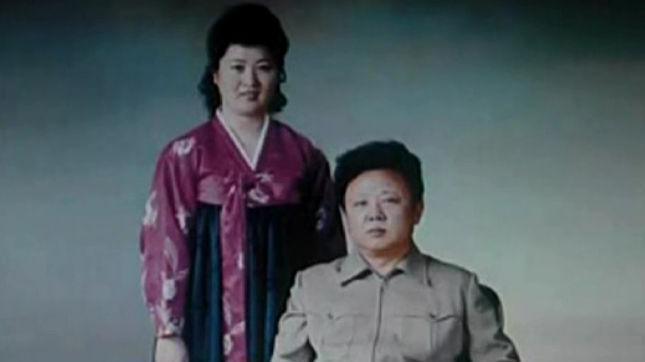 Image source, Cheong Seong-changImage caption,
 Ko was reportedly Kim Jong Il's favourite mistress
Yet it remained a fact that Ko was "never recognised as a daughter-in-law by Kim Il Sung", wrote Ryu - and nor was he ever publicly seen with her children.
Had Ko won Kim Il Sung's approval, photos of him and his grandchildren would have been circulated far and wide, says Dr Cheong Seong-chang of the Sejong Institute.
Following Kim Il Sung's death, Kim Jong Il rose to become North Korea's supreme leader, and Ko became the country's de-facto first lady, accompanying her husband on military inspections and befriending his entourage.
Kim would even seek her opinion before making policy decisions, wrote Fujimoto, Kim's former chef.
An official documentary produced in 2011 showed footage of Ko accompanying Kim on local tours - though it never revealed her name nor her songbun.
The documentary was also never publicly released, but shown only to senior party officials in June 2012, says Dr Cheong - though it was later leaked and spread among ordinary citizens via smuggled USB drives.
"As it spread... people's curiosity about Ko Yong Hui skyrocketed, so the regime quickly recalled [the documentary]," Dr Cheong explains.
Her background, he adds, could call the regime's legitimacy into question.
In 2004, Ko passed away from breast cancer at a hospital in Paris. Her death went unremarked by North Korean state media.
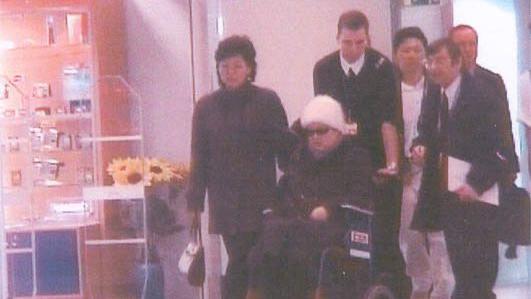 Image source, Yoji GomiImage caption,
 Ko Yong Hui (pictured in a wheelchair) died of breast cancer in France in 2004
Illegitimacy and succession
But the question remains: How did a mistress's second son – and Kim Jong Il's youngest – end up inheriting power?
Kim Young Sook, Kim's official wife, gave birth to two children - but since they were both female, neither of them were up for succession.
Kim Jong Il also had two other mistresses aside from Ko: Sung Hae-rim and Kim Ok.
While Kim Ok did not bear any children, it appeared for a while that Kim's firstborn son with Sung Hae-rim, Kim Jong Nam, could have been considered.
But Kim Jong Nam, who studied abroad for more than a decade and was known to be fluent in both English and French, fell out of favour early because he questioned North Korea's hereditary succession and advocated reform, says Goji, who exchanged emails with him for years.
He also developed a reputation as a partier because of his frequent trips to casinos and jet-setting lifestyle.
In 2017, after a few years of living in Macau in exile, Kim Jong Nam was assassinated in Malaysia - poisoned with a lethal nerve agent.
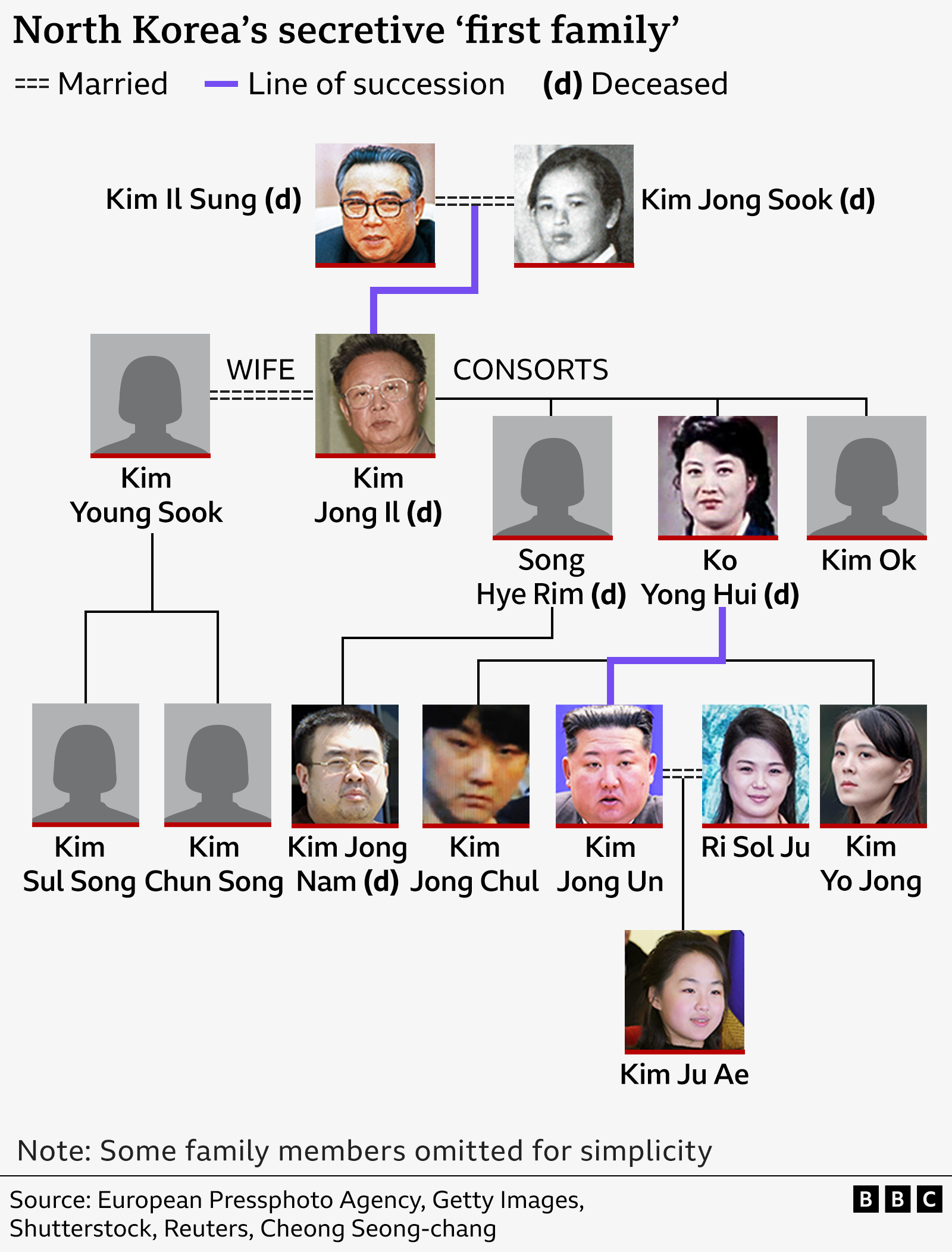
There was also Kim Jong Un's older brother, Kim Jong Chul - but he was ruled out as an heir because of a severe opium addiction, according to ex-diplomat Ryu.
And so Ko was believed to have actively lined up her second son, Kim Jong Un, for succession. This was done on the advice of Ko's sister, who said her son had to become the next leader or their family would be at risk, wrote journalist Anna Fifield in her book, The Great Successor: The Secret Rise and Rule of Kim Jong Un.
Kim Jong Un quickly became his father's favourite, largely due to his leadership potential and competitive nature, analysts say. While he also briefly studied overseas in Switzerland, he was said to be a lot more insulated than his half-brother Kim Jong Nam.
So when Kim Jong Il passed away in 2011, Kim Jong Un, who was 27 at the time, secured his spot on the throne.
Kim has since entrusted great power to his sister, Kim Yo Jong, who is believed to head the influential propaganda department, according to South Korea's Unification Ministry.
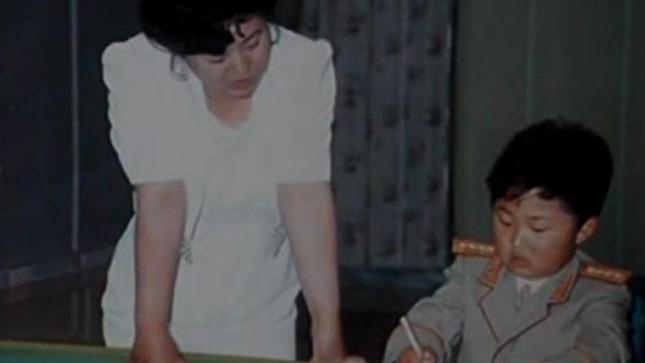 Image source, Cheong Seong-changImage caption,
 A young Kim Jong Un can be seen here with his mother, Ko Yong Hui, beside him
But the question of Kim's parentage hangs over the supreme leader to this day.
Analysts believe it is why his birthday has not been declared a national holiday, unlike his grandfather's and father's, since drawing attention to his birth could raise thorny questions about his mother and why he was raised outside of Pyongyang.
The secrecy around his parentage could also be part of the reason why he was quick to publicly present his wife Ri Sol Ju.
Unlike his mother, Ri is believed to have come from an upper-middle class family in Pyongyang, according to South Korea's intelligence service. A former singer of a prestigious performance group, she was also sent to study classical singing in China in her youth - an indicator of good songbun.
"The sense of illegitimacy and resentment Kim Jong Un experienced because of his mother's background paradoxically became a powerful motivation for him to publicly reveal his wife Ri Sol Ju and daughter Ju Ae at an early stage," says Gomi.
These public displays, Gomi adds, could stem from a "perceived 'deficiency'" surrounding Kim's mother's origins.
So, what would happen if the origins of Kim's mother ever became public?
"If it becomes known that his mother was of ethnic Korean origins from Japan, it would not only shake his legitimacy but also destabilise the hereditary system at its roots," said Ryu.
"It would have the impact of a nuclear bomb on North Korean society."
Top image by Andro Saini of East Asia Visual Journalism and additional reporting by Grace Tsoi and Laignee Barron


