 Image source, Getty ImagesImage caption,
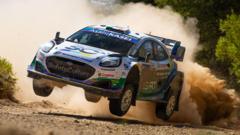
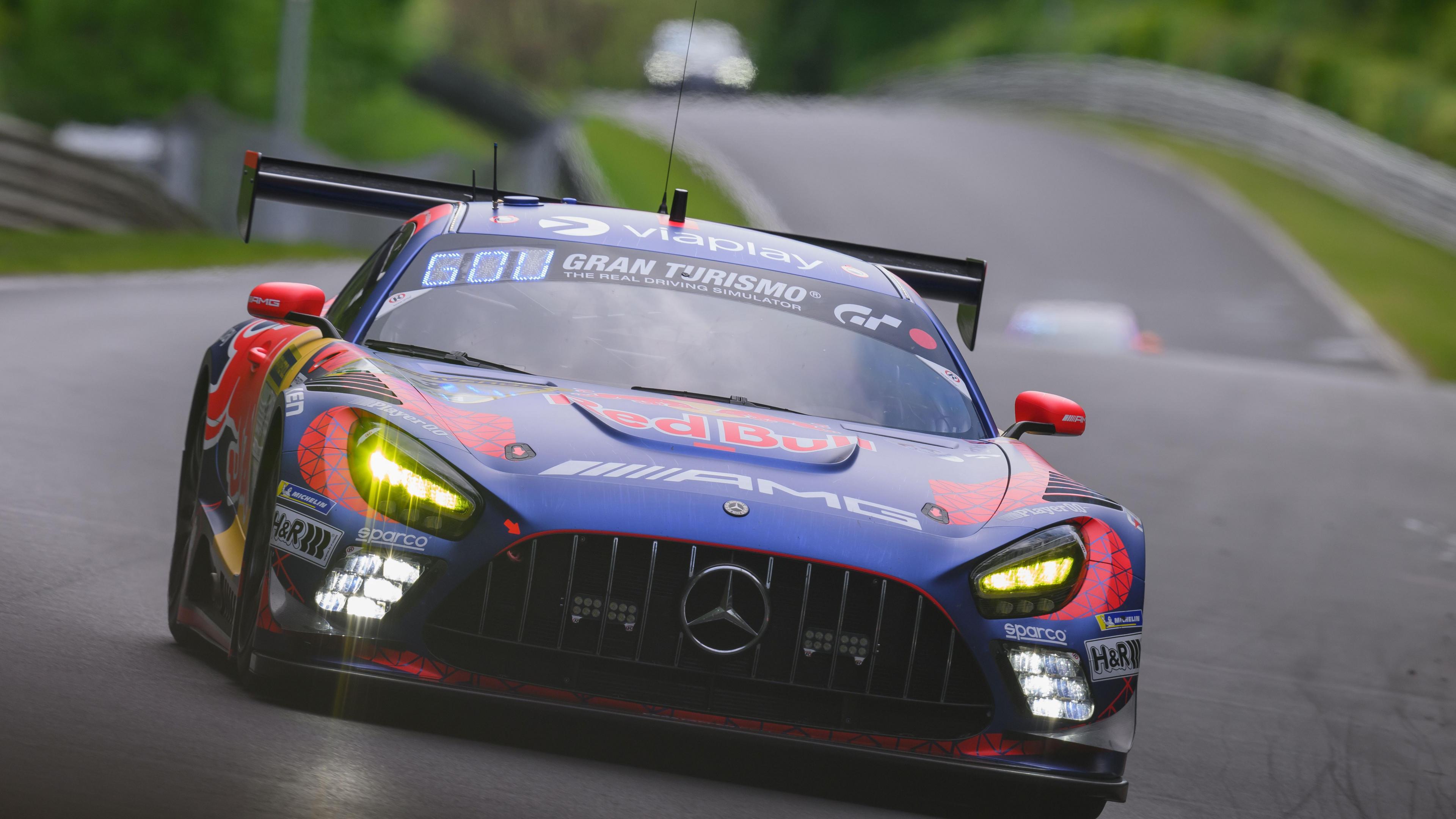
 The Mercedes of Max Verstappen, Lucas Auer, Jules Gounon and Daniel Juncadella was leading the Nurburgring 24 Hours with three hours and 20 minutes left when a broken driveshaft forced them off the track
- Published12 minutes ago
Formula 1 is back in North America this weekend for the Canadian Grand Prix, the fifth round of the 2026 season.
Mercedes' George Russell, who won the race last year, will be aiming to narrow the 20-point gap to his team-mate Kimi Antonelli at the top of the drivers' championship.
Before the race in Montreal, BBC F1 correspondent Andrew Benson answers your latest questions.
Why don't other F1 drivers enter different forms of motor racing like Max Verstappen is currently doing with the endurance racing? - Paul
Max Verstappen's outing at the Nurburgring 24 Hours last weekend generated a lot of interest, but it is no accident that he is only the third grand prix driver in more than 20 years - and probably longer - to race seriously elsewhere while competing in Formula 1.
The other big name to do so was Fernando Alonso, towards the end of his first career in F1, when he took part in the Indianapolis 500, Daytona 24 Hours and then joined Toyota for the World Endurance Championship while he was still under contract to McLaren.
Nico Hulkenberg also raced at Le Mans when he was at Force India in 2015.
The main reason drivers do not generally do this is that their contracts forbid it.
Why? Well, risk is the first obvious reason. Then there are potential contractual clashes, and the lack of time available to devote to doing something like this properly.
In Verstappen's case, it is a question of the balance of power between driver and team. He has massive leverage with Red Bull that most other drivers do not have.
He is a four-time world champion, and the team are desperate to keep him happy. On a general level, but also because right now they know he is not exactly enamoured with F1.
Alonso's situation was not dissimilar. His McLaren was uncompetitive. The team wanted to keep him happy. And in the case of the Indy adventure particularly, McLaren F1 boss Zak Brown is a motorsport fan through and through and he thought it was a cool thing to do.
On Verstappen, by the way, he was absolutely - and unsurprisingly - outstanding at the Nordschleife.
His first stint in the car on Saturday afternoon took his team from 10th on the road to the lead. A lead they never lost until the driveshaft failure that cost them the win on Sunday morning.
Most of that was Verstappen overtaking other cars, albeit a small number pitted out of his way on divergent strategies.
But the race also underlined why F1 teams don't let drivers do this sort of thing.
Verstappen nearly crashed at high speed early in that stint when his car's front wheels became airborne over a crest as he chased a rival.
And there were a series of other near-misses, as there always are in this sort of race with a number of different categories of cars, and huge speed differentials.
Generally, these sorts of races are more dangerous than F1.
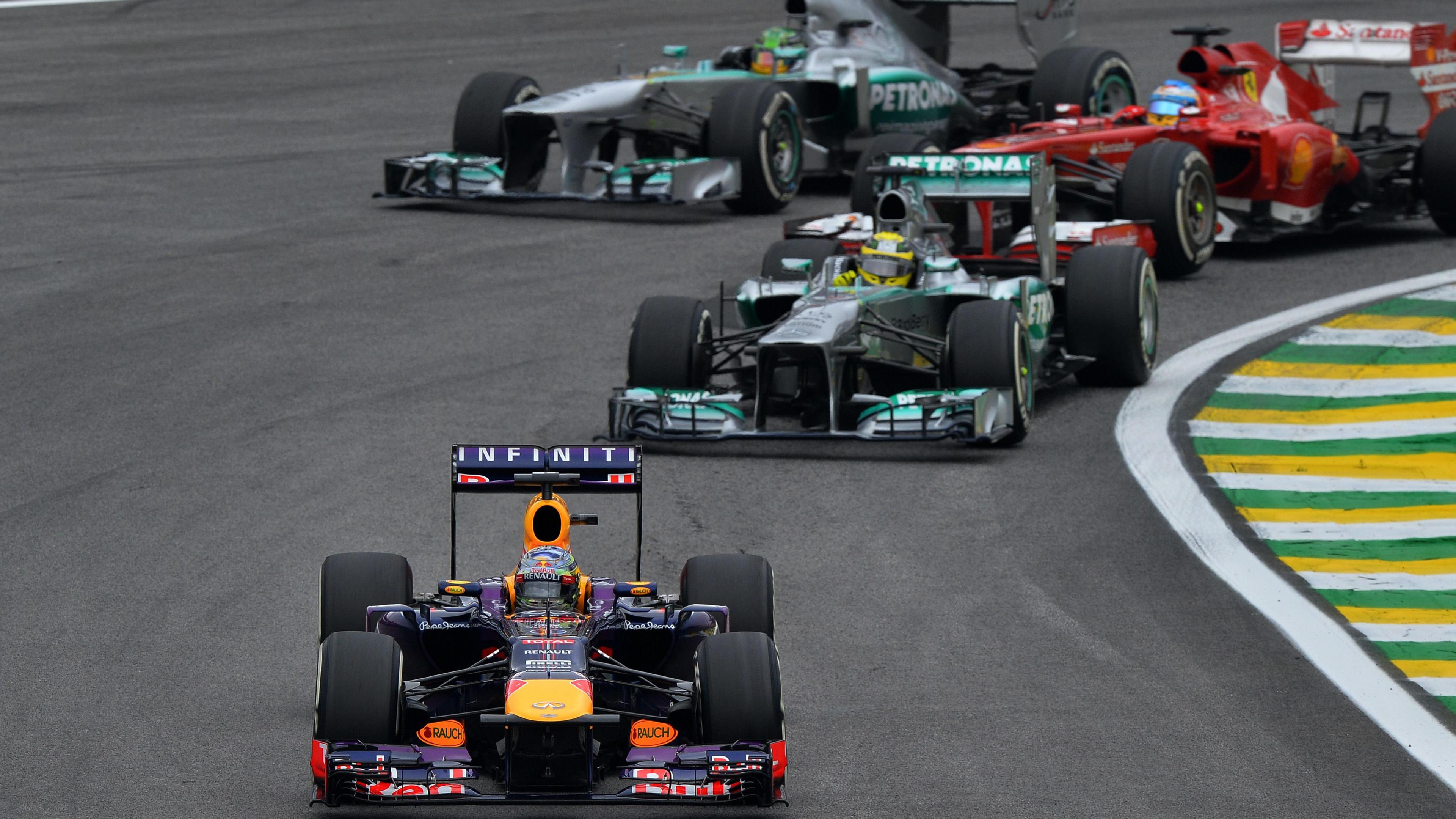 Image source, Getty ImagesImage caption,
 Red Bull's Sebastian Vettel won the 2013 drivers' championship - the last to feature V8 engines - by 155 points from Ferrari's Fernando Alonso
Much of the 2013 season was boring. Why such a fondness for the era? I'm intrigued by the demands of the new era and feel it's consistent and coherent with the current age. Are the critics of the current era flagging their age and risking their obsolescence? - Dave
This question essentially centres on the push by FIA president Mohammed Ben Sulayem to return Formula 1 to a set of engine regulations that are pretty much the same as the era from 2010-13.
We delved into this topic extensively last week. There's a link to that article below.
Now, as to the specific question, yes, 2013 was pretty boring, or at least the second half of it was.
The season started relatively competitively - Red Bull's Sebastian Vettel won four of the first 10 grands prix, but Ferrari's Fernando Alonso, Lotus' Kimi Raikkonen and Mercedes drivers Nico Rosberg and Lewis Hamilton all won over that period.
But a change to the specification of tyres following a series of blow-outs at the British Grand Prix led to Red Bull dominating and Vettel won the last nine races in a row to clinch a fourth consecutive world title.
The last years of the V8 era, once refuelling was banned at the end of 2009, fluctuated between intensely competitive and, er, not.
The 2010 and 2012 seasons had gripping title fights. In 2010 there were five drivers in the running until the penultimate race, and four mathematically at the last one.
That was the year Ferrari dropped the ball on strategy in Abu Dhabi and threw away the title, letting Red Bull and Vettel in to win their first title.
In 2012, there were seven different winners in the first seven races, and the title fight between Vettel and Alonso went to the final race again.
In 2011, as in 2013, Vettel and Red Bull dominated.
But there were a lot more factors involved in those scenarios than just engines. Tyres, for one. The relative competitiveness of the cars for another.
However, the naturally aspirated era - and especially the years from 1994-2009 when there was refuelling - was notorious for the lack of overtaking on track.
That has certainly increased this year with the new style of "yo-yo racing" brought about by the new hybrid engines.
There are so many issues wrapped up in this engine debate. Some of it may well be people harking back to the past, one they felt was more attractive than what F1 serves up today.
But there is also a cost issue, whether the essence of F1 has been polluted, noise, the changing road-car market place and on and on.
Will F1 go back to the future with its engines?
- Published4 days ago
With Kimi Antonelli doing especially well lately and a lot of talk about his talent and future, can we put some of his results down to his race engineer Pete Bonnington? We all know how good Lewis Hamilton was working with Bono. - Michael
The relationship with their engineer is one of the most important for a racing driver.
In Peter Bonnington, Antonelli has someone of vast experience, who has "learned from the greats", as Mercedes F1 boss Toto Wolff put it in Miami.
Bonnington previously had the same role with Michael Schumacher and then Lewis Hamilton. Wolff says: "He has been a good mentor to (Antonelli). But also a strong boss."
But putting Antonelli with Bonnington is just one example of the care Mercedes have taken with the start of Antonelli's F1 career.
Wolff has always been convinced of his protege's potential. He has said over and over again that he knew Antonelli would make mistakes at the start of his career, but that equally he knew he would come good.
And now Antonelli has done exactly that, Wolff is already in the next phase - keeping him grounded and focused on the job, and not getting carried away with things.
Wolff says: "We need to keep re-emphasising and repeating the message. This is a long game. He has a killer of a team-mate (George Russell) that is extremely fast. The others are catching up in performance. And we want to play the long game."
Canadian Grand Prix
22-24 May with race at 21:00 BST on Sunday
Listen on SoundsLive commentary on BBC Radio 5 Live and BBC Radio 5 Sports Extra; live text updates on BBC Sport website and app
Full coverage guideHow does a driver's size and weight affect the performance of the vehicle? Is any allowance or compensation made for larger drivers, for example Russell vs Antonelli? - Gil
The F1 rules are constructed in such a way as to minimise any deficit a driver might suffer from their size and weight.
The minimum weight for an F1 car this year is 768kg, and that includes the driver.
The principle behind this is that otherwise lighter drivers would have an advantage over heavier ones, as lower weight is lap time.
Back in the late 1980s and early 1990s, this was the case. So, for example, when Nigel Mansell and Alain Prost were Ferrari team-mates in 1990, the considerably heavier Mansell had to literally drive faster to lap at the same speed as Prost.
As Mansell was said to be more than 20kg heavier than Prost, that in theory put him at a disadvantage of a little over 0.2secs a lap.
Fundamentally, this is now a non-issue, although it does still crop up for taller drivers from time to time when it comes to seating position and trying to get their head low enough not to impede the airflow, especially into the engine air intake.
Get in touch
Send us your question for F1 correspondent Andrew Benson
Contact formContact form