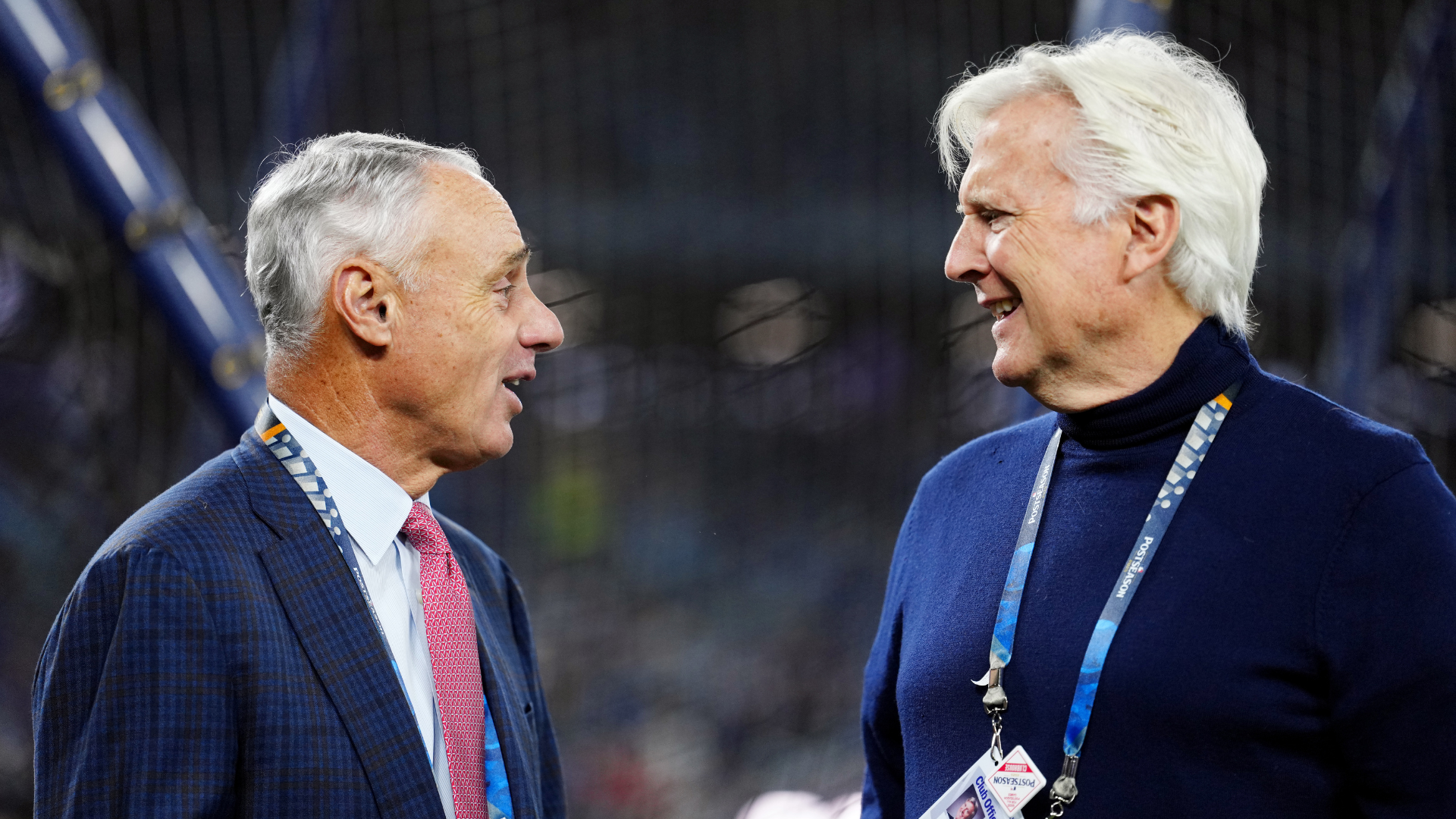
MLB owners and commissioner Rob Manfred intend to push for a salary cap
 By Dayn Perry Mar 27, 2026 at 7:38 pm ET • 4 min read
 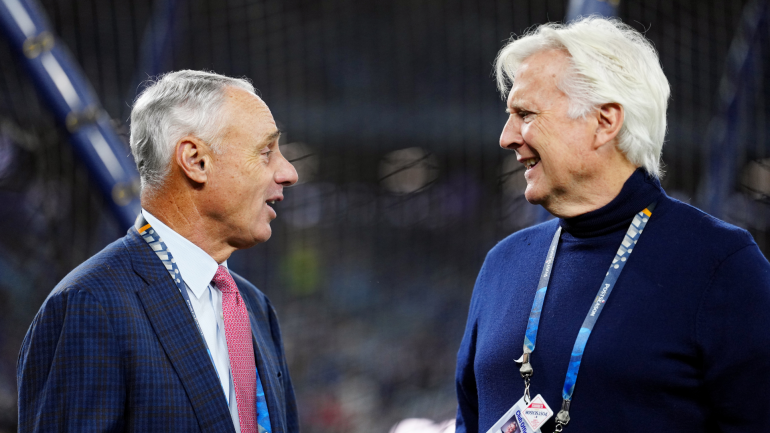 Getty Images
 While the 2026 Major League Baseball season is underway, the machinery of the game off the field never stops whirring in the background. Most notably, the December expiration of the Collective Bargaining Agreement (CBA), which governs the working relationship between MLB players and clubs, figures to be the unspoken subplot of the year.
Unfortunately, the expectation is that team owners will lock out the players after the CBA expires, which means another labor stoppage. The hope, of course, is that the lockout doesn't last 99 days like the 2021-22 stoppage did, but there's a real chance the labor fight will be an extreme one. That's because owners and their employee, commissioner Rob Manfred, intend to push for a salary cap.
That's going to be a heavy lift, largely because the MLB Players Association, the union that represents players on each 40-man roster, has always resisted efforts to install a cap. Another challenge is the potentially fractured coalition whose interests Manfred represents.
2026 MLB Opening Day overreactions: Mike Trout is back! Dodgers are inevitable! The WBC ruined Paul Skenes! Matt Snyder
Large-market owners carry the sport. Contrary to MLB's reputation, significant sharing of revenues is in place already. Teams pool 48% of their local revenues into a common pool and then receive equal shares of those pooled monies. The lowest spenders in the league -- think the Pittsburgh Pirates, Cleveland Guardians, Tampa Bay Rays, Miami Marlins and so forth -- almost certainly take in enough revenue sharing to cover their entire payrolls and then some (there's a reason MLB is less than forthcoming about team financials).
If you're the owner of, say, the New York Yankees, New York Mets, or Los Angeles Dodgers, then why would you want to continue subsidizing the profitability of such owners? Why would you want to structurally limit what you can invest in the on-field product just so their lack of basic effort is a bit less galling by comparison? That's the challenge Manfred faces in getting 30 team owners to behave as one during CBA negotiations.
"I have owners with really strongly held views that I need to coalesce into a position that we'll ultimately take to the MLBPA," Manfred said in February of 2025.
Speaking of which, maybe it's not as heavy a lift as it seems in theory? Consider what Mark Walter, owner and chairman of the two-time defending World Series champion Dodgers, recently said about his team's current status as baseball overlord and, by implication, the upcoming CBA talks. Via the Los Angeles Times:
"Here's what the problem is: Money helps us win. We can't win all the time. We've got to have some parity.
"So we've got to come up with something that will give us some parity."
Why Mark Walter's comments matter
Insofar as Manfred's "potentially fractured coalition" is concerned, Walter's comments are powerful words from an owner who wields a great deal of influence within his guild. The Dodgers win, first and foremost, because they're an exceptionally smart organization with an ownership group that's willing to invest in the team's success. Yes, the money helps, but the sport has countless examples of teams that spend and don't wind up hoisting the trophy. Accuracy, though, isn't the point. The point is that Walter has plainly communicated that the Dodgers are on board with whatever changes come out of the wash.
Presumably, the "something" to which Walter refers is a salary cap on team payrolls. MLB is the only non-capped league among the four major North American sports and baseball owners can scarcely conceal their envy of their capped-league counterparts. There's effectively no relationship between a cap and competitive parity -- the NFL has seeming parity because it plays a relatively tiny sample of games, has a single-elimination playoff format, and is driven by equally shared national revenues rather than local revenues. MLB is the opposite.
Parity is just a way to spin the cap push to fans and credulous media. MLB owners want a cap because it will increase franchise valuations, and Walter is probably no exception.
Snyder's Soapbox: ABS is not 'embarrassing' MLB umpires, it's making them better Matt Snyder
Another path toward increased parity -- or at least theoretically increased parity -- is increased revenue sharing. As noted above, MLB already has significant revenue sharing, but Manfred has positioned the league to wholly restructure the way the league makes money through media contracts. It will very likely shift toward the national model found in the NFL, and that would mean MLB revenues as a whole would be more equally shared. That, though, requires buy-in from teams like the Dodgers, Yankees, Mets, and Cubs, who make a lot of money through their regional sports networks or local broadcast agreements.
Walter, at the same time, may be signaling the Dodgers' willingness to take part in that without an internecine battle among ownership blocks. Any changes to the league's revenue-sharing system require approval from the players via CBA negotiations, but the first step is getting high-revenue teams on board. Perhaps that first step is being taken?
What MLB needs more than anything is increased accountability from those owners who don't spend what they get from teams that do spend. Maybe that will come out of the wash. Whatever the case, it's looking like owners may present more of a unified front than you might think, at least if Walter's revealing comments are any guide.
Join the Conversation comments