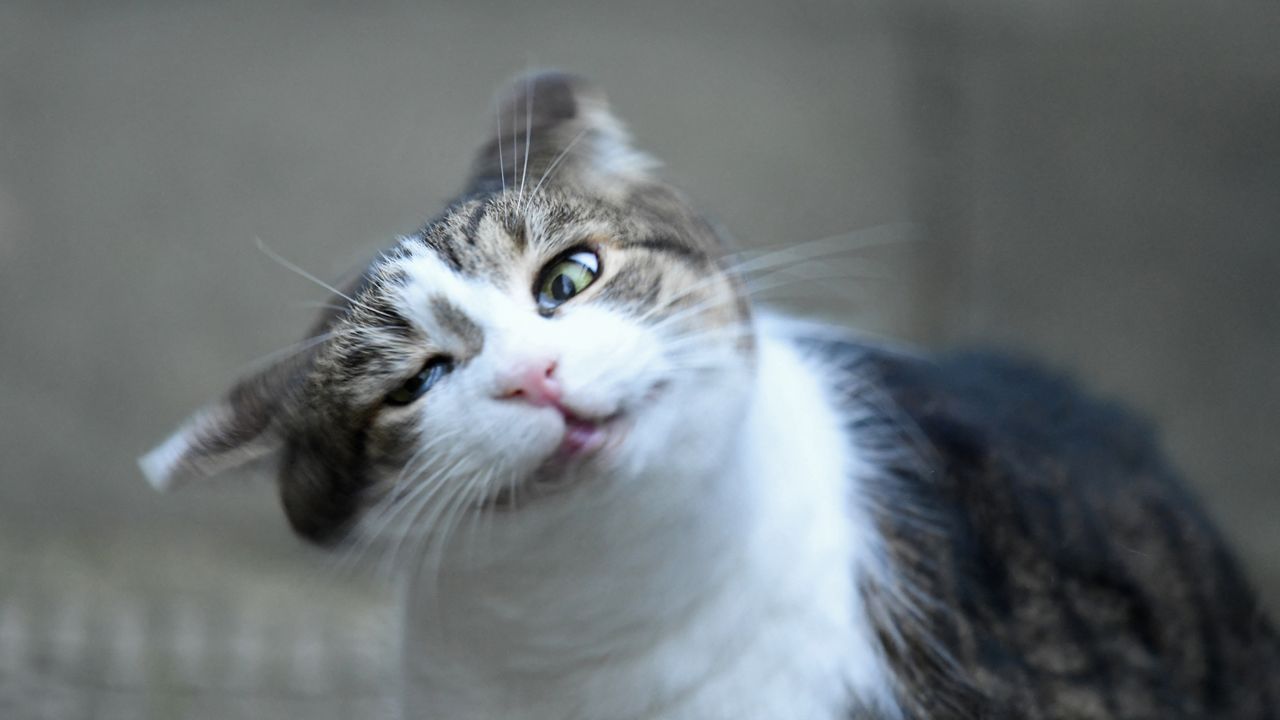
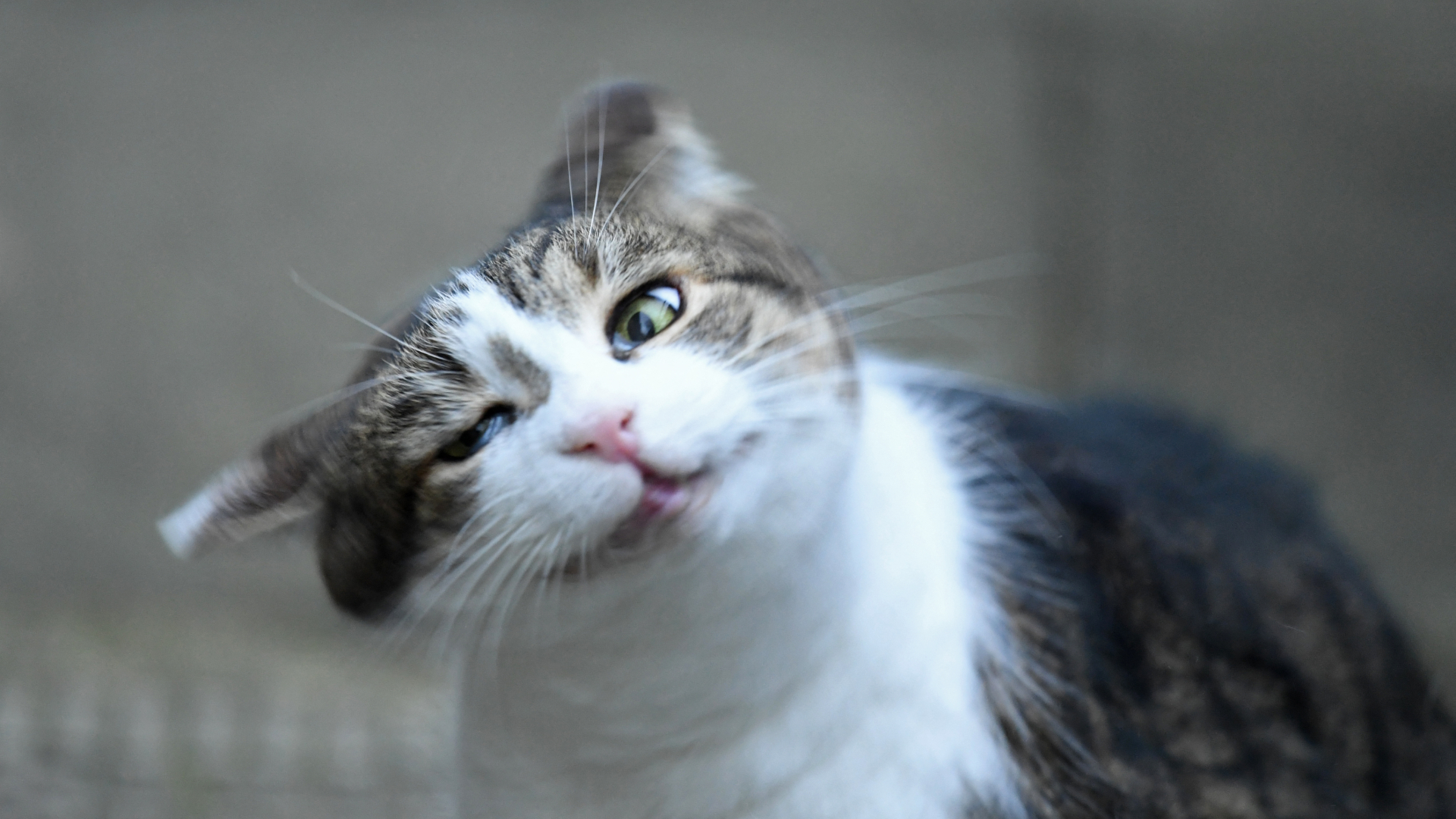
 Larry the no 10 cat shakes his head as he patrols Downing Street in central London on Nov. 30, 2021. (Image credit: DANIEL LEAL via Getty Images) Share this article 0 Join the conversation Follow us Add us as a preferred source on Google Newsletter Sign up for the Live Science daily newsletter now
 Get the world’s most fascinating discoveries delivered straight to your inbox.
Become a Member in Seconds
Unlock instant access to exclusive member features.
Contact me with news and offers from other Future brands Receive email from us on behalf of our trusted partners or sponsors By submitting your information you agree to the Terms & Conditions and Privacy Policy and are aged 16 or over.You are now subscribed
Your newsletter sign-up was successful
Want to add more newsletters?
Join the club
Get full access to premium articles, exclusive features and a growing list of member rewards.
Explore An account already exists for this email address, please log in. Subscribe to our newsletterMost cat owners are familiar with the funny head shake their pets do, often after eating, drinking or enjoying a nice cheek scratch — they flick their head back and forth a mile a minute. Dogs and other mammals are known to show similar behaviors.
So why do our furry friends shake like this, and does it mean something is wrong?
Why cats shake their heads
Sign up for our newsletter! 
Sign up for our weekly Life's Little Mysteries newsletter to get the latest mysteries before they appear online.
Cats shake their heads when the nerve endings on their heads are stimulated, Sarah Crowley, an anthrozoologist at the University of Exeter in England, told Live Science.
"The physiological driver for it is stimulation of the very sensitive hairs and nerve endings around the top of the head, particularly around the ears," she said.
These nerve endings can be stimulated by a satisfying scratch, prompting the kitty to shake it off. "If a caregiver has touched a sensitive area" — for example, around the ears or whiskers — "this may result in a head shake," said Amy Miele, a clinical animal behavior lecturer at The Royal (Dick) School of Veterinary Studies at the University of Edinburgh in Scotland.
This rapid swinging motion is very effective at dislodging obstructions, such as food or drink, from the cat's ears or whiskers. It can also help to resettle their fur, Crowley added.
"Often the head shake is followed by grooming of the face [or] ears," Miele told Live Science in an email.
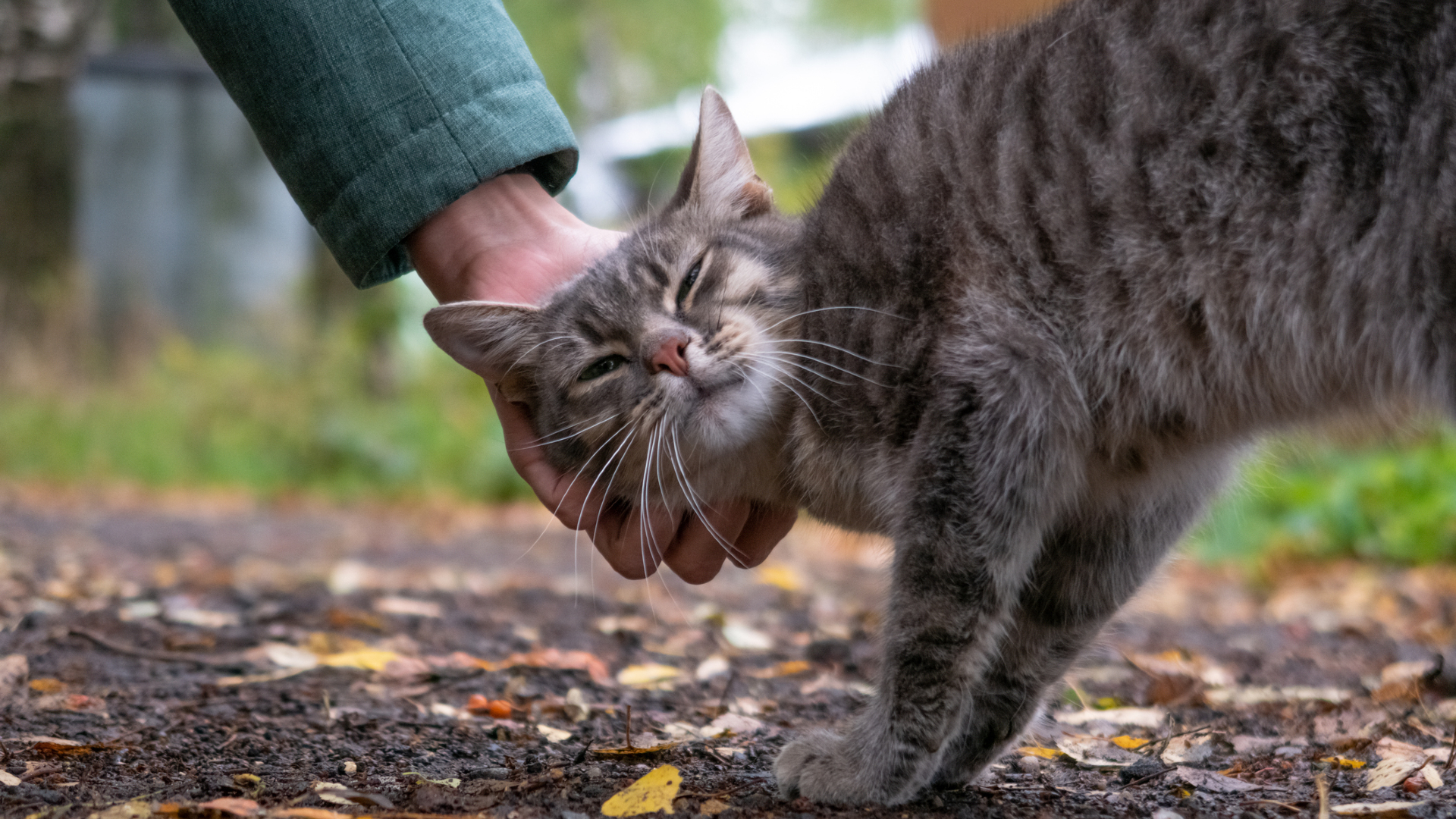
The rapid head toss can also indicate annoyance. It's often a response to having their ear blown on — not something you should do on purpose, as they don't like it.
Thankfully, this erratic side-to-side motion doesn't usually cause dizziness. "Animals (including humans) are more likely to make themselves dizzy by spinning in circles," Miele said.
The full-body shake
Cats aren't the only animal with these silly shakes. "Lots of mammals have this head shake reflex to something in or around their ears," Crowley said. "You see mice and rats do it when they've been eating and drinking."
In dogs, breeds with upright ears, like German shepherds, are more likely to shake their heads than floppy-eared pups such as King Charles spaniels because it's easier to get something (like a grass seed or insect) stuck in an open ear.
Dog owners might recognize other types of shakes: the predatory shake (when your pooch tries to playfully "kill" its toys by whipping its head from side to side while its "prey" is in its mouth) and the full-body shake, sometimes called the "wet dog shake." "It starts at the head and then rolls down the whole body and ends at the tail," Crowley said. This is the kind of post-bath shake that soaks everything in your bathroom before you've had a chance to dry Fido with a fluffy towel.
A male lion shakes its head, sending water spraying in all directions from its wet mane. (Image credit: Paul & Paveena Mckenzie via Getty Images)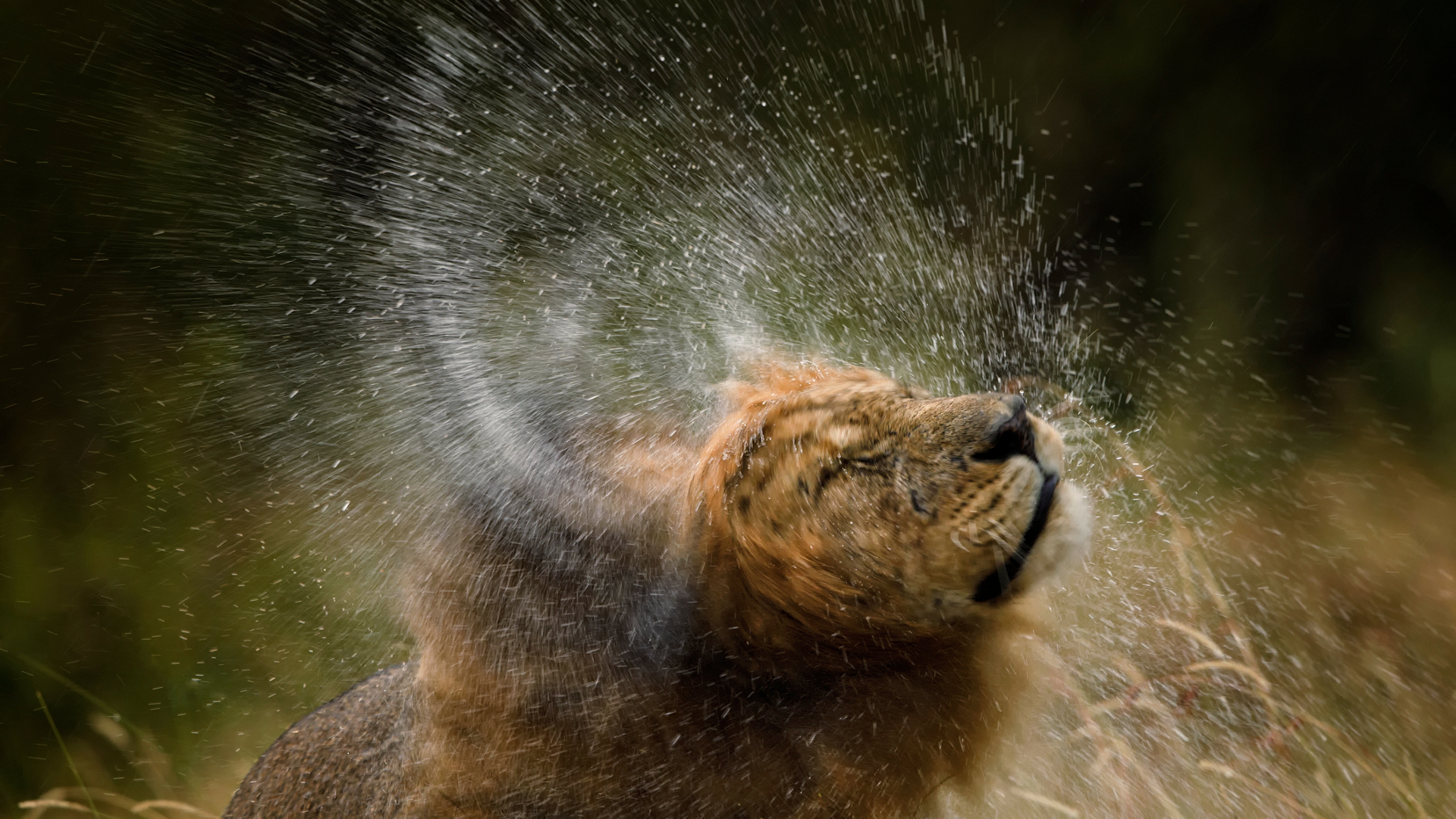
The full-body shake can also indicate a transition between places or behavioral states — for example, if the pup just experienced something stressful or exciting. "This 'shake off' is a way of helping the animal to relieve tension and reset emotionally and physically," Miele said.
"It could be after quite an intense play session with another dog that was really fun," Crowley added. "You often see both dogs will finish playing, and then they'll both shake, and then they'll go do something else."
When to be concerned about your pet shaking its head
Although head shaking can be normal, if your pet starts doing it more often, in unusual circumstances, or while scratching or tilting their head, it might indicate a medical issue, such as an infection, parasite, irritation, neurological problem or something lodged in their ear.
Related mysteries- Did any cat breeds develop naturally?
- Why do some cat siblings look so different?
- Do alpha males actually exist in nature?
"It's painful and uncomfortable, and that's the only thing that they can do, apart from stick their foot in it," Crowley said.
If you're concerned about your pet's head shaking, consult your vet. "If ear infections are left untreated, then this can result in hearing loss and risks the infection spreading beyond the tympanic membrane (ear drum) and into the middle ear, causing problems with balance and resulting in the animal becoming very unwell," Miele said.
For the most part, though, head shaking is just an adorably normal behavior that helps your pet stay clean and comfortable.
DisclaimerThis article is for informational purposes only and is not meant to offer medical advice.
How much do you know about cats? Test your knowledge with our cat quiz!
TOPICS Melissa HobsonLive Science Contributor
Melissa Hobson is a freelance writer who specializes in marine science, conservation and sustainability, and particularly loves writing about the bizarre behaviors of marine creatures. Melissa has worked for several marine conservation organizations where she soaked up their knowledge and passion for protecting the ocean. A certified Rescue Diver, she gets her scuba fix wherever possible but is too much of a wimp to dive in the UK these days so tends to stick to tropical waters. Her writing has also appeared in National Geographic, the Guardian, the Sunday Times, New Scientist, VICE and more.
View MoreYou must confirm your public display name before commenting
Please logout and then login again, you will then be prompted to enter your display name.
Logout LATEST ARTICLES 1The Trump administration wants to open precious East Coast forests to logging and mining
- 2'Eventually, it becomes you': Inventors of new 'living' knee replacement describe why this tech is desperately needed and how it works
- 3'The push towards renewables is unstoppable because it's in a country's self-interest': Climate scientist Andy Reisinger on Trump, Iran, and the future of Earth
- 4The AMOC moves closer to collapse, scientists create artificial neurons, the "Iliad" is found inside and Egyptian mummy, and researchers search for treatments for brain-eating amoebas
- 5Why are some constellations visible for only part of the year?