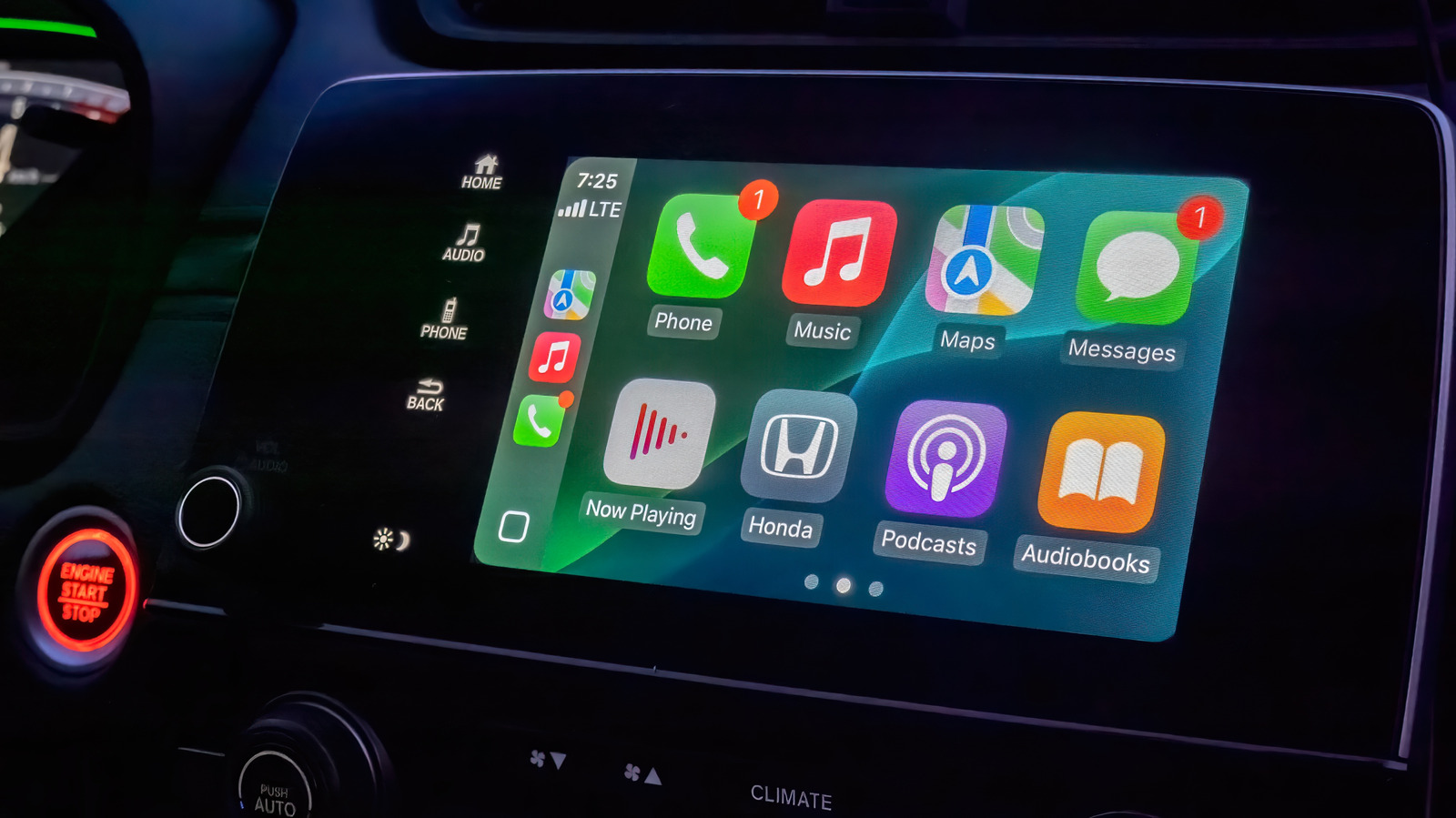
On Tuesday, Amazon announced it would be acquiring Globalstar, a company that manufactures and operates low-Earth-orbit satellites with the spectrums needed to communicate with devices on the ground. Amazon also says it is partnering with Apple, which has relied on Globalstar to provide off-grid emergency communication features on devices like its iPhone and Apple Watch.
The $11.57 billion deal is Amazon’s latest effort to take on Elon Musk’s Starlink. It comes at a time when satellite internet is becoming critical to the spread of AI tech, but it also adds to concerns about what happens when our orbit fills up with junk.
Here’s what to know about the Amazon deal.
Why Did Amazon Buy Globalstar?
Amazon started aiming to fill the sky with satellites in earnest in 2023, when it launched its first satellite for Project Kuiper. Amazon is now developing those efforts under the name Project Leo (LEO is an industry acronym for low-Earth-orbit satellites). The goal is to eventually build out a fleet of thousands of satellites that can keep people connected just about anywhere they go, filling the gap between terrestrial cell networks.
As Amazon put it in its press release, “The complete Amazon Leo network will include thousands of advanced satellites in low Earth orbit and have enough capacity to support hundreds of millions of customer endpoints around the world.”
Globalstar is a small company in the satellite space, with around 24 satellites currently in orbit. What opportunity it offers Amazon is a more robust network of GPS asset-tracking tech—ideal for tracking packages or delivery vehicles. Amazon will also control Globalstar's licensed access to wireless spectrums that enable signals to be sent from a satellite “direct-to-device.” This will likely give Amazon the ability to launch satellites that connect directly to devices sooner, rather than having to go through its own country-by-country approval process.
“It's tapping into this package of already preapproved global spectrum rights, and that is then feeding into a giant for cell phones,” says Aparna Venkatesan, an astronomy professor at the University of San Francisco. “It's going to get connected to this huge iPhone market. So I think that's a very compelling business package for Amazon and Apple.”
Apple isn't the only company offering emergency SOS features via satellite. Google and Samsung both offer the capability on their respective smartphones, and these features are only expected to grow in the coming years.
What Does Direct-to-Device Mean?
Most smartphone connections work by bouncing signals between cell towers. There are loads of cell towers around the world, but they’re limited in rural areas, out in the ocean, or in countries with less infrastructure to detect signals.
The goal of satellite internet is to connect directly from the satellite to the device on the ground. To do that, you need a line of sight to a satellite. Which means you need more of them in orbit to see everything.
That’s why companies like Amazon and SpaceX’s Starlink want thousands of satellites in low Earth orbit. The more that are up there, the more ground (or water) they can cover.
Does This Affect My iPhone or Apple Watch?
Apple devices that use Globalstar features, like the iPhone 14 or later and the Apple Watch Ultra 3, shouldn’t see any immediate changes. In its press release, Amazon said the company and Apple “signed an agreement to provide satellite connectivity for current and future iPhone and Apple Watch features.”
It will be interesting to see how Apple, which has used privacy as a strong selling point, will square using a location-aware service run by Amazon, a company with a poor track record of keeping users’ data secure across its products and services.
Does This Have Anything to Do With Starlink?
Starlink, a division of Elon Musk’s SpaceX, is still the undisputed leader of the satellite internet space. It currently has nearly 10,000 satellites in orbit. In January, Musk applied to the FCC to launch 1 million more satellites to build data centers in space.
SpaceX also seems to be filing for an IPO very soon, with a reported (and ridiculous) goal of hitting a $1.75 trillion valuation. Starlink is valued at $1 trillion of that. (Another $250 billion of estimated value goes to xAI’s horny and racist chatbot Grok.)
When Will These Satellites Get Up There?
Amazon’s Project Leo already has 241 satellites in orbit. More are scheduled to launch later this month and through 2027. As for the Globalstar acquisition, Amazon says the transaction still isn’t closed, though it expects it to go through in 2027, barring any regulatory interference.
“We're in the very early stages of the process,” Paul Flaningan, a representative in Amazon’s business and corporate development communications, wrote in an email response to WIRED’s request for comment. “Nothing is changing today; both companies will continue independent operations in the meantime.”
In 2020, when the US Federal Communications Commission first approved Amazon’s request to put satellites into orbit, it also had the condition that Amazon would launch “50 percent of its satellites no later than July 30, 2026.” That date is coming right up, though Amazon filed for an extension with the FCC in January.
Will There Be Any Problems With Those Satellites in Orbit?
Oh, like what if a satellite breaks into pieces and they hit other satellites, leading to a cascade of destruction that breaks everything in orbit and leaves the globe perpetually surrounded by flying space trash that cannot be bypassed, with no proven way to remove it? Yes, maybe. It's called the Kessler syndrome, and astronomers have been worried about it happening for decades. It's always been a theory. But now the world is in an era where companies are trying to pump thousands—even a million—satellites into orbit
“That is literally the thing that keeps me awake at night,” says John Barentine, an astronomer and founder of Dark Sky Consulting in Tucson, Arizona. “The sense that we are teetering on the edge of catastrophe, and most people don't understand that.”
As secretary of the American Astronomical Society, Barentine consults with governments and companies to advocate for keeping the night sky dark enough for astrological research. He says that, unlike Starlink, Amazon has worked to ask the right questions about how it can turn its satellites so they do not reflect light and radio frequencies to Earth.
Still, the problem is the potential volume of all that stuff in the sky. People have advocated for international laws governing space expansion, but that hasn’t really gotten anywhere.
“We're now in this era where it's just a complete free-for-all,” Venkatesan says. “There's such a mad rush to space and a rush to kind of claim everything.”
Both Venkatesan and Barentine say that chaos could ultimately be bad for the space industry.
“It's getting so crowded up there,” Venkatesan says. “I think it behooves everyone to know exactly where everyone is and to have this regulated and tracked and have a ceiling set.”
Barentine says that while he’s worried that astronomers’ and researchers' work may be threatened, he’s hopeful that there will be solutions to navigate the path forward into space.
“There doesn't have to be a conflict between the commercial development of space and astronomy,” Barentine says. “Astronomers are not trying to shut this down; we're not trying to prevent progress. We just need to keep talking to each other.”