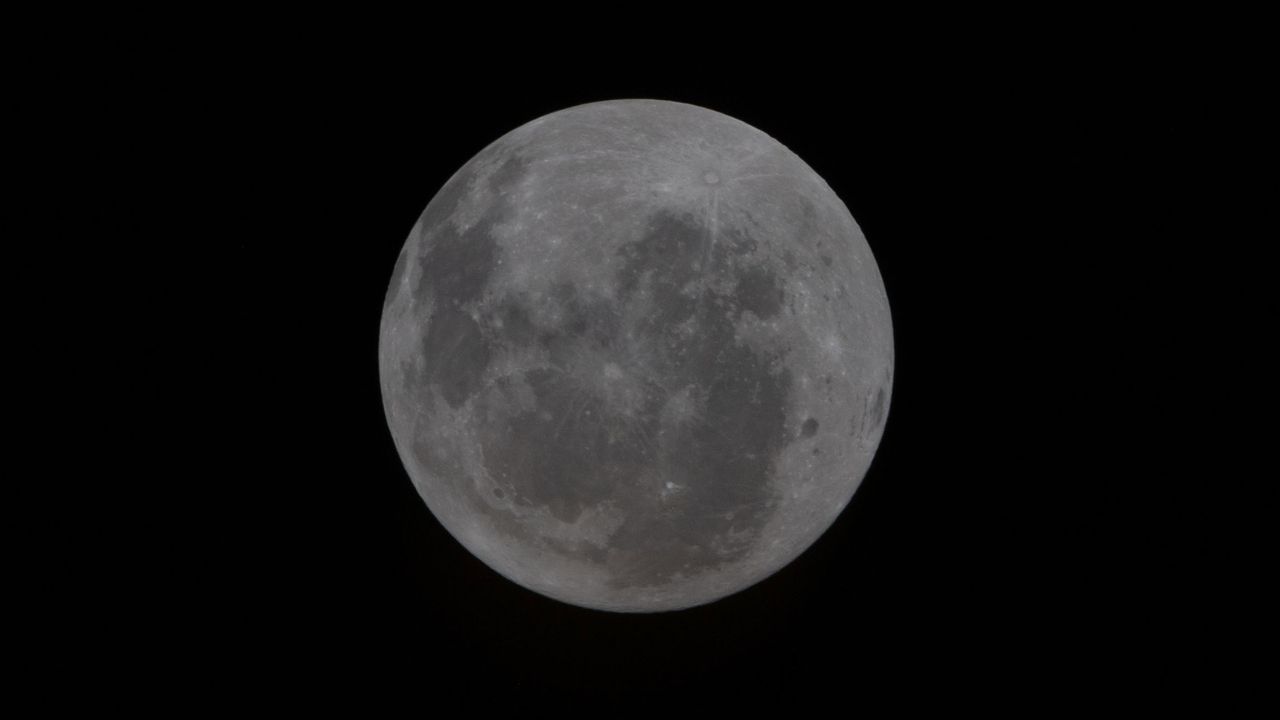
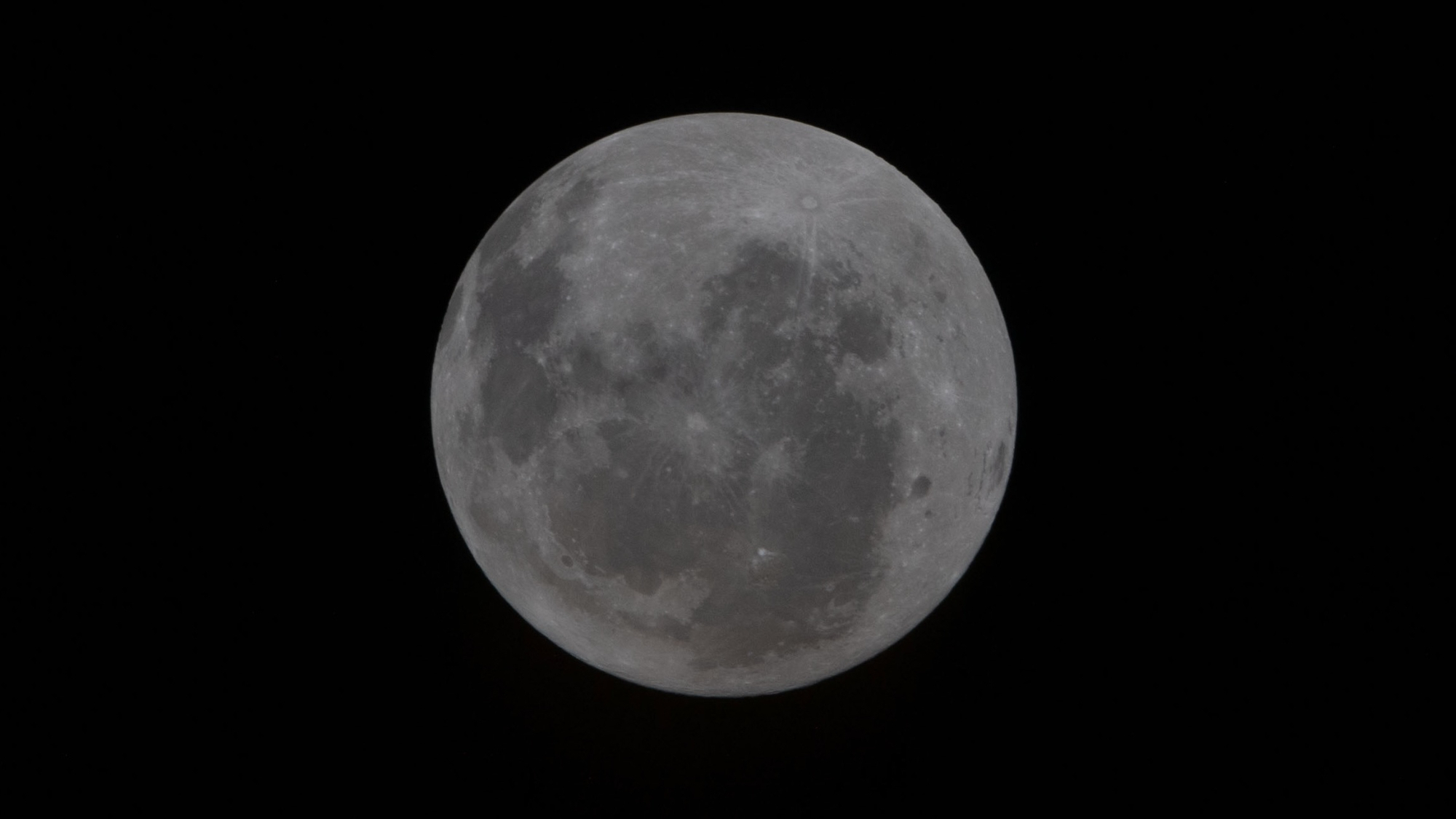
 The Artemis 2 crew took this photo on April 4, 2026, Day 4 of their journey to the moon. The moon is oriented with the south pole at the top. Orientale Basin is on the right edge of the lunar disk in this image. Artemis 2 marks the first time that humans have seen the entire basin. The astronauts will continue to observe Orientale from multiple angles as they approach the moon and throughout the lunar flyby. Orientale is the textbook multi-ring impact basin used as a baseline to compare other impact craters on rocky worlds from Mercury to Pluto. (Image credit: NASA) Share this article 0 Join the conversation Follow us Add us as a preferred source on Google Newsletter Get the Space.com Newsletter
 Breaking space news, the latest updates on rocket launches, skywatching events and more!
Contact me with news and offers from other Future brands Receive email from us on behalf of our trusted partners or sponsors By submitting your information you agree to the Terms & Conditions and Privacy Policy and are aged 16 or over.You are now subscribed
Your newsletter sign-up was successful
Want to add more newsletters?
An account already exists for this email address, please log in. Subscribe to our newsletterHOUSTON — NASA's Artemis 2 astronauts have officially struck "moon joy."
The four astronauts flying around the moon on NASA's Artemis 2 mission had a chance to observe their lunar target late Saturday (April 4), just two days before their historic flyby of Earth's nearest neighbor. And to say the crew was thrilled may be an understatement of cosmic proportions.
Artemis 2 commander Reid Wiseman, a veteran International Space Station astronaut and Navy test pilot, seemed jubilant as well. Koch, Wiseman and their crewmates Victor Glover and Jeremy Hansen are the first astronauts to see the moon from so close in over 53 years.
"I'm not one for hyperbole, but it's the only thing I can come up with," Wiseman said, rattling off moon craters he could see through a 400mm camera lens like Tycho, Copernicus, Rainer and more. "It's just everything from the training, but in three dimensions and absolutely unbelievable. This is incredible."
"Copy, moon joy," Mission Control radioed back.
There was more than just appreciation of the moon coming from the astronauts. The crew radioed back observations of lunar craters, its vast basalt plains known as mare (Latin for "seas"), brightness variations and other details. They turned out the lights in the cabin of their Orion moon ship in order to get a better view.
Get the Space.com NewsletterContact me with news and offers from other Future brandsReceive email from us on behalf of our trusted partners or sponsorsOne key target that scientists are particularly interested in— Orientale Basin, a vast crater on the far side of the moon — was just coming into view.
"We can see over Orientale just with the naked eye. The moon is so bright," Wiseman said. "We can definitely see all of the basin of Orientale. Aristarchus, Copernicus easily all in view. This is so awesome."
Koch shared observations of the terminator line, the stark border between light and darkness that marks the change from lunar day and night.
"We do apparently have a full moon; we can't detect any terminator at all. It looks like full limb all the way around," Koch said. But she did spot the terminator later. "I do think we have a terminator ... you can see the topography all along the terminator, and it is awesome."
The observations from the crew were music to the ears of NASA's Artemis 2 science team. Researchers have been working with the Artemis 2 astronauts for months, training them on what targets to seek out and how to report what they see.
Jennifer Hellmann, an Artemis 2 science team lead from NASA Ames Research Center, said the mood was ecstatic.
"You could hear the excitement in their voices. They were just beside themselves looking at the moon," Hellmann told Space.com in an interview in the Science Evaluation Room here at NASA's Johnson Space Center.
"We were thrilled by the quality of their observations already," Hellmann added. "You know, they they are trained. They know the moon, they know the geography, they know the science. You can see it all coming together."
NASA's Artemis 2 mission launched to the moon on April 1 and will fly by the moon on Monday (April 6). The lunar flyby will last seven hours and start at about 1:30 p.m. EDT (1730 GMT). Our live coverage of the flyby will begin at 1 p.m. EDT (1700 GMT). You can get live updates on the flight from our Artemis 2 mission updates page.

The only Lego Technic NASA Artemis Space Launch System Rocket, once built it can 'launch' thanks to the clever Technic engineering mechanisms inside. It stands 27.5-inches (70 cm) tall but is made from only 632 pieces, making this suitable for ages 9+, compared with the adult-oriented (and $260) static Lego Icons NASA Artemis Space Launch System (10341) model.
 Tariq MalikEditor-in-Chief
Tariq is the award-winning Editor-in-Chief of Space.com and joined the team in 2001. He covers human spaceflight, as well as skywatching and entertainment. He became Space.com's Editor-in-Chief in 2019. Before joining Space.com, Tariq was a staff reporter for The Los Angeles Times covering education and city beats in La Habra, Fullerton and Huntington Beach. He's a recipient of the 2022 Harry Kolcum Award for excellence in space reporting and the 2025 Space Pioneer Award from the National Space Society. He is an Eagle Scout and Space Camp alum with journalism degrees from the USC and NYU. You can find Tariq at Space.com and as the co-host to the This Week In Space podcast on the TWiT network. To see his latest project, you can follow Tariq on Twitter @tariqjmalik.
View MoreYou must confirm your public display name before commenting
Please logout and then login again, you will then be prompted to enter your display name.
Logout MORE FROM SPACE...- 1When the moon hits your eye from your Orion ship up high, that's a 'mare'
- 2Artemis 2 astronauts are about to see one of the rarest skywatching sights of all — a solar eclipse from beyond the moon
- 3The breakout star of NASA's Artemis 2 moon mission isn't an astronaut — it's the space toilet
- 4The powerful new Rubin Observatory just found 11,000 new asteroids and measured 'tens of thousands more'
- 5Artemis 2 moon astronauts will try to recreate Apollo 8's historic 'Earthrise' photo during April 6 flyby