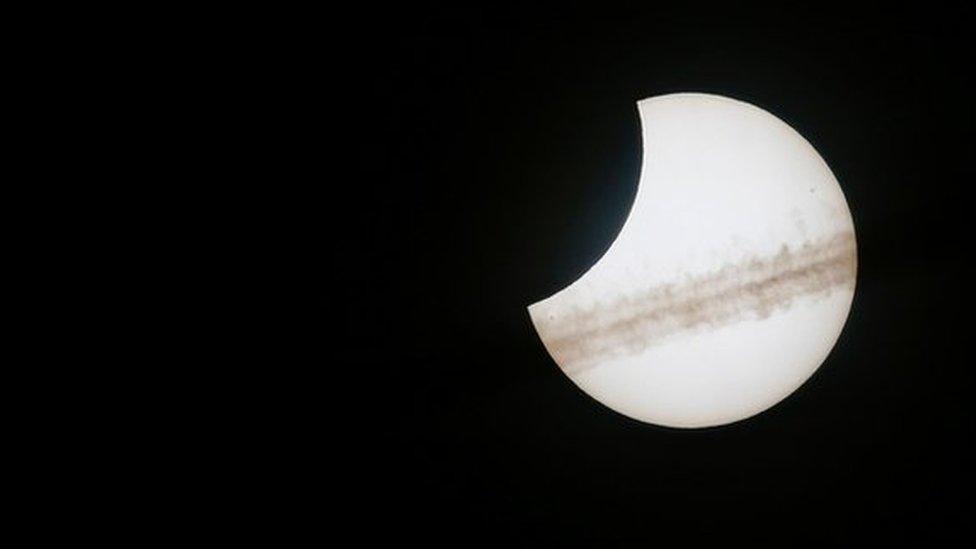
 Image source, Getty ImagesImage caption,
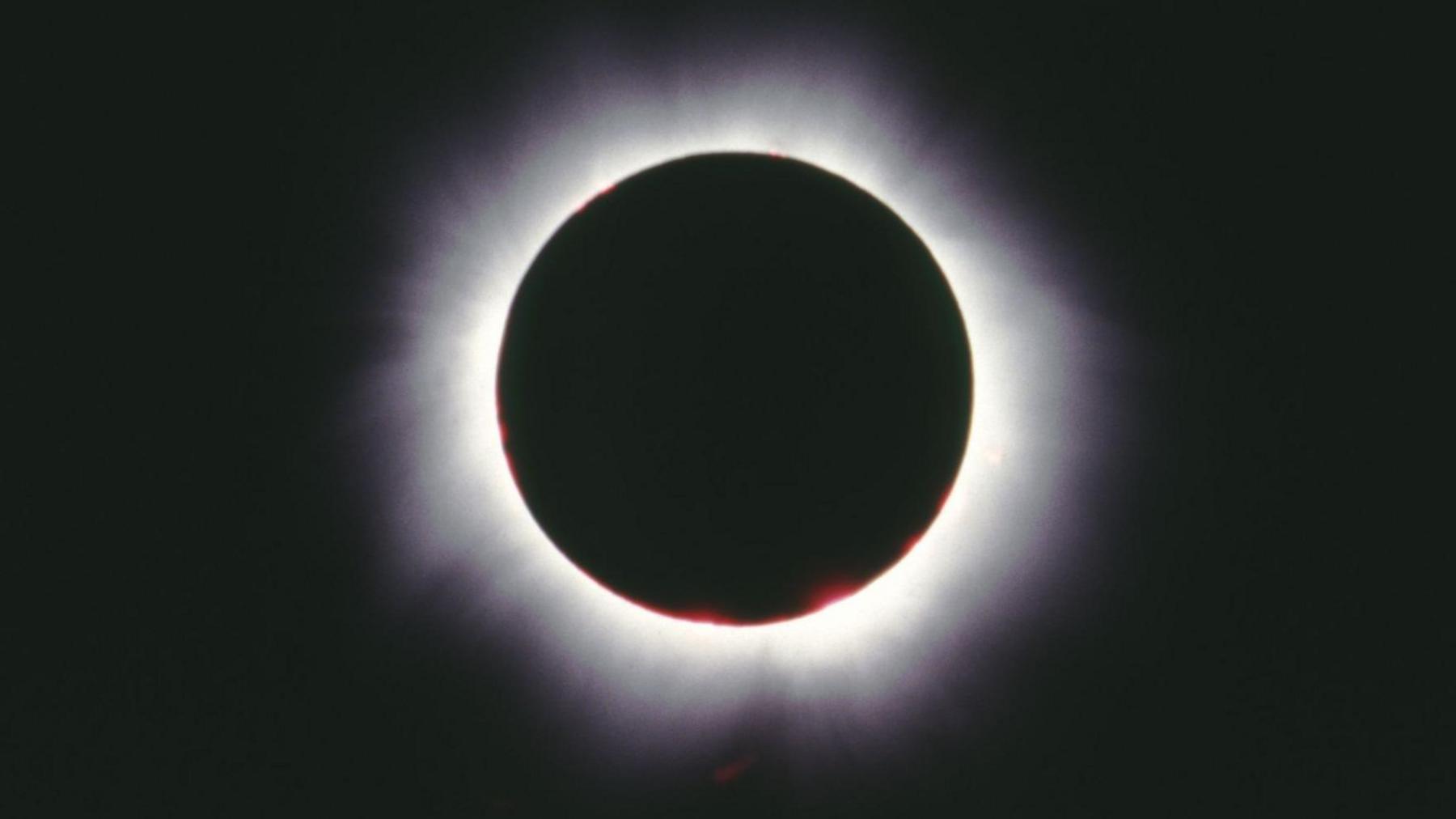
 The last total solar eclipse over the UK happened in 1999
ByFiona CallowYorkshire- Published28 minutes ago
People across Yorkshire and the UK have a chance to witness the most dramatic solar eclipse in nearly three decades on 12 August.
Up to 95% of the sun will slowly disappear behind the moon between 18:00 and 20:15 BST - the first time such coverage has been seen since 1999's total eclipse.
While there will be smaller solar eclipses in the coming years, including one next August, the next total eclipse will not take place until 23 September 2090.
Weather permitting, astronomers say the natural spectacle promises to be a "very, very special" event - so, here's what you need to know about how and where to safely watch it unfold.
What will the eclipse look like in Yorkshire?
According to Neil Sanders, astronomer at Go Stargazing and co-founder of UK Eclipse, the event on Wednesday is an unmissable occasion.
"These aren't rare events, but they are uncommon," he said.
"They happen almost yearly. But what's very, very special about this one is the amount of coverage."
The path of the eclipse shadow means this year the UK won't see a total eclipse, but in Yorkshire and the North-East the sun will be about 92% obscured, he explained.
"What's really cool about it is that, certainly when you're using eclipse glasses, you can actually see the movement that's happening in our solar system.
"You are looking at the movement of the moon as it goes around the earth. It's one of these very rare events when you can see the solar system in action."
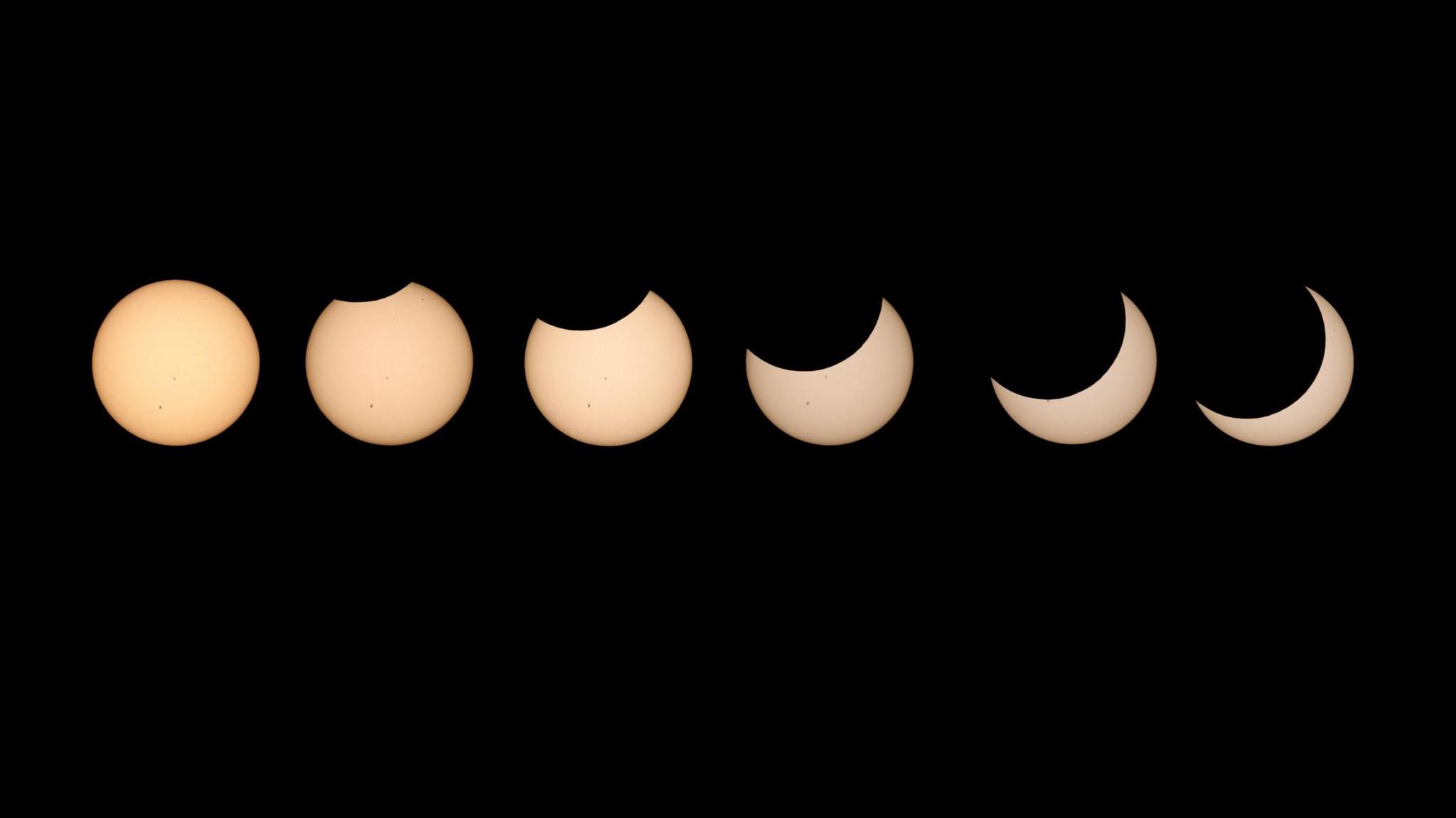 Image source, Getty ImagesImage caption,
 The progression of a solar eclipse
Other countries, such as parts of Spain and Portugal, will enjoy the spectacle of a total eclipse this year.
Chris Higgins, a retired scientist and volunteer at Lime Tree Observatory and Planetarium in Grewelthorpe, North Yorkshire, added it is still "certainly worth" seeing it from the UK.
"It's quite significant. It's not the greatest prize, a total eclipse, but it is a partial eclipse of almost nine-tenths of the sun's disk," he said.
"It's a natural phenomenon that will have been witnessed by humanity forever, so it's something that will inspire people."
How to view the eclipse safely
It is very important to enjoy the eclipse safely to avoid damaging your eyes.
You must never look at the sun directly with the naked eye, Sanders explained, and follow proper guidance for safely viewing the eclipse.
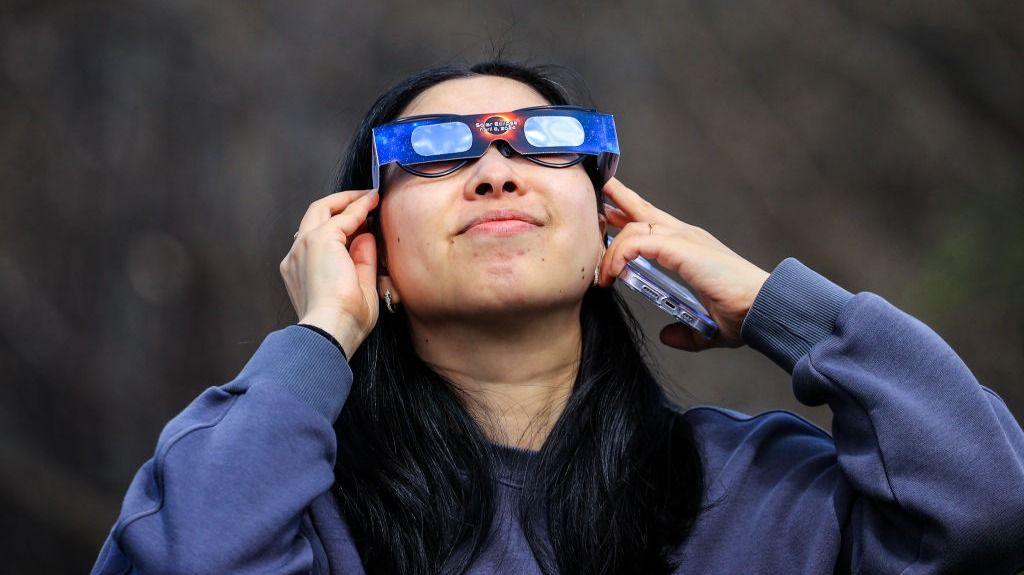
Eclipse glasses offer protection - legitimate pairs will have safety certification 'ISO 12312-2' or 'ISO 12312-2:2015' printed somewhere on the glasses, according to The Royal Observatory Greenwich.
Regular sunglasses do not provide adequate protection as "they don't block out the harmful rays of sunlight" - with this eclipse, 8% of the sun's surface will still be visible, Sanders said.
Alternative methods for safely viewing the eclipse include, using a solar telescope, which are being offered to look through as part of local astronomical society viewing events, or making a pinhole projector, which projects an indirect image of the sun onto a surface through a tiny hole.
Household objects with small holes, such as a colander, can be used to make the projector, Higgins added.
The Royal Observatory in Greenwich are also live streaming the event so people can watch from the comfort of their own home.
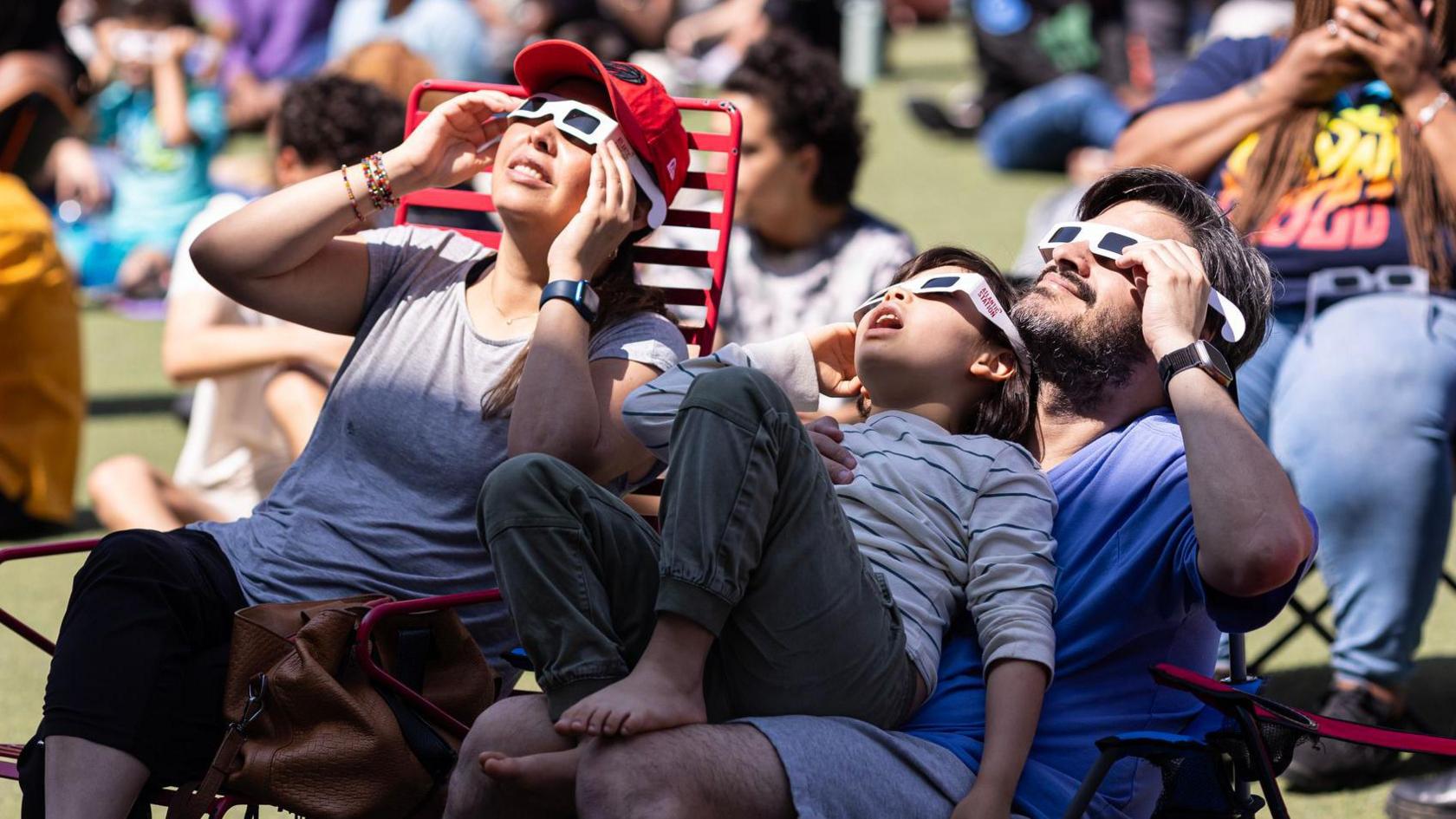 Image source, Getty ImagesImage caption,
 A family watches the solar eclipse with special glasses in 2024 in Atlanta, USA
Where can I view the eclipse?
The best way to view the eclipse is at an elevated location with a clear view to the west, because the sun and moon will be dipping to the horizon ahead of sunset.
The sun will be very low in the western sky, which could be a bit of an issue for Yorkshire, Higgins said.
"If we were a west coast county, we could all go to the beach and then we'd have a nice low horizon and we could watch it," he said.
"So you need to find a vantage point where your horizon looking west is clear of any obstructions such as trees."
According to BBC climate correspondent Paul Hudson, the moon should begin blocking the sun between approximately 18:12 and 18:19 BST.
The peak of the eclipse will occur about an hour later, with the whole event ending just after 20:00, before the sun finally sets.
Don't panic if it seems as though nothing is happening straight away, Higgins added, and even cloudy weather doesn't spell disaster.
"It's not suddenly going to whiz past and you'll miss it. It's worth waiting around just in case the clouds move on."
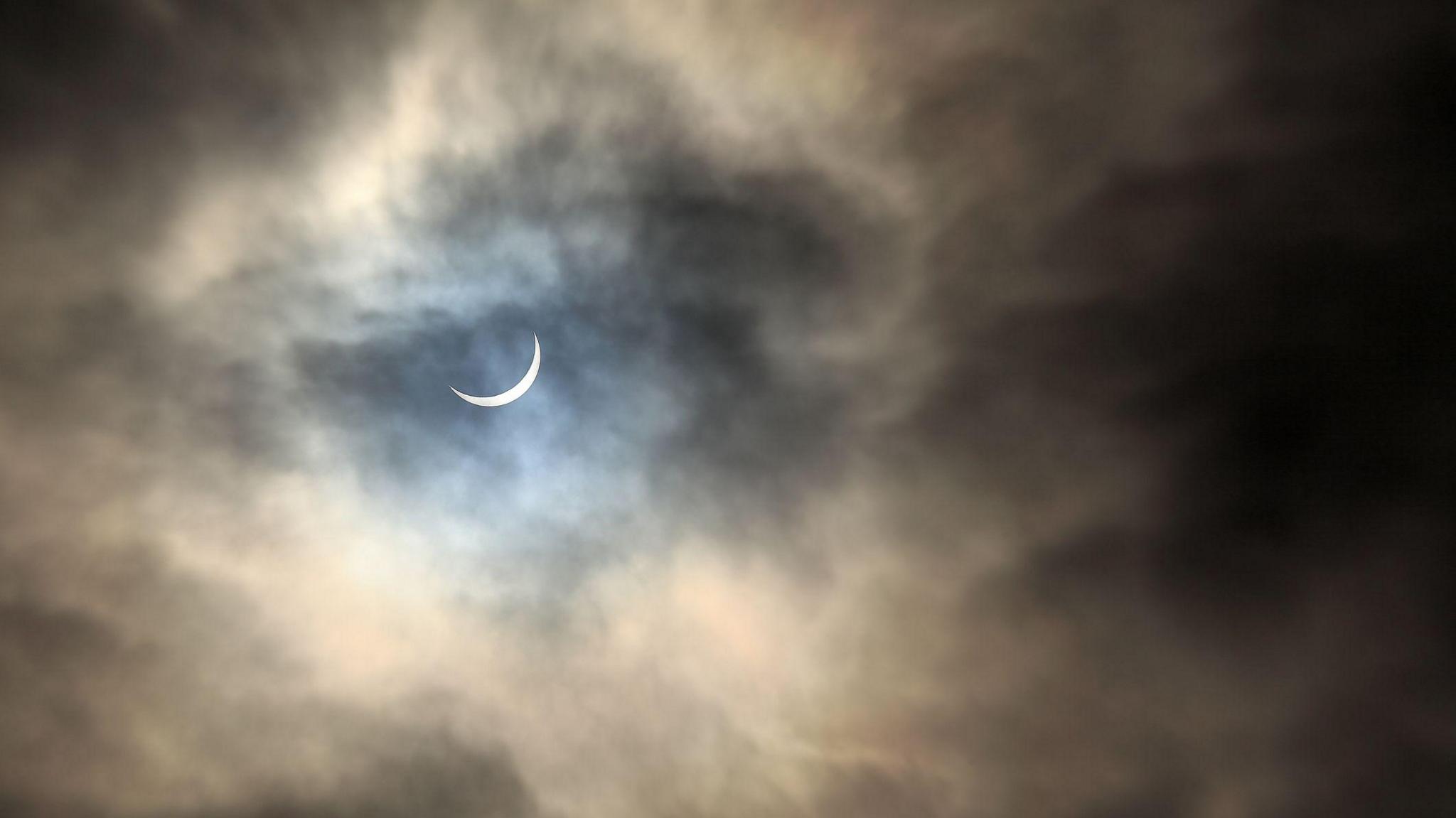 Image source, Getty ImagesImage caption,
 A partial solar eclipse pictured over Bradford in 2015
There are a number of community events happening across Yorkshire to mark the occasion:
The University of York, Ron Cooke Hub, York. The event starts at 18:15 and features a talk by astrophysicist Dr Emily Brunsden.
Olivers' Mount, Scarborough. Scarborough & Ryedale Astronomical Society will be setting up solar telescopes from 18:00 onwards.
Otley Science Festival, Otley. As part of a range of activities, free eclipse glasses will be available with volunteers teaching families to watch safely.
Banstead Park, Harehills, Leeds. To get the best view, participants are encouraged to gather at the top end of Banstead Park.
Tingley Methodist Church, Wakefield. Free eclipse glasses will be handed out as part of a "relaxed coffee evening" at the church.
Brough Observatory, Brough. Starting at 18:00, both solar telescopes and eclipse glasses will be available.
Rosse Observatory, Pontefract. The observatory will also offer a live stream shown on a large screen, if clouds threaten to obscure the view.
J.A Jones Observatory, Wentworth. Mexborough & Swinton Astronomical Society are hosting the family-friendly event.
Austerfield Field Study Centre, Doncaster. Astronomers from Doncaster Astronomical Society will be on hand to explain more about the eclipse.
What will the weather be like?
Yorkshire has experienced plenty of warm, clear nights for many weeks now - perfect for stargazing - or eclipse-spotting.
It looks like 12 August is shaping up to follow that trend, according to Hudson.
"At the moment, the forecast for Wednesday couldn't be better," he said.
"It will be a hot day with plenty of sunshine, although as the event begins there may be some high cloud towards the western horizon where the eclipse will take place."
However, this is unlikely to be thick enough to obscure the sun, he added.
To play this video you need to enable JavaScript in your browser.
This video can not be played
Figure caption,Two stunning celestial events in one day
Get in touch
Your Voice
Contact formContact formListen to highlights from North Yorkshire on BBC Sounds, catch up with the latest episode of Look North.
Related topics
Related internet links
The UK Solar Eclipse 2026: How to watch safely
What is a solar eclipse and why do they happen?
From eclipses to meteors: Night sky highlights coming in 2026
- Published14 January
Partial solar eclipse seen over Yorkshire
- Published25 October 2022
Further rural spots gain 'dark sky friendly' status
- Published9 November 2025