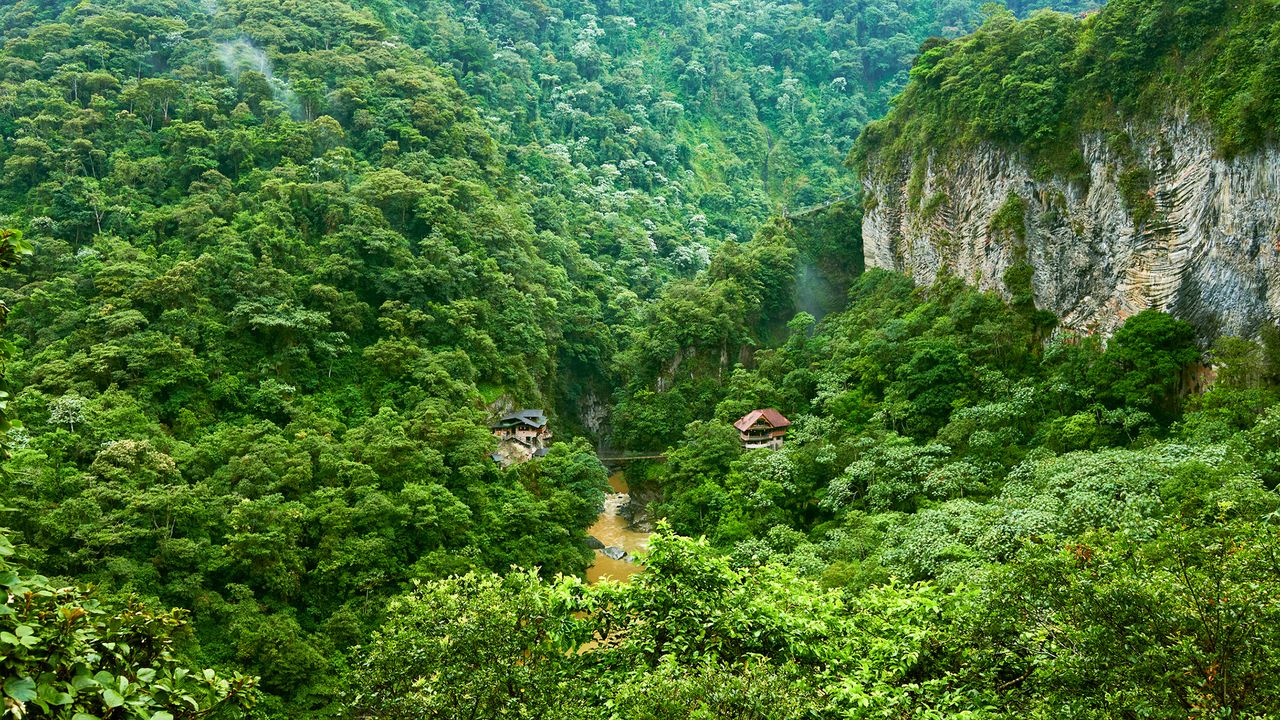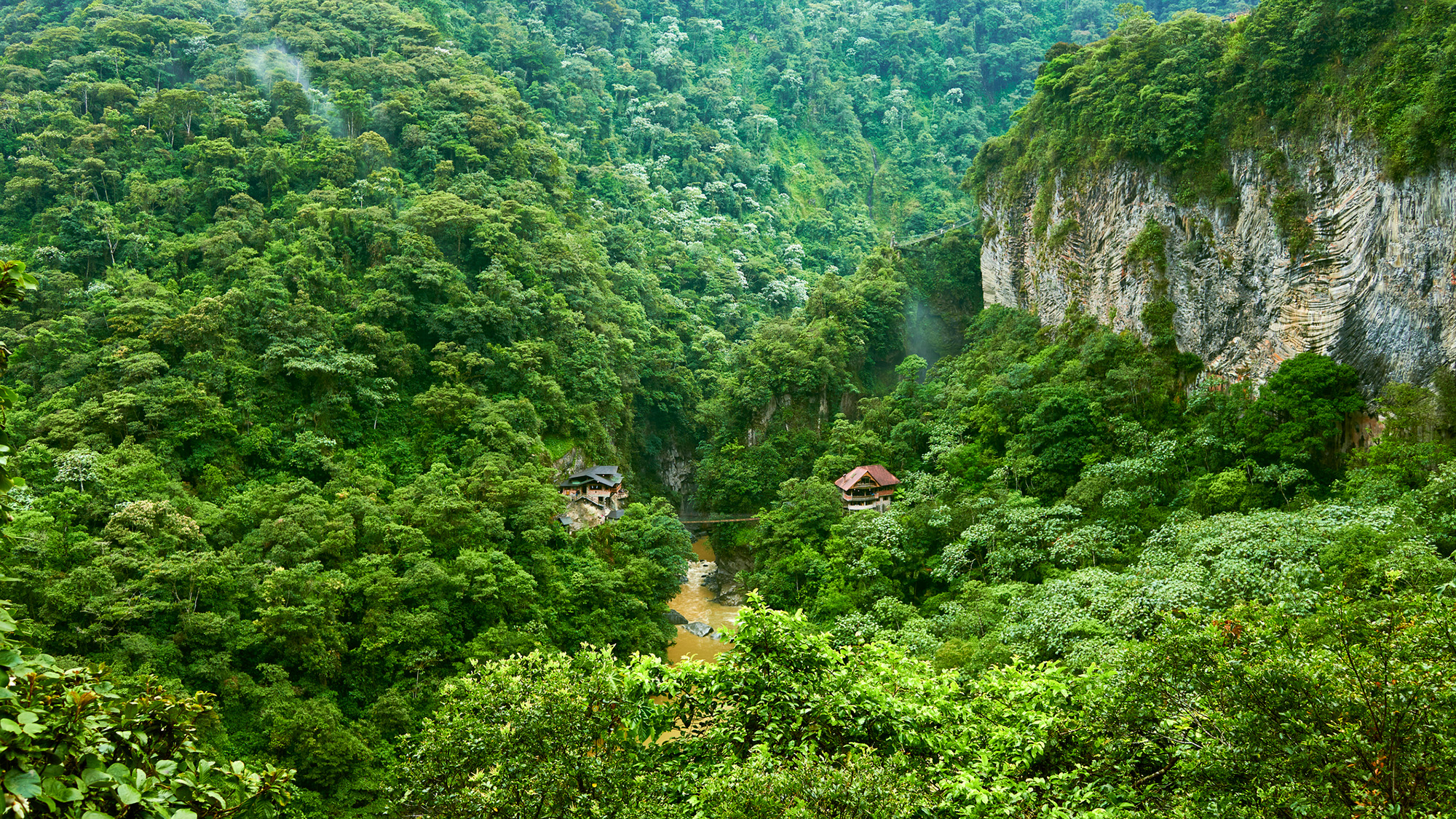
The Amazon rainforest is home to the greatest concentration of biodiversity on Earth, but 17% of it has already been cut down or destroyed. (Image credit: F.J. Jimenez via Getty Images)
Share this article Join the conversation
Follow us Add us as a preferred source on Google Newsletter Subscribe to our newsletter
The Amazon is the largest rainforest in the world, spanning more than 2 million square miles (5.2 million square kilometers) — an area 12 times the size of California. It influences global water cycles, stores years of global carbon emissions, supports 47 million people, and is home to the greatest concentration of biodiversity on Earth.
But the Amazon rainforest is also disappearing, with 17% of it already cut down or destroyed and largely replaced with agriculture. Other grave threats, such as oil drilling and illegal mining, continue to whittle it down. The next century may have outsize importance, as the forest could reach a "tipping point."
So what will the Amazon rainforest look like in 100 years?
Sign up for our newsletter

(Image credit: Marilyn Perkins / Future)
Sign up for our weekly Life's Little Mysteries newsletter to get the latest mysteries before they appear online.
The answer depends on a number of compounding threats, Bernardo Flores, a researcher with the EqualSea Lab at the University of Santiago de Compostela in Spain, told Live Science.
Encroaching farmland and organized crime are a couple of the problems chipping away at the Amazon. But those work in tandem with what he considers the three main threats: climate change, which can lead to extreme weather events, "like wetter wet seasons and drier dry seasons," deforestation and fire.
As the Amazon loses more of its forest, it triggers a feedback loop. "You have less rainfall; then you have less forest, [then] less rainfall, less forest," Flores explained. "That ultimately leads to "a global scale feedback involving the Amazon: More forest loss [leads to] more global warming. More global warming, more forest loss."
As forests get drier, it becomes easier for wildfires to burn more areas. Roads also degrade the forest, and "wherever you have roads, you have people doing illegal activities, illegal logging … then this leads to [more] forest fires," Flores said.
The "arc of deforestation" — a roughly 310,000-square-mile (500,000 square km) border along the Amazon considered the largest deforestation frontier in the world — offers a preview of what much of the Amazon could ultimately look like, according to Flores. The forests that remain there have higher tree mortality and more canopy gaps, and they are often "covered with lianas," or woody vines, that become an ecological problem, he said. Lianas compete with trees for light and nutrients in the soil, and significantly reduce not only a tree's chance of survival but also the overall diversity of trees in a forest. "When the whole forest is covered in lianas, you don't see the forest anymore," he added.
Invasive grasses introduced by cattle farmers will likely proliferate in the decades ahead, but "only a few parts" of the Amazon could become "a savanna, because a savanna is a native, biodiverse ecosystem," he said. Invasive grasses "exclude native species, reduce biodiversity" and would not allow native savanna grasses to replace the forest, Flores said. Instead, one possibility is a "degraded open-canopy ecosystem," where native, naturally fire-tolerant trees, combined with invasive grasses, vines and ferns, proliferate, Flores told Live Science.
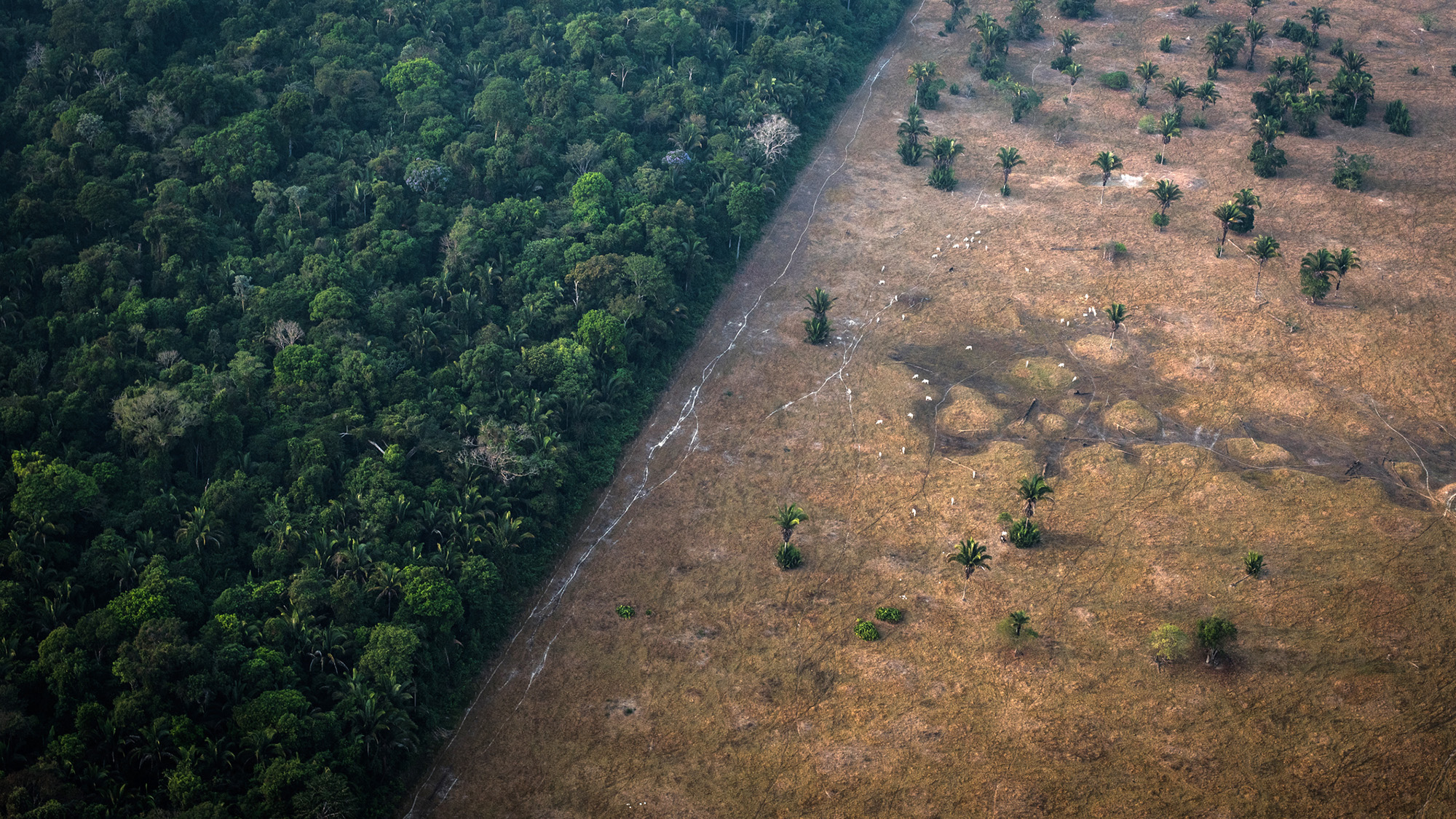
Deforestation poses a grave threat to the longevity of the Amazon rainforest.
(Image credit: Bloomberg Creative via Getty Images)
Wildlife would quickly be affected as well. Aquatic species are especially vulnerable, Flores said. "When you start having these droughts that will simply last for one, two, three years," wetlands will dry out and become flammable, he explained. That could lead to "very quick extinctions in those areas."
The destruction of the Amazon rainforest would be disastrous for the Indigenous people living there, Christian Poirier, program director of Amazon Watch, an environmental and Indigenous rights advocacy group, told Live Science. "Imagine having your backyard bulldozed and your water source poisoned," he said. "You probably need to move from where you live, and that's exactly what's happening in the Amazon."
Related mysteries
A devastated Amazon would also lead to "a more chaotic global climate system," Flores said. There could be less rainfall across parts of South America, and global warming will worsen. Earth could eventually reach a tipping point where ice sheets melt, ocean currents malfunction and the collapse of the Amazon accelerate warming all at once, pushing the planet to "cross the tipping point and transition to a much warmer climate," he said, leading to potentially irreversible consequences.
Unlike other major climate risks, such as the potential of the Greenland Ice Sheet melting and contributing to sea level rise, deforestation can in theory be reversed more easily by reforestation, said Arie Staal, an assistant professor of ecosystem resilience at Utrecht University in the Netherlands.
"That gives us a knob to turn that we don't have for other possible tipping points on Earth," he told Live Science. "It is clear that we really need to stop deforestation in the Amazon. And there's hope."
Rainforest quiz: Can you sort the largest rainforests on Earth?
TOPICS
 Jesse Steinmetz
Live Science Contributor
Jesse Steinmetz is a freelance reporter and public radio producer based in Massachusetts. His stories have covered everything from seaweed farmers to a minimalist smartphone company to the big business of online scammers and much more. His work has appeared in Inc. Magazine, Duolingo, CommonWealth Beacon, and the NPR affiliates GBH, WFAE and Connecticut Public, among other outlets. He holds a bachelors of arts degree in English at Hampshire College and another in music at Eastern Connecticut State University. When he isn't reporting, you can probably find him biking around Boston.
View More
You must confirm your public display name before commenting
Please logout and then login again, you will then be prompted to enter your display name.
Logout