 Akinbostanci/Getty Images Add Engadget on Google: Preferred Source Google Discover
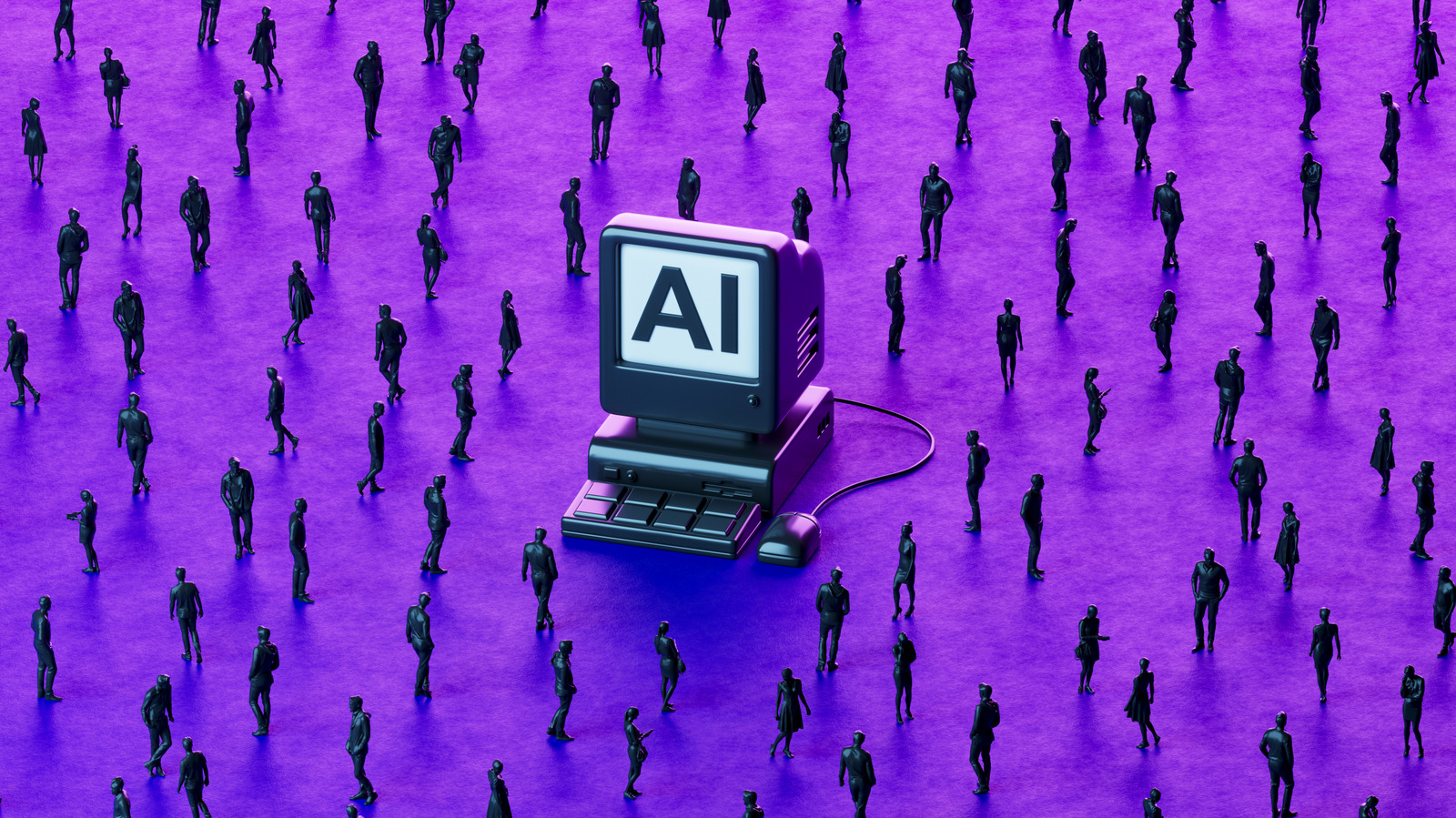
When spending time online today, do you ever get the feeling that digital life has become eerily less human? Perhaps social media posts seem a bit off, or you get the sneaking suspicion the customer service representative you are chatting with is actually a bot. If this sounds familiar, you aren't alone: a paradigm called the "dead internet theory" has been gaining momentum in the last several years, positing that the internet is increasingly dominated by non-human activity, including bots and AI-generated content.
Since the theory first started making the rounds on internet forums in the 2010s, AI has only gotten more powerful. In September 2026, OpenAI reported that it had found a solution to a famously difficult mathematics puzzle, the Navier-Stokes problem. Meanwhile, a 2026 report from cybersecurity group Thales found that automated traffic continues to overtake human activity online, with bots accounting for 53 percent of all web traffic, up from 51 percent the year before. And bots are now talking to each other without humans in the loop at all: In March, Meta acquired Moltbook — a social network on which AI chatbots communicate with one another, often discussing humans. So as the internet landscape potentially gets less human every day, what exactly is dead internet theory, where does it come from, and should we be worried?
What is the dead internet theory?
Dead Internet Theory — the idea that the majority of the internet is propelled by bots and other non-human agents – has been floating around for quite some time. It first emerged as a conspiracy theory on internet forums in the late 2010s, but gained a more concrete framework following a post in 2021 on online community Agora Road titled, "Dead Internet Theory: Most of the Internet Is Fake," which argued "the Internet feels empty and devoid of people." Followers of the theory argued that the internet "died" around 2016 when search engines and social media feeds started surfacing more AI-generated content.
The popularity of chatbots and AI-generated content has only further expanded since then. In 2024, only 33 percent of Americans said they had used chatbots like ChatGPT, Gemini or Copilot, a study from Pew Research found. By 2026, that number had increased to nearly half of Americans at 49 percent. That same report found that 25 percent of Americans use chatbots every day. In many realms of society we are now facing chatbot loops: in schools, students are writing essays using AI, which teachers then grade with AI. In the job search, employees use chatbots to spit out optimized resumes and cover letters which are then analyzed by AI systems. Increasingly, humans are cut out of the conversation entirely, our voices replaced with bots.
Should we be worried?
On a personal level, this chatbot loop can feel uncanny. Those script-like posts we see on LinkedIn or a soulless AI-generated poster at your local cafe can induce a feeling of existential dread, but the consequences go beyond personal discomfort. Bots can spread disinformation that causes real harm. AI chatbots are increasingly a source of election disinformation, and little is being done legislatively to regulate this new frontier, though government agencies have issued warnings on deepfakes and other AI-powered risks to free elections.
As AI use grows, so has the backlash: 40 percent of Americans say they think AI will have a negative impact on society in the next 20 years, according to a Pew Research study. AI detection is becoming increasingly popular, with company Pangram receiving $9 million in backing in July 2026 for its AI detection system. Following the passage of the EU AI Act, OpenAI has started watermarking AI-generated content. With measures like these, people opposed to AI will hopefully be able to more easily spot and avoid the artificial slop in favor of the human-centric connection they initially came to the internet to find.


