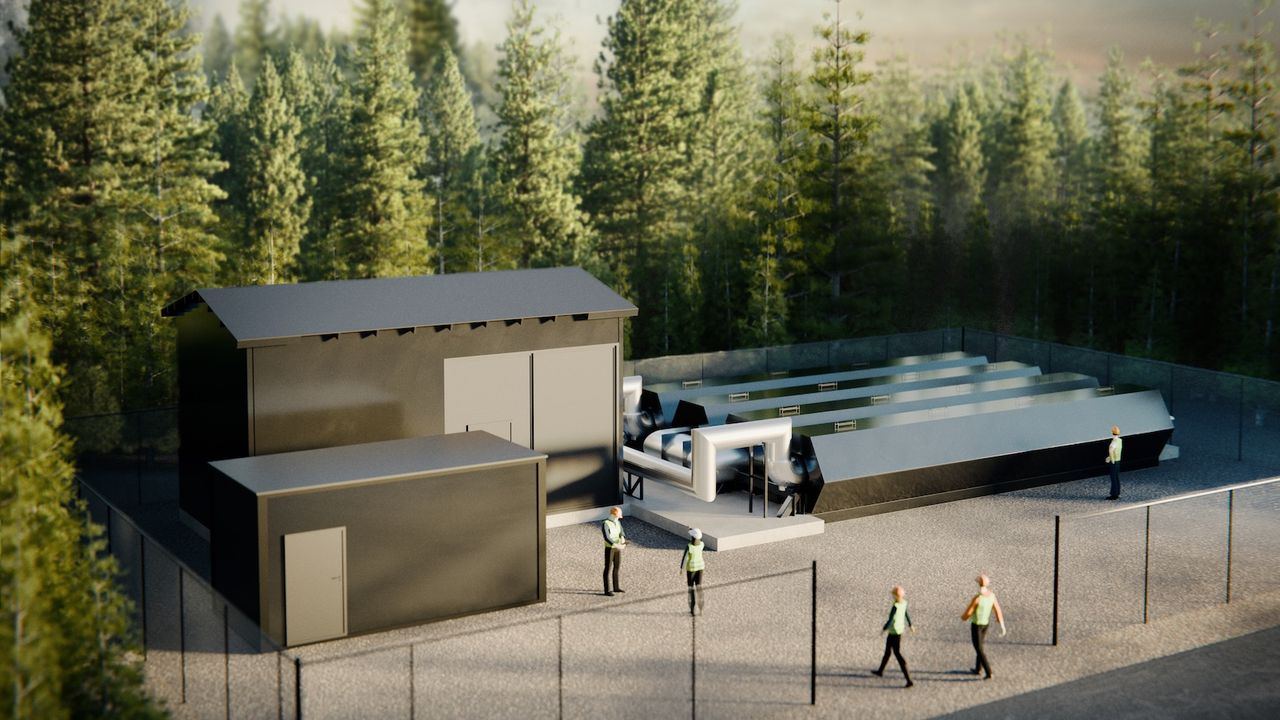
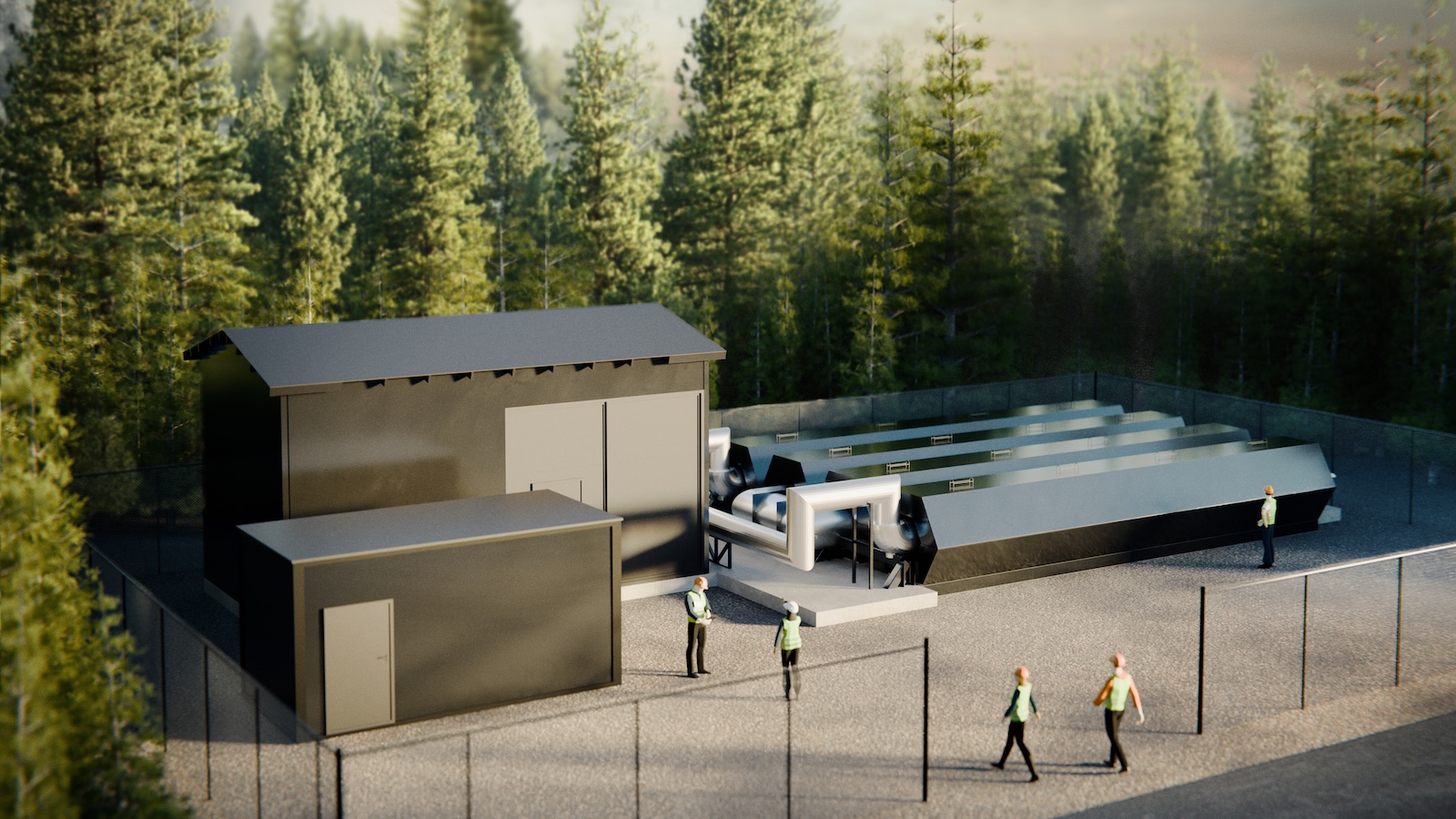
 A concept design for the power-to-heat-to-power sand battery in Valkeakoski, Finland. (Image credit: Simo Heikkinen, Polar Night Energy) Share this article 0 Join the conversation Follow us Add us as a preferred source on Google Newsletter Sign up for the Live Science daily newsletter now
 Get the world’s most fascinating discoveries delivered straight to your inbox.
Become a Member in Seconds
Unlock instant access to exclusive member features.
Contact me with news and offers from other Future brands Receive email from us on behalf of our trusted partners or sponsors By submitting your information you agree to the Terms & Conditions and Privacy Policy and are aged 16 or over.You are now subscribed
Your newsletter sign-up was successful
Want to add more newsletters?
Join the club
Get full access to premium articles, exclusive features and a growing list of member rewards.
Explore An account already exists for this email address, please log in. Subscribe to our newsletterPORNAINEN, Finland — Engineers will soon begin testing a new "sand battery" that will convert energy stored as heat back into power that can be fed into the electricity grid. However, they say challenges lie ahead, with investment cost potentially putting customers off.
Polar Night Energy's existing sand battery model stores renewable electricity by using power to heat up sand and sand-like materials to temperatures up to 752 degrees Fahrenheit (400 degrees Celsius). That heat is then extracted to deliver hot water, steam or hot air.
The new sand battery is "basically totally different" from the existing power-to-heat version, Tommi Eronen, co-founder and CEO of Polar Night Energy, told Live Science here at the site of the existing sand battery in Pornainen. Although he could not give specifics, he said the shape is one key difference between the two batteries; the power-to-heat-to-power sand battery has a horizontal configuration rather than being a vertical silo like the power-to-heat version.
The new sand battery's efficiency will depend on its size and how it is integrated into preexisting systems. However, its expected efficiency is about 30% to 35% — comparable to that of combustion-based power plants, Polar Night Energy representatives wrote in a statement. For reference, the average efficiency of fossil-fuel-based combustion power plants in the U.S. was 39% in 2023.
By converting this heat back to power, the new battery will "help balance the grid, cut emissions, reduce reliance on fossil fuels, and create a pathway to large-scale, affordable energy storage," representatives added in a separate statement.
But the new battery will output both heat and electricity to increase the efficiency of the system to around 90%, Eronen said. This sand battery could be used by any industry that requires both heat and electricity, such as utility companies, he added.
Sign up for the Live Science daily newsletter nowContact me with news and offers from other Future brandsReceive email from us on behalf of our trusted partners or sponsorsThe new sand battery is currently being piloted in the Finnish town and municipality of Valkeakoski, around 90 miles (150 kilometers) north of Helsinki. Construction commenced in October 2025, and testing will begin within weeks, with the pilot phase lasting roughly two and a half years in total. However, Polar Night Energy is already drawing up designs for a commercial product.
RELATED STORIES—Clean energy is surging — with or without Trump
—China's new 'solar-power window coating' can capture energy and power household devices
During the pilot project, engineers will trial different technological solutions that could enable electricity production in the future, Liisa Naskali, Polar Night Energy's chief operating officer, told Live Science in Pornainen. This will include developing new materials. For example, they will "develop and test new materials and designs capable of withstanding higher operating temperatures," representatives wrote in a statement.
The main barrier to this new sand battery is its cost. "The one challenge when selling this to the customers is that the investment price is so high," Naskali added. "Almost nobody has had the courage to invest in our product because we have these wood-chip boilers [currently], and wood chip is quite cheap."
Although she said that a power-to-heat-to-power sand battery is achievable, the question now is how to find an economically viable and technologically efficient solution. If it were straightforward, someone would have done it by now, she pointed out. "It's doable, but at what price?"
 Sophie BerdugoStaff writer
Sophie is a U.K.-based staff writer at Live Science. She covers a wide range of topics, having previously reported on research spanning from bonobo communication to the first water in the universe. Her work has also appeared in outlets including New Scientist, The Observer and BBC Wildlife, and she was shortlisted for the Association of British Science Writers' 2025 "Newcomer of the Year" award for her freelance work at New Scientist. Before becoming a science journalist, she completed a doctorate in evolutionary anthropology from the University of Oxford, where she spent four years looking at why some chimps are better at using tools than others.
View MoreYou must confirm your public display name before commenting
Please logout and then login again, you will then be prompted to enter your display name.
Logout LATEST ARTICLES 1Beadnet dress: A 4,500-year-old ancient Egyptian funeral 'gown' that was in vogue during the Old Kingdom
- 2'This generation's moment': How the Artemis missions will reframe humanity's relationship with the moon
- 3Diabetes rates are lower in high-altitude environments — and scientists may have discovered why
- 4Antarctica hides huge caches of gold, silver, copper and iron. As the ice melts, countries may race to harvest them.
- 5Shroud of Turin, claimed to be Jesus' burial cloth, contaminated with carrot and red coral DNA