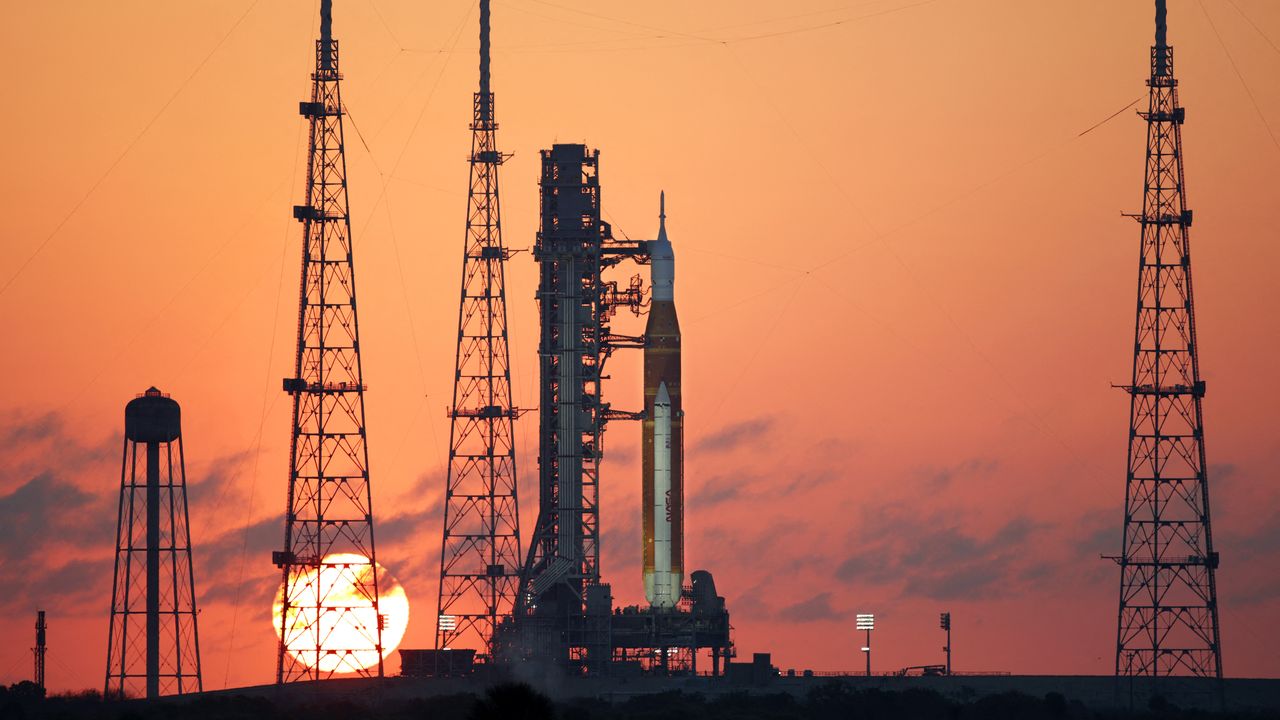
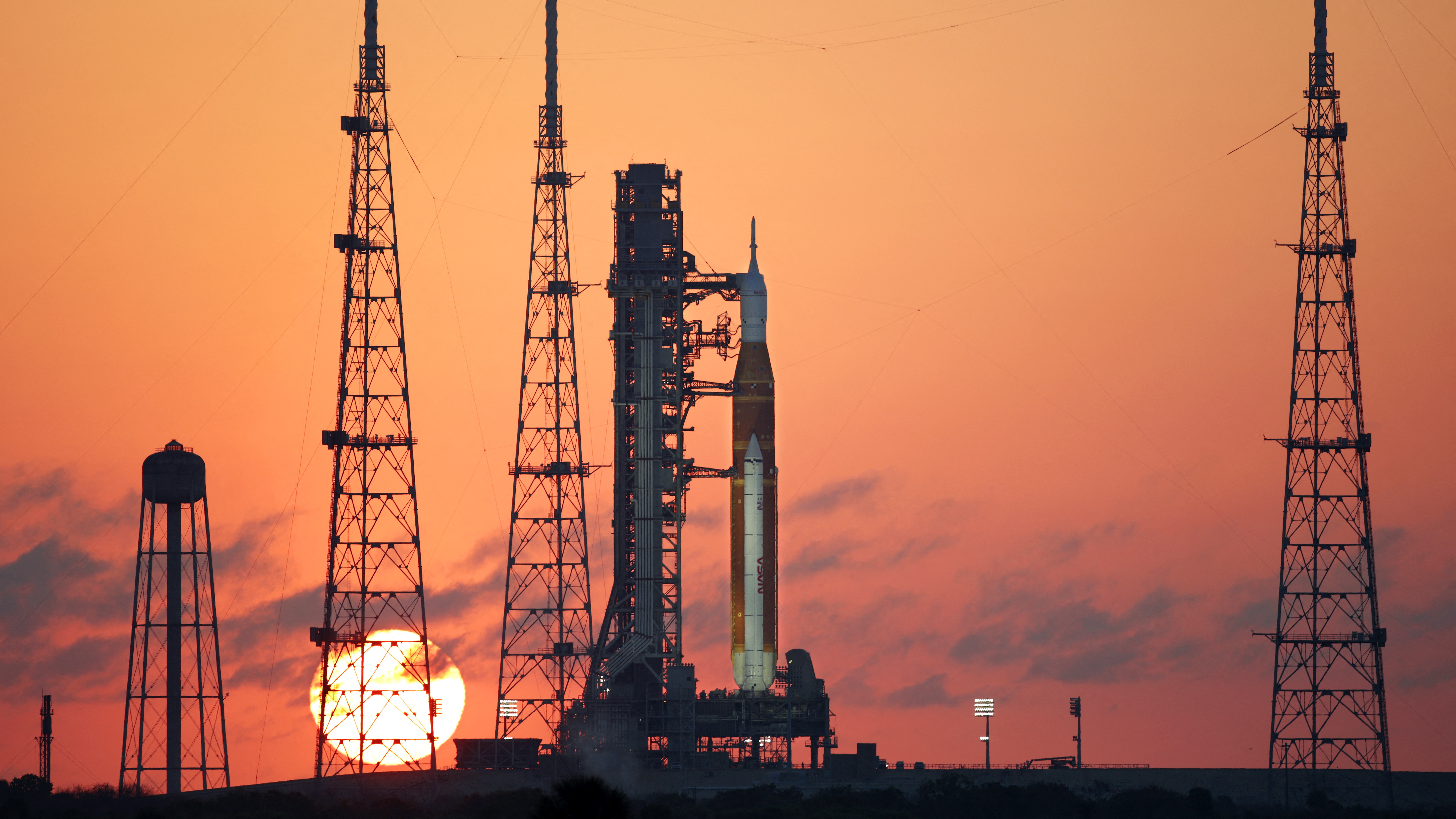
 The Artemis II rocket is sitting on a launch pad at the Kennedy Space Center in Florida. (Image credit: Gregg Newton / AFP via Getty Images) Share this article 0 Join the conversation Follow us Add us as a preferred source on Google Newsletter Sign up for the Live Science daily newsletter now
 Get the world’s most fascinating discoveries delivered straight to your inbox.
Become a Member in Seconds
Unlock instant access to exclusive member features.
Contact me with news and offers from other Future brands Receive email from us on behalf of our trusted partners or sponsors By submitting your information you agree to the Terms & Conditions and Privacy Policy and are aged 16 or over.You are now subscribed
Your newsletter sign-up was successful
Want to add more newsletters?
Join the club
Get full access to premium articles, exclusive features and a growing list of member rewards.
Explore An account already exists for this email address, please log in. Subscribe to our newsletterNASA is making its final preparations to launch its Artemis II rocket on a historic crewed flight around the moon.
Artemis II's mission management team will make a final decision about the readiness of its Space Launch System (SLS) and Orion capsule to launch this afternoon. If they give the green light, then Artemis II could take off during a two-hour launch window that opens at 6.24 p.m. ET on Wednesday (April 1).
Article continues below"We are getting very, very close, and we are ready," Lori Glaze, the acting associate administrator for NASA's exploration systems development mission directorate, said during a news conference on Sunday (March 29).
Artemis II is scheduled to take humans farther into space than ever before as part of a 10-day test flight around the far side of the moon. This is NASA's first attempt to send humans back to the moon in more than 50 years, with hopes it will pave the way for lunar landings in 2028 and future crewed missions to Mars.
The Artemis II crew includes three NASA astronauts: commander Reid Wiseman, pilot Victor Glover, and mission specialist Christina Koch, along with Canadian Space Agency astronaut and mission specialist Jeremy Hansen.
On Sunday, the crew took virtual questions from the press at their quarantine quarters at Kennedy Space Center (astronauts go into quarantine ahead of a launch to ensure they don't get infected by illnesses that could delay their mission). Commander Wiseman stressed that the mission is a test flight, and the crew doesn't have an expectation that they will fly on Wednesday.
Sign up for the Live Science daily newsletter nowContact me with news and offers from other Future brandsReceive email from us on behalf of our trusted partners or sponsors"This is the first time we're going to try this," Wiseman said. "This is the first time we're loading humans on board. And I will tell you, the four of us, we are ready to go, the team is ready to go and the vehicle is ready to go, but not for one second do we have an expectation that we are going."
RELATED STORIES"We will go when this vehicle tells us it's ready, when the team is ready to go," he added."So, we might go out to the pad and we might have to try again a few more times and we are 100% ready for that."
NASA has worked through numerous issues and delays to get to this point. For example, last month, the mission was delayed for the second time this year after NASA discovered a helium-flow issue in the upper stage of the mission's Space Launch System (SLS) rocket. NASA said it has fixed that problem, but that doesn't mean new problems won't arise to delay the mission again between now and Wednesday.
The April launch windows for Artemis II run from Wednesday through to Monday (April 4 to 9), with the potential for a launch on any of those days. After Monday, the next launch window is April 30. This will be NASA's last chance to launch the rocket on time, as the mission is meant to lift off no later than April 30.
TOPICS Patrick PesterTrending News Writer
Patrick Pester is the trending news writer at Live Science. His work has appeared on other science websites, such as BBC Science Focus and Scientific American. Patrick retrained as a journalist after spending his early career working in zoos and wildlife conservation. He was awarded the Master's Excellence Scholarship to study at Cardiff University where he completed a master's degree in international journalism. He also has a second master's degree in biodiversity, evolution and conservation in action from Middlesex University London. When he isn't writing news, Patrick investigates the sale of human remains.
View MoreYou must confirm your public display name before commenting
Please logout and then login again, you will then be prompted to enter your display name.
Logout LATEST ARTICLES- 1'We are getting very, very close': NASA makes final Artemis II preparations as expectation grows for Wednesday launch
- 2Farthest, fastest and most diverse: 6 major records the Artemis II astronauts will smash as NASA returns to the moon
- 3Tudor Heart: A Renaissance gold necklace featuring a French-English pun on the love between Henry VIII and his first wife, Katherine of Aragon
- 4Saturn's chaotic atmosphere revealed in most comprehensive view yet by James Webb and Hubble telescopes
- 5AI systems are enabling mass surveillance in the US, and there is no national law that 'meaningfully limits' the use of this data