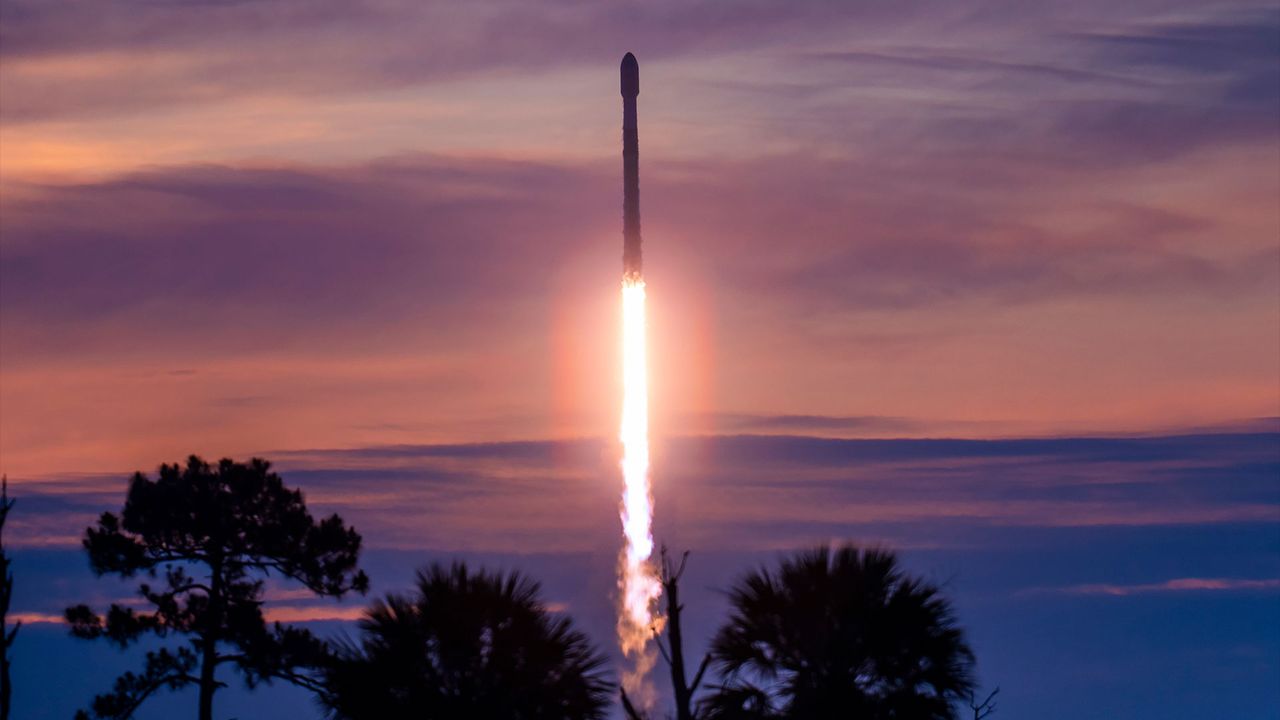
SpaceX has again broken its own rocket reuse record, launching a first stage booster for its 35th time.
The Falcon 9 rocket, carrying 29 Starlink satellites into low Earth orbit, launched on Monday (June 8). The vehicle lifted off at 6:13 a.m. EDT (1013 GMT) from Space Launch Complex 40 at the Cape Canaveral Space Force Station in Florida.
Just over an hour later, SpaceX confirmed successful deployment of the Starlink payload (Group 10-35).
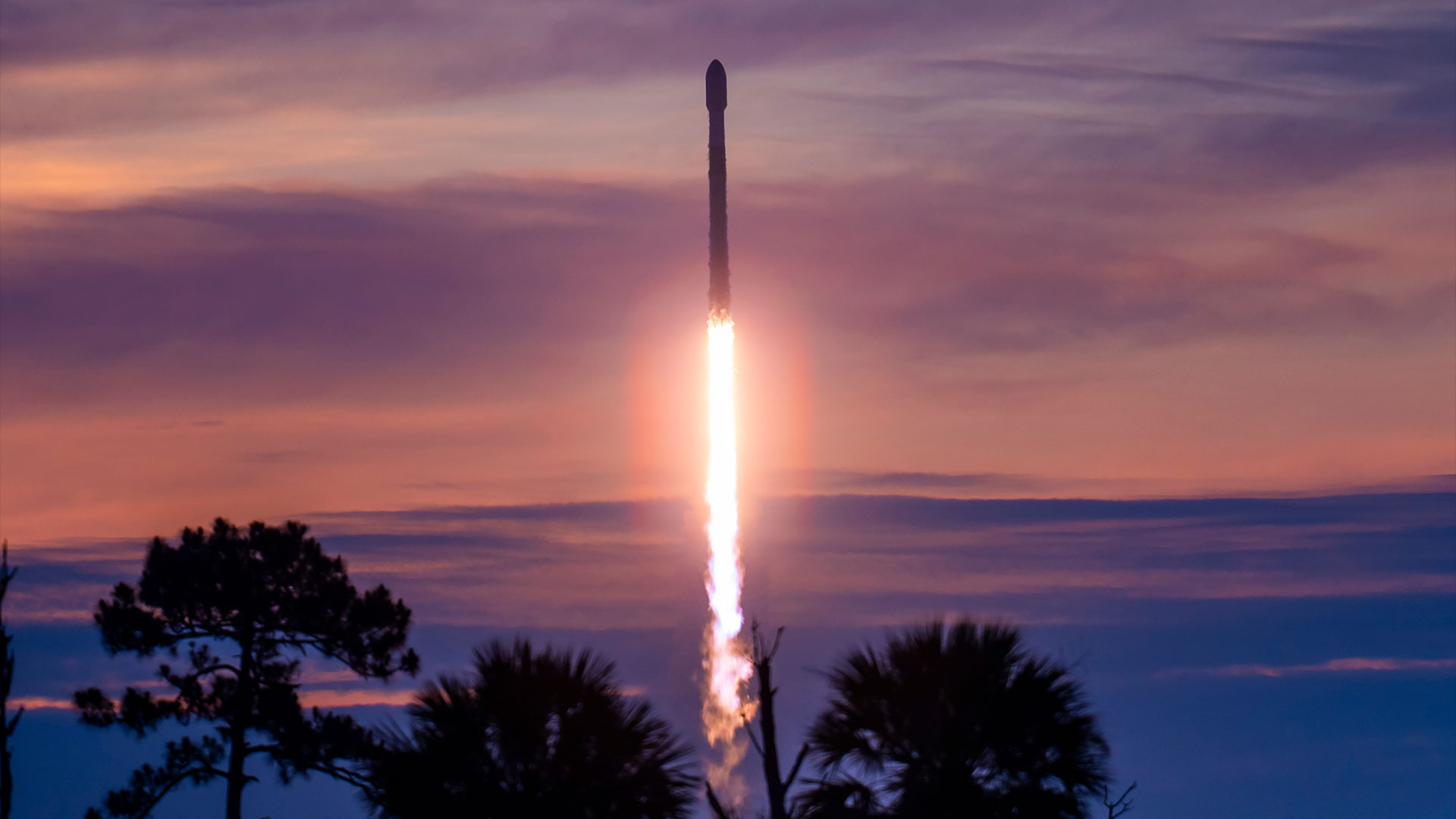
The record-setting first stage, Booster 1067, completed its 35th trip to space and back by landing on the droneship "A Shortfall of Gravitas" stationed in the Atlantic Ocean. With this flight, the Falcon 9 is approaching the overall reuse record set by NASA's space shuttle orbiter at 39 flights.
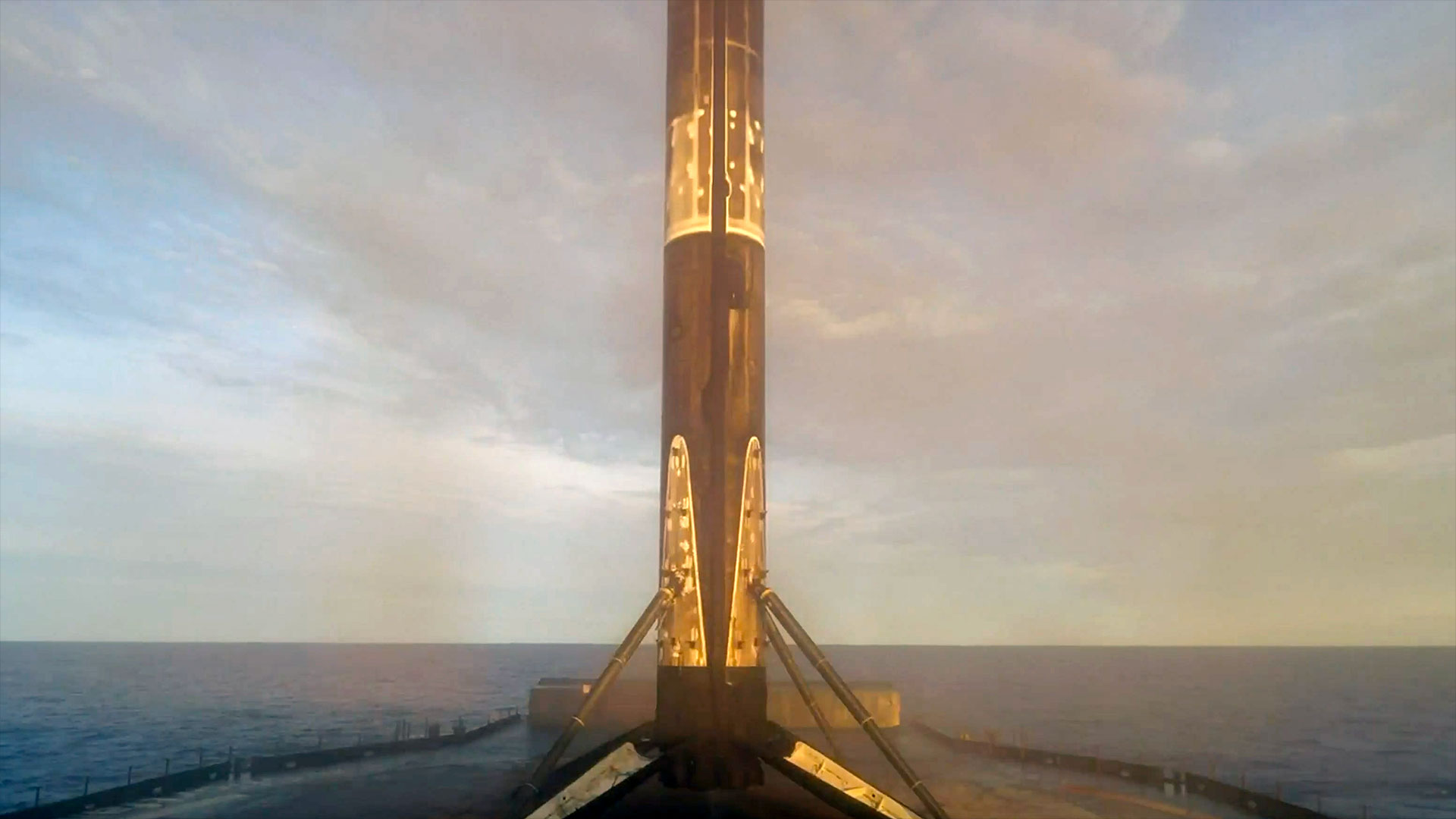
The launch increased SpaceX's Starlink megaconstellation to more than 10,580 active satellites, according to tracker Jonathan McDowell. The network provides broadband internet access around the world, including in-flight wifi and direct to cell service for some carriers.
Previous Booster 1067 missionsCRS-22 | Crew-3 | Turksat 5B | Crew-4 | CRS-25 | Eutelsat HOTBIRD 13G | O3B mPOWER | PSN SATRIA | Telkomsat Marah Putih 2 | Galileo L13 | Koreasat-6A | 23 Starlink missions
Monday's launch was SpaceX's 66th Falcon 9 flight of the year and 660th completed mission its history.
On Sunday, the company also launched another Falcon 9 rocket from Vandenberg Space Force Base in California. That mission carried 21 Starlink satellites into orbit alongside two Starshield satellites for the U.S. military. It was the 10th flight for the Falcon 9 first-stage booster on that flight, SpaceX said.
View MoreYou must confirm your public display name before commenting
Please logout and then login again, you will then be prompted to enter your display name.
Logout Robert Z. PearlmancollectSPACE.com Editor, Space.com Contributor
Robert Pearlman is a space historian, journalist and the founder and editor of collectSPACE.com, a daily news publication and community devoted to space history with a particular focus on how and where space exploration intersects with pop culture. Pearlman is also a contributing writer for Space.com and co-author of "Space Stations: The Art, Science, and Reality of Working in Space” published by Smithsonian Books in 2018. In 2009, he was inducted into the U.S. Space Camp Hall of Fame in Huntsville, Alabama. In 2021, he was honored by the American Astronautical Society with the Ordway Award for Sustained Excellence in Spaceflight History. In 2023, the National Space Club Florida Committee recognized Pearlman with the Kolcum News and Communications Award for excellence in telling the space story along the Space Coast and throughout the world.