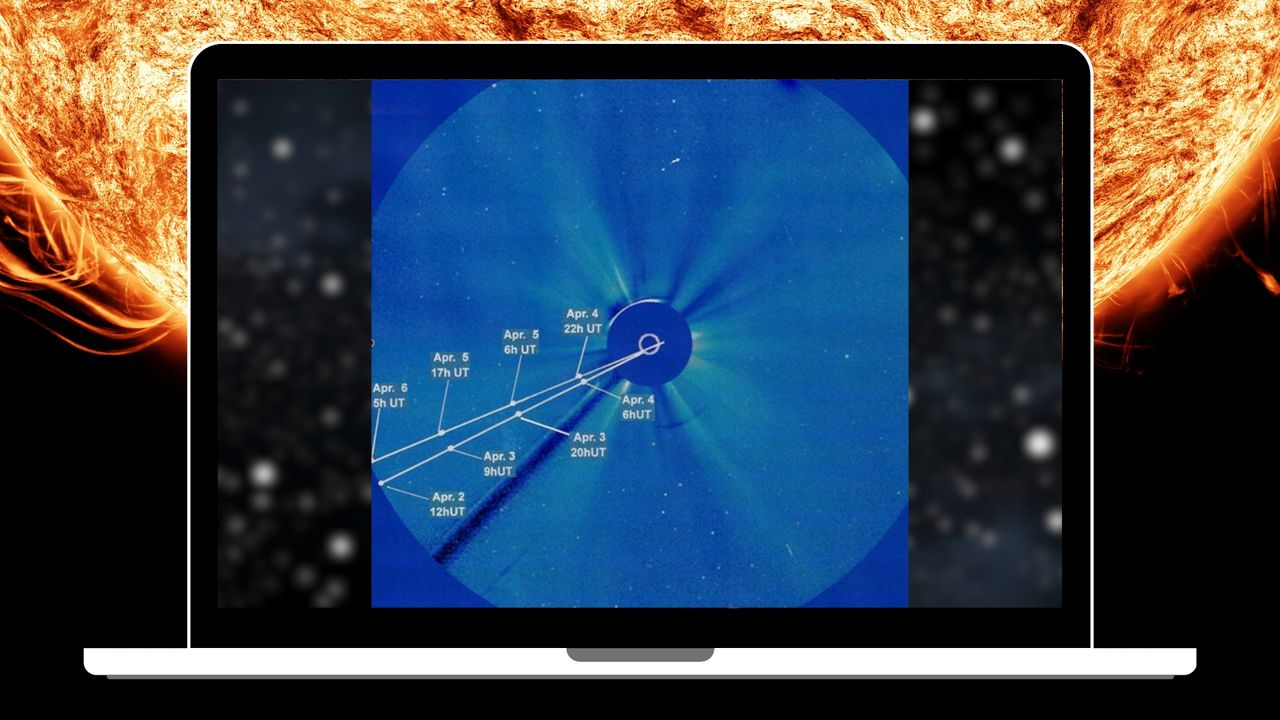
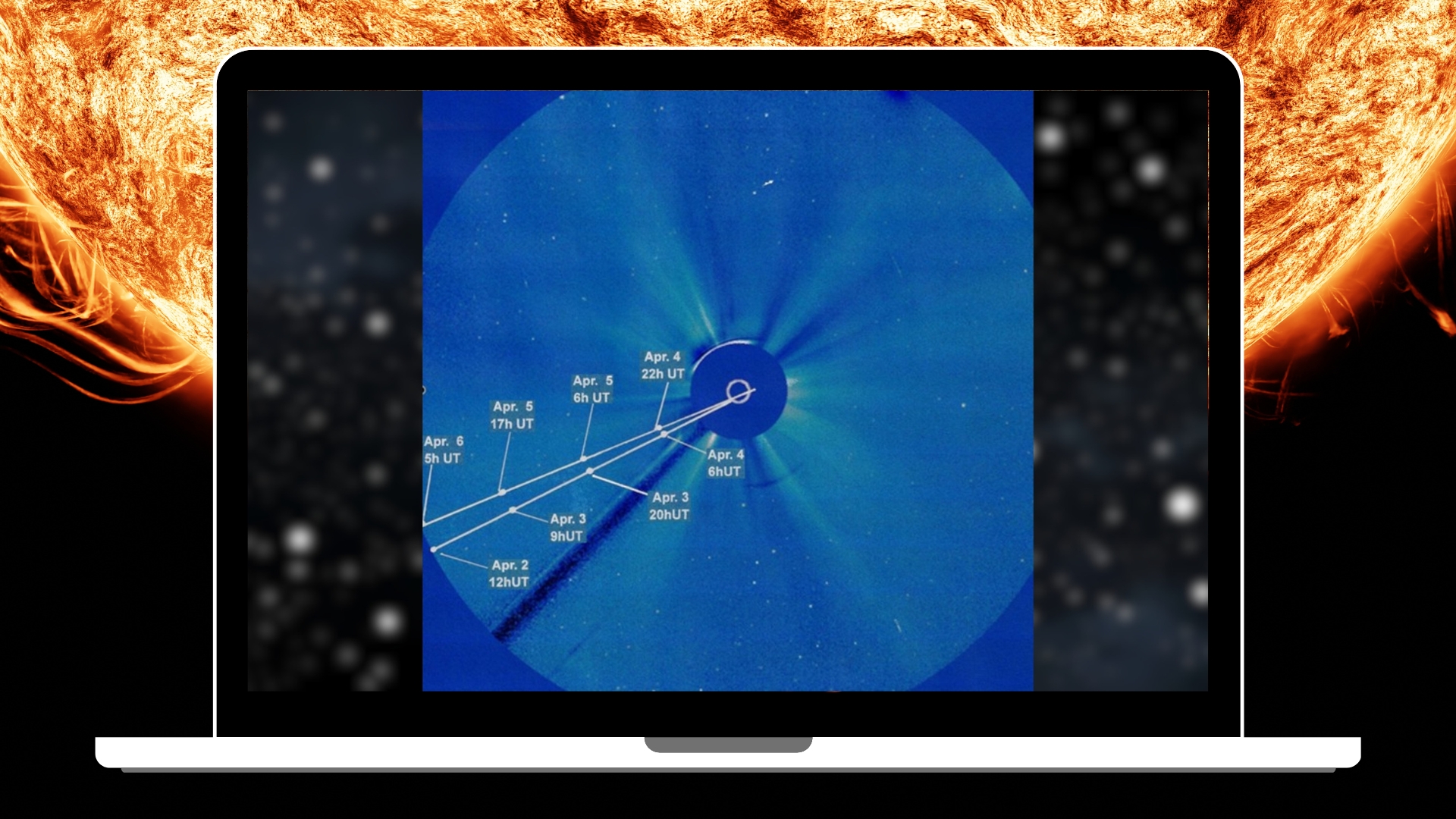
 Comet C/2026 A1 may not survive its close brush with the sun. (Image credit: ESA / NASA / SOHO. Comet track by Joe Rao. Graphic created in Canva Pro.) Share this article 0 Join the conversation Follow us Add us as a preferred source on Google Newsletter Get the Space.com Newsletter
 Breaking space news, the latest updates on rocket launches, skywatching events and more!
Contact me with news and offers from other Future brands Receive email from us on behalf of our trusted partners or sponsors By submitting your information you agree to the Terms & Conditions and Privacy Policy and are aged 16 or over.You are now subscribed
Your newsletter sign-up was successful
Want to add more newsletters?
An account already exists for this email address, please log in. Subscribe to our newsletterThe sungrazing comet C/2026 A1 (MAPS) has been causing a stir in recent months as it brightened during its headlong rush towards the sun, which culminates in a high stakes close approach known to astronomers as perihelion on April 4. Here's how you can watch its final do-or-die approach for yourself through the technological eye of a sungazing spacecraft.
C/2026 A1 (MAPS) is thought to belong to the Kreutz family of comets — enigmatic solar system wanderers that are thought to have a shared progenitor and whose orbits take them perilously close to our parent star.
At perihelion, C/2026 A1 (MAPS) is expected to pass just 101,100 miles (162,700 km) from the sun's photosphere — a passage that could either spell its doom as volatiles buried beneath its surface vaporize and undermine its integrity, or may even see it shine bright enough to appear in the daytime sky.
Either way, you may be able to spot the wandering solar system body as it careens towards the sun in imagery captured by the Large Angle Spectrometric Coronagraphy (LASCO) mounted on the joint ESA/NASA Solar and Heliospheric Observatory.
The comet will cross the field of view of the SOHO's LASCO 3 coronagraph from April 2 to April 6. (Image credit: ESA / NASA / SOHO. Comet track by Joe Rao.)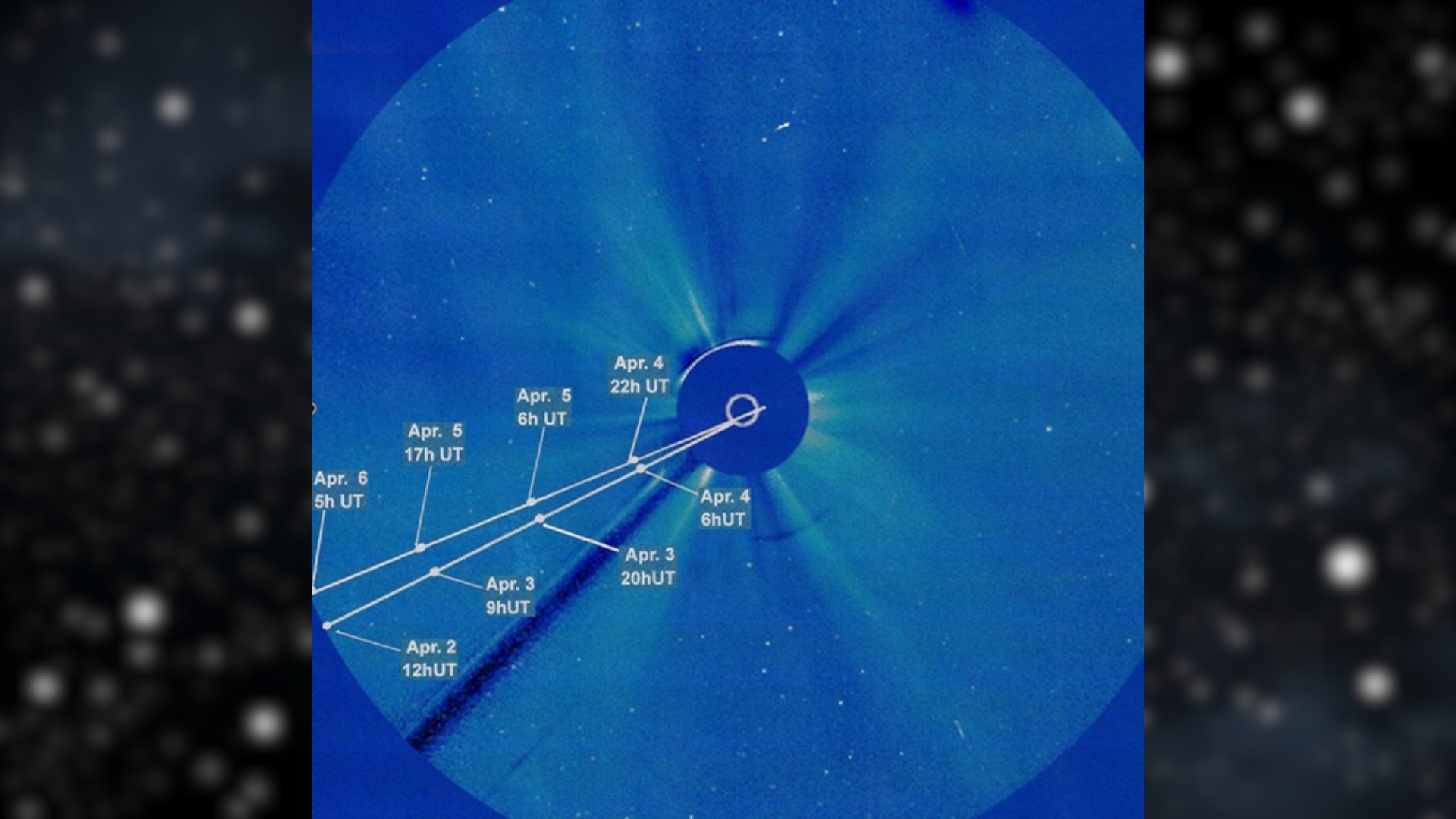
LASCO was designed to take detailed images of the sun's atmosphere by blocking out the light coming directly from its surface. Each of SOHO's "C3'" images captures a field of view 32 times the diameter of the sun, revealing how material ejected from its surface interacts with the space environment and, occasionally, detecting the presence of interlopers, such as C/2026 A1 (MAPS).
Space.com columnist Joe Rao forecast that comet C/2026 A1 (MAPS) will enter the LASCO instrument's field of view from 8:00 a.m. EDT (1200 GMT) on April 2 through to 1:00 a.m. EDT (0500 GMT) on April 6. It will briefly disappear as it passes into the blind spot created by the instrument's occulter disk for the four hours surrounding periohelion, before emerging back into LASCO's field of view, assuming it survives the close brush with our parent star.
Get the Space.com NewsletterContact me with news and offers from other Future brandsReceive email from us on behalf of our trusted partners or sponsors Anthony WoodSkywatching Writer
Anthony Wood joined Space.com in April 2025 after contributing articles to outlets including IGN, New Atlas and Gizmodo. He has a passion for the night sky, science, Hideo Kojima, and human space exploration, and can’t wait for the day when astronauts once again set foot on the moon.
View MoreYou must confirm your public display name before commenting
Please logout and then login again, you will then be prompted to enter your display name.
Logout MORE FROM SPACE... 1'The universe shall quake in my shadow' — 'Masters of the Universe' looks like the summer's most metal movie
- 2'Supergirl' goes full John Wick to save her dog Krypto in new trailer
- 3Stunning new James Webb Space Telescope images reveal 'hidden' stars being born
- 4NASA's Artemis 2 moon launch seen from space | Space photo of the day for April 2, 2026
- 5How to track the Artemis 2 astronauts on their journey around the moon