
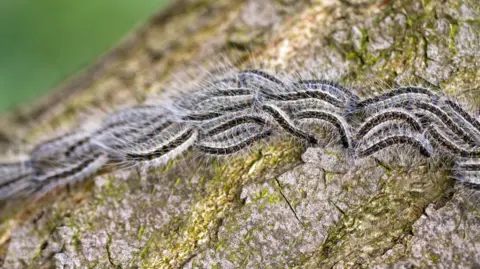
 Getty ImagesThe oak processionary moth caterpillars can cause breathing difficulties and eye irritation
Surrey residents are being urged to be aware of oak processionary moth (OPM) caterpillars and their nests, which can pose risks to both people and animals.
The larvae are active across south-east England between late spring and early summer, and are mostly found on oak trees.
Their tiny hairs contain toxins that may lead to itchy skin rashes, sore throats, breathing difficulties and eye irritation if touched or inhaled.
Ellen Nicholson, Woking Borough Council's portfolio holder for green spaces, said: "Whilst the risks are generally low if you keep your distance, it's important that people know how to recognise the caterpillars and what to do if they see them."
She said locals should avoid contact and report any sightings to the relevant authority so their nests can be removed safely.
The council also advises to keep children and pets away from affected trees, and not attempt to remove nests themselves.
If nests are found on private land, residents should contact the Forestry Commission, and the Neighbourhood Team in Woking if on public land, a council spokesperson said.
"By reporting sightings and keeping a safe distance, residents can play an important part in helping the relevant authority manage the issue," Nicholson said.
OPM caterpillars were first accidentally introduced to England in 2005 and the species is subject to a government-led programme of survey and control to minimise its population, spread and impacts, says a Forest Research spokesperson.
They add: "OPM is established in most of Greater London and in some surrounding counties.
"The remainder of the United Kingdom (UK) is designated as an area free from the pest with special restrictions on movements of oak plants to minimise the risk of introducing OPM to new areas."
Follow BBC Surrey on Facebook, X, and Instagram and listen to BBC Radio Surrey on Sounds. Send your story ideas to [email protected] or WhatsApp us on 08081 002250.
More on this story