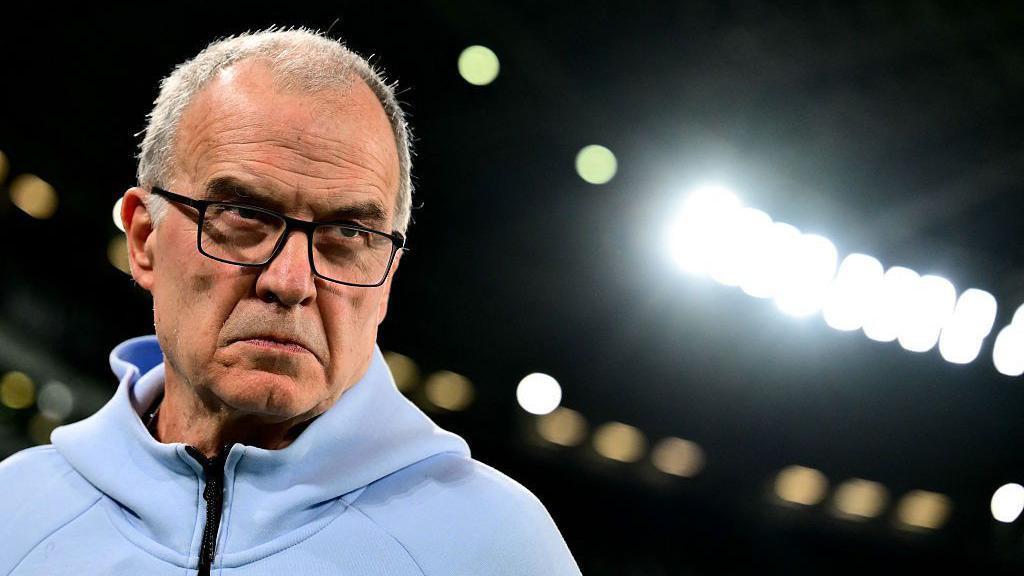
 Image source, AFP via Getty ImagesImage caption,
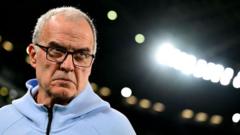
 Marcelo Bielsa is manager a country at a World Cup for the third time in his career
ByGary RoseBBC Sport journalist- Published12 minutes ago
It is quite possible that nobody alive today has watched more football than Marcelo Bielsa.
The 70-year-old is one of the most respected and influential coaches in the game, and that reputation has been earned from his borderline obsessive dedication to preparation for every single match he oversees.
More than two decades ago he took 2,000 video tapes to Japan for the 2002 World Cup - when he was manager of Argentina - with those covering everything from clips of his players at their respective clubs to the opposition teams his side would come up against at the tournament.
Thankfully, modern technology means suitcases packed with VHS tapes will no longer be necessary.
But Bielsa will no doubt have a similar volume of clips with him in North America for the 2026 World Cup - where his Uruguay side will face Saudi Arabia, Cape Verde and Spain in the group stage.
In, or out? The joy and despair of World Cup squad selection
- Published21 May
World Cup player signs petition calling for protection from extreme heat
- Published20 May
Empty rooms and Fifa cancellations - US hotels fear World Cup washout
- Published20 May
The making of Bielsa
Born in Rosario, Argentina, Bielsa hails from a family of educated minds, with his brother having worked in politics and his sister a renowned architect.
Both of those professions require analytical thinking - a gift Bielsa also possessed from childhood. However, he was drawn to football, not necessarily playing it but absorbing the tactics.
Every day he would send his mother to the local newsagent to buy football magazines and newspapers, spending hours reading up as much as he could about how teams played and how different managers worked.
Bielsa was still a capable but limited footballer. A defender but lacking in pace, he came through the youth system at his boyhood club Newell's Old Boys before frustrating spells in the lower leagues of Argentinian football meant he decided to call time on his playing career at the age of 25 to focus on coaching.
His post-playing career started with the Buenos Aires university football team and, after two years there, he secured a position back at Newell's as a coach of the reserve team.
Bielsa's frustration with his limitations as a player played a significant part in his coaching philosophy, as he focused on ensuring that any player he coached was able to get the maximum out of their ability.
His training sessions were intense, with lots of focus on repetition - if a player did not have the talent to make something happen naturally then he would be sure to drill the processes into their minds.
Bielsa was appointed Newell's manager in 1990 and his methods brought instant success as they won the Argentinian championship.
A spell in Mexico followed before Bielsa returned to Argentina in 1997 to manage Velez Sarsfield. There he would be labelled 'loco' (crazy) as he insisted on fielding two teenage centre-backs. He would have the last laugh, however, as he immediately helped them to win the league title.
Bielsa, who has said his nickname of 'El Loco' actually predates his time at Velez Sarsfield, very briefly became manager of Spanish side Espanyol but left them when he was offered his first international post in 1998 - as Argentina boss.
Highs and lows with Argentina
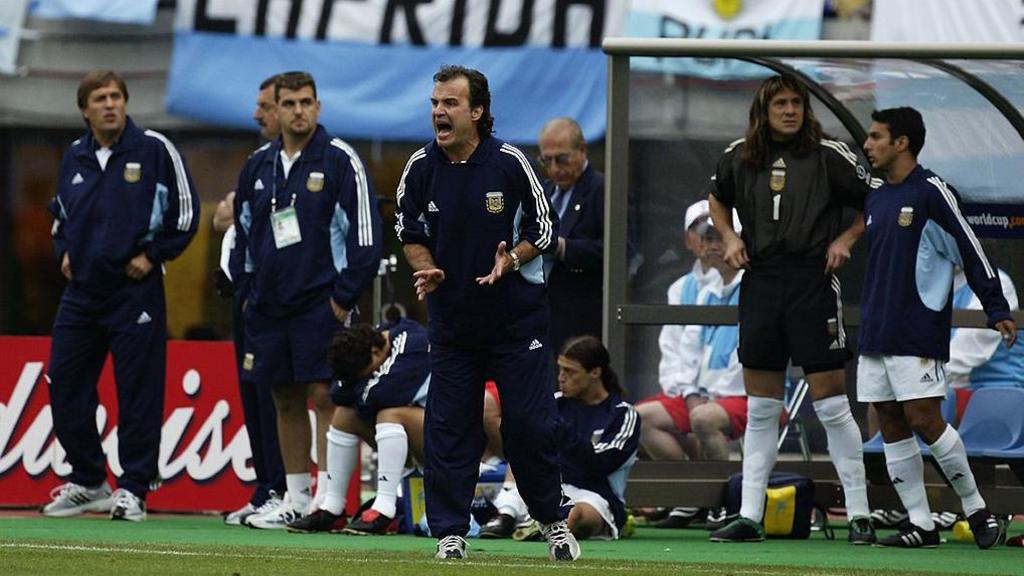 Image source, AFP via Getty ImagesImage caption,
 Bielsa's first international job was as manager of Argentina
It took a while for Argentina fans to warm to Bielsa, particularly as he was never afraid to make decisions that went against popular opinion.
Managing one of the best teams in world football meant Bielsa had a wealth of talent available to him, with one of those being the legendary Gabriel Batistuta.
Batistuta was scoring goals for fun in Italy's top flight, but Bielsa's system had only one place for a striker and that was taken up by Hernan Crespo, meaning Batistuta mostly had to be satisfied with appearances off the bench.
The players were swiftly on board with his methods.
"He's the type of coach who makes you win matches," Juan Pablo Sorin said at the time.
"You get to notice which coaches are winners and which aren't. He's managed to get to the stage where if two or three players are missing, the team doesn't change."
Argentina breezed through qualifying for the 2002 World Cup, losing just one of their 18 games, and that form had them installed as among the favourites to win the tournament.
What transpired, though, was the lowest point of Bielsa's career as Argentina failed to make it out of the group stage.
Their surprise exit was attributed to a mixture of issues - injuries to key players and reliable stars being out of form among them - but some strange decisions by Bielsa will not have helped.
Crespo had been key during qualifying with his goals, but at the finals Bielsa opted for the 33-year-old Batistuta as his lone striker, while goalkeeper German Burgos was a regular starter in qualifying but was overlooked for the tournament itself.
Bielsa stayed on despite that failure, and did lead Argentina to the Copa America final a year later and to Olympic gold in 2004 but he resigned at the end of that year, saying he no longer had the energy to manage them. He reputedly then moved into a monastery for three months to recharge, taking only books and living without a phone or access to the internet.
Revolutionising Chile and success at club level
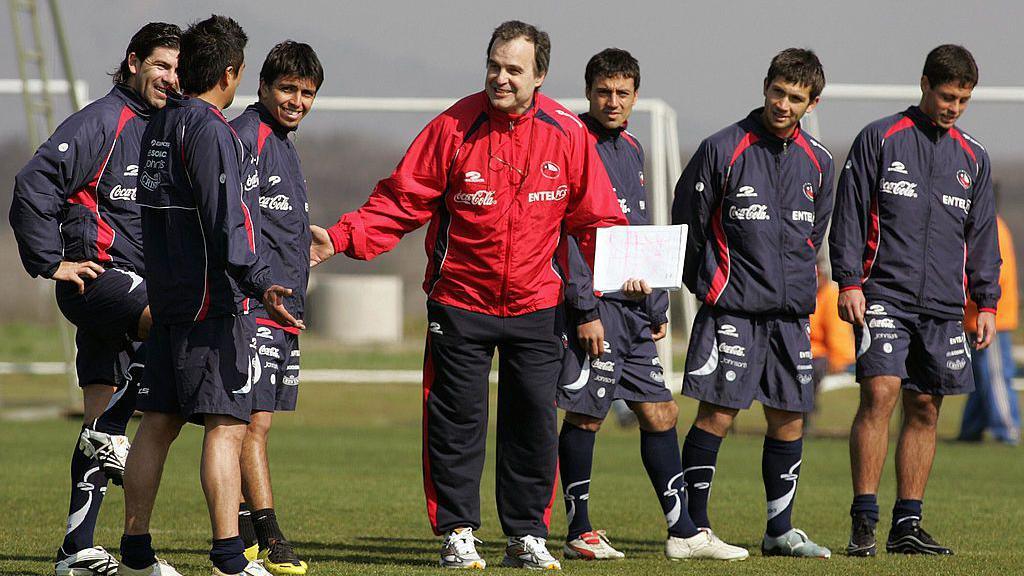 Image source, AFP via Getty ImagesImage caption,
 Bielsa managed Chile at the World Cup
Bielsa's time away from football appeared to do the trick as he would return to management seemingly refreshed and rejuvenated.
In 2007 he was appointed Chile boss, with the national team's hierarchy allowing Bielsa to do whatever was required to revolutionise the team.
He moved into a bedroom at Chile's training site and during his four years in charge he oversaw it being transformed from a tired and outdated place to a modern complex.
Bielsa again put faith in talented youth players, with the likes of Alexis Sanchez, Arturo Vidal, Gary Medel and Mauricio Isla swiftly promoted from the Chile Under-20 side, becoming key players as the national team qualified for the 2010 World Cup.
"Before I was erratic, running around like crazy all over the pitch," Vidal told El Mercurio in 2010.
"He made me realise the importance of the mental side of my game and helped me grow as a person."
Bielsa had led Chile back to a World Cup following two successive absences from the tournament, and in South Africa they progressed to the last 16 where they were beaten by Brazil.
A change in the presidency of the Chilean Football Association was followed by Bielsa resigning in 2011, but within months he accepted the role of head coach at Athletic Club, Bilbao's LaLiga side.
"I first met Bielsa at Athletic Club and he had just been telling somebody off," remembers Spanish football journalist Guillem Balague.
"His arrival there shook people up. He was demanding something that is now given as a minimum, but at the time the fact they had to run constantly, they had to repeat exercises a million times - all of that was very new there but you saw the consequences of that."
He would lead Athletic Bilbao to the 2012 Europa League final but they were beaten to the trophy by Atletico Madrid.
Leading Leeds back to the Premier League
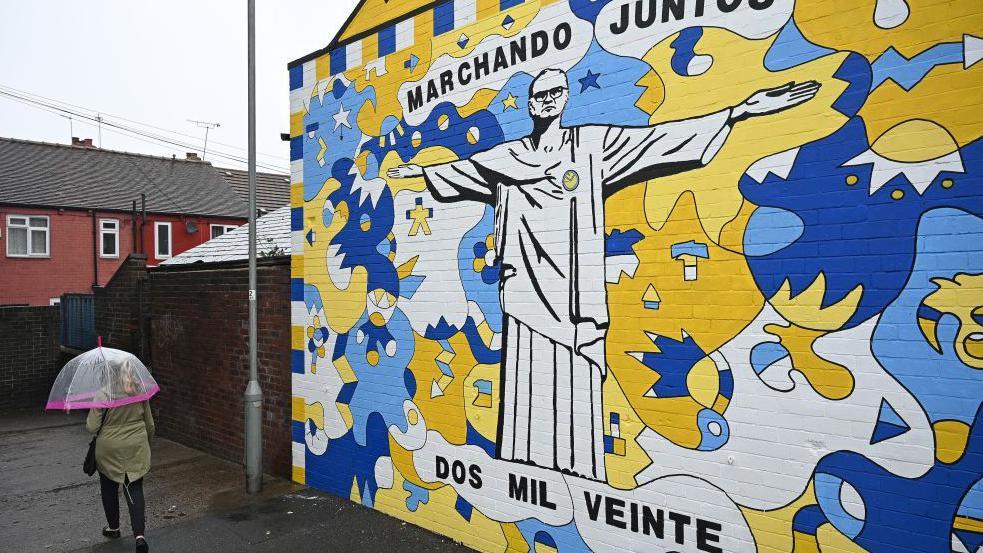 Image source, AFP via Getty ImagesImage caption,
 Marcelo Bielsa achieved legendary status at Leeds
Fleeting spells at Lazio and Lille would follow before Bielsa was appointed Leeds United boss in 2018.
He would go on to once again transform players as he famously guided the West Yorkshire club to promotion back to the Premier League in 2019-20.
Another key aspect of Bielsa's coaching philosophy is being humble.
He has always been keen to make sure the players he coached knew they had privileged jobs. He would look for ways to remind them that not everyone shared the same luxuries in life.
"Much was made of a story about [Leeds] players being made to collect litter near the ground," says Balague, who spent time observing Bielsa's coaching methods at Leeds.
"It was done so they could realise that the world was not made up of people living in elitist and privileged bubbles, but rather 'normal' human beings who had to work very hard.
"It's all about setting high standards that will stay with the club long after he has gone."
Will Bielsa bring Uruguay success at the World Cup?
Uruguay are now the third country Bielsa has guided to a World Cup, and in 2023 he oversaw wins against South American giants Brazil and Argentina.
More recently they drew with Thomas Tuchel's England in a friendly at Wembley, but it has not all been plain sailing for Uruguay under Bielsa.
In September 2024, he was criticised by the country's legendary striker Luis Suarez, who said Bielsa had "divided the whole group".
At the time, Suarez urged Uruguay fans "not to take it out on the players when things go wrong" because "the players will reach a limit and they will explode" under Bielsa's working conditions.
They were also beaten 5-1 by the USA in November last year, a result that left Bielsa feeling "ashamed" and seemingly considering his position in charge of the national team.
At 70, this World Cup could well represent Bielsa's final chance to cement his legacy on the international stage, and he has already hinted that he will step down once Uruguay's campaign comes to an end. A quiet exit from the big stage, whenever it might come, seems unlikely.
Related topics
Follow your club with BBC Sport
- Published12 March

Listen to the latest Football Daily podcast
Get football news sent straight to your phone
- Published6 days ago