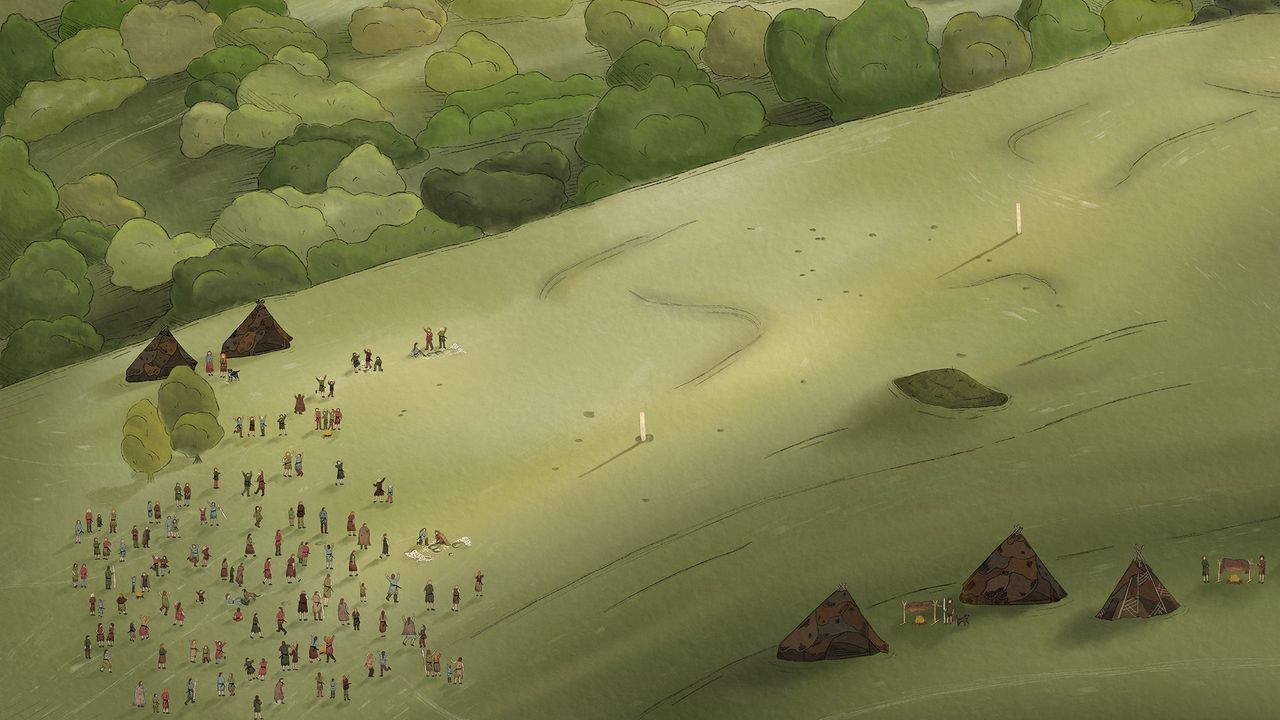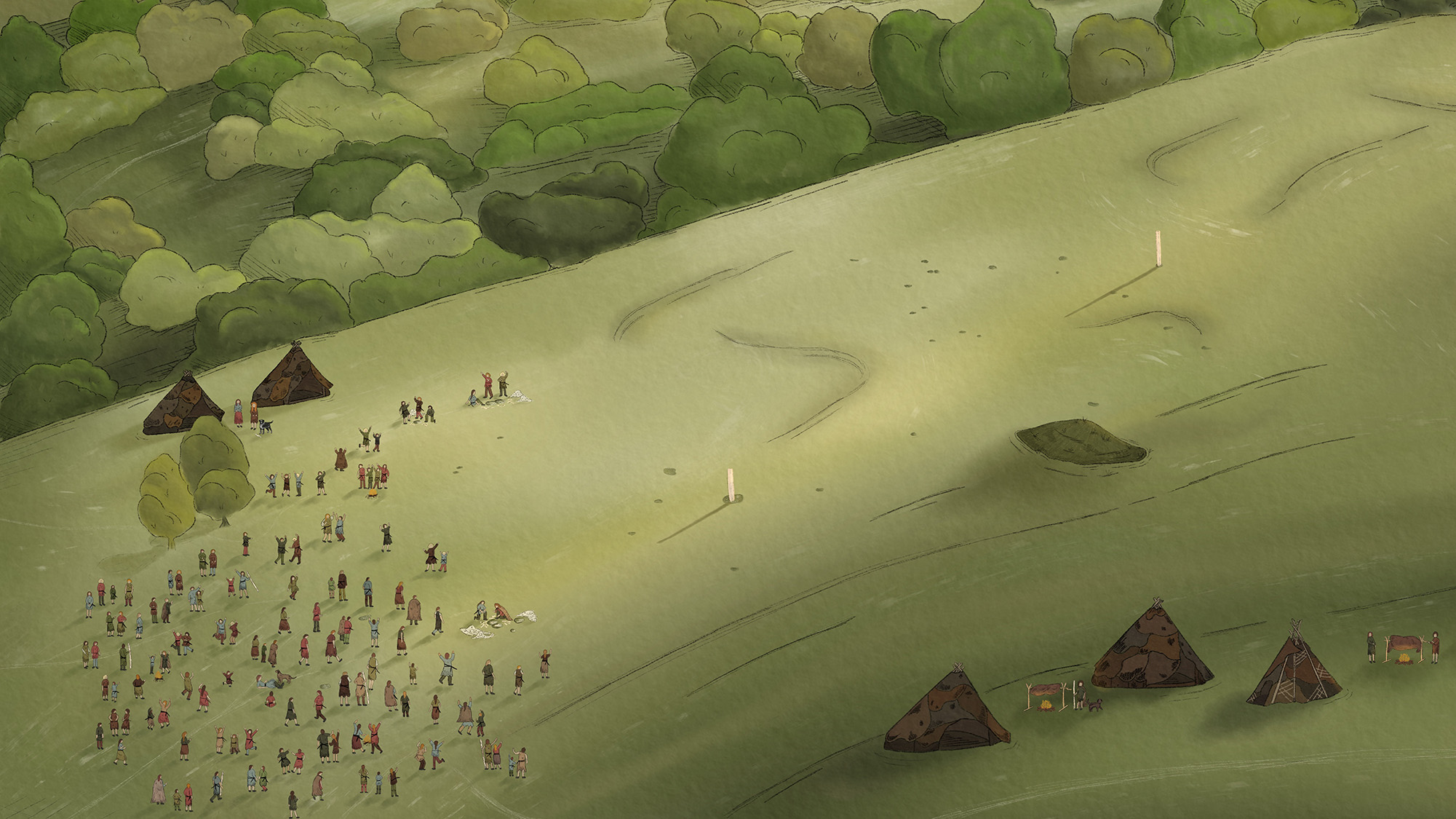
Two ancient posts at Stonehenge were aligned with the summer and winter solstices and seem to have been an ancient center for religious ceremonies, as shown in this artist's reconstruction. (Image credit: Marijane Porter, Wessex Archaeology)
Share this article Join the conversation
Follow us Add us as a preferred source on Google Newsletter Subscribe to our newsletter
Evidence of two ancient wooden posts aligned with the summer and winter solstices has been discovered near Stonehenge in southwest England. The posts have rotted away, and only traces of the postholes survive. But archaeologists say the structure predated Stonehenge, and they think it was a temporary religious monument until a permanent one was built. They even suggest it may have been a Stonehenge prototype.
Analysis suggests that ancient people used the posts to mark the summer and winter solstices, Phil Harding, an archaeologist at Wessex Archaeology who's leading the project, noted at a news conference on Wednesday (June 17).
"These people were capable of establishing the points on the horizon where the sun rises in the midsummer and sets in midwinter," he said. "This was a pioneering achievement." (The 2026 summer solstice will be celebrated at Stonehenge on June 21.)
Harding's team at Wessex Archaeology, a private firm that often works for the government and local authorities, publicly announced the finds June 18 in the U.K., and a report on their research will be peer-reviewed and published. The ancient monument consisted of the two large, wooden posts, about 400 feet (120 meters) apart, on land near the village of Bulford, a few miles east of Stonehenge.
The land is now controlled by the U.K. Ministry of Defence, but archaeologists have been allowed to excavate there since 2015. They previously found traces of two "henges" — rings of ditches and banks made from earth — and dozens of Neolithic pits from about 5,000 years ago, centuries before Stonehenge was completed. The pits were filled with animal bones, pottery, flints and charcoal, and the researchers think they date to the time that the first phase of Stonehenge was being built.
Solstice alignment
The posts were aligned to point along an axis that marked the direction of sunrise on the summer solstice, or "midsummer's day," and the setting of the sun exactly six months later, at the winter solstice, or "midwinter's day," according to a statement from Wessex Archaeology. The same astronomical alignments are seen at Stonehenge.
The animal bones and other signs of feasting in the pits at Bulford are evidence of large numbers of people gathering for religious festivals. (Signs of ancient feasting have also been found at Stonehenge.)
Sign up for the Live Science daily newsletter now
Get the world’s most fascinating discoveries delivered straight to your inbox.
Contact me with news and offers from other Future brandsReceive email from us on behalf of our trusted partners or sponsors
"When we talk about the solstice, we're talking about religion," Matt Leivers, an archaeologist at Wessex Archaeology and one of the researchers, said in the statement. "What we see at Bulford, and later at Stonehenge, is a way of celebrating and marking the passage of time, but it's also about making sure the world keeps working as it should."
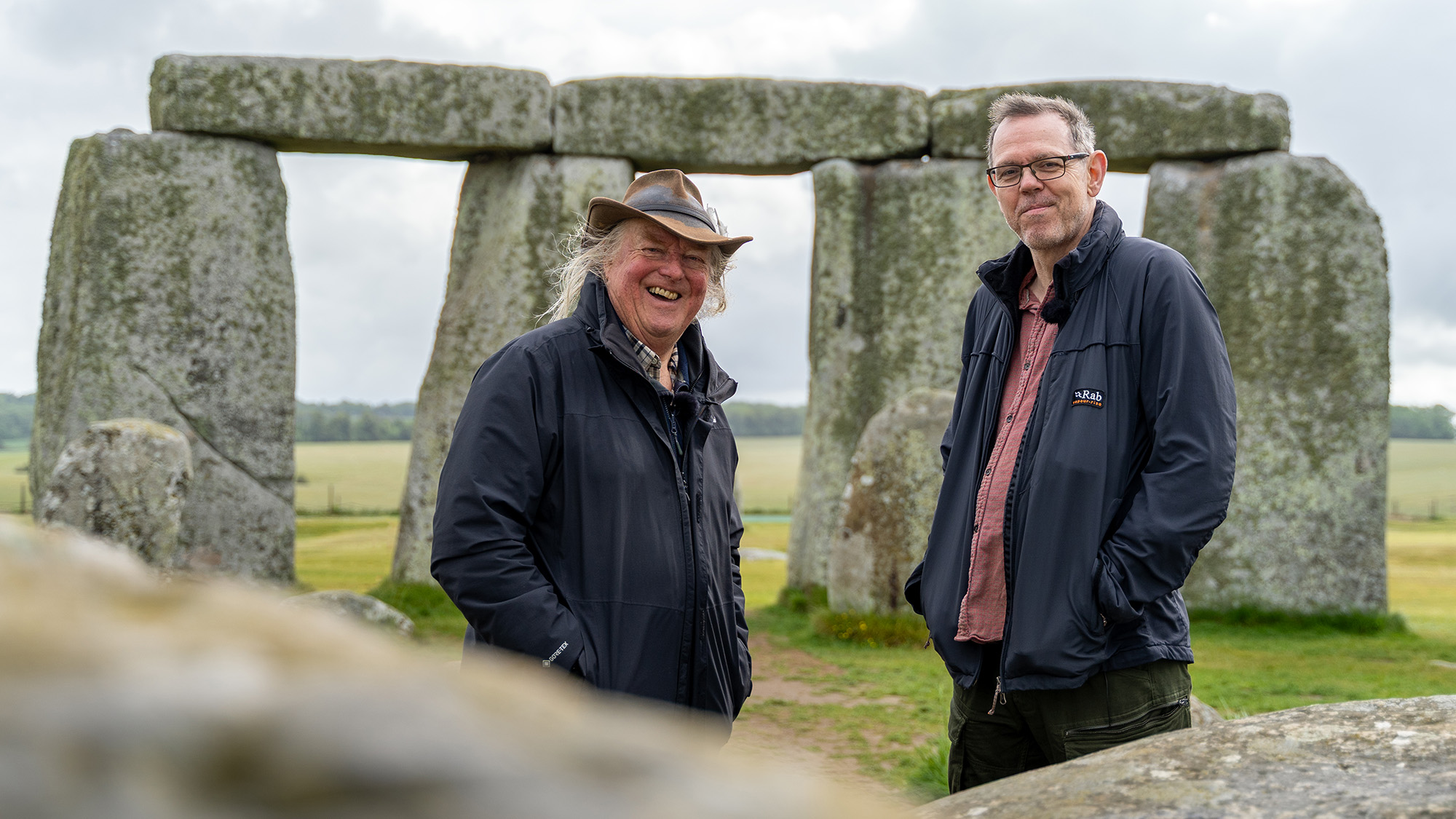
Archaeologists Phil Harding (left) and Matt Leivers led the excavations at the Bulford site, a few miles east of Stonehenge.
(Image credit: Wessex Archaeology)
The site predates the largest circles of stones at Stonehenge, which have the same alignments. "What we've discovered at Bulford is 500 years earlier than the famous stones we know so well," Harding said. The researchers even suggest that the Bulford monument may have been a sort of prototype for Stonehenge itself.
Ancient stones
Stonehenge is the world's most famous Neolithic monument, but its original purpose was long a mystery. Archaeological investigations have established that the first earthwork henge was started there about 5,000 years ago, and the famous central stones were added about 500 years later.
Related stories
Recent discoveries at Stonehenge include evidence of ancient cremations, and many archaeologists now think the monument was originally a burial site. If that's the case, the alignment with sunset on the winter solstice might have represented "new life," as the days then became longer and warmer after the depths of winter. However, no human remains have been found at the Bulford site.
Susan Greaney, an archaeologist at the University of Exeter who was not involved in the research, said the new finds show the importance of the region to prehistoric people. "It is intriguing to think that simple posts were erected here to align with the solstices around 500 years before Stonehenge was built," she told Live Science.
The Bulford monument may have been a temporary "model" for Stonehenge itself, Amanda Chadburn, an independent archaeologist who wasn't involved in the research, told Live Science "If you were designing a very complicated piece of engineering like Stonehenge," she said, "you would have had to understand how to make it before starting."
See how much you know about Stonehenge with our Stonehenge quiz!
Tom MetcalfeLive Science Contributor
Tom Metcalfe is a freelance journalist and regular Live Science contributor who is based in London in the United Kingdom. Tom writes mainly about science, space, archaeology, the Earth and the oceans. He has also written for the BBC, NBC News, National Geographic, Scientific American, Air & Space, and many others.
View More
You must confirm your public display name before commenting
Please logout and then login again, you will then be prompted to enter your display name.
Logout