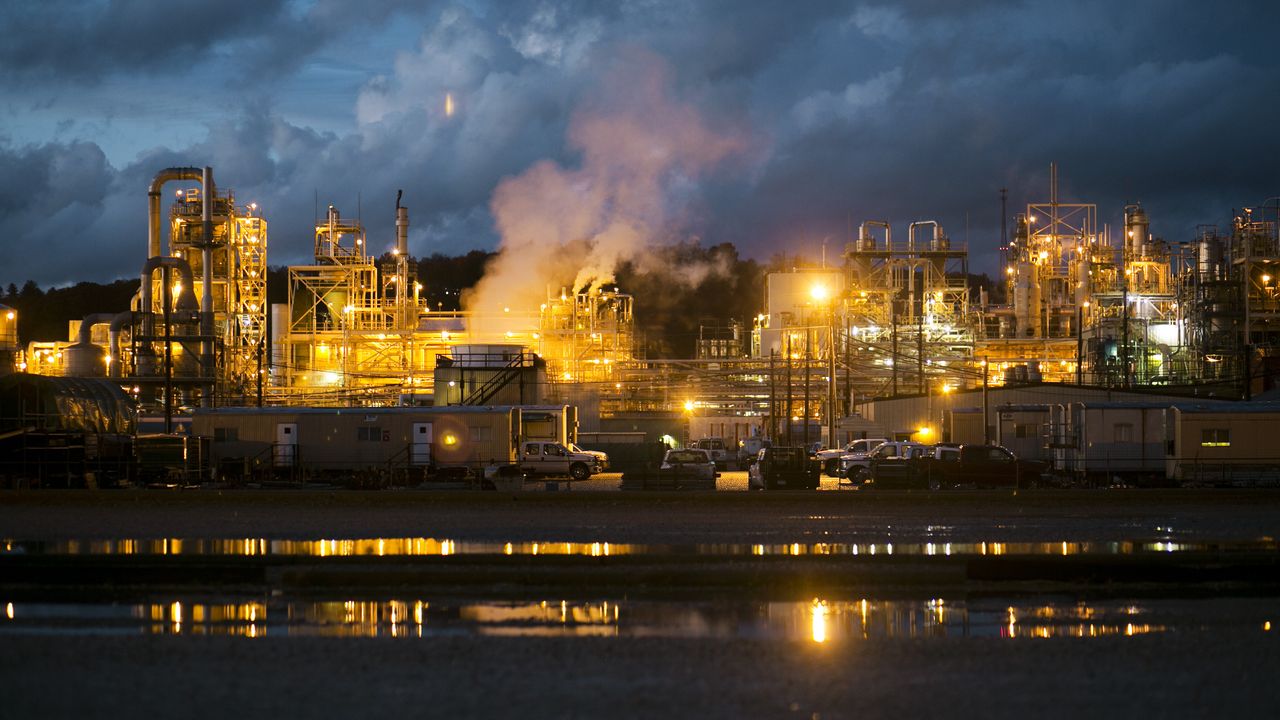
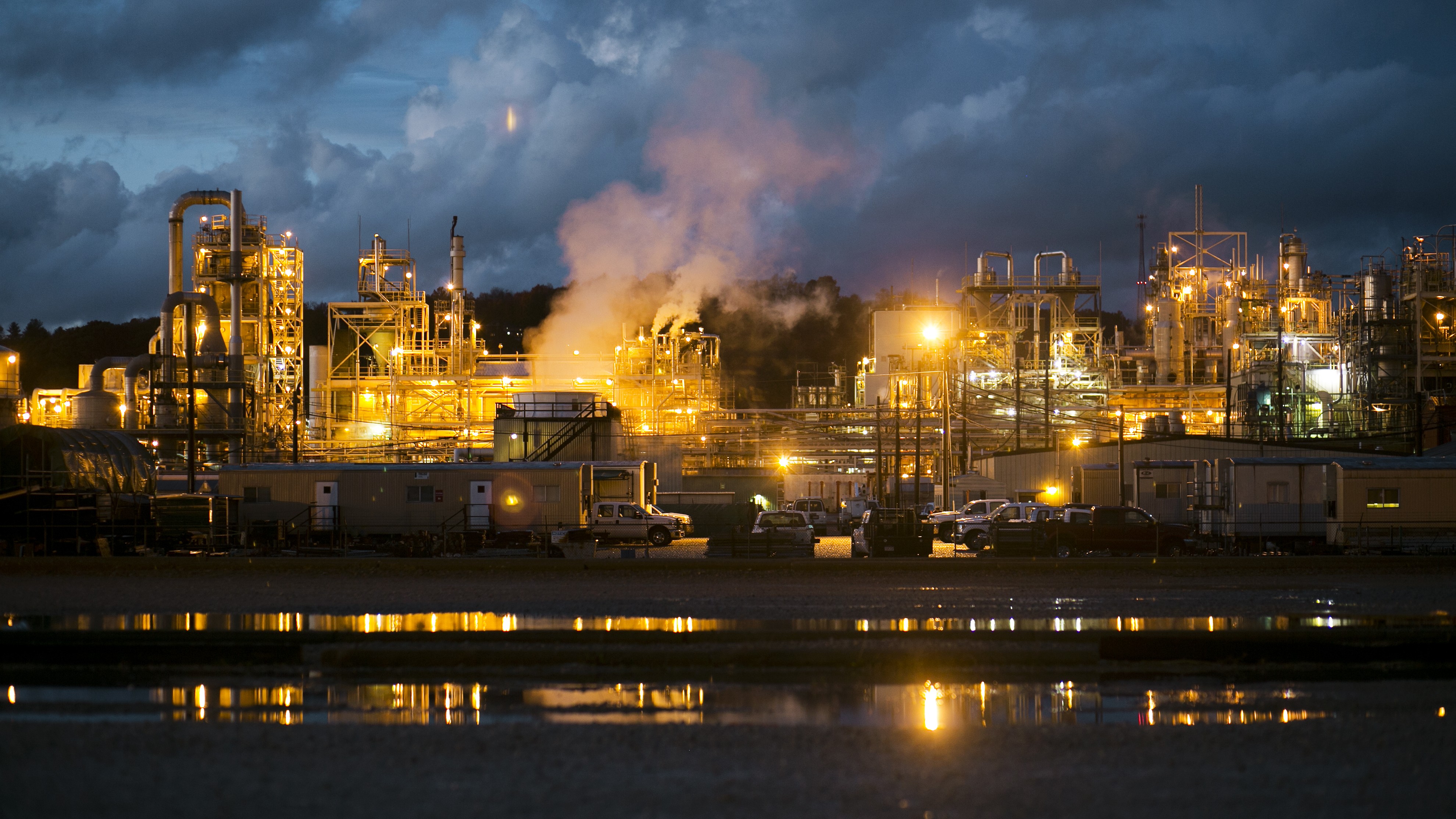
 The Washington Works DuPont plant in Parkersburg, West Viriginia. The plant has an infamous entry in the history of PFAS litigation, having discharged enormous volumes of dangerous forever chemicals into the surrounding waters. (Image credit: Maddie McGarvey via Getty Images) Share this article 0 Join the conversation Follow us Add us as a preferred source on Google Newsletter Sign up for the Live Science daily newsletter now
 Get the world’s most fascinating discoveries delivered straight to your inbox.
Become a Member in Seconds
Unlock instant access to exclusive member features.
Contact me with news and offers from other Future brands Receive email from us on behalf of our trusted partners or sponsors By submitting your information you agree to the Terms & Conditions and Privacy Policy and are aged 16 or over.You are now subscribed
Your newsletter sign-up was successful
Want to add more newsletters?
Join the club
Get full access to premium articles, exclusive features and a growing list of member rewards.
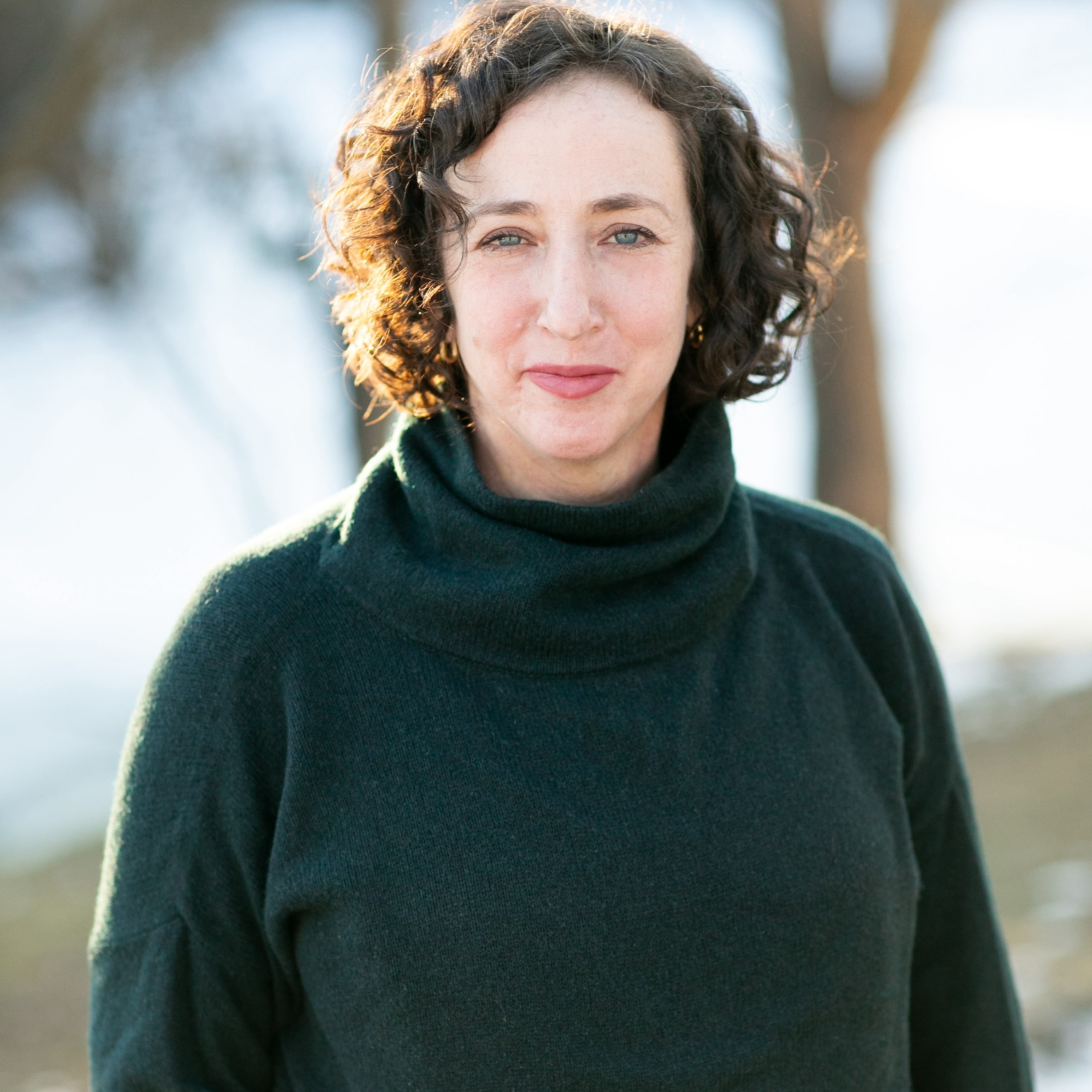
Explore An account already exists for this email address, please log in. Subscribe to our newsletter"Forever chemicals" — technically known as perfluoroalkyl and polyfluoroalkyl substances (PFAS) — are remarkably useful things. They're also among the most dangerous pollutants on the planet, says investigative journalist Mariah Blake.
The many carbon-fluorine bonds in these chemicals, consisting of an alkyl chain connected to multiple fluorine atoms, are considered the strongest in organic chemistry.
But as Blake recounts in her book "They Poisoned the World" (Penguin Random House, 2025), PFAS bonds are "proteinophilic", causing them to strongly bind with proteins in the organs and blood, persisting there for years. Outside of our bodies, the chemicals have biological half lives that can span centuries. Eight decades since their invention, they are now in the bodies of nearly every human being on the planet — accumulating in our bloodstreams, livers, kidneys and lungs.
Blake's book chronicles a decades-long cover-up that hid the chemicals' links to cancer and birth defects, and the fight to expose the contamination by the people of Hoosick Falls — a village in New York State whose water was polluted by PFAS runoff. Her work has been shortlisted for multiple prizes, including the PEN/E.O. Wilson Literary Science Writing Award, an annual award for excellence in nonfiction in the physical or biological sciences.
Live Science spoke with Blake about PFAS, how they came to pollute the planet, and why one of history's greatest corporate scandals is not quite over yet.
Ben Turner: Let's start off simple. What are PFAS?
Mariah Blake: PFAS, also known as forever chemicals, are a large family of substances with some pretty incredible properties that make them very useful.
They're extremely resistant to heat, stains, water and grease. They stand up to corrosive chemicals that burn through almost every other substance. They helped usher in air and space travel and high-speed computing. They have given rise to lifesaving medical devices — things like patches for deteriorating veins and arteries. They've transformed thousands of everyday items — everything from dental floss and clothing to kitty litter and makeup. They are in all of our homes and in all of our blood.
They also happen to be, in my opinion, the most insidious pollutants in all of human history.
They persist in the environment for hundreds, or even thousands, of years. Those that have been studied are highly toxic, even in the most minuscule of doses, and they are literally polluting the entire planet, including human blood and ecosystems in the remotest parts of the world — so places like the Tibetan Plateau or Mount Everest or the deepest parts of the ocean. They are literally everywhere.
BT: PFAS were first developed in 1938 with the invention of Teflon, but they weren't immediately used for commercial purposes. In fact, you write that their first major use was in the Manhattan Project, the secret project led by J. Robert Oppenheimer to develop the atomic bomb.
MB: There had been a couple of PFAS that were developed prior to the war as a result of laboratory accidents, but they never would have been produced on a commercial scale if it weren't for this U.S. government program. The U.S. government had physicists working in labs all across the country to develop nuclear fuels and the bomb itself, and they had chemists working to develop PFAS. They developed various methods to produce them, and they put them into mass production as early as 1943.
It was clear from the beginning that these were dangerous chemicals. The plants where they were manufactured were prone to fires and explosions; workers were regularly hospitalized with breathing problems and chemical burns or worse.
But it wasn't just workers who were affected. Beginning in 1943, farmers downstream of these plants began to complain that their peach crops were burning up, that their cows were so crippled they couldn't stand, and they had to graze by crawling on their bellies.
They began to complain to DuPont [which manufactured Teflon or Polytetrafluoroethylene using Perfluorooctanoic acid (PFOA), a synthetic chemical in the PFAS family] because nobody knew that the Manhattan Project was happening.
These complaints alarmed Manhattan Project officials, and they launched an elaborate research program to study the health and environmental effects of the chemicals. They had determined as early as 1947 that PFAS were highly toxic and that they were accumulating in the blood of people around the [chemical] plants.
The FDA [Food and Drug Administration] also began studying the fluoride content. They didn't have the technology then to detect these specific chemicals, but they started testing the [food] produced around the plants for fluorides known to be toxic at high levels. They determined that there were extraordinarily high levels in the produce, and they were going to ban the produce from this region.
But Manhattan Project officials intervened to stop that from happening. And I think that's really key, because if that had happened, concern about that would have raised a red flag. People would have begun looking into these chemicals much, much earlier. So that decision set public knowledge back by half a century or more.

BT: Instead, in the postwar commercial boom that followed, chemical companies began to mass-produce PFAS — for cookware, fabrics, food packaging, in cars, planes and industrial processes. Then the chemicals started leaking out through landfills and industrial discharge to waterways, and later into our bodies. Which companies were responsible? And how early on were they aware that their products were toxic?
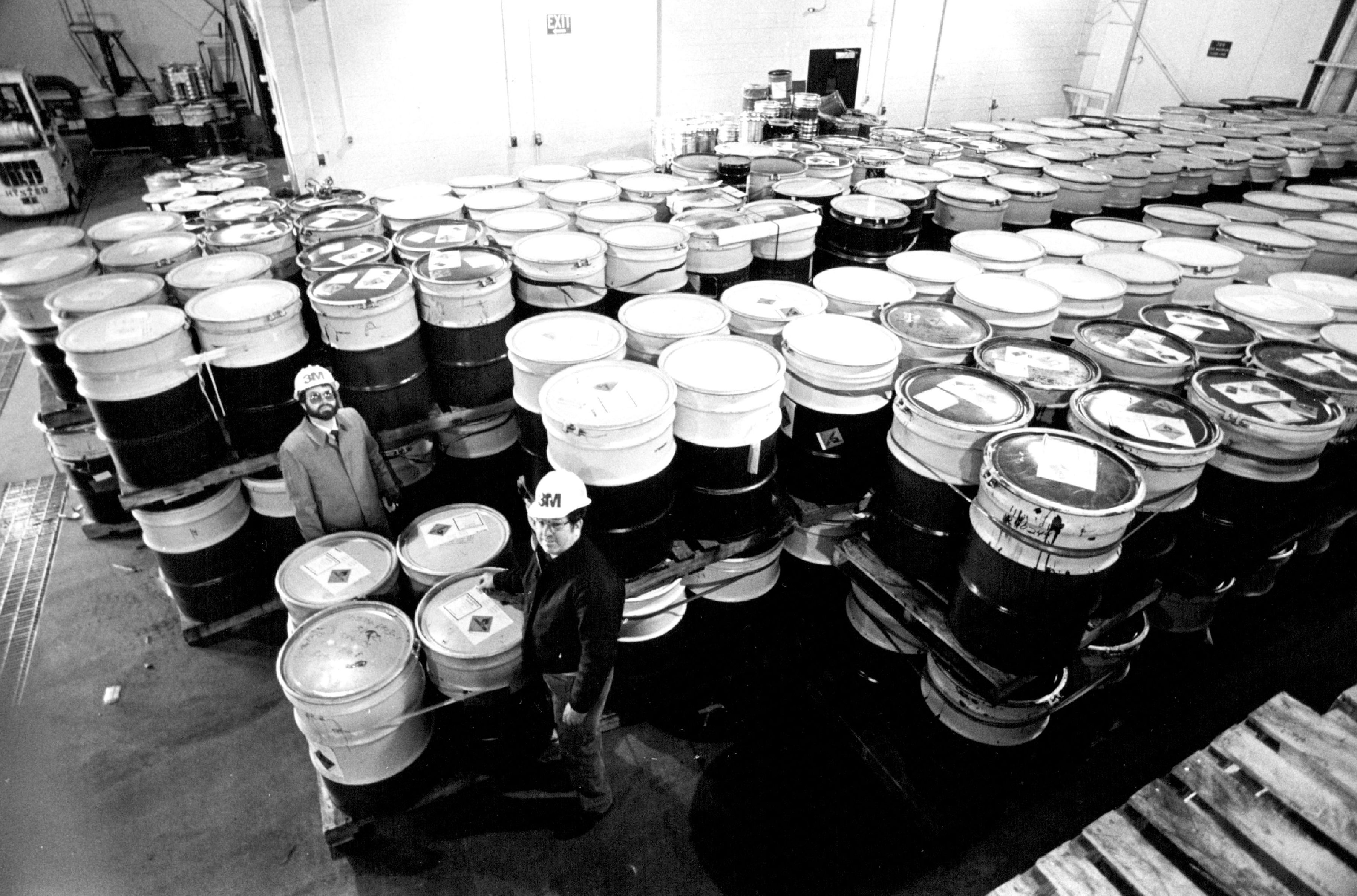
MB: After the war, a Minnesota-based company called 3M [originally the Minnesota Mining and Manufacturing Company] acquired patents for technology to produce PFAS. They actually hired some Manhattan Project chemists to parlay them [PFAS] into substances that could then be marketed to corporations for manufacturing and to the general public. So as early as the 1950s, you had products like Scotchgard and Teflon appearing on the market that incorporated these chemicals.
Now, the industry was also aware very early on that these chemicals were harmful. As early as the 1960s, the two main manufacturers, DuPont and 3M, knew that they were toxic. By the 1970s, they had discovered that these chemicals were accumulating in the blood of people all over the United States, even in places where there was no known source — so places where they weren't being used in manufacturing. They eventually discovered that this was true all over the world.
They looked at thousands of blood samples collected from around the globe, and some from past medical studies. The only samples they could find anywhere that didn't contain these chemicals were collected from Korean War veterans before 1952 — before these chemicals went into wide-scale production. What that tells us is that these chemicals were probably already ubiquitous in the environment by the 1960s.
The blood data set off alarms inside DuPont and 3M, and they began intensively studying the health and environmental effects of these chemicals. They quickly discovered that they [PFAS] did not break down in the environment at all and that they had a devastating effect on lab animals.
In one case, they tested the Teflon chemical PFOA [perfluorooctanoic acid] on monkeys, which were chosen because they're more biologically similar to humans than lab rats, and all of the monkeys died.
These two companies [3M and DuPont] also began monitoring the effects of the chemicals on their workers, and they linked them to a number of diseases, like kidney cancer, prostate cancer, leukemia, organ damage, drops in testosterone, and immune suppression.
But most alarmingly of all, they found that there was a link to birth defects. In the 1970s, 3M conducted a study that found that rats who were exposed to this Teflon chemical [PFOA] while they were pregnant gave birth to pups with facial deformities.
DuPont decided to see if the same was true of its workers, conducting what it called a "pregnancy outcome questionnaire". The goal, according to internal DuPont documents, was to determine whether this chemical caused "abnormal children."
Two of eight women who gave birth during the course of this study gave birth to children with facial defects very similar to the ones that had been found in rats. I interviewed one of these women [Sue Bailey] and her son [Bucky Bailey] when I first began reporting on this story, and their experience was completely wrenching. This young man went through 40 or so surgeries within the first year of his life to correct these deformities.

BT: So what happened to the evidence?
MB: Rather than alerting the public or regulators, DuPont simply shut down the study and continued exposing workers to these chemicals. In fact, they temporarily moved female workers out of the area where they were exposed to these chemicals and then moved them back.
But I think, perhaps more importantly, they continued exposing the public to these chemicals.
By this point DuPont was aware that these chemicals were polluting drinking water around its plants and all over the country. And there are very simple steps that DuPont could have taken to filter these chemicals so they didn't leave its factories, but it opted not to do so because the additional expense wasn't justified in the eyes of executives.
BT: That seems shortsighted, given that it has already led to big lawsuits. Are you suggesting they thought they could get away with it?
MB: They came to the conclusion that they would already be liable for the 32 years that they'd been producing the chemical, and so any additional liability would be incremental.
It was a very cold calculation. They didn't think that they wouldn't get caught; they just thought that the additional expense of installing these filters would be less than the additional liability they would face from not installing them.
BT: The thing you note that really puts the cherry on all of this is that tests have found there really is no safe level of exposure to these chemicals.
MB: They couldn't find a dose at which PFAS didn't have health impacts.
The U.S. EPA [Environmental Protection Agency] has set safety standards for the two best known and best studied of these chemicals [PFOA and PFOS] in drinking water, and the safety standard is 4 parts per trillion — which is the lowest level you can reliably detect — but the health based goal is zero. So the EPA has essentially said there is no safe level of exposure to these chemicals.
BT: In the end, it was left to the ordinary people in the worst-hit places to fight back. How did regulators — the EPA, the FDA, even mayors of poisoned towns, look the other way for so long?
MB: Most of the evidence was not made public, right? Industry withheld all of its own internal data. And they were allowed to do this partially because of the way we regulate chemicals.
When the current [chemical] regulation [system] in the United States was developed, chemicals that were already on the market were presumed safe and grandfathered in.
Things are a little different in Europe, which has since embraced the precautionary principle [Editor's note: The precautionary principle means regulators can ban or restrict a substance if there's some evidence of danger to human health, even if this link has yet to be proven].
But as a result of this, the vast majority of chemicals [on the U.S. market] have never been tested for safety, and companies don't have to provide their own internal data.
It was a very cold calculation. They didn't think that they wouldn't get caught; they just thought that the additional expense of installing these filters would be less than the additional liability they would face from not installing them.
In fact, the only reason PFAS even came onto regulatory regulators' radar — and later, the radar of scientists and the public — was because a family of West Virginia farmers sued DuPont after runoff from a DuPont landfill began killing off their cattle. That exposed this whole cover-up and is the only reason that the world knows these chemicals exist.
But it didn't happen until the late 1990s. So scientists, the public and regulators weren't aware that these chemicals existed — despite having been in circulation for 80 years — until about 25 years ago. That's a key piece of the puzzle.
But even after this information came to light, the chemical industry launched this Big Tobacco-style campaign to downplay or suppress evidence that these chemicals were harmful. They deployed all kinds of strategies: They published their own internal studies in the scientific literature with more troubling findings downplayed; they hired outside scientists to defend the safety of these chemicals; they funded or founded ostensibly independent think tanks and scientific organizations to discredit the science on PFAS and other toxic chemicals, and undermine science-based regulation; and they flooded Congress with lobbyists.
As a result, even after this information entered the public record, it took another 15, almost 20, years for it to really register with the public.
BT: You write in your book that, more recently, chemical companies have switched to using shorter chain fluorocarbons. What are they? How widely are they being used? And how dangerous are they compared to legacy chemicals like PFOA?
MB: The truth is that we don't know what chemicals are being used, and how widely they're being used, because manufacturers don't have to disclose which chemicals they are using. So when we have discovered what chemicals are being used in place of the two that have theoretically been phased out, it's more or less by happenstance or because scientists go through some elaborate detective work.
Now we do know that PFOA, the Teflon chemical that I've spoken about, was replaced in DuPont's [whose perforamnce chemicals business was later spun out to become Chemours] formulations, at least, with Gen X. DuPont claimed that Gen X was safer than PFOA, but we now know that that is probably not true. So the evidence that has been collected so far shows that Gen X is probably as toxic as PFOA, and in other ways it is more problematic as it moves more readily through the environment.
They [shorter-chain fluorocarbons] build up more rapidly in crops, leading to higher concentrations in food, and they are more difficult to remove from drinking water. All over the country, communities have spent hundreds of millions or even billions of dollars installing filtration systems to remove the better studied PFAS.
But [these systems] aren't particularly useful for Gen X. And scientists are now discovering that there are other forms of PFAS that are even more abundant in the environment that can't be removed with the existing technologies at all, at least not technology that's feasible to deploy on a utility scale.
One of the EPA scientists I spoke to in the course of my research likened it to cutting off the head of the Hydra and having it sprout more to replace it. He was one of the scientists that spent years reverse-engineering the identity of Gen X by testing water downstream of a plant.

BT: What can we do to finally stop PFAS? Especially if harmful new chemicals are developed quicker than they can be detected and identified, let alone regulated?
MB: You can't as long as you're regulating chemicals one by one. But if you start regulating them as a class, I think it's possible for regulatory agencies to be much more effective. In the case of PFAS, you have a class of probably around 15,000 chemicals.
RELATED STORIES- Scientists transform 'forever chemicals' in water into fluoride with new process
- PFAS 'forever chemicals' to officially be removed from food packaging, FDA says
- How worried should we be about PFAS, the 'forever chemicals'?
And I think in response to the unique threat they pose, you actually do have some government agencies beginning to regulate them as a class. A lot of the U.S. states that have bans have banned the entire class of chemicals, and they include exceptions for uses that are essential to the health, functioning and safety of society, and for which there are no substitutes available. But otherwise they are banned. End of story.
The EU ban is supposed to be a class-wide ban. There are lobbyists in Brussels right now fighting to insert loopholes into it, but I think Europe has a historic opportunity right now, because a strong PFAS ban in Europe would move us a lot closer to turning off the tap on these chemicals. Regulating them as a class is the only solution.
Editor's note: This interview has been condensed, and edited for clarity. 3M did not respond to Live Science's request for comment by the time of publication. DuPont de Nemours told Live Science in an email that it emerged as a new and independent company in 2019, and that it cannot comment on products, events and other actions that occurred while E.I. DuPont de Nemours ran its performance chemicals business, or after that business was spun off into the independently-owned and operated Chemours Company in 2015.
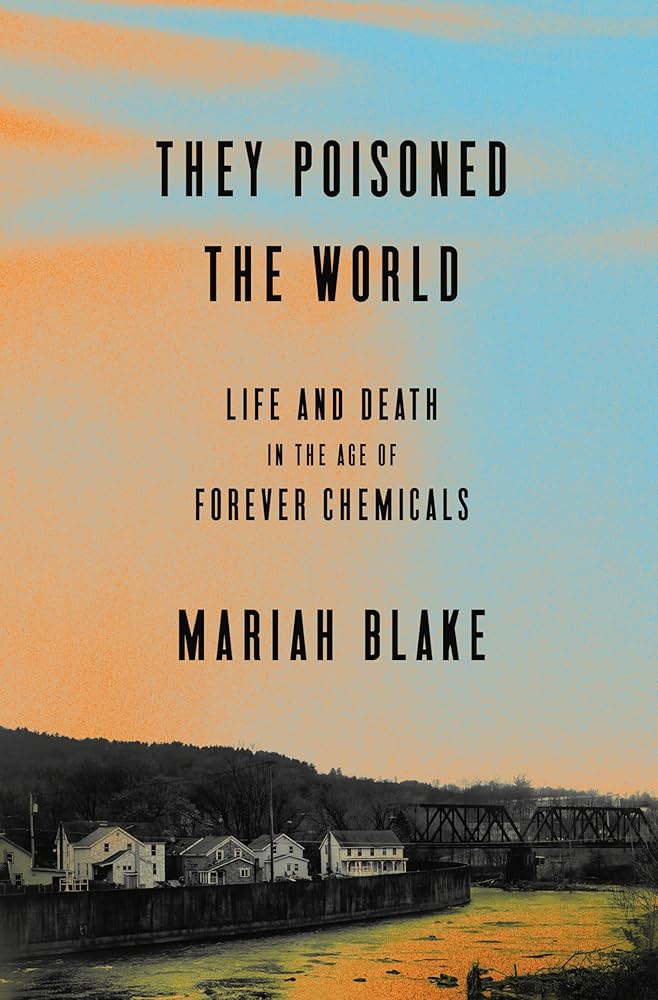
"They Poisoned The World" was a finalist for the 2026 PEN/E.O. Wilson Literary Science Writing Award.
 Ben TurnerActing Trending News Editor
Ben Turner is a U.K. based writer and editor at Live Science. He covers physics and astronomy, tech and climate change. He graduated from University College London with a degree in particle physics before training as a journalist. When he's not writing, Ben enjoys reading literature, playing the guitar and embarrassing himself with chess.
View MoreYou must confirm your public display name before commenting
Please logout and then login again, you will then be prompted to enter your display name.
Logout LATEST ARTICLES 1DNA reveals ancestry of man buried in Stone Age monument in Spain, but his religion remains a mystery
- 2'So much magic': Artemis II shares first images from the far side of the moon, including new 'Earthset' and total eclipse in space
- 3AI 'mirages' mean tools used to analyze medical scans could fabricate their findings
- 4World's fattest parrot — on the verge of extinction 30 years ago — has record-breaking breeding season
- 5California declared war on smog in the 1970s. The knock-on effects were huge.