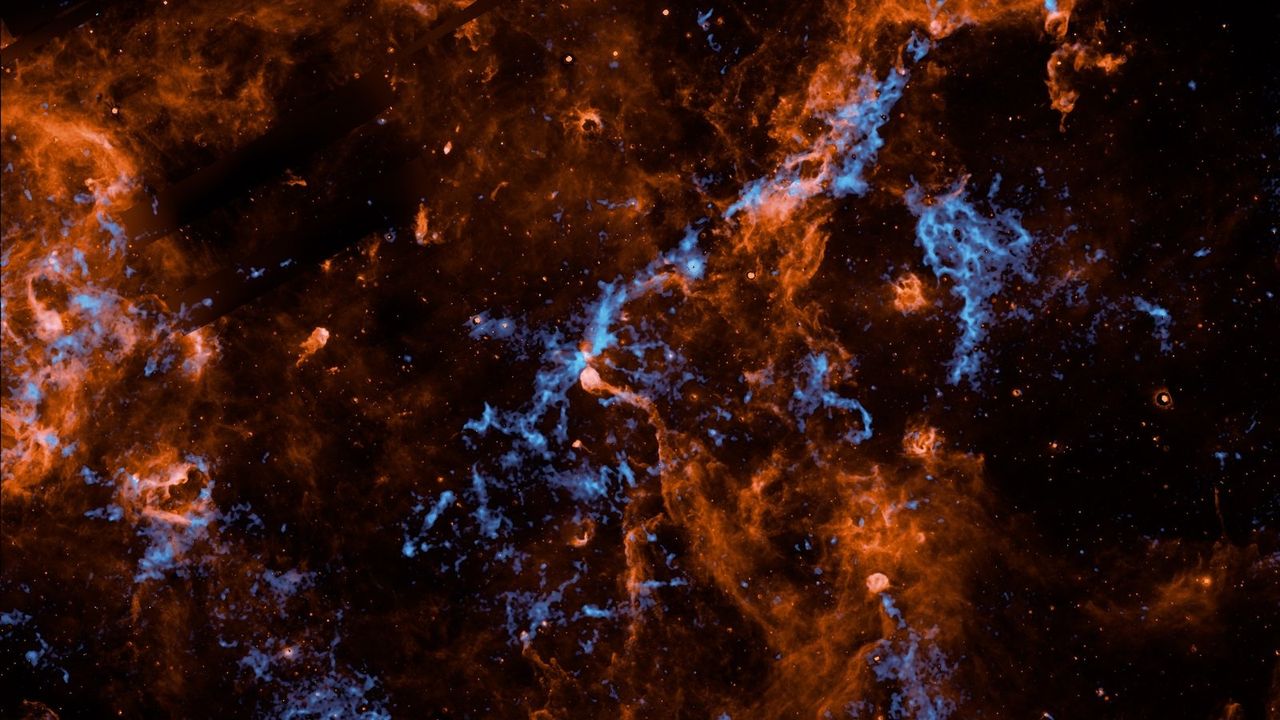
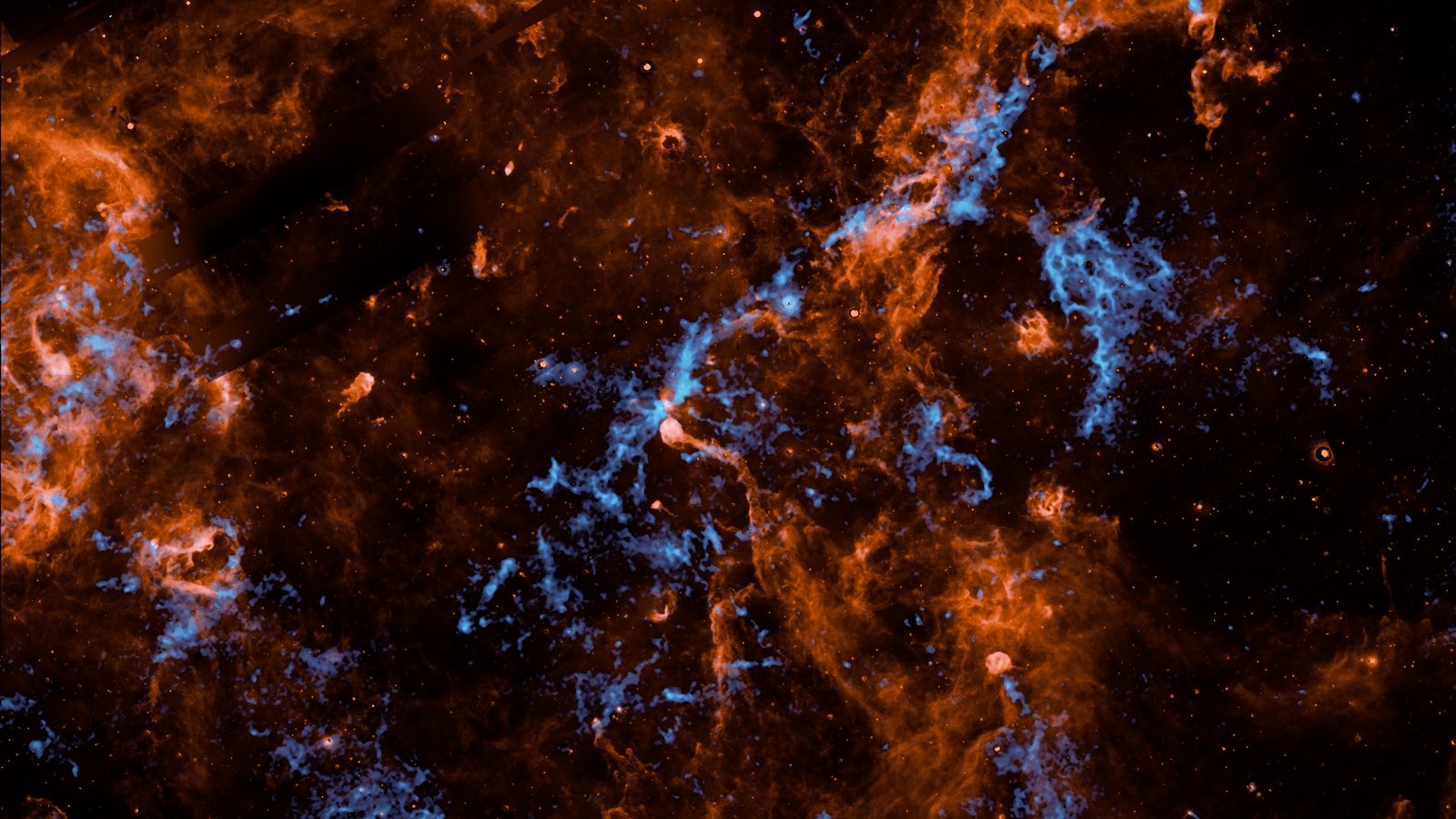
 The chemical signatures of water ice (shown in bright blue) and polycyclic aromatic hydrocarbons (orange) in Cygnus X, one of the most active and turbulent regions of star birth in our Milky Way galaxy. (Image credit: NASA/JPL-Caltech/IPAC/Hora et al.) Share this article 0 Join the conversation Follow us Add us as a preferred source on Google Newsletter Get the Space.com Newsletter
 Breaking space news, the latest updates on rocket launches, skywatching events and more!
Contact me with news and offers from other Future brands Receive email from us on behalf of our trusted partners or sponsors By submitting your information you agree to the Terms & Conditions and Privacy Policy and are aged 16 or over.You are now subscribed
Your newsletter sign-up was successful
Want to add more newsletters?
An account already exists for this email address, please log in. Subscribe to our newsletterA striking new image from NASA's newest space telescope reveals vast reservoirs of water ice stretching across one of the Milky Way's most chaotic stellar nurseries, offering a glimpse into where much of the universe's water — including that found in Earth's oceans — may originate and be stored.
The observations, captured by SPHEREx, map icy material across the turbulent Cygnus X region, a massive star-forming complex filled with dense clouds of gas and dust where new stars are rapidly emerging. The snapshot, based on data collected in 2025 and released this week, highlights water ice in bright blue alongside intertwining dark dust lanes that weave through the region, dotted with pinpricks of light from newborn stars.
"These vast frozen complexes are like 'interstellar glaciers' that could deliver a massive water supply to new solar systems that will be born in the region," Phil Korngut, a SPHEREx instrument scientist and researcher at the California Institute of Technology, said in a statement.
"It's a profound idea that we are looking at a map of material that could rain on nascent planets and potentially support future life."
Researchers say they expected SPHEREx to find these ices only in front of individual bright stars, where starlight acts like a spotlight revealing any intervening material.
"But this is something different," study lead author Joseph Hora, an astronomer at the Center for Astrophysics (CfA) at Harvard & Smithsonian in Massachusetts, said in the same statement.
Get the Space.com NewsletterContact me with news and offers from other Future brandsReceive email from us on behalf of our trusted partners or sponsorsTo the surprise of the mission team, SPHEREx captured diffuse background light passing through "entire dust clouds" along the galactic plane, where most of the galaxy's stars, gas and dust are concentrated.
"SPHEREx can see the spatial distribution of the ices they contain in incredible detail," said Hora.
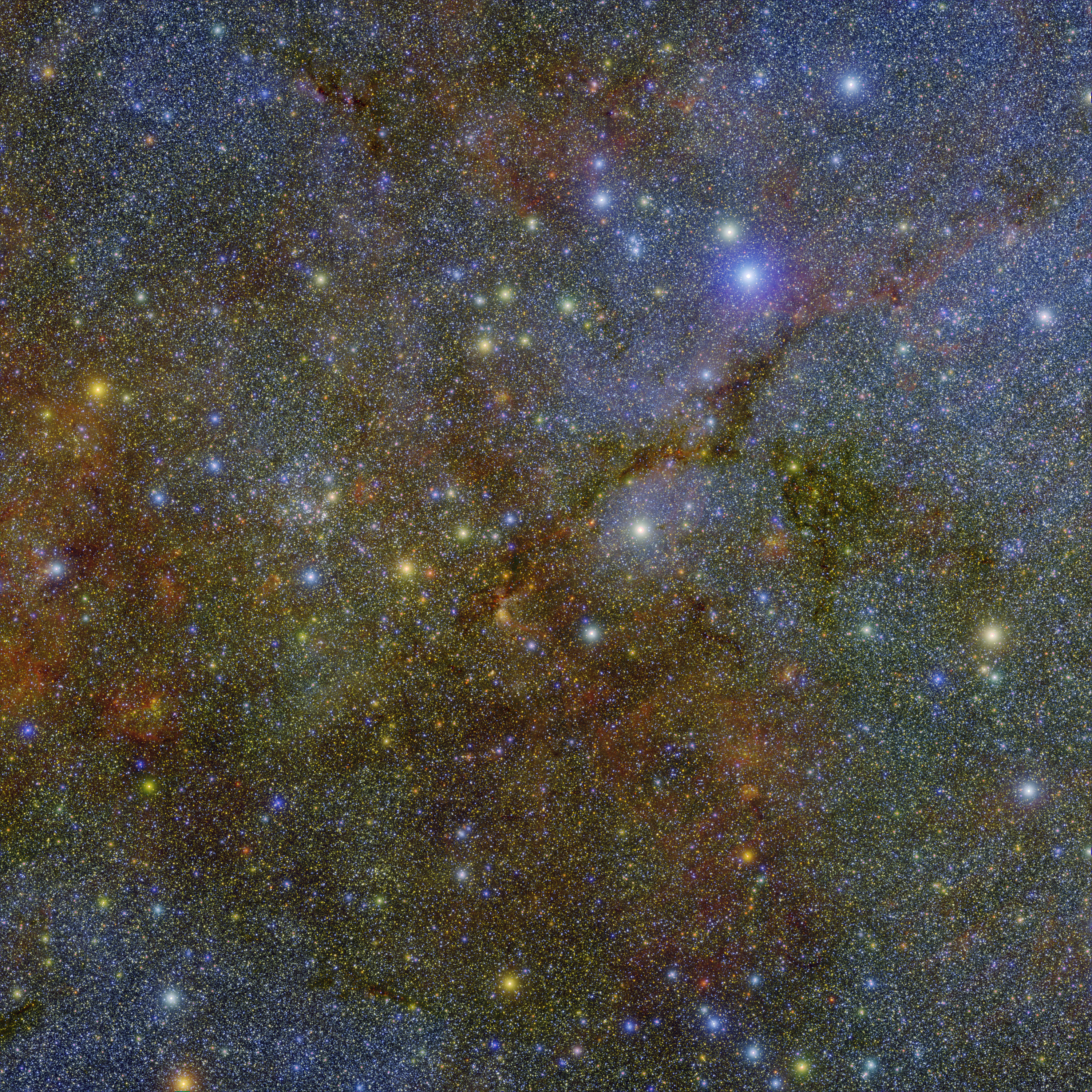
The study supports a long-standing idea that interstellar ice forms on the surfaces of tiny dust grains "no larger than particles found in the smoke from a candle," the NASA statement says.
The findings also show that water ice is not evenly distributed but instead concentrates in the densest regions of cosmic dust, which act as protective shields and block harsh ultraviolet radiation from nearby newborn stars and allow those fragile molecules to survive across eons.
As SPHEREx continues its planned two-year all-sky survey, researchers say they are excited to build an increasingly detailed map of how water and other molecules, like carbon dioxide, are distributed across the Milky Way, and how they respond to varying levels of ultraviolet radiation.
"This is just the beginning for the mission," the NASA statement read.
A study about these results was published on April 15 in The Astrophysical Journal.
 Sharmila KuthunurContributing Writer
Sharmila Kuthunur is an independent space journalist based in Bengaluru, India. Her work has also appeared in Scientific American, Science, Astronomy and Live Science, among other publications. She holds a master's degree in journalism from Northeastern University in Boston.
View MoreYou must confirm your public display name before commenting
Please logout and then login again, you will then be prompted to enter your display name.
Logout MORE FROM SPACE... 1Ancient volcanic ash seen blowing across Mars in new spacecraft images
- 2James Webb Space Telescope peers into a dying star surrounded by mysterious buckyballs: 'The structures we're seeing now are breathtaking'
- 3Interstellar invader comet 3I/ATLAS formed in a world much colder than the solar system
- 4NASA's TESS spacecraft discovers a weird system of exoplanets unlike anything seen before
- 5Nebula sparkles in new Hubble snapshot | Space photo of the day for April 23, 2026