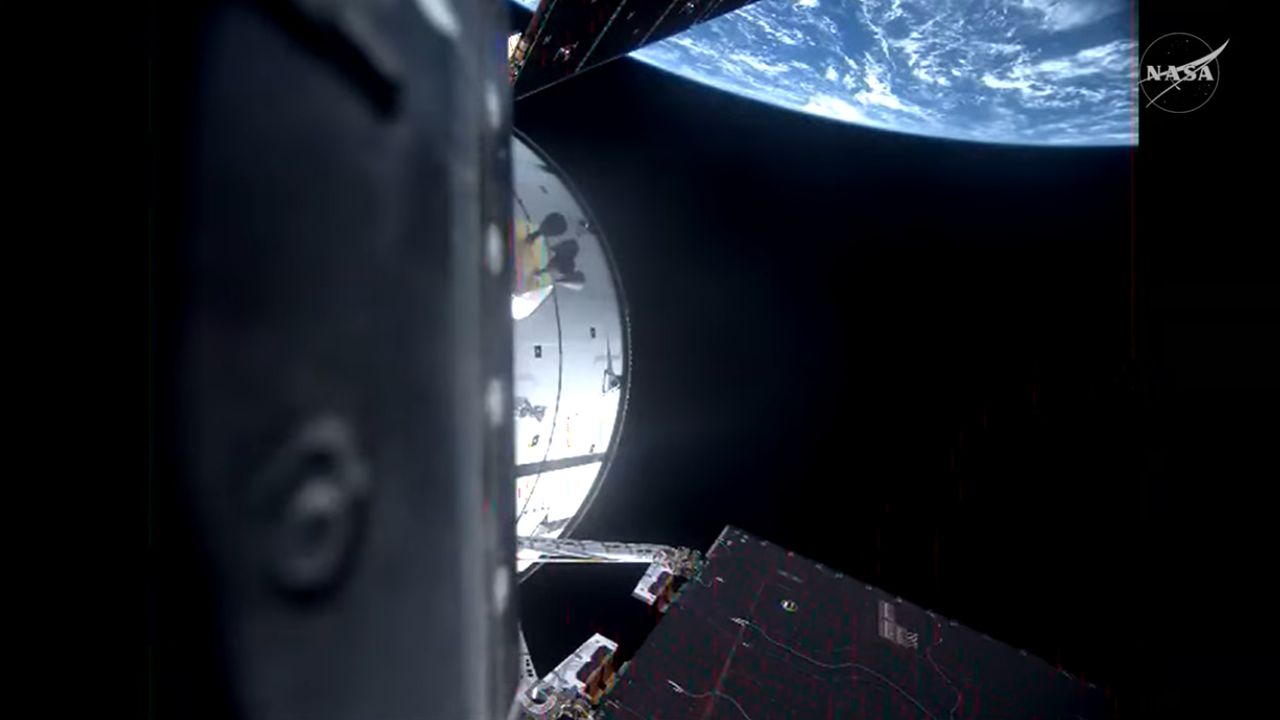
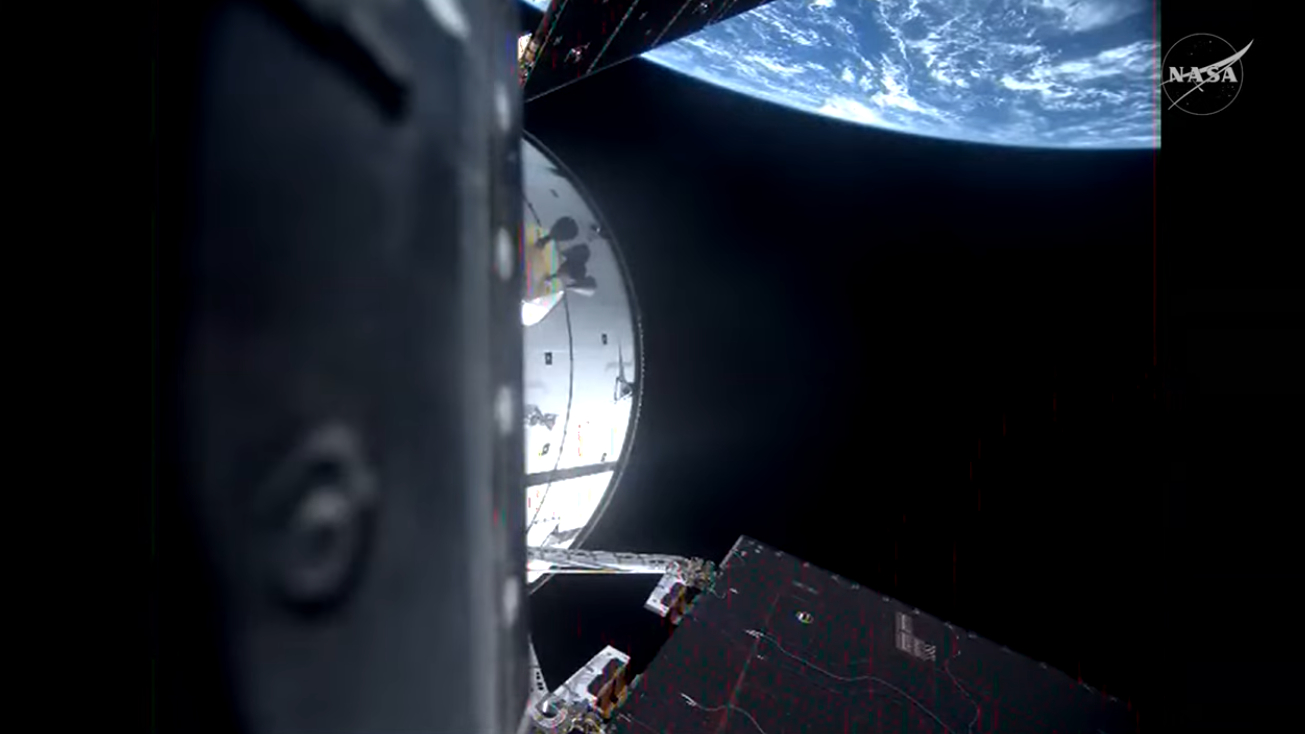
 A view of Earth from space as seen from NASA's Orion spacecraft after launching on the Artemis 2 mission on April 1, 2026. (Image credit: NASA) Share this article 0 Join the conversation Follow us Add us as a preferred source on Google Newsletter Get the Space.com Newsletter
 Breaking space news, the latest updates on rocket launches, skywatching events and more!
Contact me with news and offers from other Future brands Receive email from us on behalf of our trusted partners or sponsors By submitting your information you agree to the Terms & Conditions and Privacy Policy and are aged 16 or over.You are now subscribed
Your newsletter sign-up was successful
Want to add more newsletters?
An account already exists for this email address, please log in. Subscribe to our newsletterCAPE CANAVERAL, Fla. — There's a little potty problem on NASA's Artemis 2 moon ship.
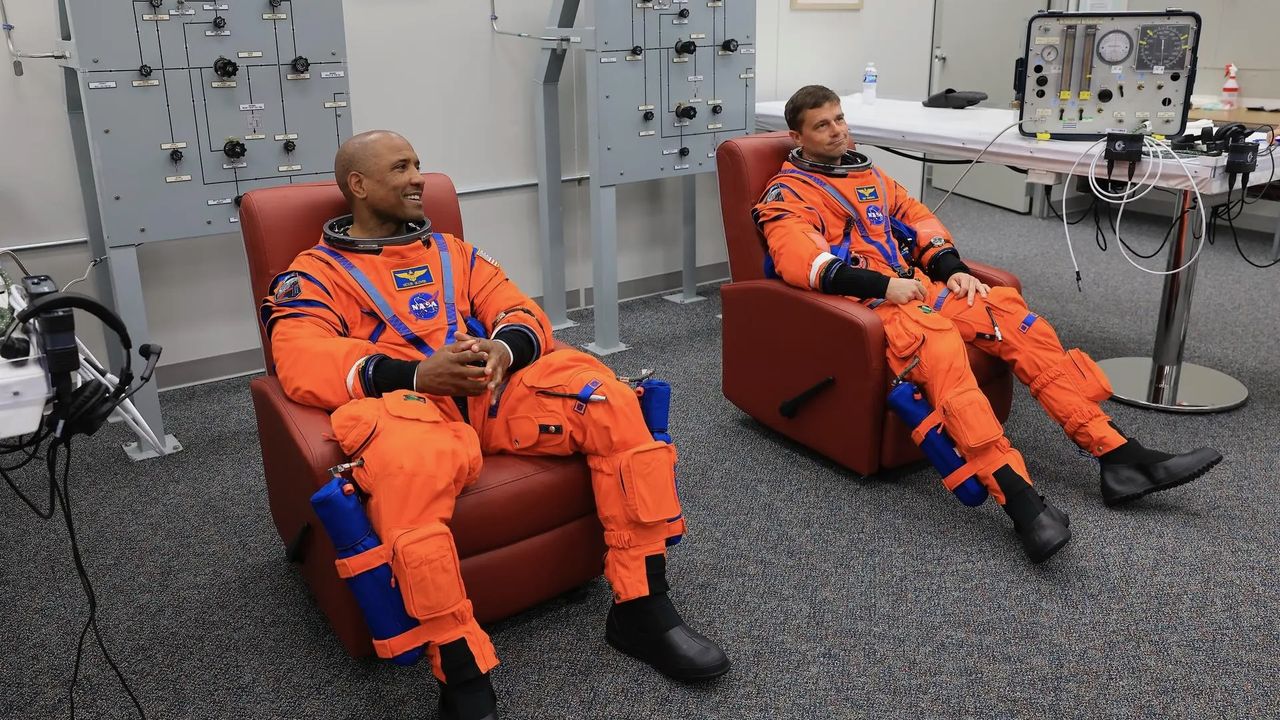
Within hours of launch on Wednesday evening (April 1), the four astronauts of NASA's Artemis 2 moon mission reported a glitch in what may have been the most anticipated new creature comfort of their Orion spacecraft: their space toilet.
Artemis 2 mission specialist Christina Koch noted an issue starting up part of the Orion capsule's toilet — which NASA calls the Universal Waste Management System — that deals with urine collection.
"The toilet fan is reported to be jammed," NASA spokesperson Gary Jordan said during live mission commentary. "Now the ground teams are coming up with instructions on how to get into the fan and clear that area to revive the toilet for the mission."
Norm Knight, NASA's director of flight operations, told reporters here at the Kennedy Space Center that the malfunction was due to a controller issue on the toilet. But NASA confirmed that astronauts can still use the space commode to poop, just not urinate for now, though engineers are working to restore it to full service.
"In the meantime, they're getting their contingency — their backup waste management capabilities specifically for urine," Jordan said. "The fecal collection of the toilet, that specific capability, can still be used with the waste management system aboard Orion."
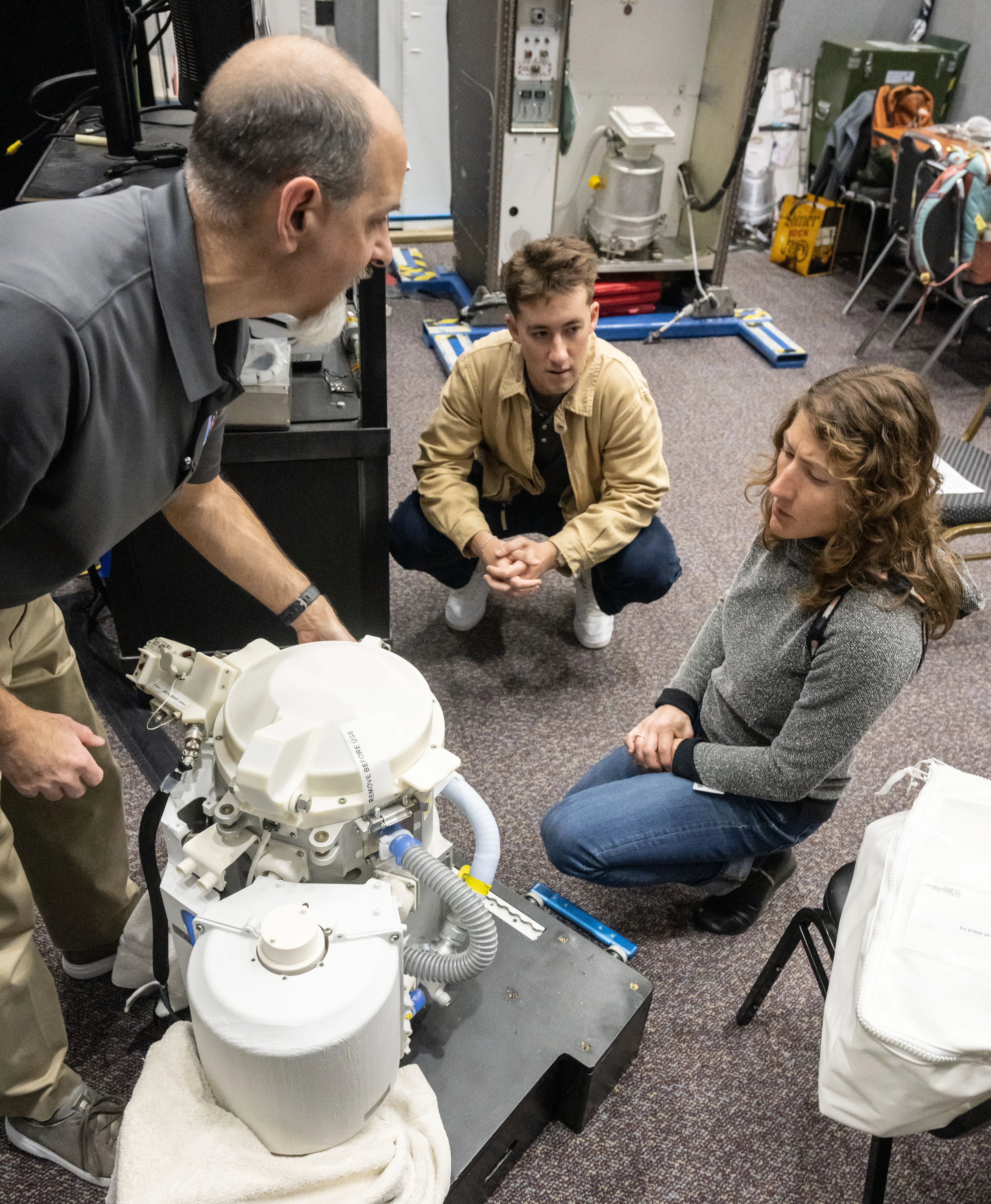
That may be a relief for the Artemis 2 astronauts, in more ways than one. NASA's Apollo astronauts did not have the luxury of a toilet when they flew to the moon in the 1960s and 1970s. They peed and pooped in plastic bags, then stowed the solid waste and vented urine overboard into space.
Get the Space.com NewsletterContact me with news and offers from other Future brandsReceive email from us on behalf of our trusted partners or sponsorsThe toilet aboard Orion is a smaller, more compact version of the bathrooms on the International Space Station. It's built into the floor of the Orion capsule and allows Artemis 2 astronauts some privacy while taking care of business. While the Orion spacecraft is larger than NASA's Apollo capsules, it's still cramped — the interior has been compared to that of two SUVs.
"The one place that we can go on our mission where we can feel like we're alone for a moment," Artemis 2 mission specialist Jeremy Hansen of the Canadian Space Agency said of the toilet in in a video overview.
Vlog 18: The lunar loo – or going to the bathroom during a mission to the Moon - YouTube Watch On
 The toilet is technically known as the "hygiene bay" and has about as much room as the bathroom on a passenger jet, according to Lockheed Martin, which built the Orion spacecraft for NASA. It's part of Orion's systems to support an astronaut crew — NASA's uncrewed Artemis 1 test flight to the moon in 2022 didn't carry one — but there are backup systems aboard, like those Apollo-era bags, if they're needed.
The Artemis 2 astronauts use foot restraints to help stay in place while using the toilet, which uses airflow to draw solid waste away from the body and into a collection device. For urine, each astronaut has his or her own personal funnel to use, with a fan that draws the urine into a tank.
"That's absolutely an important component on this ship," Blaine Brown, Lockheed Martin's director of Orion spacecraft mechanical systems, told Space.com in an interview. "You can call it a luxury. Some call it a necessity."
NASA's Artemis 2 mission is a historic test flight to send astronauts on a 10-day trip around the moon. It's the first crewed flight of the Orion spacecraft and the Space Launch System rocket that launched them on their way.
The mission is the vanguard of NASA's Artemis program, which aims to land astronauts on the moon by 2028 and begin a permanent moon base by 2032.
 Tariq MalikEditor-in-Chief
Tariq is the award-winning Editor-in-Chief of Space.com and joined the team in 2001. He covers human spaceflight, as well as skywatching and entertainment. He became Space.com's Editor-in-Chief in 2019. Before joining Space.com, Tariq was a staff reporter for The Los Angeles Times covering education and city beats in La Habra, Fullerton and Huntington Beach. He's a recipient of the 2022 Harry Kolcum Award for excellence in space reporting and the 2025 Space Pioneer Award from the National Space Society. He is an Eagle Scout and Space Camp alum with journalism degrees from the USC and NYU. You can find Tariq at Space.com and as the co-host to the This Week In Space podcast on the TWiT network. To see his latest project, you can follow Tariq on Twitter @tariqjmalik.
View MoreYou must confirm your public display name before commenting
Please logout and then login again, you will then be prompted to enter your display name.
Logout MORE FROM SPACE... 1Why is the Artemis 2 rocket launch different from all other rocket launches?
 - 2NASA launches 4 astronauts to the moon on historic Artemis 2 voyage, a lunar leap for the 21st century
- 3'Project Hail Mary' end credits showcase stunning nebula photos captured over 400 hours by a single astrophotographer — here's the inside story
- 42 bright planets light up April evenings — here's where and when to look
- 5What do scientists hope to learn from NASA's historic Artemis 2 moon flyby?