 Image source, Getty ImagesImage caption,
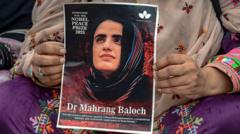
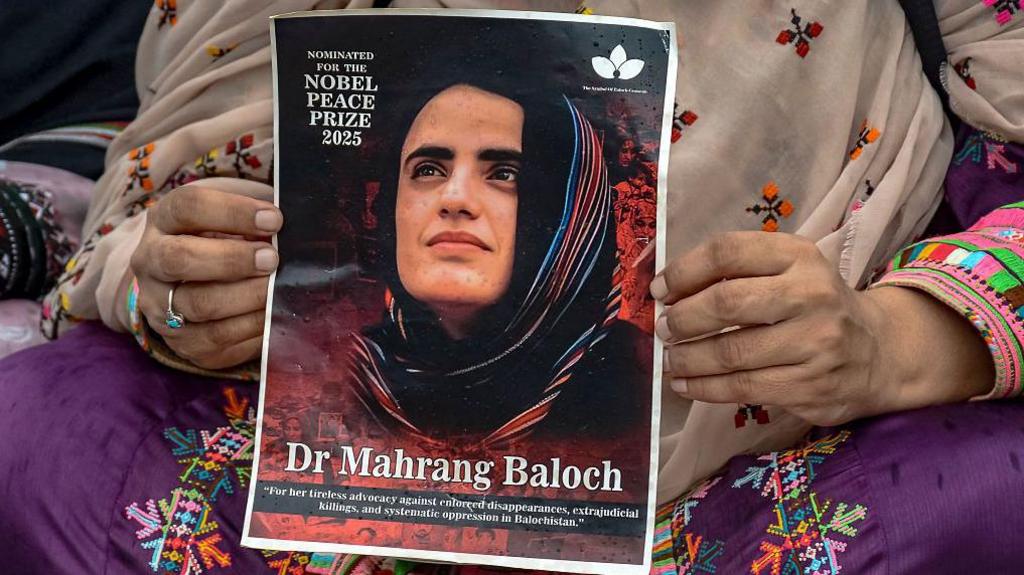
 Mahrang Baloch was nominated for the Nobel Peace Prize in 2025
ByFarhat JavedReporting fromIslamabad- Published24 June 2026
When Dr Mahrang Baloch was a teenager, she joined hundreds of families across Pakistan's south-western province of Balochistan to search for her father, who was allegedly arrested by security forces and later killed.
Years on, the doctor-turned-activist became one of the most recognisable faces of a movement demanding answers about enforced disappearances in the province.
Now, she faces life behind bars.
A Pakistani anti-terrorism court sentenced Mahrang and fellow activist Sibghatullah Shah to life imprisonment on Monday after convicting them of terrorism, sedition and murder in connection with the death of a paramilitary soldier during a protest in the town of Gwadar in 2024.
The pair deny the charges and are expected to appeal.
Speaking to the BBC after the ruling, Mahrang's sister Nadia Baloch said the family remained defiant.
"We will challenge this decision in the higher courts," said Nadia, who is also part of her sister's legal team.
Asked whether she had visited her sister in prison, Nadia paused.
"I don't have the courage to see her," she said, because she feels she has failed her by not getting Mahrang justice.
For Mahrang, 33, the issue of enforced disappearances is not merely political. It is deeply personal.
Her father, Abdul Ghaffar Langove, who was also a political activist, disappeared in 2009, when she was 16.
Nearly three years later Mahrang's family received a phone call informing them that his body had been found in Lasbela district, in the south of the province.
"When my father's body arrived, he was wearing the same clothes, now torn. He had been badly tortured," she told the BBC in her last interview before her arrest in 2025.
The circumstances of her father's death would shape much of her life.
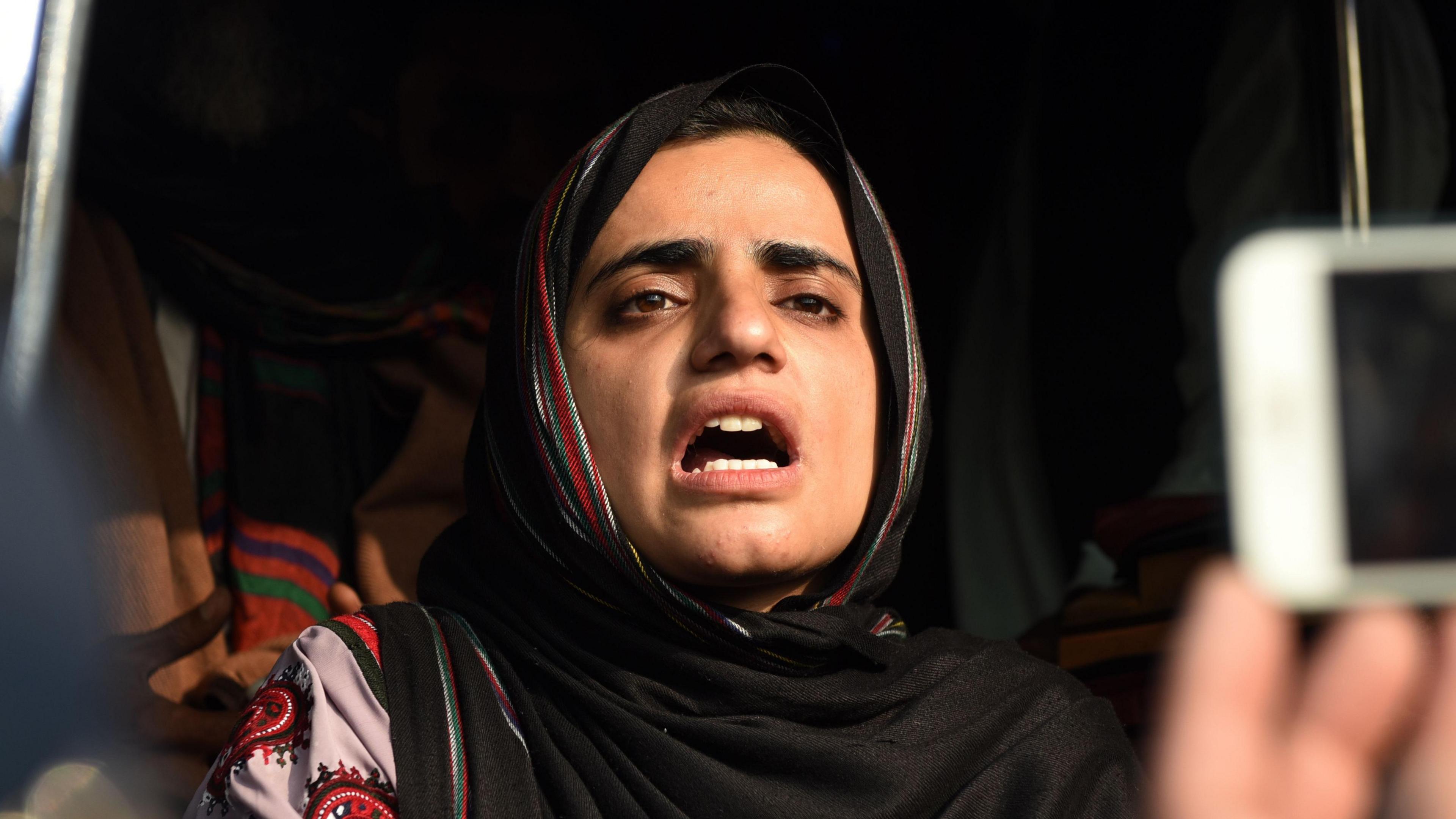 Image source, EPAImage caption,
 Mahrang Baloch has been campaigning since her teens, when her father vanished
In the following years, Mahrang became involved in campaigns demanding information about missing persons in Balochistan. Activists and rights groups say thousands of ethnic Baloch people have disappeared over the past two decades, alleging many were detained by security forces without due process or abducted, tortured and killed as part of operations against a long-running separatist insurgency.
The Pakistan government denies the allegations, insisting that many of the missing have joined separatist groups or fled the country.
Some come back after years, traumatised and broken - but many never return. Others are found in unmarked graves that have appeared across Balochistan, their bodies so disfigured they cannot be identified.
And then there are the women across generations whose lives are defined by waiting. Their grief, and the search for their relatives, became a central focus of Mahrang's activism.
Nominated for the Nobel Peace Prize last year, she has become one of the movement's most prominent leaders over the past decade.
Balochistan's struggle
In 2025, the BBC documented the stories of Baloch women who had spent years searching for missing fathers, husbands, brothers and sons. Some travelled from morgue to morgue, hoping to find answers. Others described the anguish of identifying bodies recovered from remote areas.
Balochistan is the largest of Pakistan's provinces, covering about 44% of its national territory. The land is rich with gas, coal, copper and gold.
But Balochistan has been locked out of progress. Access to many parts of the province is restricted for security reasons. Infrastructure is poor, electricity is sporadic and water is scarce. Foreign journalists are often prohibited from visiting.
Balochistan became a part of Pakistan in 1948, in the upheaval that followed the partition of British India - and in spite of opposition from some influential tribal leaders, who sought an independent state.
Some of that resistance turned militant, and has been stoked over the years by accusations that Pakistan has exploited the resource-rich region without investing in its development.
Militant groups like the Balochistan Liberation Army (BLA), designated a terrorist organisation by Pakistan, the United States and several other countries, have intensified their attacks in recent years. Bombings, assassinations and ambushes against security forces have become more frequent.
Disappearances in the province are widely believed to be part of Islamabad's strategy to crush the insurgency - but also to suppress dissent and weaken nationalist sentiment and support for an independent Balochistan.
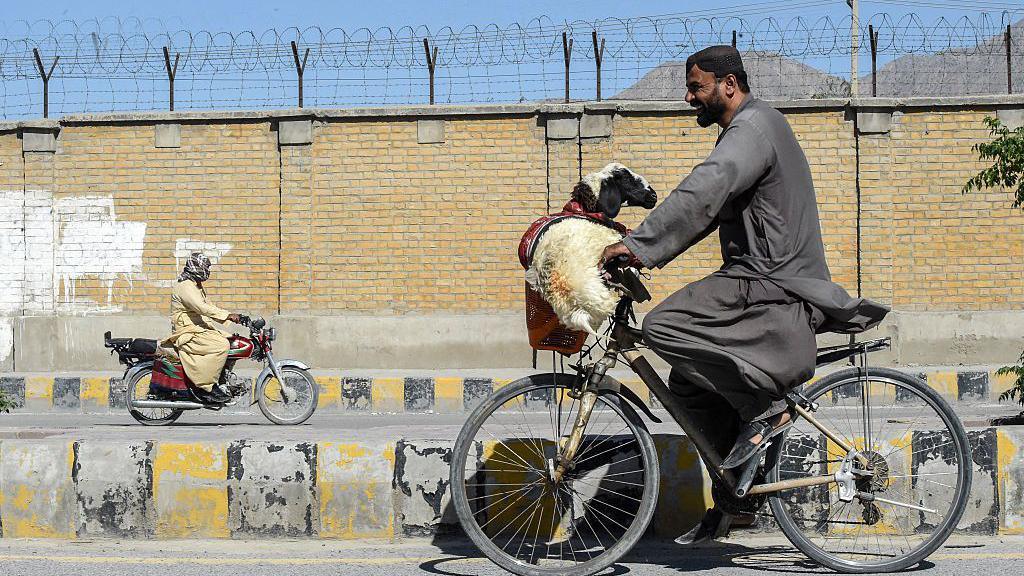 Image source, Getty ImagesImage caption,
 Balochistan is one of Pakistan's poorest regions because of a lack of investment and poor infrastructure
Many of the missing are suspected members or sympathisers of Baloch nationalist groups that demand more independence. But a significant number are ordinary people with no known political affiliations.
Many in the government deny that enforced disappearances are happening on a large scale, calling it "systematic propaganda".
"Self-disappearances exist too," said Balochistan's chief minister, Sarfraz Bugti. "How can I prove if someone was taken by intelligence agencies, police, FC [Frontier Constabulary], or anyone else?"
Pakistan's government also says that of more than 2,900 disappearance cases reported in Balochistan since 2011, around 80% have been resolved. Activists put the number of disappearances much higher, at around 7,000 – but there is no reliable source of data and no way to verify either side's claims.
Enforced disappearances intensified after 2006, when a key Baloch leader, Nawab Akbar Bugti, was killed in a military operation, leading to a rise in anti-state protests and armed insurgent activities.
The government cracked down in response – and as enforced disappearances increased, so did the number of bodies found on the streets.
After her father's death, Mahrang says her family's world "collapsed".
Then in 2017, her brother was picked up by security forces, according to the family, and detained for nearly three months.
"It was terrifying. I had made my mother believe that what happened to my father wouldn't happen to my brother. But it did," Mahrang told the BBC before her arrest more than a year ago.
"I was scared of looking at my phone, because it might be news of my brother's body being found somewhere."
It was then that Mahrang decided to fight against enforced disappearances and extrajudicial killings.
A legal battle begins
A trained doctor, Mahrang Baloch rose to prominence through the Baloch Yakjehti Committee (BYC), a movement that campaigns against enforced disappearances and alleged human rights abuses, while also advocating greater control over Balochistan's natural resources.
She led protests, organised long marches and became one of the most influential voices emerging from Balochistan – all despite death threats, legal challenges and travel bans.
Supporters view her as a peaceful human rights campaigner who gave a voice to families, especially women, affected by conflict.
Critics, including state officials, have accused her movement of amplifying narratives that benefit separatist groups – allegations she has consistently rejected.
In her last interview with the BBC, Mahrang said her campaign was for ensuring the rights of Balochistan's people.
"We want the right to live on our own land without persecution," she said. "We want our resources, our rights. We want this rule of fear and violence to end."
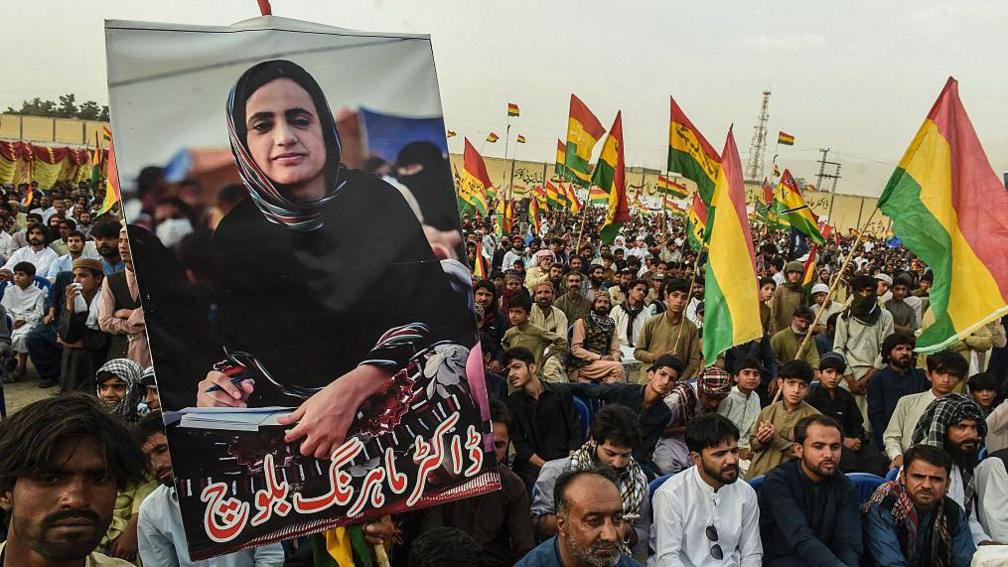 Image source, Getty ImagesImage caption,
 Over the years Mahrang Baloch became the face of the decades-old movement against enforced disappearances
In late 2023, she led hundreds of women on a 1,000-mile (1,600km) march to the capital Islamabad to demand information on the whereabouts of their family members. She was arrested twice during the journey.
Finally, Mahrang was arrested in March 2025, as she was leading a protest in Quetta after 13 unclaimed bodies - feared to be missing persons - were buried in the city. Authorities claimed they were militants killed after the Bolan Pass train hijacking, though this could not be independently verified.
Mahrang warned that enforced disappearances fuelled more resistance, rather than silencing it.
"They think dumping bodies will end this. But how can anyone forget losing their loved one this way? No human can endure this."
Throughout her campaigns and protests, she demanded institutional reforms.
"We don't want our children growing up in protest camps," she said. "Is that too much to ask?"
She was included in the BBC's 100 Women list in 2024 and was named among TIME magazine's TIME100 Next, recognising emerging leaders and changemakers around the world.
The life sentence marks the most serious challenge yet to her activism. Her family says it is an attempt to silence dissent in Balochistan.
Authorities insist the case concerns criminal acts rather than political activity.
But Mahrang's sister has questioned the integrity of the trial, and says her legal team remain determined to fight the case.
"It was not transparent," Nadia says. "Her lawyers were changed as we went on a protest demanding an open court trial; she was assigned state lawyers; she was not given access to witnesses' accounts or their details. She was not given a chance to a fair trial."
Before her arrest, Mahrang told the BBC she knew imprisonment was a possibility, but wasn't fearful of the prospect.
Now, her family says, she remains resolute, and her message is unchanged: "The struggle will continue."
Related topics
A life spent waiting - and searching rows of unclaimed bodies
- Published23 March 2025
Where is Balochistan and why is it the target of strikes?
- Published19 January 2024
Balochistan - the women of the vanished


