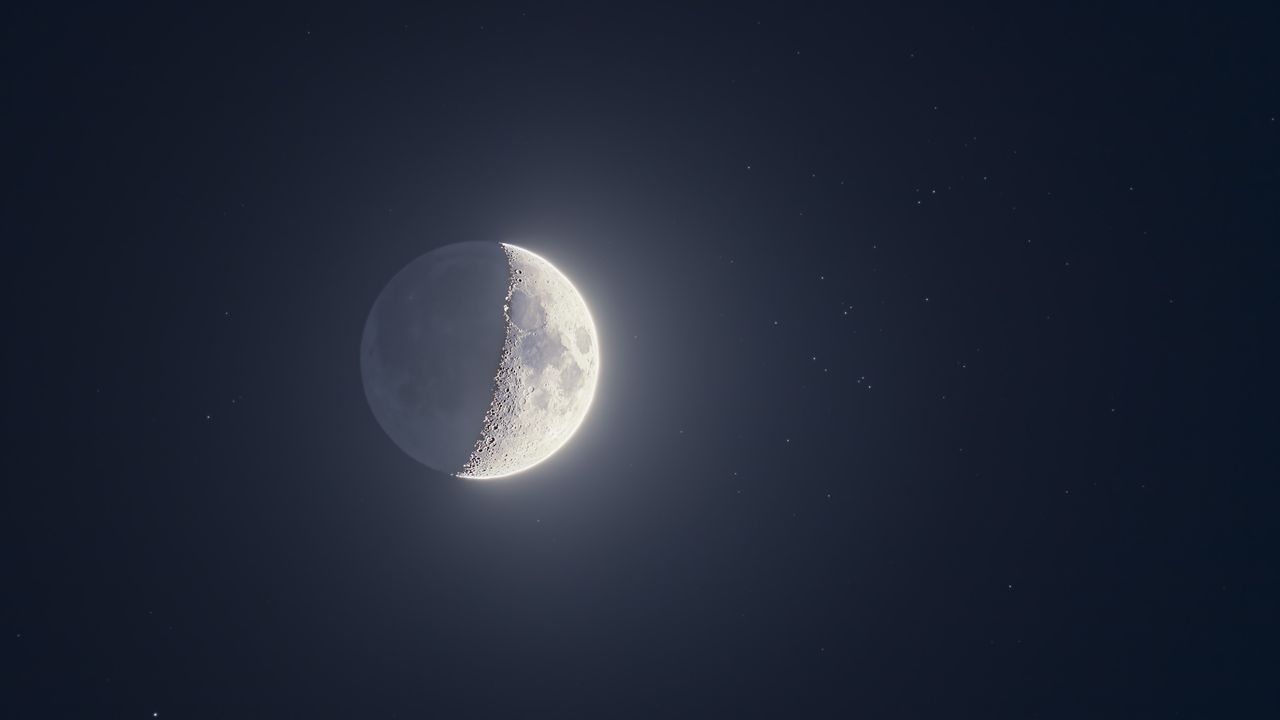
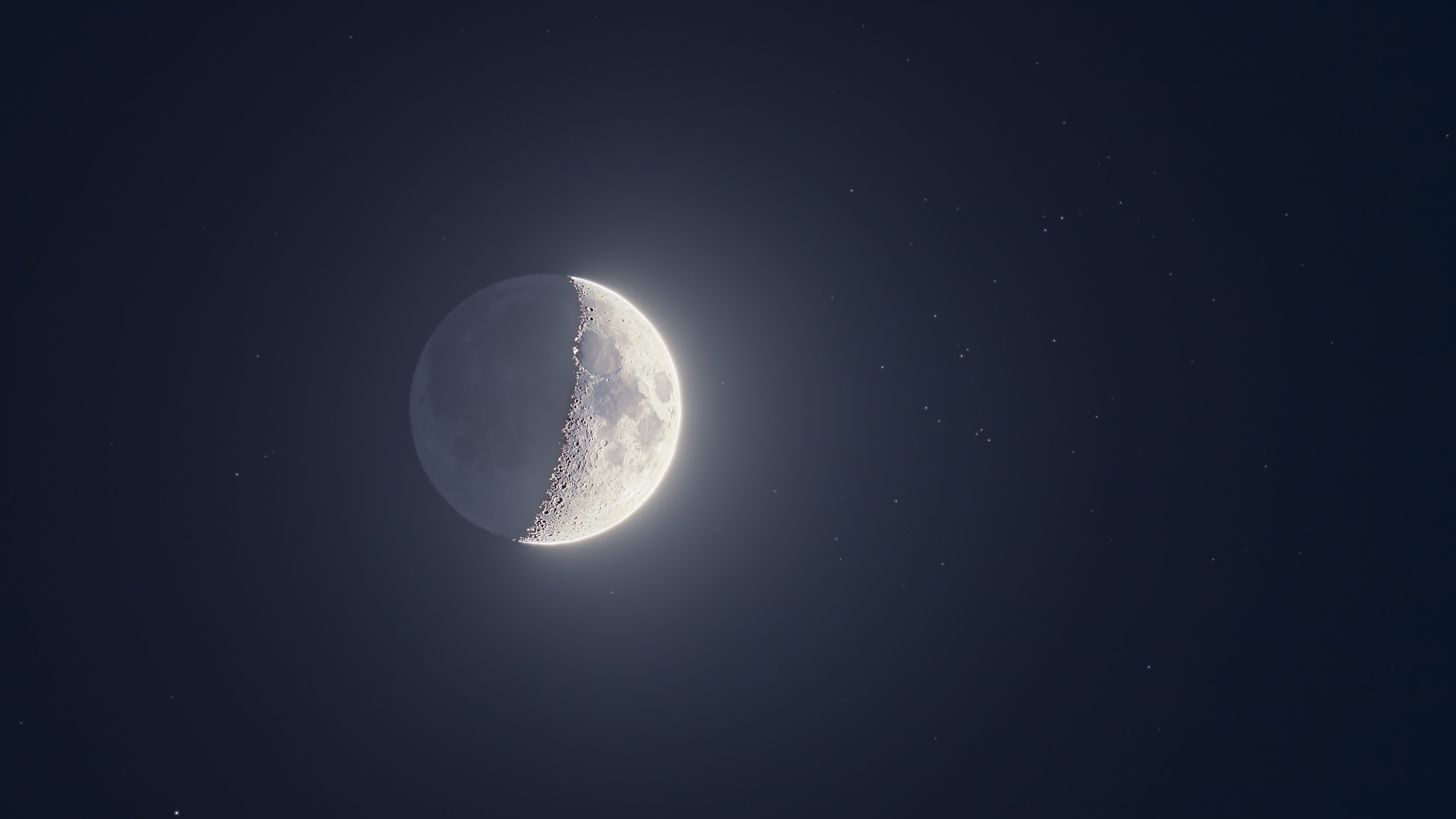
 The waxing moon shines next to Messier 44. (Image credit: Alan Dyer/VW PICS/Universal Images Group via Getty Images) Share this article 0 Join the conversation Add us as a preferred source on Google Newsletter Subscribe to our newsletter
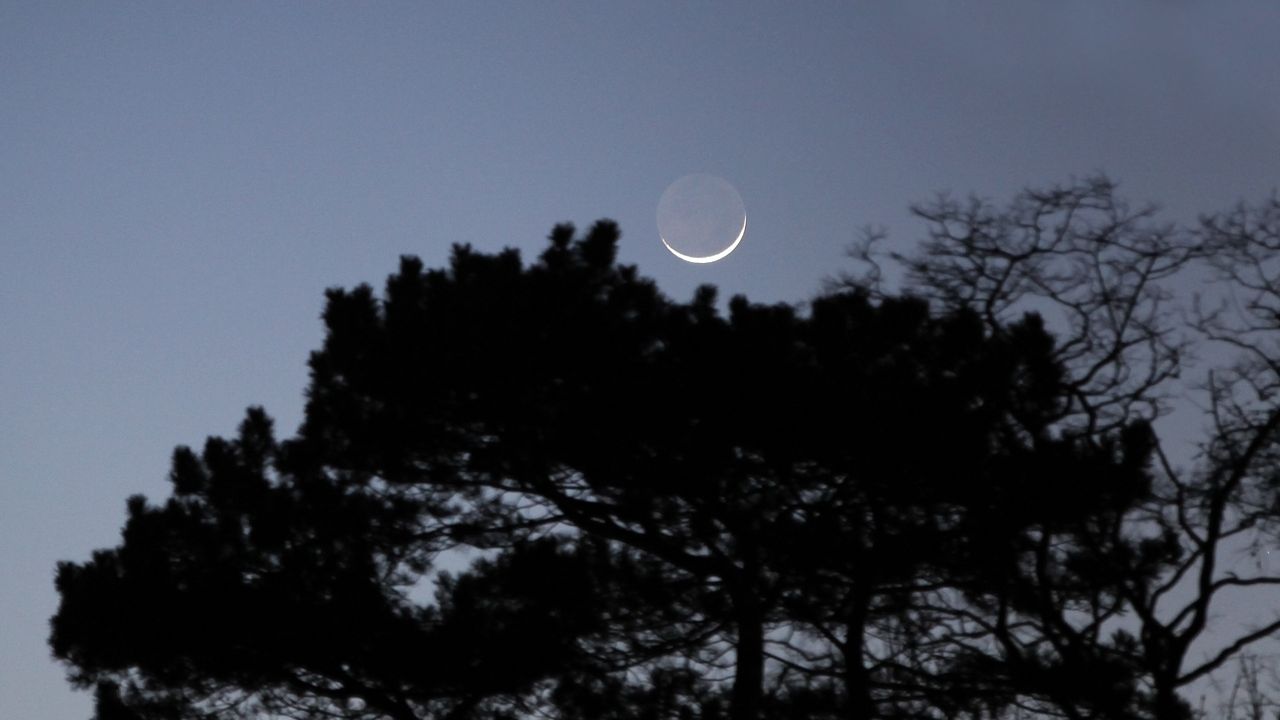
 Look west after sunset on May 21 to see the crescent moon shining alongside the Beehive Cluster in the constellation Cancer, while Jupiter, Venus and elusive Mercury line up nearby in the evening sky.
Nikon 10x50 Aculon A211 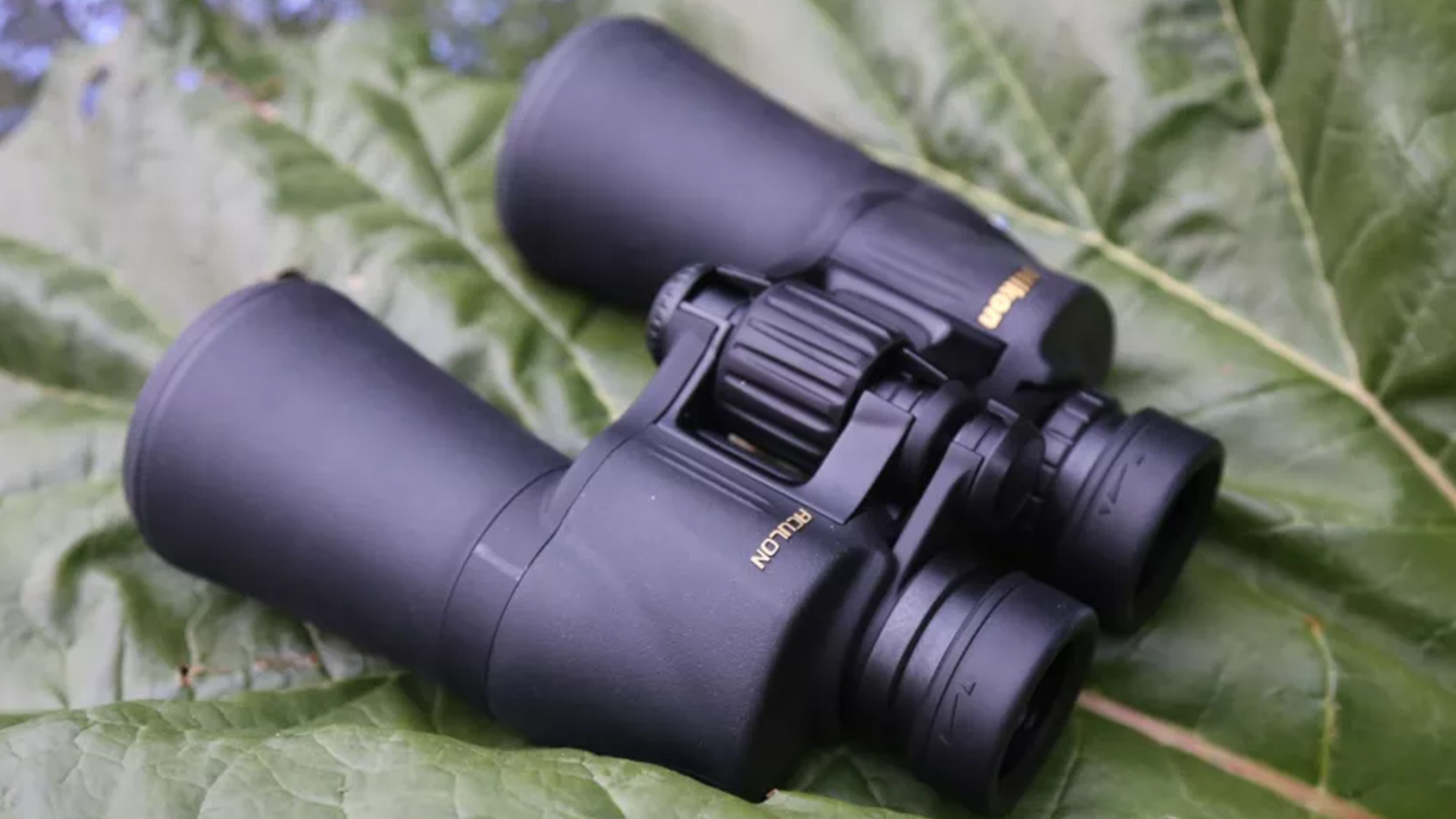
Look no further for quality optics at a great price, the Nikon Aculon A211 binoculars offer BaK-4 prisms, 50mm objective lenses and 10x magnification. It's hard to find such a top-quality pair of binoculars that are also affordable. Read our Nikon 10x50 Aculon A211 binoculars review.
Jupiter will shine brightly about 20 degrees to the lower right of the moon, while Venus and Mercury form a diagonal line beyond. Mercury — the lowest of the planetary trio — will sit less than 5 degrees above the horizon. You'll need a clear view to the west, but even then you may struggle to spot it in the yellow glow of the retreating sun.
Both the moon and the Beehive Cluster will fit neatly in the field of view of a pair of 10X50 binoculars, which help reveal the brightest of its young stars in the waxing glow of the 36%-lit lunar disk.
The location of the moon and Beehive Cluster on the night of May 21 (Image credit: Created by Anthony Wood in Canva. Moon imagery: NASA Scientific Visualization Studio.)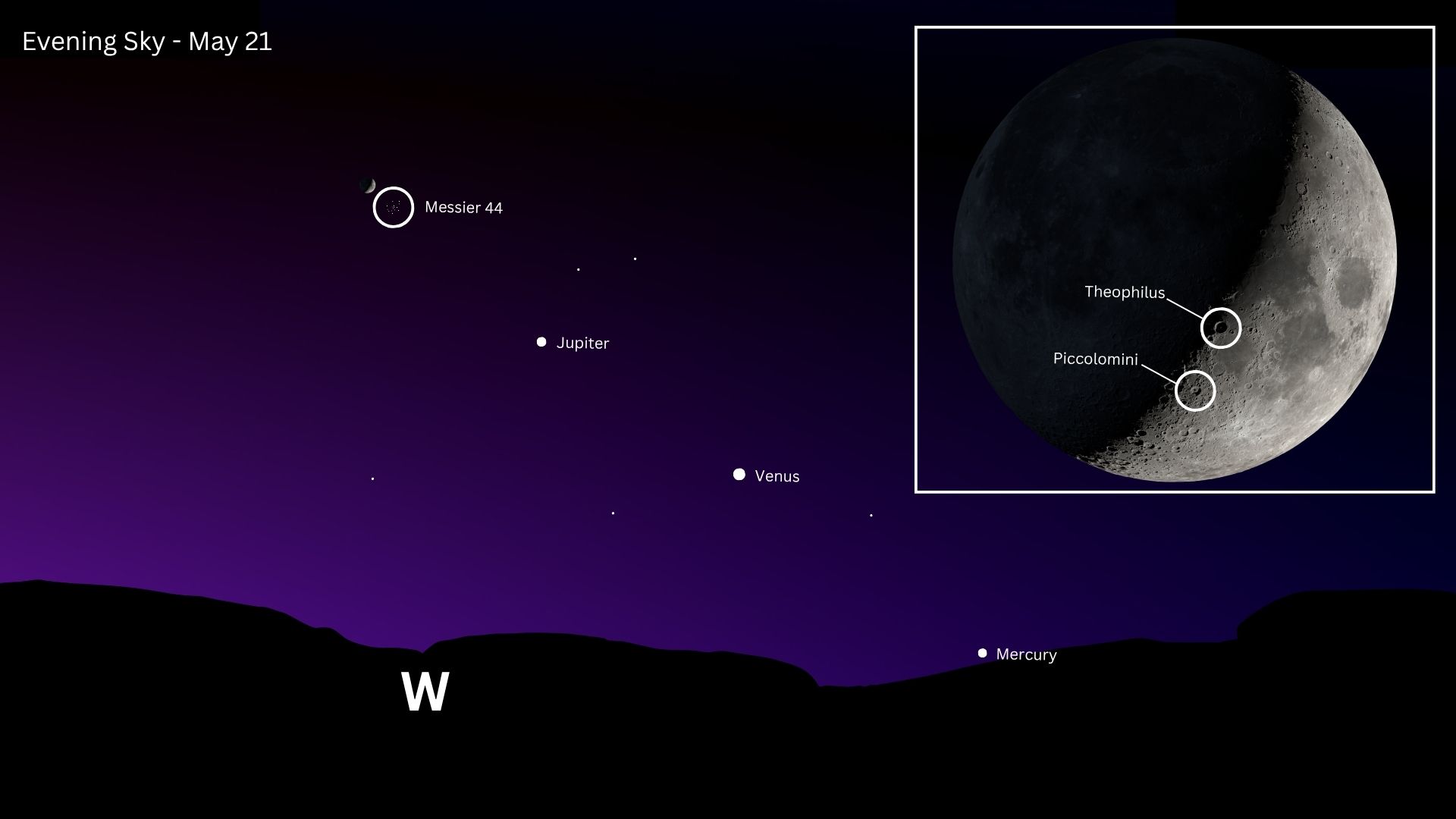
A small backyard telescope will bring a plethora of diverse craters and dark lunar seas into view. Look out for Theophilus crater, which sits close to the line separating night from day — known as the terminator — and the Piccolomini impact site, which scars the lunar surface further to the south.
How to measure distances in the night sky using nothing but your hand. (Image credit: Created in Canva Pro)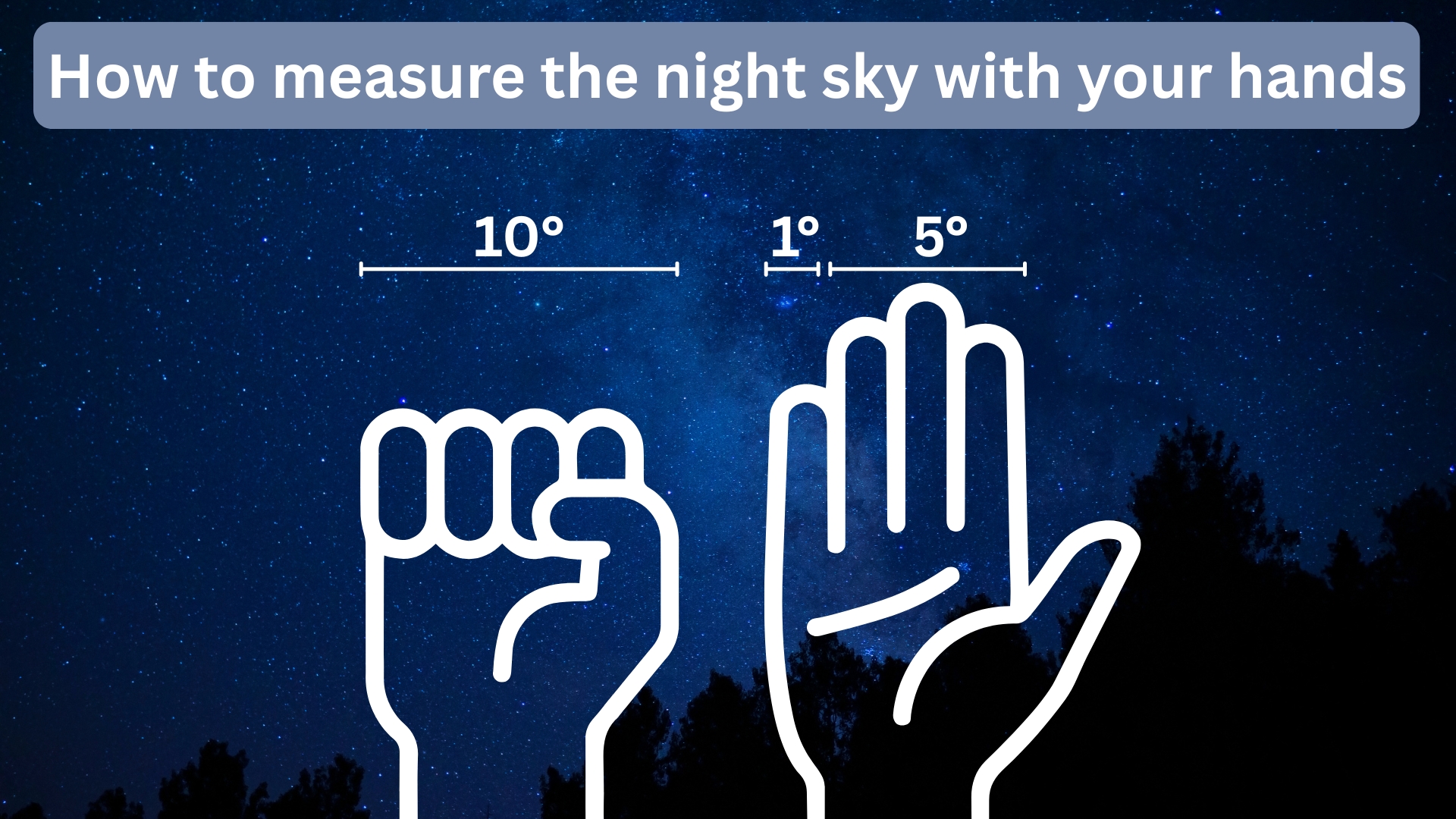
Both craters feature prominent central peaks formed from rock that rebounded inwards following the violent impact that heralded their creation. Their terraced eastern walls will also appear filled with shadow on May 21, making for a dramatic sight.
The moon will gently drift away from M44 as the hours wear on, before finally setting below the horizon in the early hours of May 22.
Interested in capturing glorious photos of the night sky for yourself? Then be sure to read our beginner's guide to photographing the night sky, along with our picks of the best lenses and cameras for astrophotography.
Editor's Note: If you would like to share your astrophotography with Space.com's readers, then please send your photo(s), comments, and your name and location to [email protected].
View MoreYou must confirm your public display name before commenting
Please logout and then login again, you will then be prompted to enter your display name.
Logout Anthony WoodSkywatching Writer
Anthony Wood joined Space.com in April 2025 after contributing articles to outlets including IGN, New Atlas and Gizmodo. He has a passion for the night sky, science, Hideo Kojima, and human space exploration, and can’t wait for the day when astronauts once again set foot on the moon.