 Image source, Getty ImagesImage caption,
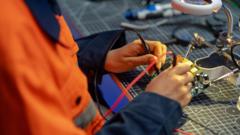
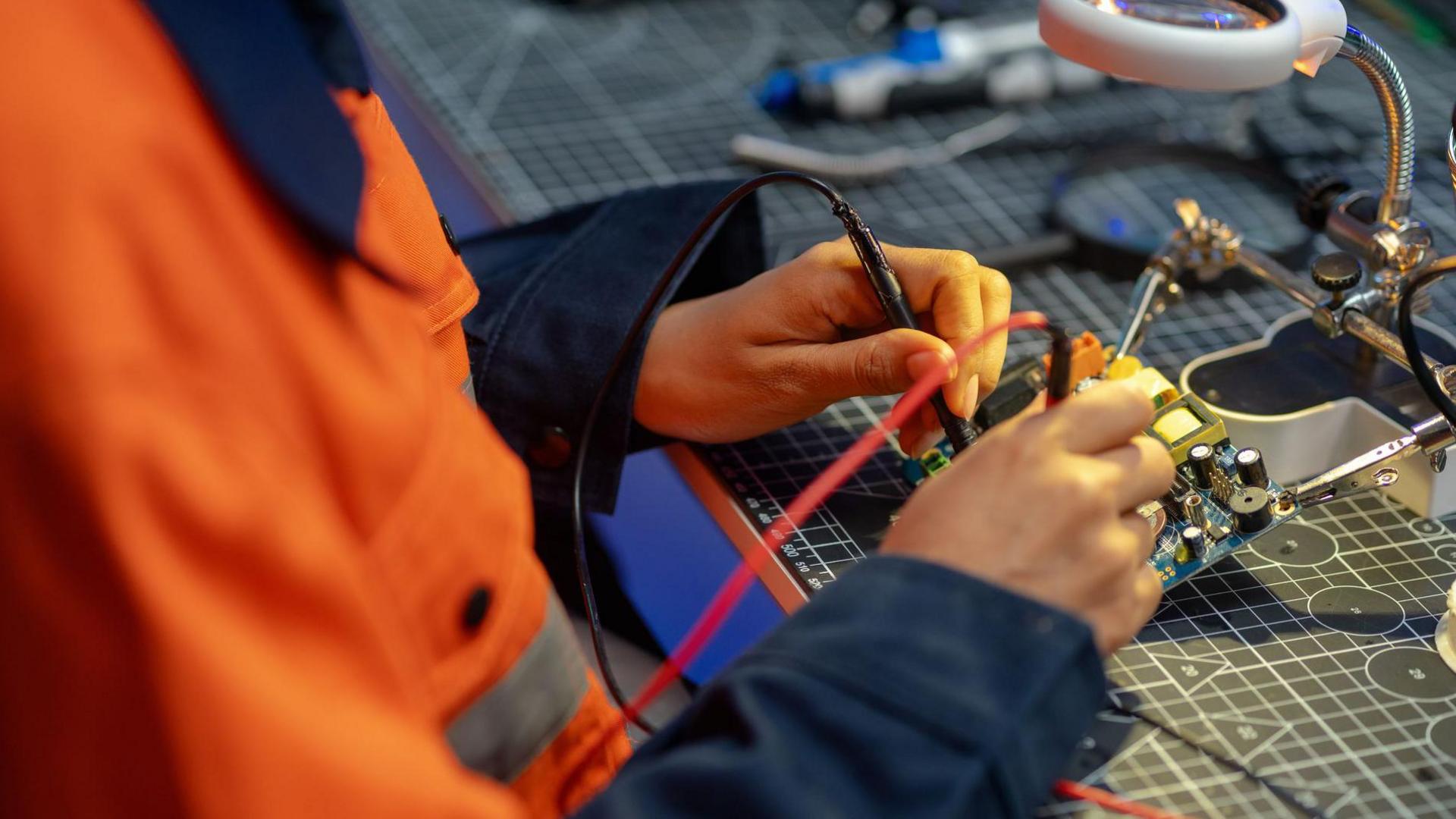
 Special workshops for disabled people employ 300,000 people in Germany
ByAmy ZayedBusiness reporter, Reporting fromPaderborn, Germany- Published49 minutes ago
A test case before a German court could have implications for hundreds of thousands of disabled people in the country who currently work for less than the legal minimum wage.
The legal action has been brought on behalf of 57-year-old Jürgen Linnemann, who has spent all his working life in a "Werkstatt für behinderte Menschen" – a workshop for disabled people.
In English these would be called sheltered workshops, and in Germany some 300,000 disabled people work in them.
The workshops produce a range of goods for companies and brands that are often known internationally, but the people who make them are paid less than the minimum wage, less than a worker in the mainstream economy would be paid for doing the same work.
This is possible because disabled people in sheltered workshops are technically not employees. That means not only that the right to the minimum wage does not apply to them, but also that they do not enjoy other rights, such as the ability to join a trade union.
Linnemann is asking the court to rule that people like him should be treated as employees and be paid the minimum wage.
According to Hubert Hüppe, a former federal commissioner for the interests of disabled people, and a prominent critic of the workshop system, once you become part of what is a segregated system it's very hard to get out of it.
"You go from a special kindergarten to a special school and then into one of these sheltered workshops," he says.
This is what happened to Dirk Hähnel, now in his 50s, who spent most of his adult life in sheltered workshops near the central-western city of Paderborn.
He was sent initially to a regular school, but before long was transferred against his wishes to a special school. "My parents were told that a special school was the best choice," he tells me.
Later, when he was preparing to leave that institution, he was told his only option was to go to a workshop. "I didn't want to do that," he says.
So he tried to find an apprenticeship instead. He remembers one devastating job interview. "I told my potential employer that I had epilepsy and he said, 'we don't employ idiots here'."
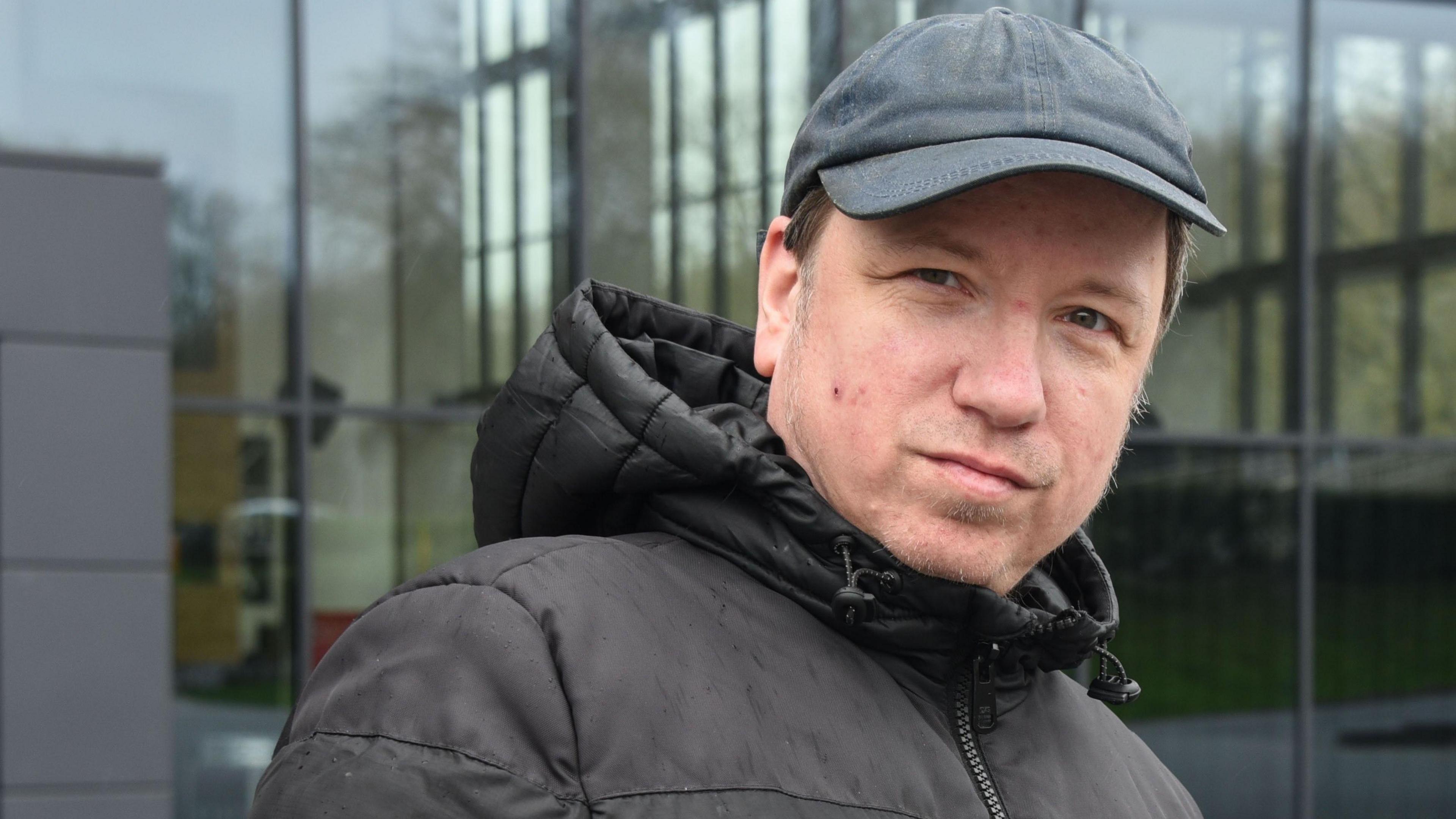 Image caption,
 Dirk Hähnel has spent much of his adult life in a workshop
I have heard many similar stories. I myself was born blind, and remember very well my first school report, when I was six, which advised my parents to send me to a school for children with learning disabilities.
I grew up speaking both German and Arabic and constantly mixed them up, not understanding that they were separate languages. If my parents had not ignored that first school report, I too might have ended up in a workshop. Instead, today I'm one of only a handful of journalists in Germany with a visible disability.
Hüppe says the workshop system fails in one of its most basic responsibilities – to rehabilitate disabled people in order to prepare them to work in the mainstream economy.
"This responsibility just isn't taken seriously," he tells me.
The reason for that is in part the economic incentives that are offered to German companies to support the system. In Germany, any company that employs more than 20 people is legally obliged to employ at least one disabled person.
Larger companies have a minimum quota of 5%. Those who fail to meet this commitment have to pay a sum in compensation into a central fund that supports disabled people in the workplace.
Many companies choose simply to pay this money rather than meet their quota. They are offered a further incentive by the system, in that if they outsource production to a workshop the compensation they have to pay is reduced.
The result is that fewer than 1% of disabled people make a successful transition from workshop to a job with a mainstream company.
Hüppe also says workshops are reluctant to see their best staff move on. "Obviously a workshop is a commercial enterprise that survives on what it produces," says Hüppe. "And so obviously they want to hold on to their best workers, the ones that would have the best chance of making it out in the mainstream economy."
He points me to a 2023 report, external by the United Nations Committee on the Rights of Persons with Disabilities, which criticised Germany's record on disability.
Specifically, it noted "the high number of persons with disabilities enrolled in sheltered workshops and the low rate of transition to the open labour market".
Not everyone, however, is unhappy being employed in a workshop, including Medina Arnaut, 35. She works for one in Paderborn that is operated by a charity called Caritas.
Arnaut is also the chair of the local workshop council, which represents the interests of the workers in a similar way to a trade union.
"We have colleagues here who are so grateful that workshops exist," she says. "These are colleagues who quite simply need this workshop environment because of their disability."
Arnaut adds many of her colleagues have worked in the mainstream economy and the pressure there is completely different. "People come to me and say, I've experienced life out there in the commercial world and it made me sick."
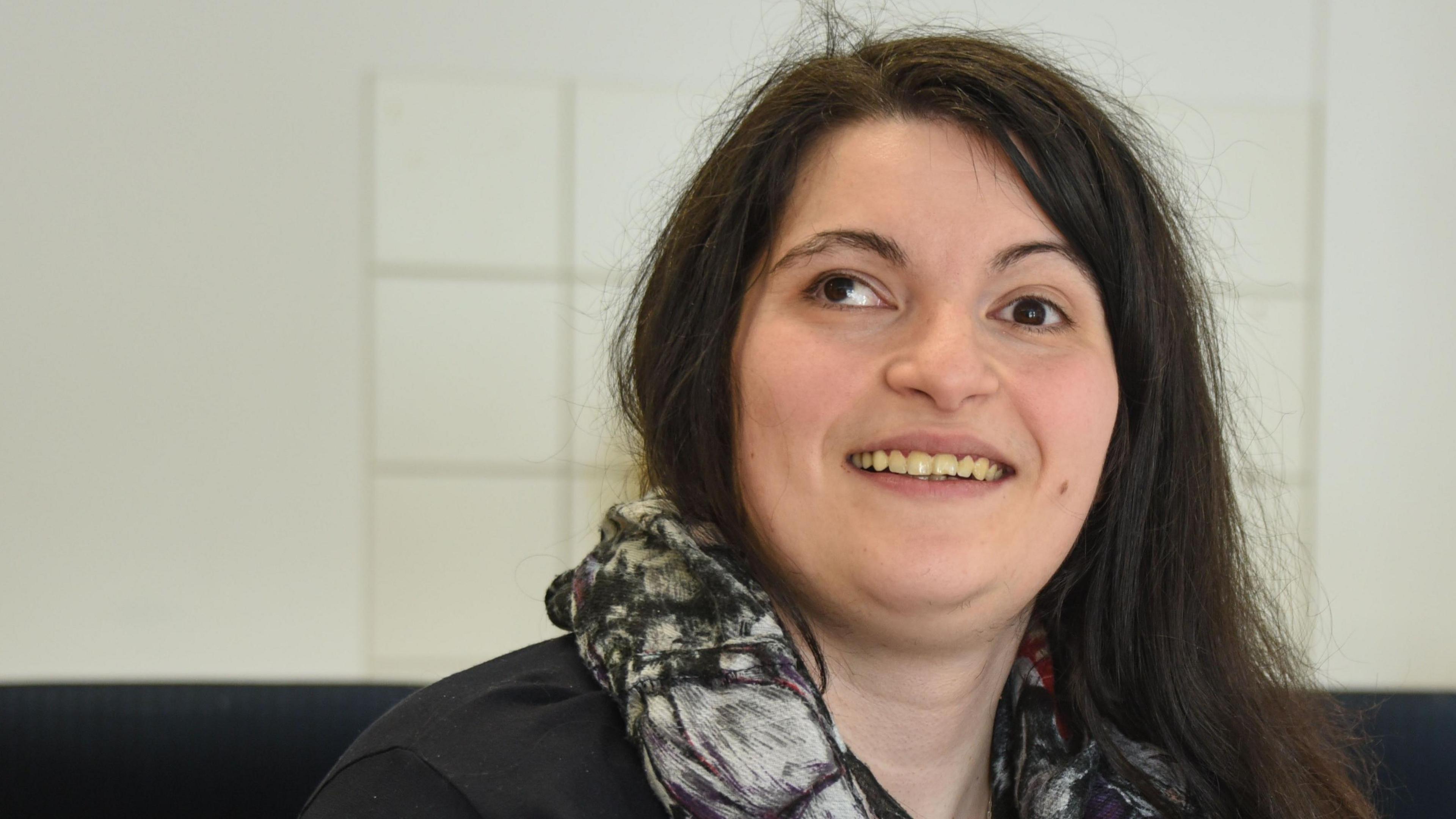 Image caption,
 Medina Arnaut says that colleagues are grateful that the workshops exist
Karla Bredenbals, the boss of the Caritas workshops in Paderborn, agrees that the rate of transition to the mainstream economy is too low.
"Quite often we'll find companies that, for example, don't have any accessible toilets," she says. "Or we might have someone with the potential to move on, but they are not able to use public transport."
Bredenbals acknowledges, however, that on occasion she does hear colleagues express reluctance to let the more productive workers leave the workshop.
"That's the one sentence that makes me really angry," she says. "When I hear someone say 'I can't let this person leave because I don't know how we'll get the work done without them'.
"Hanging onto people means we are robbing them of the chance to take responsibility for their own working lives."
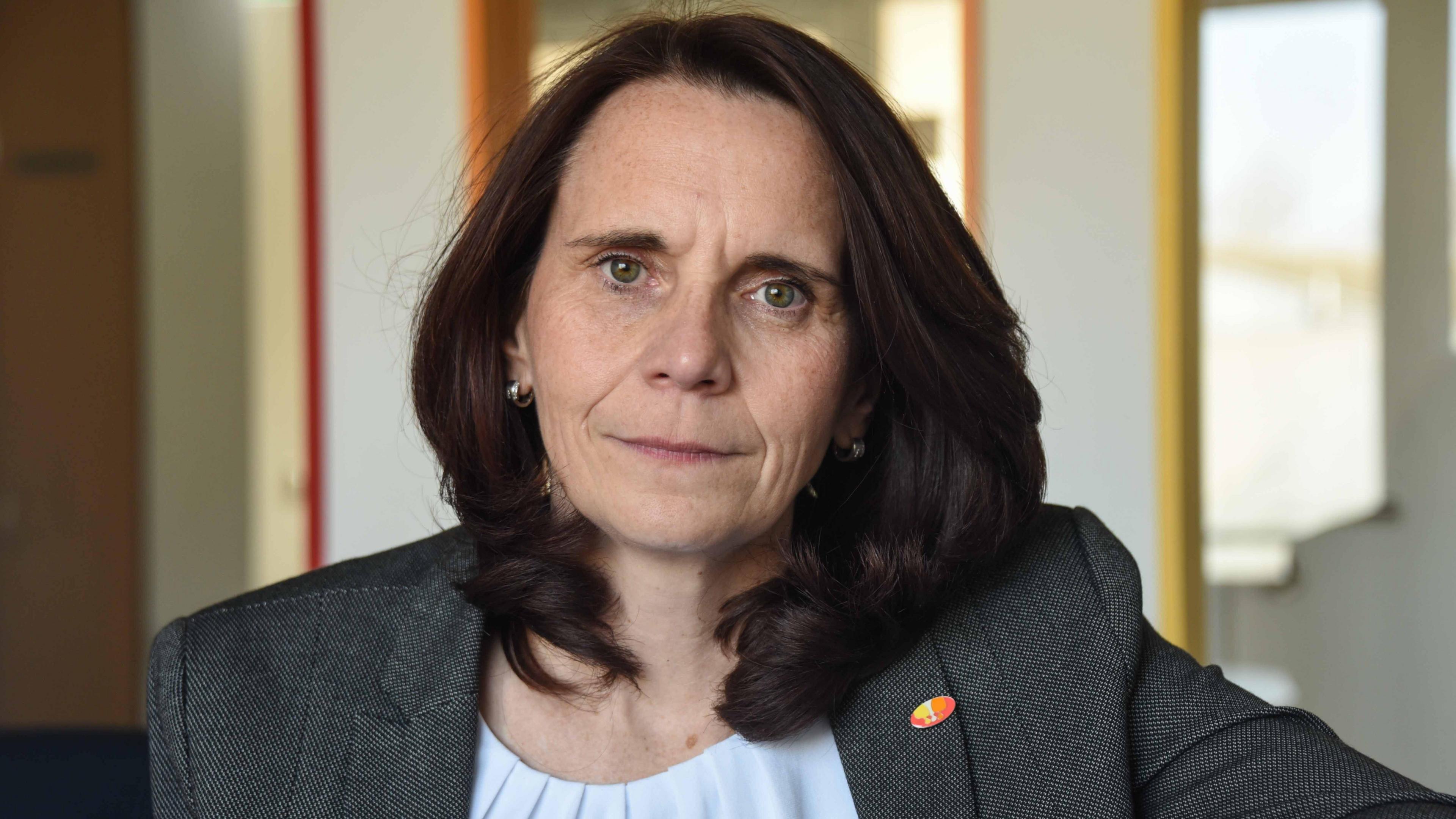 Image caption,
 Karla Bredenbals says workshops must let staff move into the wider economy if they wish to
On the question of workshop workers receiving the minimum wage, Bredenbals responds carefully.
"If you are talking about what it means to be employed and you are talking about rights, then you also have to talk about obligations," she says.
"Someone who is in employment is obliged to perform certain tasks, to perform to a certain level, as per their contract. But many of the people in our workshops are not in a position to fulfil these obligations fully, and we have to talk openly about this."
Linnemann's legal case is against a different set of Caritas-run workshops near the city of Münster, so separate to those where Karla Bredenbals works. It has been brought on his behalf by Berlin-based human rights organisation Gesellschaft für Freiheitsrechte (The Society for Civil Rights).
The next hearing at Münster Labour Court is due in September. A decision is not expected for a year.
Additional reporting by Tim Mansel.
Related topics
Read more global business stories
Is Germany looking again at coal-powered electricity?
- Published3 days ago

'We had to get out of the way': The backlash over delivery robots
- Published7 days ago

Why I sold my business to my staff
- Published15 June
Spain's visitor numbers hit new highs as tourists avoid Middle East
- Published8 June