 Google
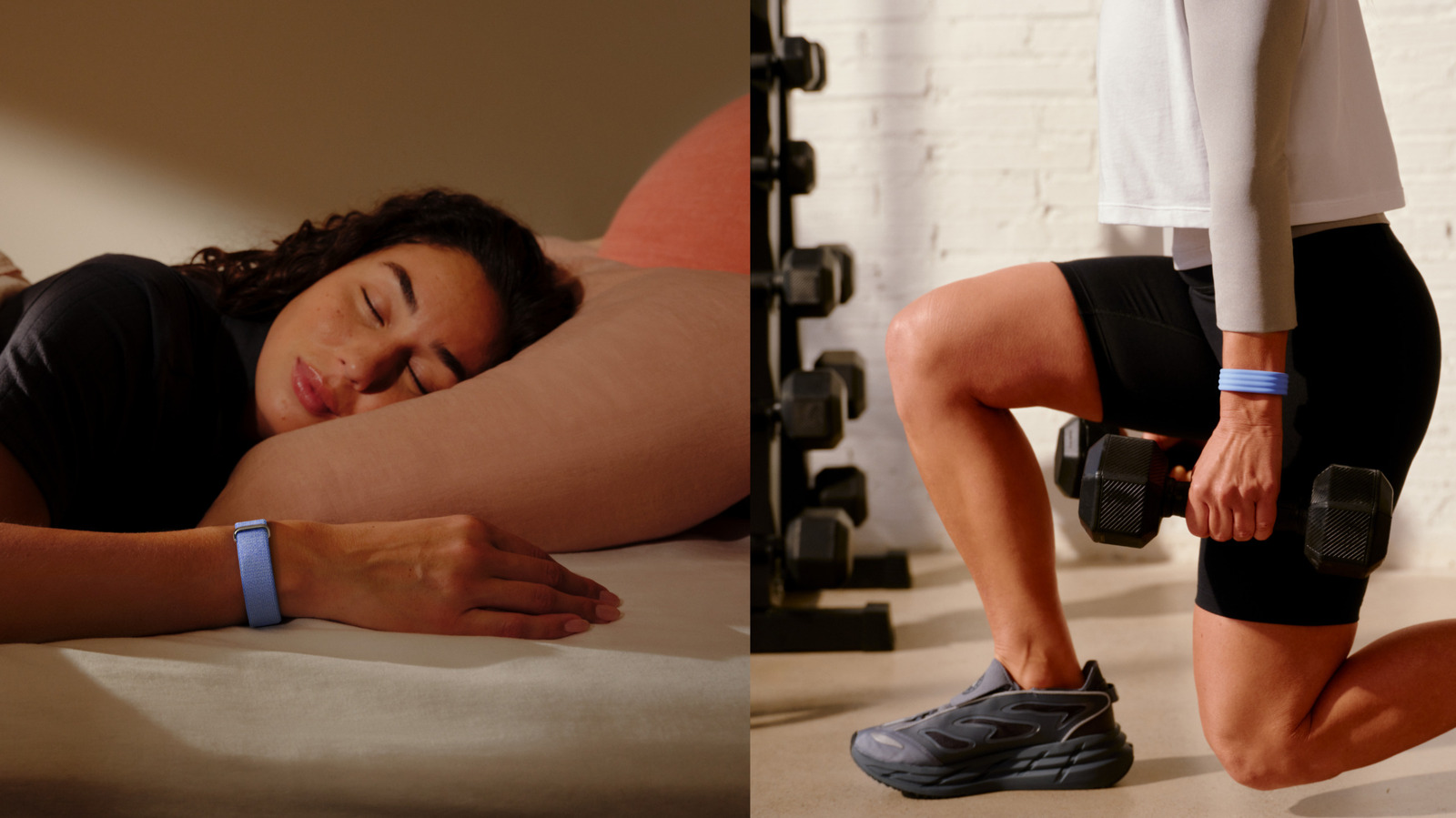
 The Whoop-like wearable that Google teased in March has just been unveiled. Called the Google Fitbit Air, it's a screenless device that you can put in a wristband, chest strap or technically anywhere, really, depending on the accessory you choose. It's available for pre-order today for $100 and is basically a Fitbit, freed from its band. But of course, with a name like Air, the new gadget is a lot smaller than its predecessors. According to the general manager for Google Health Rishi Chandra, the Fitbit Air is 25 percent smaller than the Fitbit Luxe and 50 percent smaller than the Inspire 3.
Google also said its latest device was "rated more comfortable than leading competitors" in an independent consumer perception study conducted last year, looking at the most popular wearables in the US. The company described the Fitbit Air as having a "secure, micro-adjustable fit" that is supposed to make it so comfortable you won't notice it at work, at the gym or in bed. At just 12 grams (0.42 ounces) with a band and 5.2 grams (0.18 ounces) without, it's certainly very light.
Since it doesn't have any buttons or a screen, the Fitbit Air is mostly a passive wearable that just sits on your person and collects information. It will monitor your heart rate all day, and with that data it can use the company's long-established algorithms to log your sleep, deliver details on your time spent in specific sleep stages and assign you a Sleep Score each night. The Air can also detect "signs of AFib with irregular heart rhythm notifications" and help you "understand your heart rate variability (HRV) and its impact on your overall wellbeing."
You won't need to worry about having to pull out your phone to start logging a workout session, by the way, The Fitbit Air has auto activity detection like most of its peers, and can automatically track common types of exercise including biking (stationary or outdoors), running, walking, rowing, elliptical and other high-heart-rate sports. You can use the app to manually start sessions for about 40 types of activities, including aerobics, circuit training, canoeing, dancing, kickboxing, walking, yoga and more. Stats like your heart rate will show up on your phone as you work out. Finally, if you want to add activity to the app that wasn't already logged, you'll be able to find more than 140 options including archery, assault biking, badminton, cricket, curling and even household chores.
You'll also get information on your weekly cardio load and readiness, as well as all the basics you expect from a modern activity tracker like your steps, distance traveled and time spent exercising. And because it has a vibration motor, it can silently wake you up by buzzing against your skin. Google's Smart Wake feature can use this to help rouse you from slumber at the most appropriate times in your sleep cycle.
These all sound like features we've come to expect from most smartwatches and fitness trackers today, of course. But Google did say the Air is "powered by advanced new machine learning models that are 15% more accurate than our previous models." It also pointed out that the Sleep Score has been improved in a way that "better reflects recovery."
 Google
 The Air also has the letters A and I in its name, and like most products launched by Google this year, comes with a host of AI features. Central to the Air experience is the Google Health Coach, which has been in public preview since its October unveiling. This is basically a Gemini-powered interface that lets you have a conversation with the Google Health app and get personalized suggestions based on your data. The Health Coach will create "dynamic, tailored fitness plans that fit your goals — and your life — with workout suggestions and proactive insights that adapt to your real-time performance data and changing schedule.
According to Google, the coach will be able to work with fitness and health data including Cycle Health and "vital medical information." The company also says that "your data is private and secure."
For now Google is offering three bands alongside the Fitbit Air. There is a Performance Loop Band that is "micro-adjustable" and an Active silicone band that is sweatproof and "wetproof" to better withstand workouts. (Google says the Air is water resistant up to 50 meters, but it's not officially waterproof.) The third option is an "Elevated Modern Band," which Google says turns the Air "into a fashionable bracelet." No chest strap option (or necklace or anklet or other variation) is available yet, although Chandra did tell Engadget more bands were coming. "Right now, it's just wristbands," he said. "We're looking into how to accessorize it more."
Like other Fitbits, the Air has an estimated battery life of up to a week, and it can charge fast enough to get up to one day of power in five minutes of being plugged in. It would take about 90 minutes to get completely full. Like the Pixel Watch 4's, the Fitbit Air's charger is magnetic and bi-directional so you don't need to fuss over its orientation when you place the device on the dock.
Google has also made a special edition of the Air in collaboration with basketball star (and the company's "Performance Advisor") Steph Curry. It features a "raised interior print for increased airflow and signature Stephen Curry design details," as well as an additional water-resistant coating. All those extras will cost you a premium, as the Fitbit Air Special Edition will set you back $130. Each purchase of the Fitbit Air (including the Special Edition) will come with three months of Google Health Premium, and the devices will arrive on May 26.
Update, May 7 2026, 10:40AM ET: This story has been updated to clarify the number of and types of activities the Fitbit Air can auto detect, as well as the ones that can be started manually and added to the app.