
 Flying cars have been the stuff of science fiction, but could they soon be a part of reality? (Image credit: XH4D via Getty Images) Share this article 0 Join the conversation Follow us Add us as a preferred source on Google Newsletter Get the Live Science Newsletter
 Get the world’s most fascinating discoveries delivered straight to your inbox.
Become a Member in Seconds
Unlock instant access to exclusive member features.
Contact me with news and offers from other Future brands Receive email from us on behalf of our trusted partners or sponsors By submitting your information you agree to the Terms & Conditions and Privacy Policy and are aged 16 or over.You are now subscribed
Your newsletter sign-up was successful
Want to add more newsletters?
Join the club
Get full access to premium articles, exclusive features and a growing list of member rewards.
Explore An account already exists for this email address, please log in. Subscribe to our newsletterFlying cars have long captured the imagination of science fiction writers, and in recent years, a host of tech startups have been rushing to make the dream a reality. Following a long period of research and development, more bullish voices in the industry say the launch of air taxi services is imminent — but significant technical, regulatory and economic hurdles may yet stymie their take off.
U.S. companies Joby Aviation and Archer have both announced plans to launch air taxi services in Dubai, in the United Arab Emirates (U.A.E.), later this year, which would mark a major milestone in the technology’s winding road to commercialization.
Despite the enduring appeal of this new form of urban mobility and efforts by aviation authorities to lay the regulatory groundwork, however, experts say they’re not yet ready for prime time. Concerns around safety, question marks about the financial viability of air taxi services, and the challenges involved in setting up the infrastructure and operational capacity to support a completely new transport network mean we could still be waiting at least a decade for an airborne alternative to Uber.
Article continues below"We think that full-scale services is more of a middle of the next decade kind of thing, not anytime soon," Sergio Cecutta, founder and partner at SMG Consulting, which covers the advanced air mobility sector, told Live Science.
Despite lofty ambitions, plans to roll out flying taxis to date have so far fizzled out. There were, for example, plans to introduce flying taxis in time for the 2024 Paris Olympics — but they were scrapped due to delays over the certification for the vehicles' engines. Around the same time, Archer set out plans to introduce flying taxis ahead of the upcoming FIFA World Cup, for flights in LA. This now seems unlikely, with the company now targeting the 2028 LA Olympic Games for the introduction of new passenger transport services.
In recent weeks, however, the U.S. Federal Aviation Administration (FAA) has announced the latest phase of its advanced air mobility program that will evaluate air taxi performance in eight separate projects over the summer across 26 states. Does that mean we can expect flying taxis to take to the skies this year?
Certification challenges
The promise of electric vertical take-off and landing (eVTOL) aircraft is to create a quieter, cleaner and more efficient alternative to helicopters. While designs vary between companies, they typically rely on distributed electric propulsion (DEP) — spreading multiple electric motors and propellers across the airframe to create something that looks more like a drone than a conventional rotorcraft.
Sign up for the Live Science daily newsletter nowContact me with news and offers from other Future brandsReceive email from us on behalf of our trusted partners or sponsorsSome eVTOLs, like those made by German company Volocopter and Chinese company EHang, feature propellers fixed in a vertical position. But other companies like Joby and Archer are experimenting with propellers that can shift from a vertical to horizontal position, which allows them to combine vertical takeoff with more efficient forward flight.
Because they are powered by batteries, they could be both greener and quieter than conventional aircraft. In theory, at least, the increased efficiency and simplicity of electric motors could also make eVTOLs cheaper to build and operate, according to NASA. Proponents say this could make it feasible to operate large numbers of these aircraft in urban areas at a price point that many more people would be able to afford.
But getting a new class of aircraft off the ground is not simple. While eVTOL companies have carried out hundreds of hours of test flights, starting commercial operations will require them to go through onerous certification processes with aviation authorities. These include bodies like the FAA, the European Union Aviation Safety Agency (EASA) and the U.K. Civil Aviation Authority (CAA).
While the specifics vary from country to country, this is likely to involve around 1,000 hours of test flights overseen by regulators to ensure they can safely fly the kinds of missions the developers envisage, said Cecutta. Given that even the most advanced eVTOL developers have managed just a few hundred hours of test flights, normally in several different aircraft designs, he says certification is still some way off.
"There's not enough time on this planet for them to do it in a year," said Cecutta. "We think certification, even for the most advanced of the bunch, is a 2027 thing. And for some other companies, it might be a 2028 or 2029 milestone."
From certification to hardware, flying cars have a lot of challenges to overcome in becoming a reality. (Image credit: Jaime Suárez via Getty Images)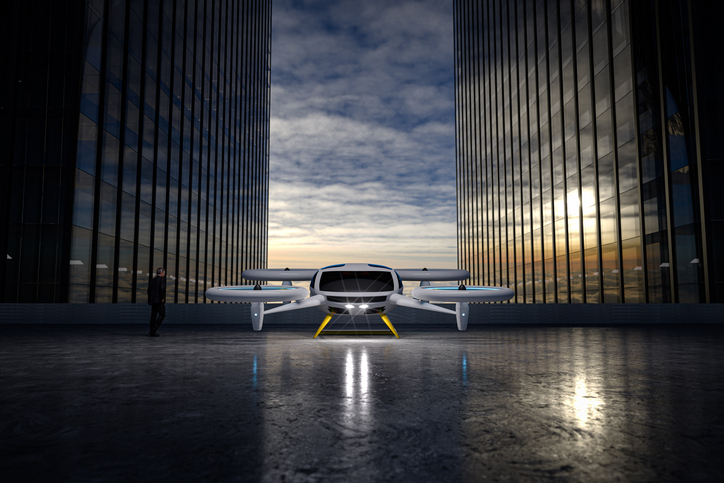
Early pilots launch — but technical challenges remain
Regulators in the U.A.E have committed to fast-tracking approvals for eVTOLs, but Cecutta suspects this won't be a full certification in the traditional sense. Normally, certification allows an aircraft to fly anywhere under various conditions, but he says the U.A.E's General Civil Aviation Authority (GCAA) is expected to issue an airworthiness certificate that allows flights only on very restricted routes that avoid flying over densely populated areas, such as from Dubai airport to the Palm Jumeirah resort island.
While this may provide companies with some early operational experience, aerospace analyst Bill Sweetman, principal at Valkyrie Strategic Solutions, says it's unlikely to accelerate the technology’s broader rollout. Leading aviation authorities typically have agreements whereby certifications are reciprocally recognized between countries. But because the U.A.E. has never certified an aircraft before, this is not likely to happen here.
Companies in the U.S. do have another avenue for getting services up and running before full certification. In September 2025, the FAA introduced the eVTOL Integration Pilot Program (eIPP) that will allow uncertified aircraft to operate in controlled environments in a series of pilots designed to test out various use cases for the technology, including air taxi services.
But Cecutta emphasizes that this is unlikely to accelerate the widespread deployment of the technology. The program is designed to help companies gain operational experience so that they can launch commercial services faster following certification, but it won’t speed up the certification process itself.
There may yet also be significant speed bumps in efforts to prove the airworthiness of these vehicles. Richard Brown, an aerodynamics consultant at Sophrodyne Aerospace in Scotland, says there are technical complexities to eVTOL operations that many in the industry have been reluctant to fully address.
One major concern involves what happens when these multi-rotor aircraft interact with the ground. Research Brown conducted for the CAA has revealed that the downwash from eVTOL rotors can create highly concentrated airflows that travel considerable distances across the ground with surprising strength. This could damage surrounding infrastructure or even send people flying unexpectedly.
Brown suggests that eVTOL company modeling focuses on average airflows and fails to capture these dynamics. But the phenomenon could restrict where these aircraft can safely operate and what kind of infrastructure they'll need.
Even more concerning, he says, is the risk of a vortex ring state, a dangerous aerodynamic condition that can cause rotors to suddenly lose thrust. This is already a major safety concern for helicopters, which experience vortex ring state accidents every year, he adds, but eVTOL designs with multiple interacting rotors may be even more susceptible to these effects.
Facing up to hard economic truths
Even if startups overcome the technical hurdles, significant questions remain about economic viability. Although eVTOLs are likely to be cheaper to operate than conventional aircraft — because electric propulsion is inherently more efficient and less prone to failure — they are likely to be considerably more expensive to purchase for the foreseeable future, Cecutta said.
Costs will come down as companies scale up production, and plans to enable autonomous flight could remove the considerable cost of training and employing pilots, he adds. But this will take time and Cecutta estimates that it could be a decade before eVTOL services become a transportation option for middle-class passengers, rather than just the ultra-wealthy.
Sweetman is more sceptical about whether eVTOL operations will ever achieve the scale required to significantly reduce costs — with per-vehicle costs decling with many more vehicles manufactured. He questions whether urban airspace can safely accommodate the hundreds or thousands of aircraft required to make the economic case stack up.
And long-term operational costs may be considerably higher than many have suggested. Unlike electric cars, which draw power relatively steadily, eVTOLs subject their batteries to very high discharge rates during takeoff and landing.
RELATED STORIES—Watch four flying cars go toe-to-toe in new 'Formula One of the skies'
"You're beating the hell out of the battery," said Sweetman. He points to regulatory filings from U.S. eVTOL developer Beta Technologies that suggested they would need to replace their aircraft's batteries every year, a cost that "alone is enough to destroy the economics."
In the near term, cargo operations and emergency medical services may prove a more viable use case for eVTOL aircraft than air taxi services, according to Cecutta. These applications don't require flying over dense populations and face fewer public acceptance hurdles than large-scale urban transportation networks. Many eVTOL companies are also branching out into defense applications, he adds, where they can tap the deeper pockets of military customers.
These applications could provide the financial breathing room for eVTOL manufacturers to continue the development of their technology, said Cecutta. Despite outlandish projections that flying taxi services could commence this year, for flying taxis to truly take off in a meaningful way, the industry still faces years of work ahead, with no guarantee that all the pieces will ultimately come together.
TOPICS Edd GentLive Science ContributorEdd Gent is a British freelance science writer now living in India. His main interests are the wackier fringes of computer science, engineering, bioscience and science policy. Edd has a Bachelor of Arts degree in Politics and International Relations and is an NCTJ qualified senior reporter. In his spare time he likes to go rock climbing and explore his newly adopted home. View More
 You must confirm your public display name before commenting
Please logout and then login again, you will then be prompted to enter your display name.
Logout LATEST ARTICLES 1Unusual burials of Celtic 'warriors' discovered in France point to violent deaths
- 2Should compulsive shopping and gaming be considered an addiction? Psychiatrists are considering expanding the definition.
- 3Monte Verde, one of the earliest Indigenous sites in South America, is much younger than thought, study claims. But others call it 'egregiously poor geological work.'
- 4First Americans quiz: How much do you know about the first people to reach the Americas?
- 51,800-year-old nails discovered in 3 burials in Roman necropolis, possibly to 'protect' both the living and the dead