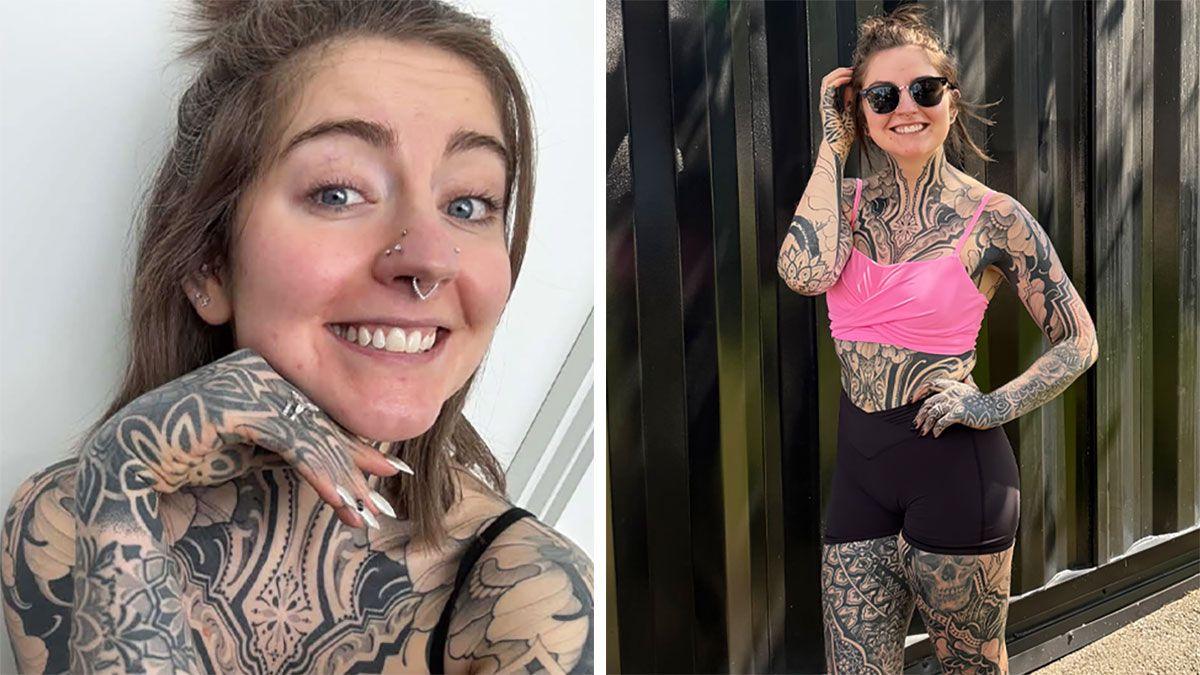
Image source, Eleanor TobinImage caption,
 Eleanor Tobin (right) says she's no stranger to hang-xiety after a night out
ByChloe HaywardHealth reporter- Published13 minutes ago
You wake up. Your head throbs. Then comes the second wave: a low, gnawing horror at what you might have done.
You scroll back through last night's messages, certain you said something wrong.
You replay conversations worried you offended someone, embarrassed yourself, or both.
"It's that nagging feeling of dread," says 25-year old Eleanor Tobin who works in marketing and events in London.
"If the day starts with me doing a checklist of my things - panically checking I have my bag, my phone - I know the anxiety is going to seep into everything I do beyond just reliving the night before."
This is hang-xiety, a name coined in social slang a decade ago, for the anxiety that can accompany a hangover.
And yes, it is real.
"Alcohol affects the body in many ways - the brain, sleep, hormones and nervous system - that all help explain why a night out drinking can be followed by an excessively anxious morning," says Celia Morgan, professor of psychopharmacology at the University of Exeter.
To play this video you need to enable JavaScript in your browser.
This video can not be played
Figure caption,Watch: Yes, hang-xiety is a real thing
What alcohol does to your brain
Alcohol affects two chemical messengers in the brain: GABA and glutamate.
GABA acts a little like the brain's braking system, reducing nerve-cell activity. Glutamate is involved in excitation and alertness.
Alcohol enhances the effects of GABA and suppresses some glutamate activity, helping to produce that familiar feeling of relaxation and lowered inhibitions.
But the brain is constantly trying to restore balance. As alcohol wears off, the nervous system can swing towards greater alertness and arousal.
This can trigger anxiety. "Everything is always 100% worse in my mind when you have a hangover than in reality," says Tobin.
A 2023 study of over 5,000 students from the UK and the Netherlands, concluded that 18.3% reported symptoms of anxiety when hungover.
 Image source, Eleanor TobinImage caption,
 For the 25-year-old, it can lead to an anxious spiral at the end of a weekend
Genes play a part
Studies also suggest that not everyone gets hang-xiety, and the level of anxiety does not neatly correlate with how much you drink the night before. Existing psychological characteristics – and potentially genetics – appear to play a part.
In 2019 researchers at the University of Exeter studied this in 97 social drinkers.
Those who drank reported a spike in anxiety the following day compared with a control group who stayed sober. The effect was strongest in people who had scored highly for shyness before drinking.
Morgan's research found that shy drinkers often felt less anxious during the evening itself. Alcohol was doing exactly what they hoped, quieting social nerves, but the rebound came the next day.
"Shy people were hit even harder the next morning, with hugely elevated anxiety markers, especially when compared with those that weren't naturally shy," says Morgan.
Hormonal and psychological chaos
There is a psychological layer, too.
Innocuous moments get reinterpreted as embarrassing. A perfectly normal joke becomes, in the retelling inside your own head, a terrible mistake.
The anxious spiral can outlast the physical symptoms, because it feeds on itself: worry disrupts thinking, and disrupted thinking produces more worry.
If Tobin has been out Friday and Saturday night, by Sunday that spiral can become overwhelming.
"Suddenly taking the underground can feel like a challenge - normal stuff feels hard when you got a really bad case of the 'Sunday scaries' triggered by two hangovers in a row," she says.
 Image source, David Cheskin/PA WireImage caption,
 Drinking alcohol can affect sleep as well as trigger severe anxiety the next day
You may have fallen asleep quickly after drinking, but that doesn't mean you've had a good night's sleep, researchers warn.
Alcohol disrupts sleep, including the pattern of rapid eye movement (REM) sleep, which is important for emotional regulation. Wake up dehydrated and sleep-deprived, and your ability to cope with anxious thoughts is already reduced.
"Light and broken sleep means you wake feeling on edge," says Dr Alanna Hare, President of the British Sleep Society.
"Even if you have eight hours in bed, you haven't had a proper night's sleep, and a tired brain is more reactive to worry."
What actually helps
The advice from researchers is unglamorous but consistent. Moderating alcohol intake matters more than any remedy taken afterwards. Drinking water between alcoholic drinks can help, so can eating during your night out.
UK guidelines recommend no more than 14 units a week, the equivalent to six pints of beer or six medium glasses of wine, spread across several days.
Alcohol Change UK director Andrew Misell says it's important not to reach for alcohol to manage or mask stress.
"Alcohol turns into a depressant and can exacerbate all sorts of problems with our physical and mental health," he says, advising people to see their GP if they are struggling with the spiral. Talking to a close friend can also be a good starting point.
And perhaps the most useful trick if you are suffering with hang-xiety is to reframe the thoughts. Recognising hang-xiety as a temporary state, rather than proof that something has gone horribly wrong socially, can blunt its power.
The dread is real. The catastrophe it points to usually isn't.
So the next time the Sunday morning spiral sets in, remember it may simply be your brain and body trying to regain balance after alcohol.
Related topics
Hidden habits that make your social anxiety worse - and how to break them
- Published6 days ago

Why caffeine makes some people buzz - and others barely notice
- Published17 September

Could your tattoo stop you from getting a job?
- Published10 August