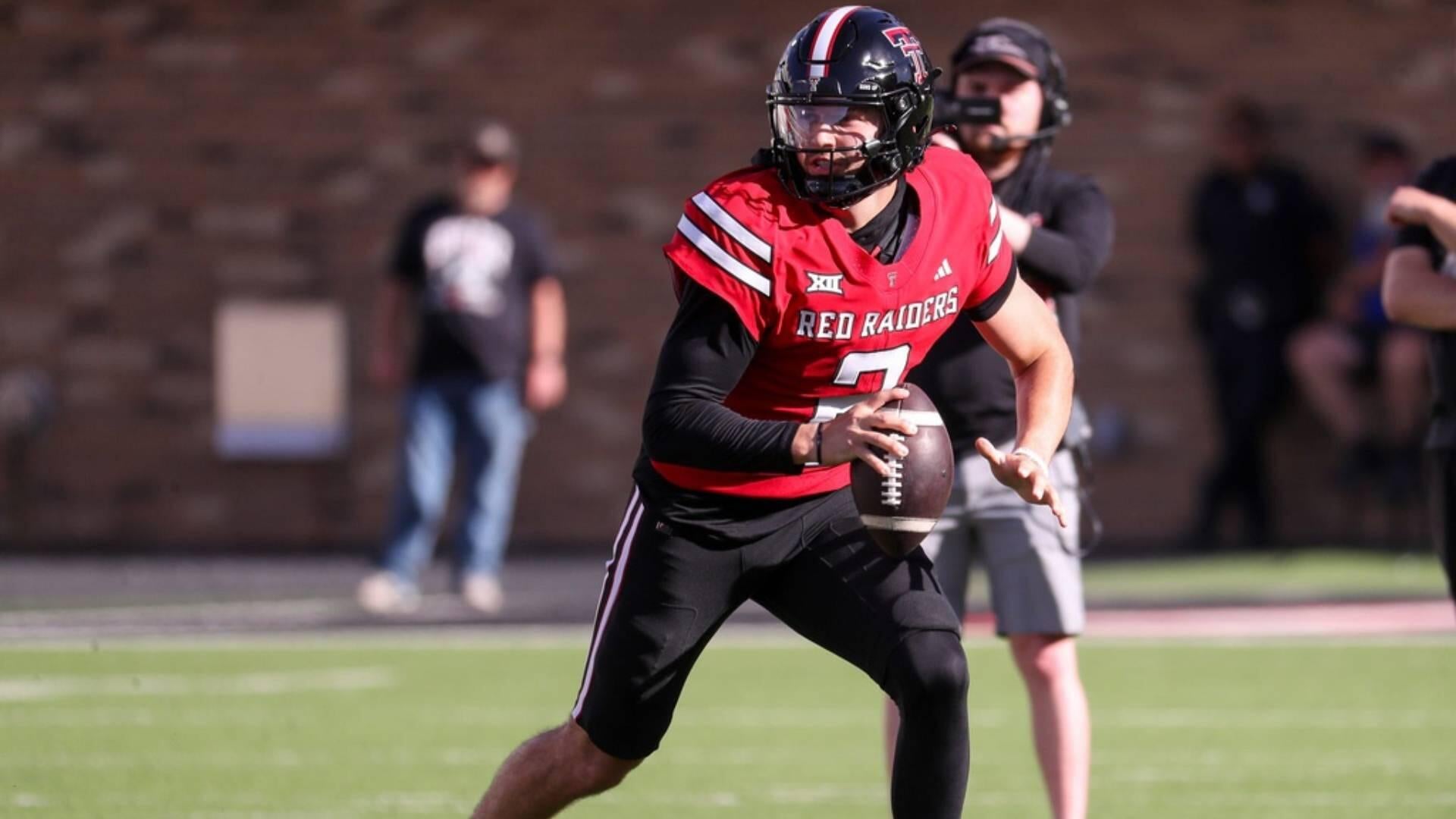
Texas Tech athletics defended its controversial decision to allow quarterback Brendan Sorsby to return to campus in a lengthy video. In a message featuring its president, athletic director and head coach, the athletic department made its case for why they've stood by Sorsby despite admitted violations of NCAA gambling rules.
In the video, Texas Tech officials claim that Sorsby returning to campus as a member of the football team will help support his recovery from a clinically diagnosed gambling addiction.
"We have a long time before we have to think about when he's going to play football again," Texas Tech coach Joey McGuire said. "We have a long time to continue to work with him to help him with this addiction and deal with a lot of different things in his life. Right now, our top priority is getting him back in this environment with his teammates, with people who love and care about him, and then deal with the football."
A message to the Texas Tech community from our leadership. pic.twitter.com/MpbXtNJakp
— Texas Tech Red Raiders (@TechAthletics) June 12, 2026
In legal filings, Sorsby admitted to placing several thousand bets over the course of four years, including many on Indiana athletics while he was a redshirting athlete. Placing bets on your own team or athletic department is grounds for permanent loss of eligibility under NCAA rules.
Sorsby received an injunction from a Lubbock County District Court on Monday that prevents the NCAA from enforcing any punishments while he awaits his full trial in February 2027. The full trial is scheduled for two weeks after the national championship game, when Sorsby's college career will be over. As part of the injunction, Sorsby will receive a two-game suspension.
Criticism for Judge Curry's decision has been swift from all corners of college athletics. Georgia and Nebraska have publicly declared that they will not schedule Texas Tech in any sports heading forward. Big 12 administrators have met to consider sanctioning Texas Tech or Sorsby. On Thursday, Texas Attorney General Ken Paxton informed the Big 12 that any such attempt would be met with legal action by the state.
Returning to campus
After the NCAA denied Sorsby's application for reinstatement, Texas Tech president Lawrence Schovanec penned a lengthy letter expressing his public support for the quarterback. In it, he argued that Texas Tech's addiction recovery center and campus support would help Sorsby. At the time, there was little guarantee that he would be ruled eligible.
"Our concern for him was sincere," Texas Tech president Lawrence Schovanec said. "We did not know what the outcome [of the hearing] would be. We would not just welcome him back under the expectation that he would necessarily play, we just thought, this is the place for you. Our support for him is unwavering."
After a five-week stint at an inpatient recovery center in Arizona, Sorsby returned home to the Dallas area and later returned to Lubbock. He was not present in the courtroom on June 4, when his high-powered attorneys argued for eligibility.
Texas Tech senior athletic director Grant Stovall outlined some of the key conditions Sorsby was asked to meet when he was brought back to campus. Many of the steps were laid out in the court order released on Monday, including continued individual and group treatments for gambling addiction.
Additionally, Sorsby will have constant monitoring of his tech devices, including software installed by Texas Tech to block gambling sites. He will also have continuous monitoring of his devices and a custodian to oversee his finances. In the hours after Sorsby's eligibility was reinstated, he reported to the athletic department's IT services to have monitoring software installed on his phone.
Key questions
Texas Tech has stood by Sorsby through the tumultuous past six weeks, even after the NCAA ruled him permanently ineligible. But while officials made a reasonable case for why the school could support him in his recovery, the argument for his return to action is more specious.
By his own words, Sorsby has a diagnosed anxiety disorder. After the attention surrounding this case, he is now perhaps the most scrutinized player in college football. President Schovanec also noted that part of his return to campus is to help prepare him for his future career endeavors.
"We are attending first of all to his medically diagnosed condition, and we are prepared to support him as he pursues that career that he's spent his whole life working towards," Schovanec said. "That's what we do at Texas Tech."
However, Sorsby would still be able to pursue playing professional football without returning to campus. In fact, he could enter the 2026 NFL Supplemental Draft and perhaps even land on a roster this fall.
Granted, Sorsby has yet to participate in a real practice or play in a game since his reinstatement. As McGuire points out, there are still more than three months until he is eligible to take his first live snap.
"He can play, is what the judge said," McGuire said. "What we're trying to do is get him into a healthy space to where he can feel great about what he's doing and he can deal with this addiction, and that's day by day."
But with all the money and pressure involved, is there really a choice?
McGuire told the story of Sorsby's parents calling him on Monday after the backlash reached fever pitch. They asked whether Texas Tech would be okay. With even Big 12 colleagues irate, it's a question the athletic department should keep top of mind.
Add CBS Sports on Google Join the Conversation comments