
 Image source, Getty ImagesImage caption,
 Declan Rice's Arsenal scored 19 goals from corners in the Premier League last season
BySami MokbelSenior football correspondent in Kansas City- Published56 minutes ago
Arsenal are set-piece masters, and no club supplied more players for England's World Cup squad than the Gunners. So it is understandable that Thomas Tuchel will look to play to the Premier League champions' strengths.
Here in the United States, Mikel Arteta's dedication to perfecting Arsenal's routines is an approach England head coach Tuchel is looking to replicate.
In a tournament environment, when the margins can be so small, Tuchel is keen to take a leaf out of the Arsenal playbook that he admires, and has impressed on his players the importance of exploiting dead-ball situations.
Arsenal landed their first Premier League title in 22 years in May and were within a penalty shootout of winning their first Champions League.
With that level of success in mind, it is entirely understandable that set-pieces have emerged as a key focus in training sessions since England's arrival in the USA.
There are certainly experts in the field among Tuchel's likely starters.
Declan Rice is one of the most adept ball strikers in European football – his corners have proved a major threat for Arsenal, certainly in the previous two seasons.
You can expect Rice, who is guaranteed to start at the World Cup, to be one of England's designated specialists.
Chelsea's Reece James, who is expected to start the tournament as England's first-choice right-back, is another likely to be high on the list of Tuchel's takers.
The England boss knows all about James' abilities, having coached the defender during his time in charge of Chelsea.
Bukayo Saka's dead-ball prowess is also viewed as a major asset by Tuchel, even if there is concern inside the England camp about having to manage the Arsenal attacker through the start of the tournament with his ongoing tendonitis complaint.
The physical make-up of England's squad adds to the set-piece threat.
From the 10 outfield players that started against Costa Rica on Wednesday, just two - James and Elliot Anderson - are under 6ft tall.
Could England's set-pieces win them the World Cup?
- Published27 March
'I'll be staying out of the way' - Southgate on World Cup punditry
- Published15 hours ago
England prioritising set-pieces - analysis
ByUmir IrfanFootball tactics correspondentIn the news conference following England's squad announcement, Tuchel said: "We have specialists with us for all different scenarios. We always said we want to be a strong set-piece team so we have specialists for that."
It's clear that the England boss, in his selection and in what we've seen in the games leading up to the World Cup, is looking to borrow the success of the Premier League when it comes to prioritising set-plays.
In the Premier League, certain tactics at set-plays led to a considerable upturn in goals scored. Inswinging crosses from corners, crowding the keeper and the use of blocking to prevent defenders getting to zones that teams would target from corners were all seen and often.
During the recent games against Costa Rica and New Zealand, England looked to use blockers to prevent opponents from getting to the players they were targeting.
But because of a change in the rules, the video assistant referee (VAR) can now be used to disallow goals in which blocking fouls were committed before the ball was in play. For teams to take advantage of blocking actions, they will have to be more subtle.
One way England have looked to do this is by having players move towards the goal, duelling with their markers in a more natural manner - before playing an outswinging corner into the space in front of the cluster of players.
This resulted in both John Stones and Dan Burn getting unmarked headers towards goal on two different occasions against New Zealand.
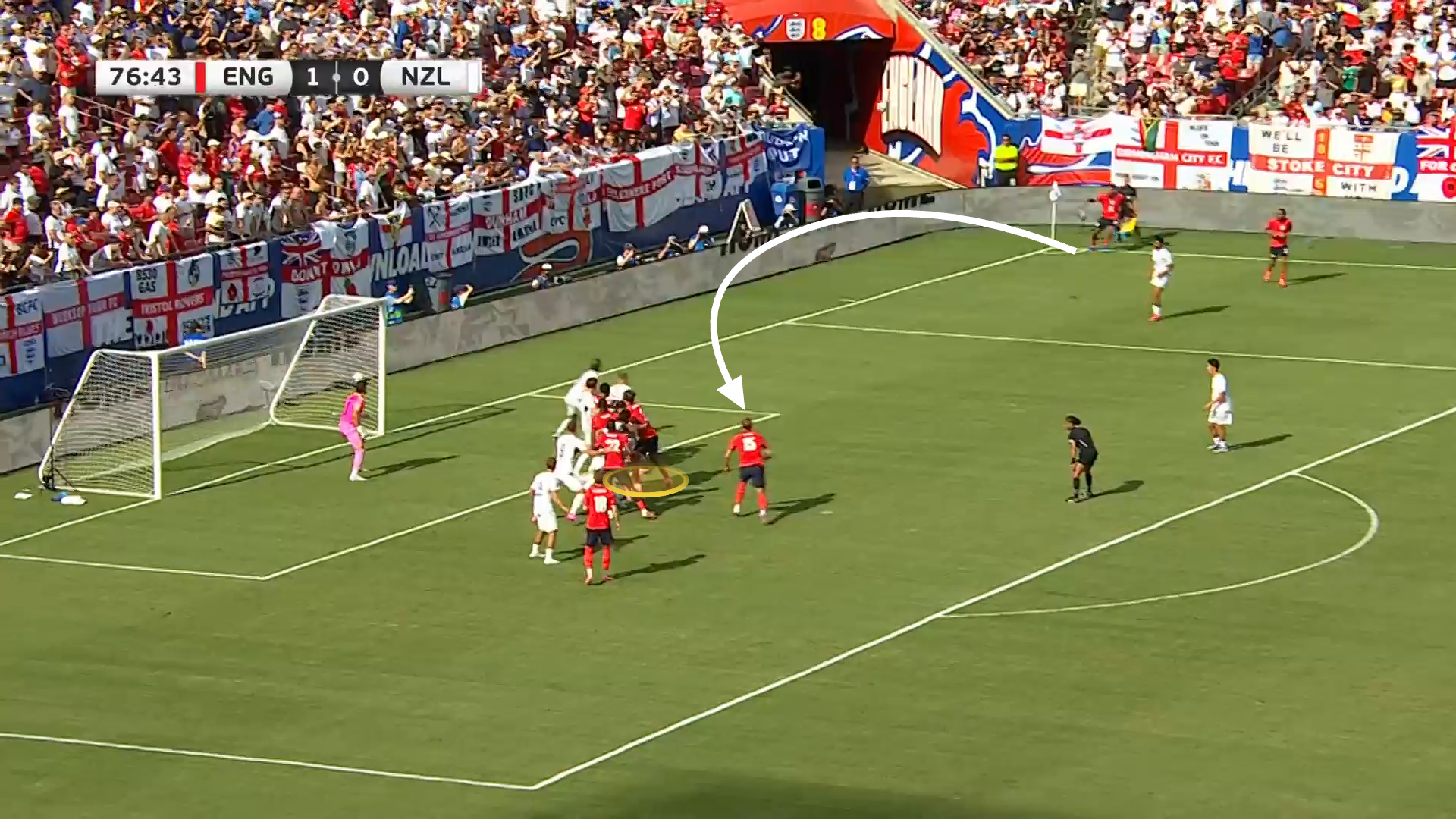 Image caption,
 An outswinging corner resulted in a headed chance for Dan Burn against New Zealand
Another way blockers have been used is with England positioning themselves behind their markers before playing a cross to the back post. As the ball sails over the opponents' heads, they are unable to run back to contest England's free player at the back post.
Teams, including England will have to get increasingly creative. Tuchel's men also looked to borrow a set-piece routine that Manchester United used successfully against Spurs this season. By passing it flat towards the near post before laying it off to the edge of the area, England were able to get a free shot in space.
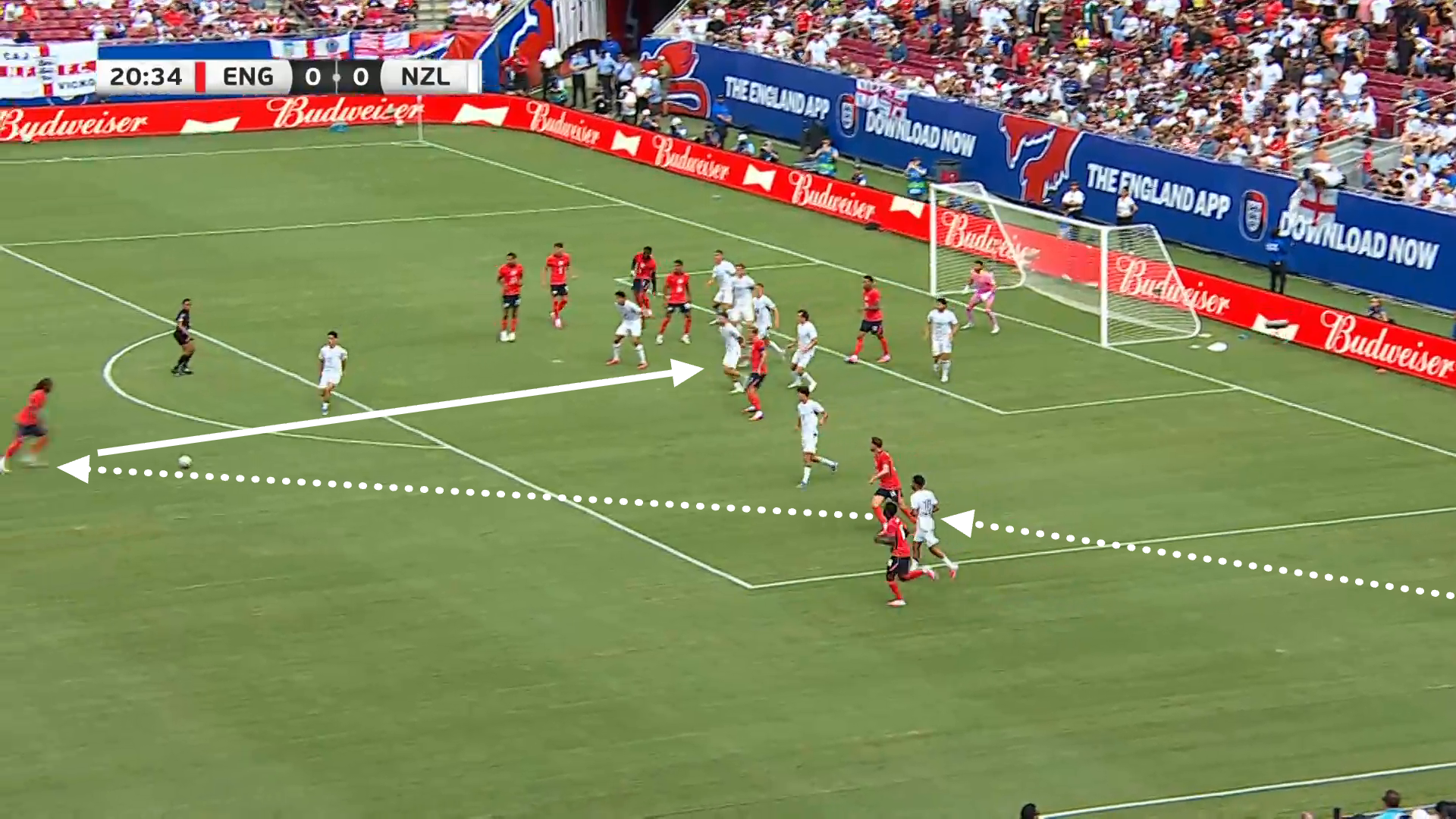 Image caption,
 A short-corner routine resulted in a shot at goal for England against New Zealand
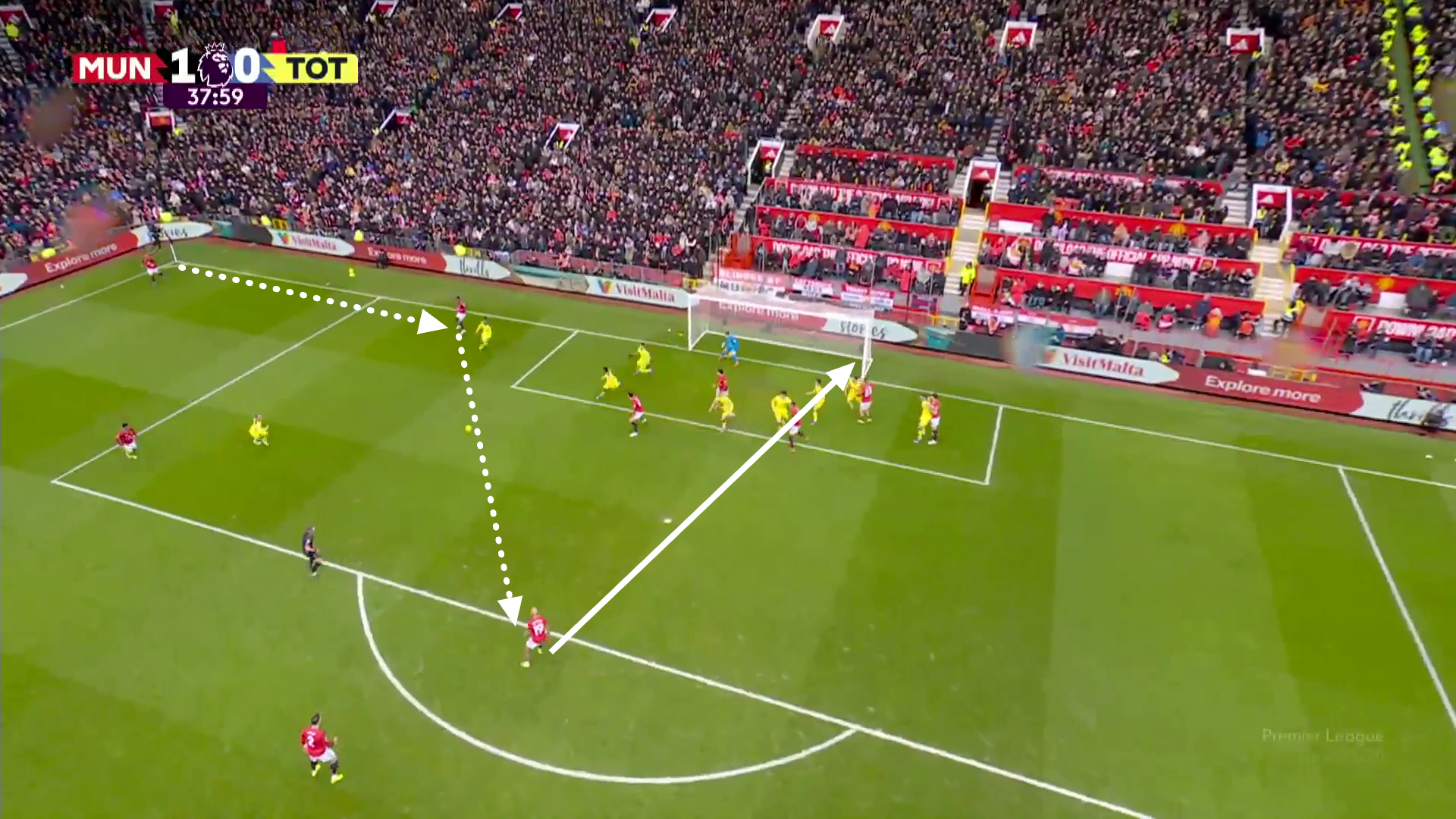 Image caption,
 Bryan Mbeumo scored from this set-piece routine for Manchester United
England are clearly prioritising this part of the game at this World Cup and they've brought with them the players who can achieve success.
Related topics
England's first World Cup training session: What did we learn?
- Published1 day ago

Criticism of Bellingham is hard to read - Henderson
- Published8 hours ago
Play BBC Sport's new World Cup predictor game
- Published6 days ago

World Cup fixtures and group standings

How to watch the World Cup on the BBC
- Published6 June