 Image source, Getty ImagesImage caption,
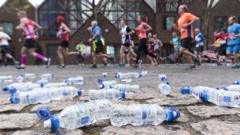
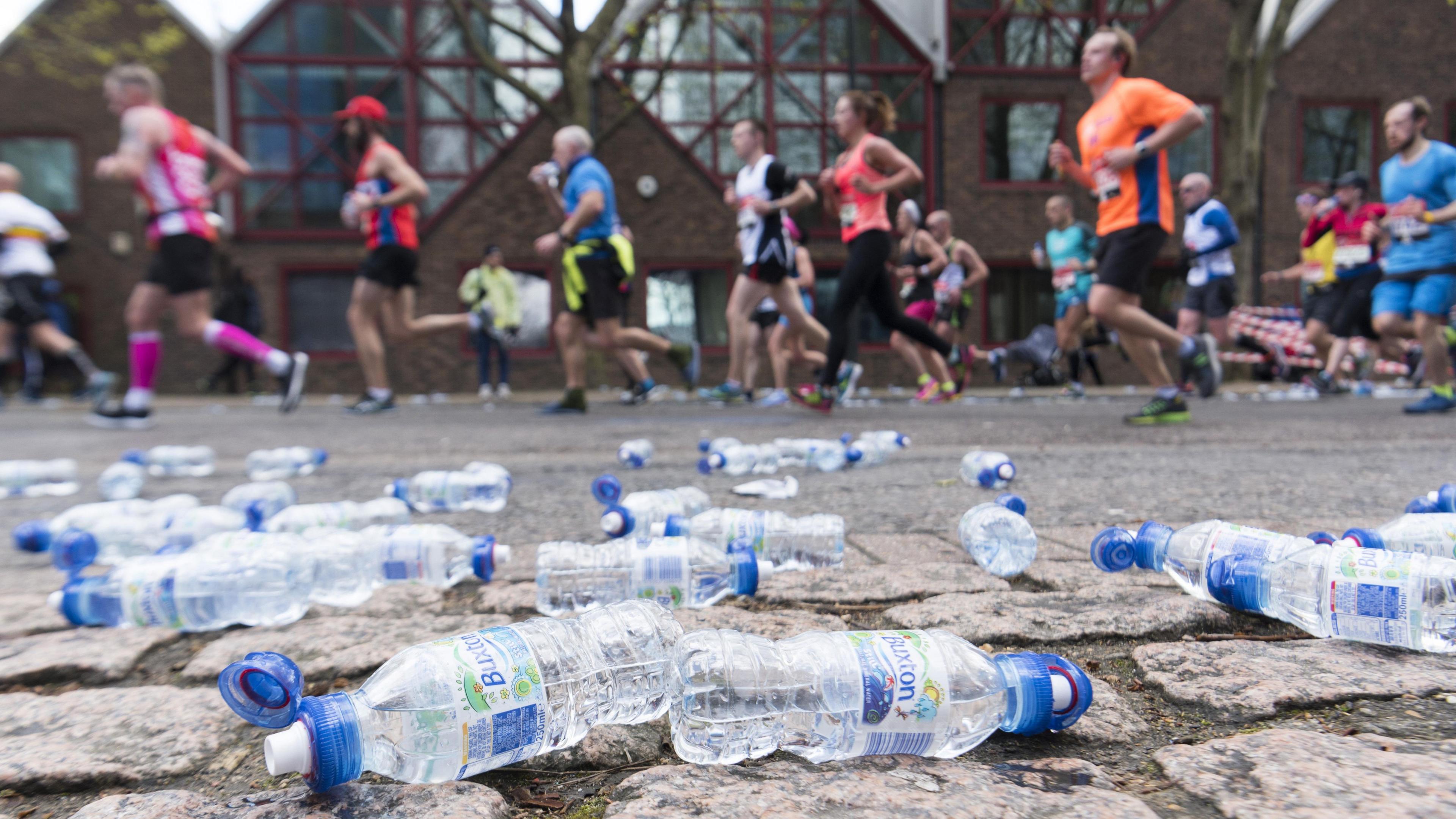
 This scene will not be witnessed at the Paris Marathon this year
BySarah DawkinsBBC Sport Senior Journalist- Published1 hour ago
Every long-distance runner will relate to the relief of a hydration station appearing in the distance. The trail they leave behind - a sea of thousands of discarded cups and bottles - is however less idyllic.
Litter-strewn courses are synonymous with marathons, but could that be about to change?
All eyes in the running world will be on the French capital this weekend as single-use cups and plastic bottles will not be available at the Paris Marathon on Sunday - the first time it has happened at a mass participation event.
Instead, runners will be required to carry their own hydration container - whether that's a soft flask, collapsible cup, or hydration pack on their back - that they will be able to refill at water points along the course.
The decision has divided the road-running community, with some runners abandoning their personal best attempts and others celebrating the shift towards sustainability.
Organisers say the decision will not affect performance and this is the future of mass participation events.
BBC Sport understands representatives from the London, New York and Chicago marathons, which are all on a similar scale to Paris, will be on the ground to observe how the system works.
BBC Sport speaks to two runners taking part in Paris.
'It's going to impact my time'
Cari Brown is hooked on marathons and is preparing to compete in her 11th on Sunday.
After learning of the changes, she felt forced to abandon her plans to run a personal best in Paris and entered a different race to chase her goal.
"Unfortunately, it's not going to be my goal marathon. Any runner who has to stop and start to get water, it's going to affect your time and it's going to affect your cadence," Brown said.
Her biggest disappointment, though, is the decision to allow pre-filled personal water bottles on the course for runners targeting a time under two hours and 50 minutes.
It is a common practice in elite races to avoid athletes losing time at hydration stations, but generally not a luxury extended to those in the wider event.
"That is a massive advantage to generally younger male runners, as on average their marathon times are quicker. It also gives recognition to the fact that it [stopping for water] does affect your time," Brown adds.
The IT manager from Woking will be running the streets of Paris with a hydration backpack. It is a tried-and-tested method for trail runners, but is less familiar for road runners who generally prefer to keep their kit as light as possible and rely on water provided along the course.
That causes concern for Brown who, while acknowledging plastic waste is an issue, believes having no water available at all in single-use paper cups on a potentially warm day is a big "risk factor", with runners likely to skip stations if they are busy and put themselves at risk of dehydration.
Organisers insist this will not be the case, with the number of aid stations increased from eight to 13 and water spray systems in operation in case of hot weather.
Thomas Delpeuch, director of the Paris Marathon, told BBC Sport that while the system is a "significant change", it is "successful and efficient" after a trial at the city's half marathon last month.
Prompted by a city-wide ban two years ago on single-use plastics at all Parisian races, it is hoped this change to the marathon will eliminate waste equivalent to 660,000 plastic bottles.
"Plastic is everywhere in our life and we need strong decisions to break free. Runners have appreciated bottles and cups for years for their practicality, but things are changing now," Delpeuch adds.
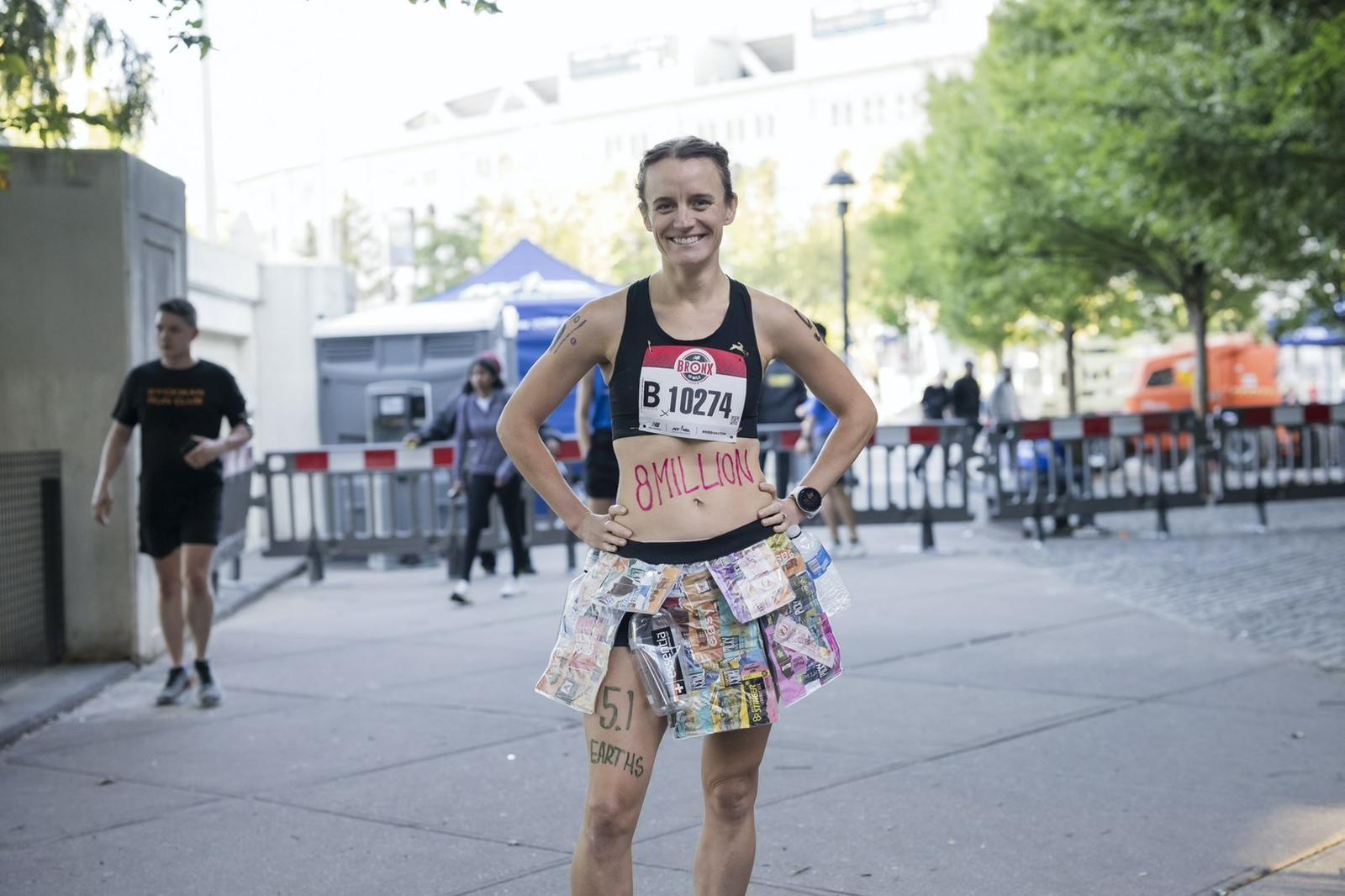 Image source, New York Road RunnersImage caption,
 Tina Muir plans to run a two hour 50 minute marathon in London with a refillable bottle to show running fast and refilling is possible
'Individual choices can make a big difference'
Tina Muir is a runner on a mission.
After the high of representing Great Britain at the World Half Marathon Championships in 2016, she fell out of love with running.
Now, the 37-year-old has returned with what she describes a "new purpose" to promote more sustainable practices in running and this move by Paris organisers is exactly what she has been hoping for.
"I had a feeling this was coming and I was so excited to see a race as big as Paris be so bold to do it," Muir said.
Since establishing campaign group 'Racing for Sustainability' last year, she has worked with organisers of some of the biggest races in the world to try to eliminate the cups used at these events, which is estimated to be between one and two million in number.
Muir has lived in the USA since her college years and is now famous for running in skirts made of rubbish.
After overhauling her habits as a runner, she now wants others to follow suit and take "personal accountability" by embracing these changes.
"I come from a place of imperfect attempts, imperfect action. I'm not saying 'never use a gel again because it comes in a plastic container'," Muir said.
"This is a small step that we can all take - I think if it is given a chance, runners will find it's actually not as bad as they think, or maybe even better than they think," she adds.
"This could be easily adapted and taken on by other races. I think it can be a blueprint. We just have to get runners to trust that change is okay".