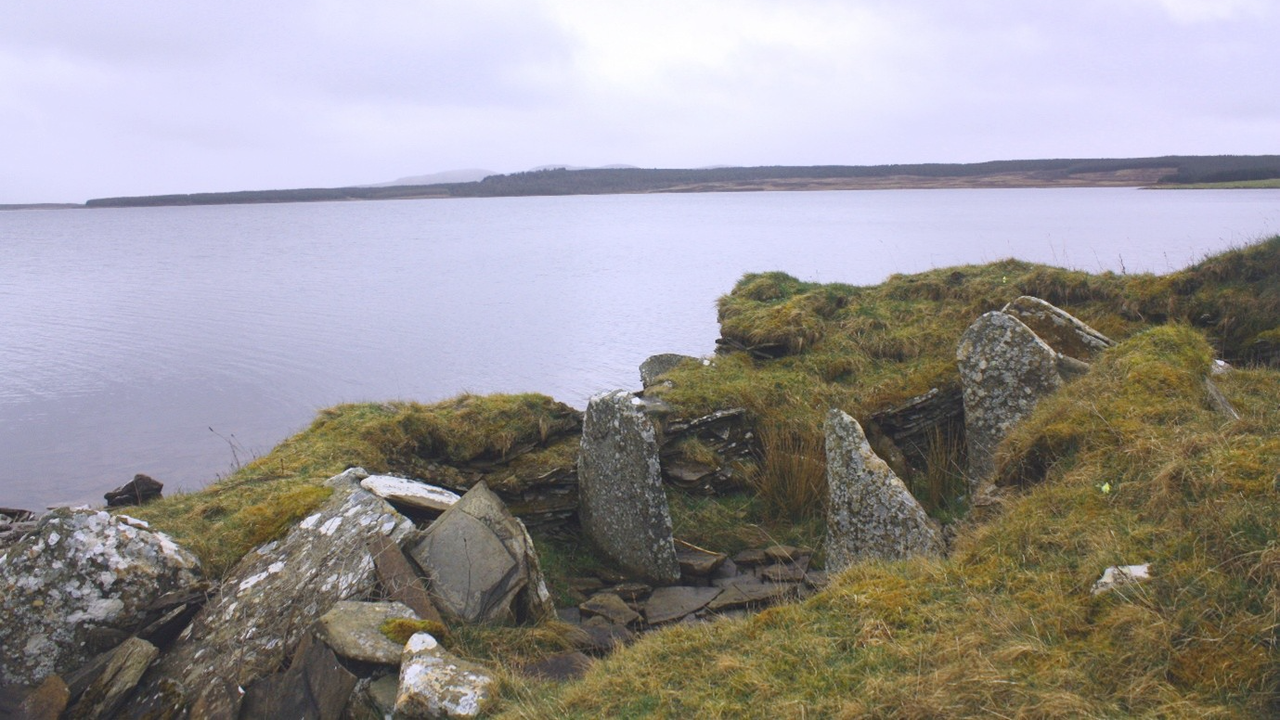
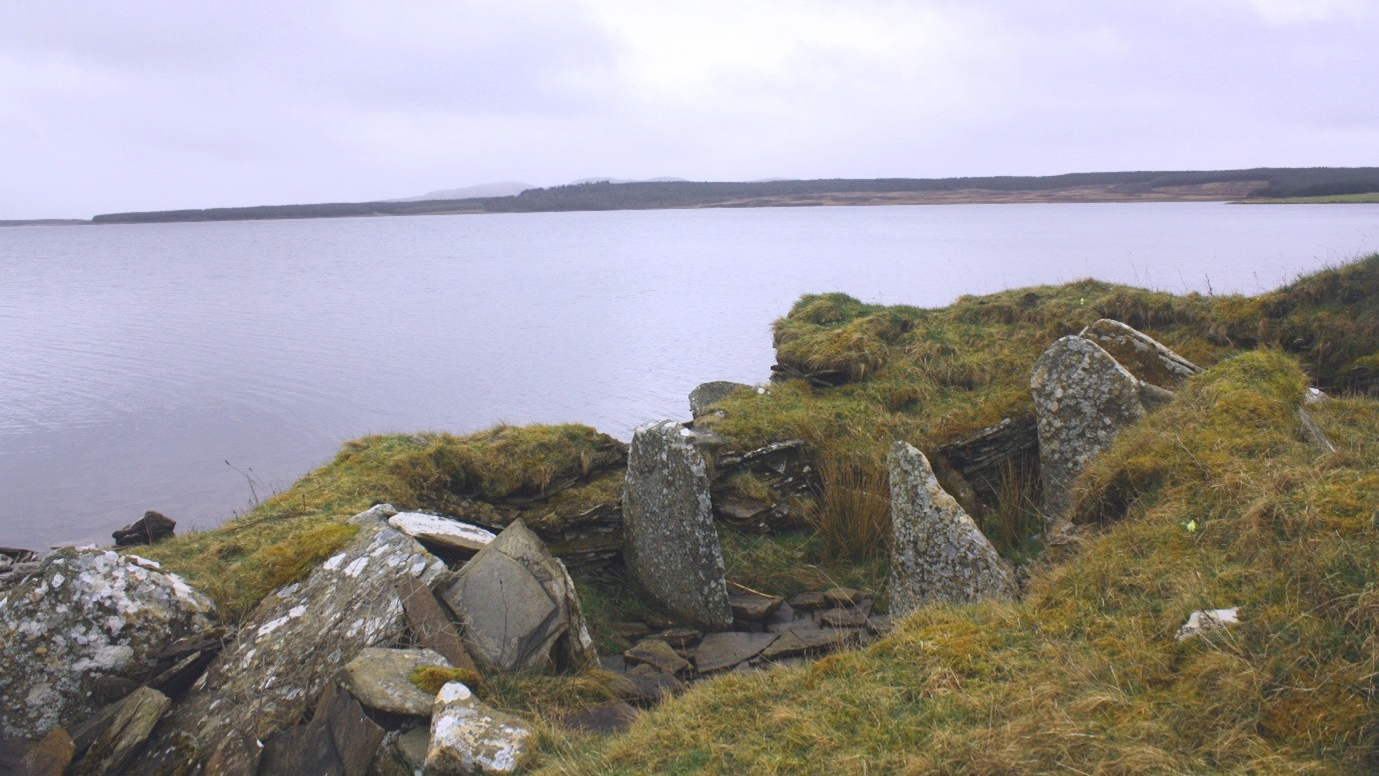
 One of the tombs at Loch Calder in the Scottish Highlands. (Image credit: Vicki Cummings) Share this article 0 Join the conversation Follow us Add us as a preferred source on Google Newsletter Sign up for the Live Science daily newsletter now
 Get the world’s most fascinating discoveries delivered straight to your inbox.
Become a Member in Seconds
Unlock instant access to exclusive member features.
Contact me with news and offers from other Future brands Receive email from us on behalf of our trusted partners or sponsors By submitting your information you agree to the Terms & Conditions and Privacy Policy and are aged 16 or over.You are now subscribed
Your newsletter sign-up was successful
Want to add more newsletters?
Join the club
Get full access to premium articles, exclusive features and a growing list of member rewards.
Explore An account already exists for this email address, please log in. Subscribe to our newsletterStone Age people in northern Scotland buried related males — but not females — together in the same tomb, a new DNA study reveals, creating "webs of descent" across several Neolithic archaeological sites.
In the study, published Tuesday (April 14) in the journal Antiquity, researchers analyzed the DNA of 22 people from five tombs in the county of Caithness and the Orkney Islands in northern Scotland. The tombs were used between 3800 and 3200 B.C., when prehistoric Scotland was transitioning from foraging to farming.
Using ancient DNA analysis, researchers have now been able to raise and answer questions about kinship in this period. For example "how often were tombs used to contain the remains of close genetic relatives? How often were individuals selected for inclusion because they were related along the male line?" study co-author Chris Fowler, an archaeologist at Newcastle University in the U.K., said in a statement.
In the tombs, the researchers found close genetic relatives, all of whom were linked along the male line. Two tombs held father-and-son pairs, and one contained brothers. Half brothers or paternal uncle-and-nephew pairs were found in two neighboring tombs. And one tomb — located in northeast Scotland on Loch Calder — contained the only evidence ever found of a father, son and grandson buried together in Neolithic Scotland.
"It is incredible to think that, over 5,000 years after these people were deposited in these tombs, we were able to reconstruct how they were related to each other through the analysis of ancient DNA," study lead author Vicki Cummings, an archaeologist at Cardiff University in Wales, said in the statement. "This study shows that the people building these monuments placed a particular emphasis on the male line."
The female skeletons that the researchers studied did not show any close connections. There were no mother-daughter or sister pairs in tombs, for example, and the closest genetic relationship between any two women was fifth-degree, which equates to first cousins once removed.
Sign up for the Live Science daily newsletter nowContact me with news and offers from other Future brandsReceive email from us on behalf of our trusted partners or sponsorsRELATED STORIES- 'Ultimate adventure story': Submerged stone circles reveal perilous migration of prehistoric people to far northern Scotland 11,000 years ago
- 3,300-year-old cremations found in Scotland suggest the people died in a mysterious catastrophic event
- Roman military fort discovered in Scotland far north of Hadrian's Wall
However, two females buried in tombs on an Orkney island were genetically related to males buried in mainland tombs, suggesting that women may have played a key role in maintaining "webs of descent" across the water, the researchers wrote in the study.
While experts had long assumed that Neolithic people in this area organized themselves along the male line, the new study confirms it.
"These results are consistent with the interpretation that patrilineal descent was traced in this region," Cummings said. "For the people introducing the Neolithic into Britain, this social connection may have been as important as pots, cows and axes."
Article SourcesCummings, V., Fowler, C., Olalde, I., Cuthbert, S., Reich, D. (2026). Building tombs and entombing the dead as technologies of descent and affinity in Neolithic northern Scotland. Antiquity. https://doi.org/10.15184/aqy.2026.10291
Stone Age quiz: What do you know about the Paleolithic, Mesolithic and Neolithic?
 Kristina KillgroveStaff writer
Kristina Killgrove is a staff writer at Live Science with a focus on archaeology and paleoanthropology news. Her articles have also appeared in venues such as Forbes, Smithsonian, and Mental Floss. Kristina holds a Ph.D. in biological anthropology and an M.A. in classical archaeology from the University of North Carolina, as well as a B.A. in Latin from the University of Virginia, and she was formerly a university professor and researcher. She has received awards from the Society for American Archaeology and the American Anthropological Association for her science writing.
View MoreYou must confirm your public display name before commenting
Please logout and then login again, you will then be prompted to enter your display name.
Logout LATEST ARTICLES 1'Oslo patient' likely cured of HIV after getting stem cell transplant from his brother, who is genetically resistant to the virus
- 2Antiseptic-tolerant germs spread through the air in hospitals, early study hints
- 3Homo erectus' tools include stunning geodes and fossils, possibly as a way to connect with the cosmos, study finds
- 4Physicists entangle two moving atoms for the first time, validating 'spooky' quantum theory
- 5'I have not processed what we just did': Artemis II astronauts share all in first news conference since splashdown