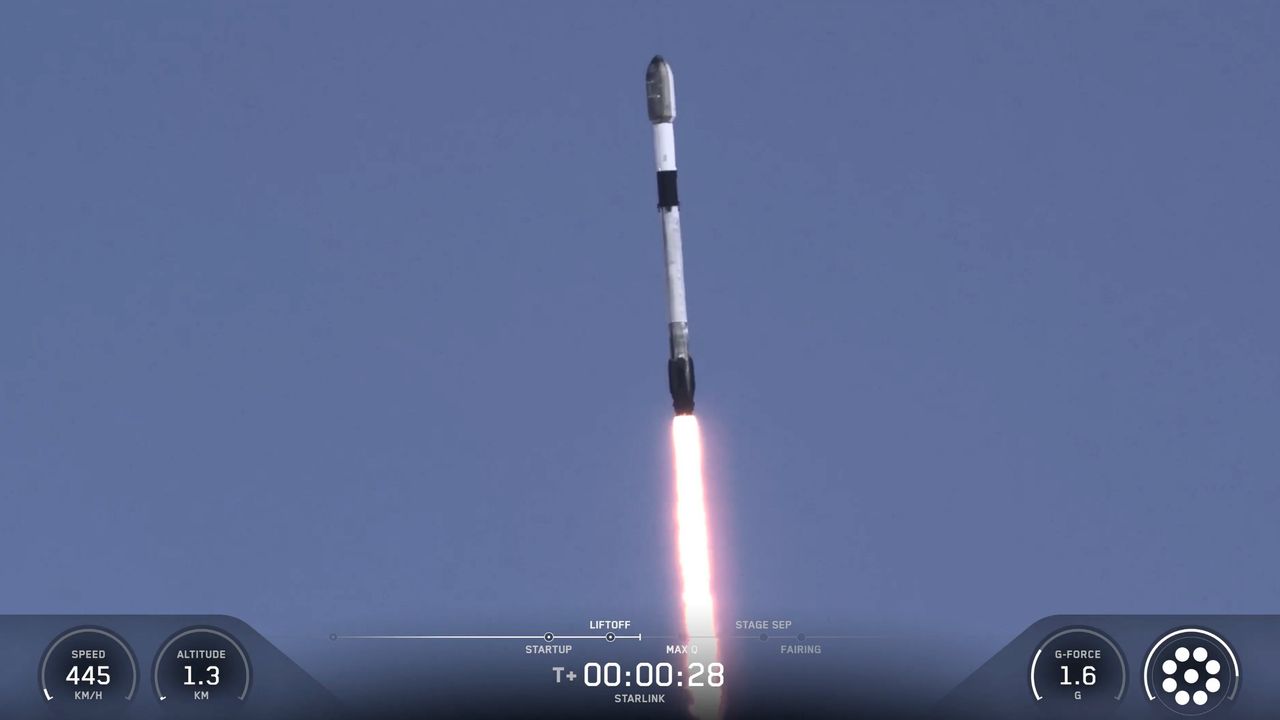
SpaceX has launched yet another batch of its Starlink internet satellites to the final frontier.
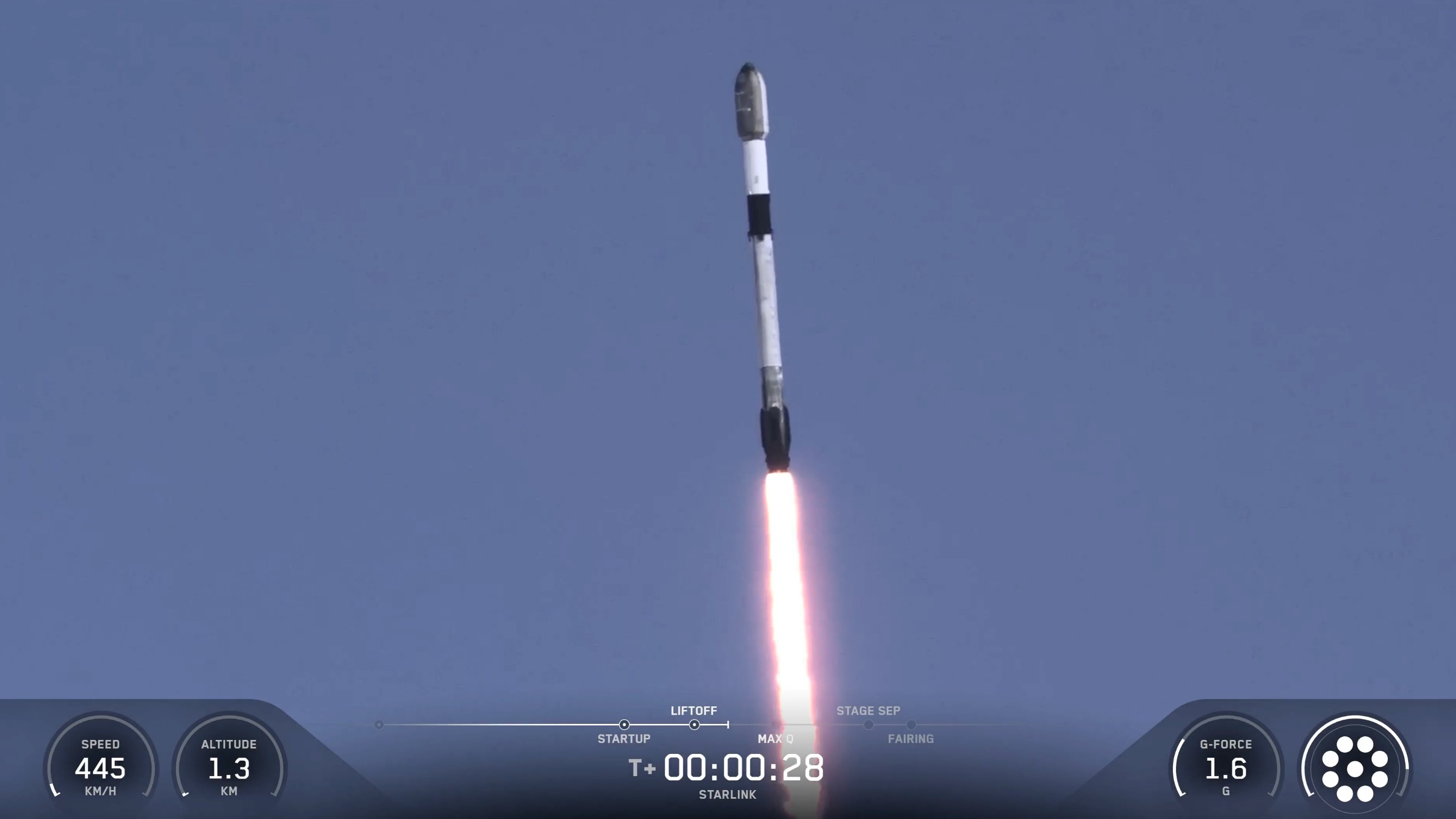
A Falcon 9 rocket lifted off from California's foggy Vandenberg Space Force Base today (Aug. 4) at 1:05 p.m. EDT (1705 GMT; 10:05 a.m. local time), carrying 24 of the broadband spacecraft toward low Earth orbit (LEO).
It was the 90th Falcon 9 liftoff of the year and the 70th of 2026 devoted to building out the Starlink megaconstellation.
The rocket's first stage came back to Earth as planned about 8.5 minutes after launch, touching down on the SpaceX droneship "Of Course I Still Love You," which was stationed in the Pacific Ocean. It was the 34th mission for this particular booster, which is designated B1063.
That's just two flights shy of the Falcon 9 reuse record, which was set last month on a different Starlink launch.
If all goes according to plan, the 24 Starlink satellites will be deployed into LEO about 61 minutes after liftoff. They'll join quite a few other spacecraft in the Starlink megaconstellation — nearly 10,900 at last count.
Previous Booster B1063 launchesSentinel-6 Michael Freilich | DART | Transporter-7 | Iridium OneWeb | SDA-0B | NROL-113 | NROL-167 | NROL-149 | NAOS | 24 Starlink missions
There's some other SpaceX action on tap today as well. At 4:30 p.m. EDT (2030 GMT), the company will host a webcast to discuss its first-ever public earnings report, which covers the second quarter of 2026. You can listen live via SpaceX's X account.
SpaceX was a private company from its founding in 2002 until mid-June of this year, when Elon Musk took it public in the largest IPO in history.