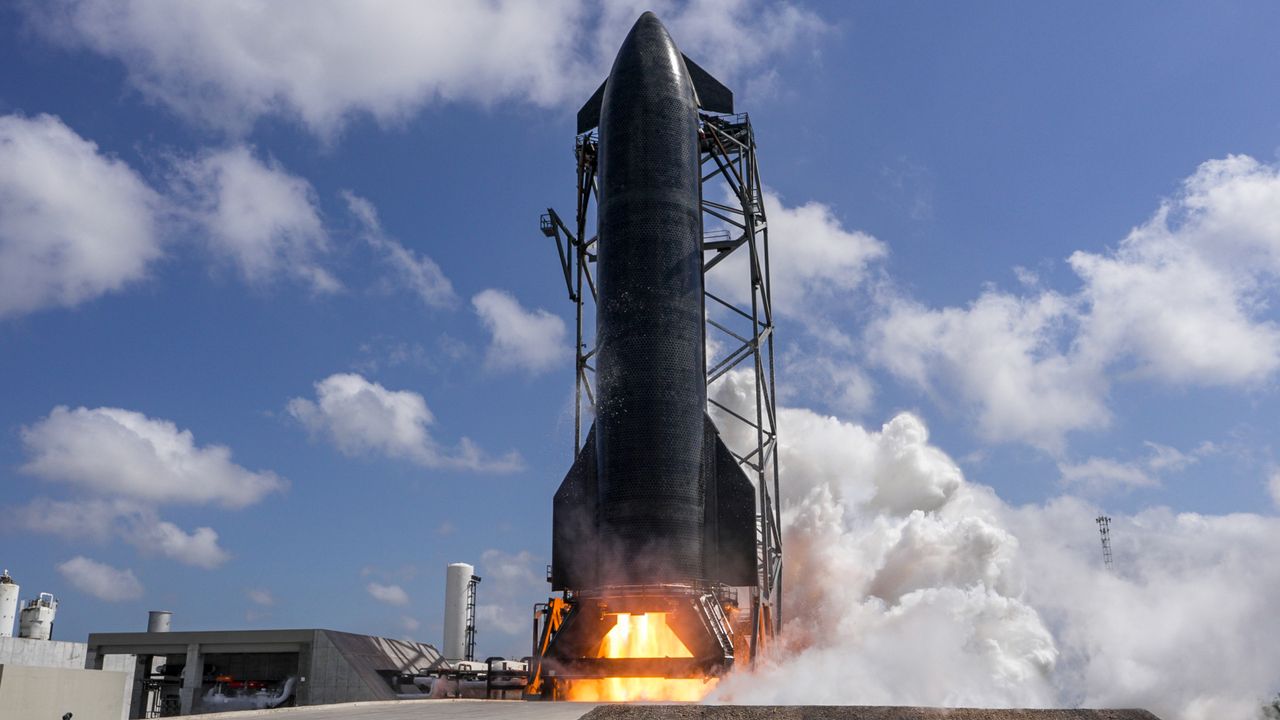
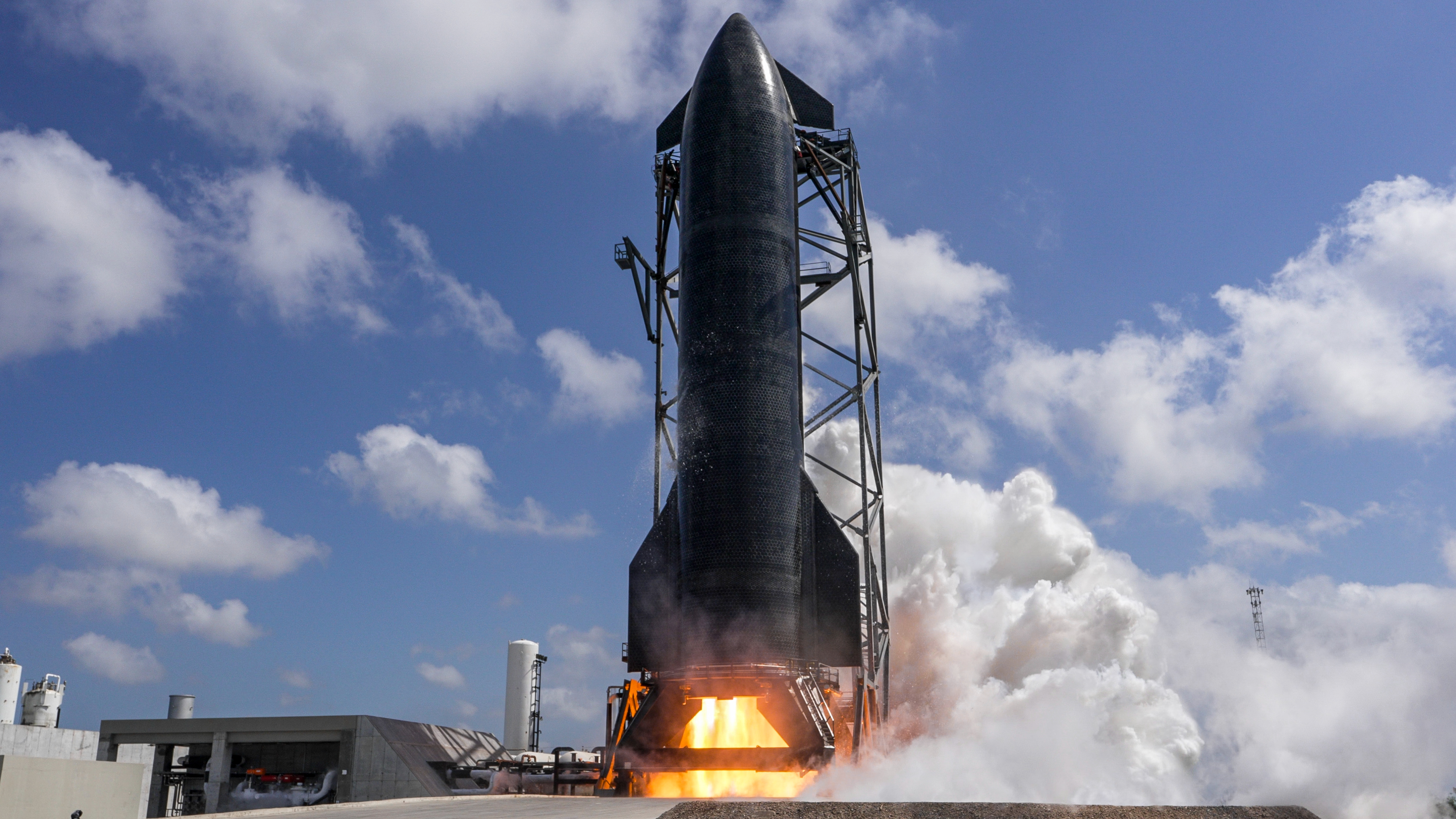
 SpaceX conducts a full-duration static fire test with the upper stage of the Starship V3 vehicle that will conduct the Flight 12 test. SpaceX posted this image on X on April 14, 2026. (Image credit: SpaceX) Share this article 0 Join the conversation Follow us Add us as a preferred source on Google Newsletter Get the Space.com Newsletter
 Breaking space news, the latest updates on rocket launches, skywatching events and more!
Contact me with news and offers from other Future brands Receive email from us on behalf of our trusted partners or sponsors By submitting your information you agree to the Terms & Conditions and Privacy Policy and are aged 16 or over.You are now subscribed
Your newsletter sign-up was successful
Want to add more newsletters?
An account already exists for this email address, please log in. Subscribe to our newsletterThe new, juiced-up version of SpaceX's Starship megarocket just cleared a big hurdle on the path to its first-ever launch.
That liftoff, targeted for early or mid-May, will be the 12th overall for Starship but the first for the vehicle's "Version 3," which is bigger and more powerful than its predecessors.
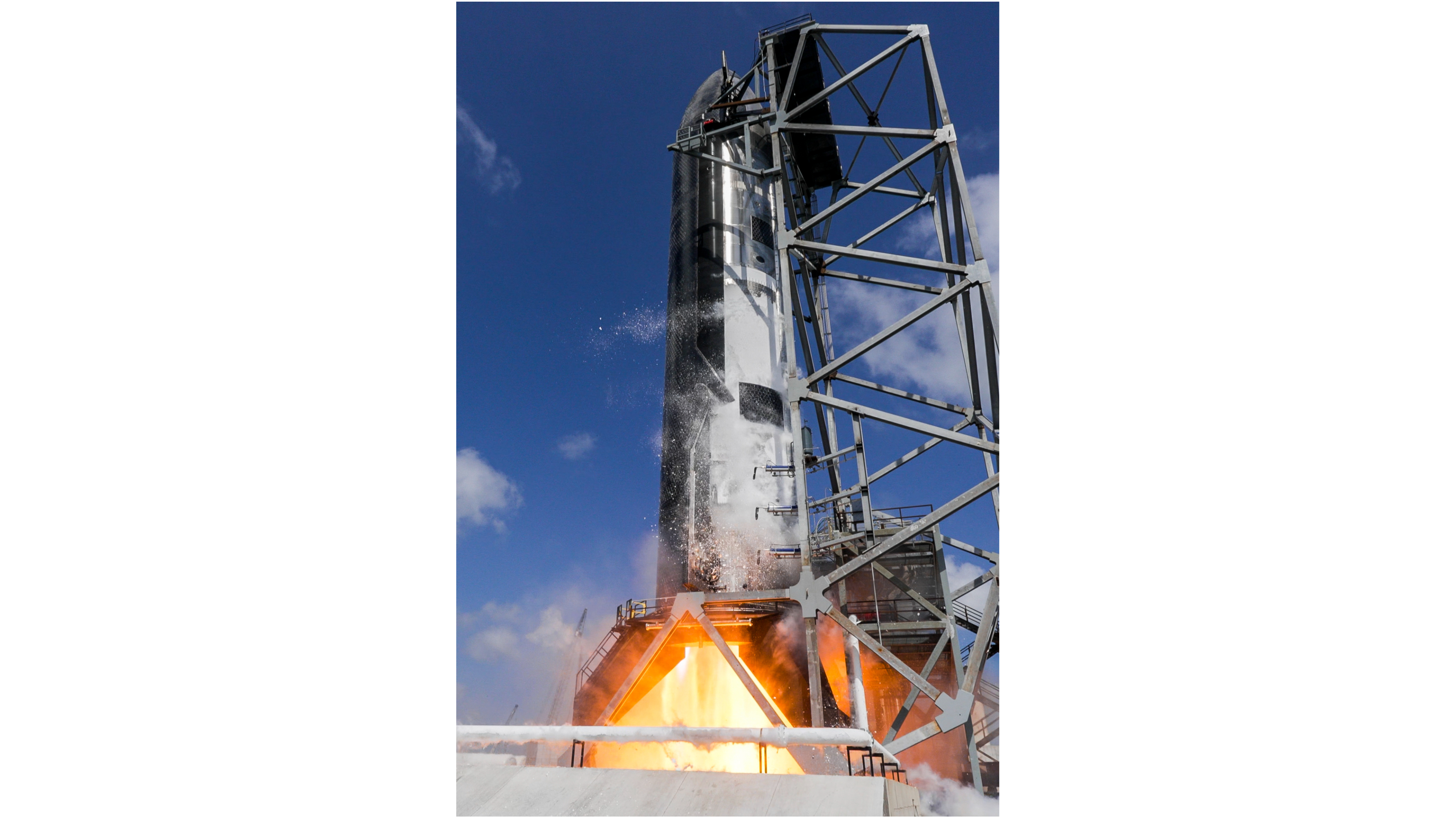
"Full-duration static fire for the first time on Starship V3," the company wrote via X.
The milestone came four weeks after the first static fire of a Starship V3 first stage, a trial that involved just 10 of the booster's 33 Raptor engines and ended early due to an issue with ground equipment.
When stacked, Starship V3 stands 408.1 feet (124.4 meters) tall — about 4 feet (1.2 m) taller than its immediate predecessor, the V2.
The V3 is also much more powerful, thanks to its new V3 Raptor engines. This latest Starship variant can carry more than 100 tons to low Earth orbit, compared to about 35 tons for the V2, SpaceX founder and CEO Elon Musk has said.
Get the Space.com NewsletterContact me with news and offers from other Future brandsReceive email from us on behalf of our trusted partners or sponsorsStarship has flown 11 suborbital test missions to date, most recently in October 2025. The five latest launches were performed by the V2.
SpaceX is working to get the megarocket ready for astronaut missions to the moon; NASA selected Starship to be the first crewed lunar lander for its Artemis program.
The agency's Artemis 2 mission just sent four astronauts around the moon and back to Earth. NASA is now gearing up for Artemis 3, which will test docking operations in Earth orbit between the agency's Orion capsule and one or both of Artemis' contracted moon landers — Starship and Blue Origin's Blue Moon.
Artemis 3 is targeted to launch in mid-2027. If all goes well with that mission, Artemis 4 will put astronauts down near the lunar south pole in late 2028, aboard either Starship or Blue Moon.
 Mike WallSpaceflight and Tech Editor
Michael Wall is the Spaceflight and Tech Editor for Space.com and joined the team in 2010. He primarily covers human and robotic spaceflight, military space, and exoplanets, but has been known to dabble in the space art beat. His book about the search for alien life, "Out There," was published on Nov. 13, 2018. Before becoming a science writer, Michael worked as a herpetologist and wildlife biologist. He has a Ph.D. in evolutionary biology from the University of Sydney, Australia, a bachelor's degree from the University of Arizona, and a graduate certificate in science writing from the University of California, Santa Cruz. To find out what his latest project is, you can follow Michael on Twitter.
View MoreYou must confirm your public display name before commenting
Please logout and then login again, you will then be prompted to enter your display name.
Logout MORE FROM SPACE... 1How do supergiant exoplanets form? James Webb Space Telescope finds a clue
- 2Space combat was 'critical to mission success' in US war in Iran, Space Force chief says
- 3The 7 best sci-fi movie soundtracks of all time
- 4NASA astronauts joke around with an optical illusion on the ISS | Space photo of the day for April 15, 2026
- 5Fly higher and longer for less with $120 off this sub-9-ounce Potensic Atom 2 drone


