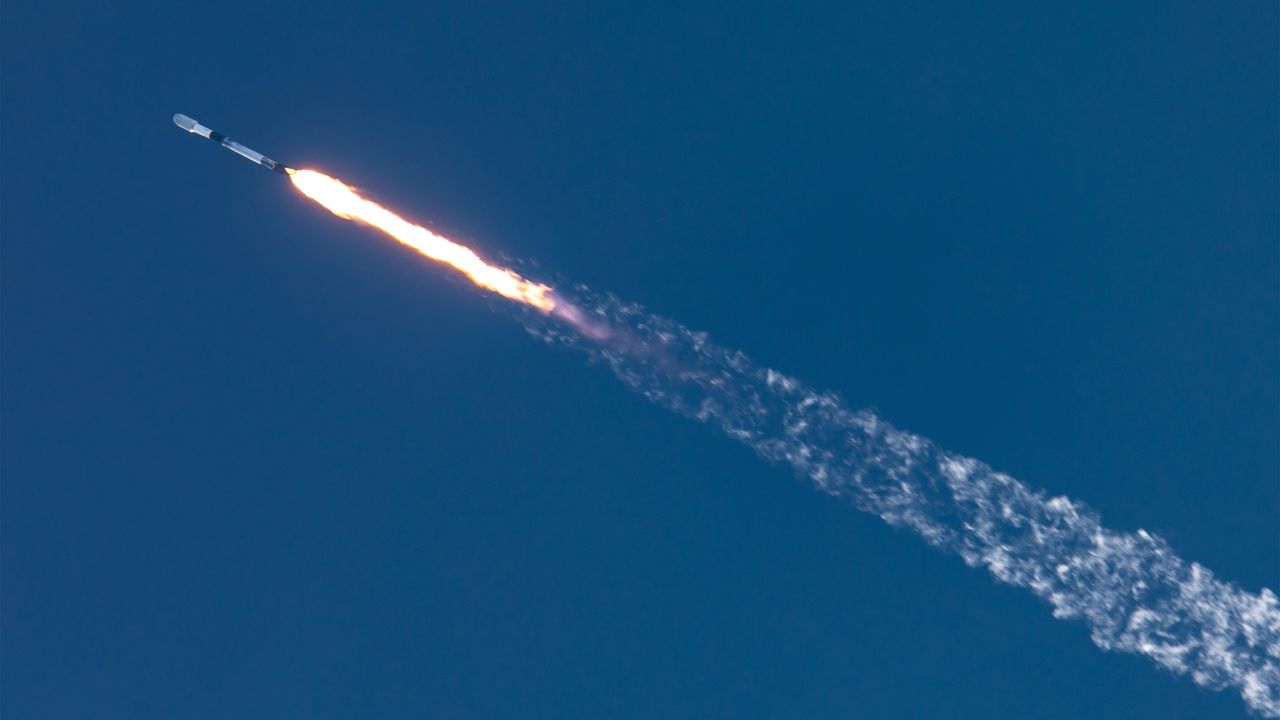

 ReutersAstronauts on Nasa's Artemis II mission made history with a lunar flyby
A company which has been pioneering satellite technology since the 1970s is working on a spacecraft to provide communications on the far side of the Moon.
Guildford-based Surrey Satellite Technology Ltd (SSTL) is building Lunar Pathfinder, a spacecraft expected to launch in spring 2027.
It comes as four astronauts on Nasa's Artemis II mission made history this week with a lunar flyby that took them behind the Moon – the first crewed mission to do so in more than 50 years.
During the flyby, the team experienced a 40-minute communications blackout, but SSTL says when Lunar Pathfinder is operational, lunar missions, including rovers and orbiters, will be able to stay in contact with the Earth.
 Andrew Cawthorne said Lunar Pathfinder would be able to "bounce" information
During this week's flyby, the Artemis II crew kept a constant connection with mission control in Houston, Texas, until the Orion spacecraft passed behind the Moon at about 23:47 BST (18:47 EDT) on Monday.
For about 40 minutes, radio and laser signals which allowed communication between the spacecraft and Earth were blocked by the Moon itself.
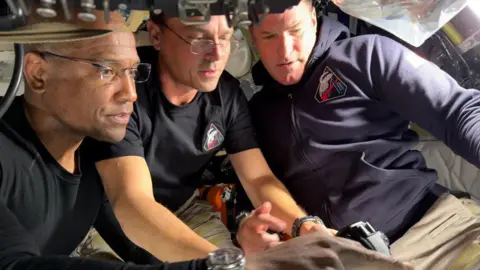 NASADuring the blackout, the crew took photos and studied the Moon's geology
SSTL managing director Andrew Cawthorne explained: "Radio waves travel in a straight line.
"In order to be able to communicate with something you need to be able to see it."
He said: "Any time that a spacecraft is flying behind the Moon or indeed has landed on the far side of the Moon, if you can't see the Earth, you can't communicate.
"That's where our Lunar Pathfinder and other spacecraft like that will come in, because it can relay the information.
"If the spacecraft can see Lunar Pathfinder and Lunar Pathfinder can see the Earth then you can bounce the information that way instead."
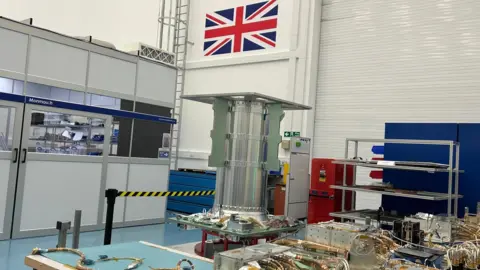 Lunar Pathfinder is expected to launch in spring 2027
During the blackout, the Artemis II astronauts were completely out of touch, travelling through space.
They used the time to take detailed photos of the moon's surface and study its geology.
Communications dropouts are expected to become less common in future.
The European Space Agency's Moonlight programme is planning to launch a network of satellites to support continuous coverage around the Moon.
The last time Nasa sent astronauts to the Moon's surface was Apollo 17 in 1972, and the agency is aiming to return a crew to the Moon by 2028.
Follow BBC Surrey on Facebook, on X. Send your story ideas to [email protected] or WhatsApp us on 08081 002250.
More on this story