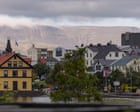
Country holds a knife-edge referendum that cuts across political divides on taking step closer to Brussels after Trump threats towards Greenland
By Miranda Bryant in Hvammur, Þorlákshöfn and ReykjavíkFor a long time, the prospect of becoming the third generation to run his family farm was an exciting one, says Davíð Clausen Pétursson.
Icelandic farmers were starting to get higher prices for their meat and milk, debt was no longer an occupational prerequisite and innovation was on the rise.
Now the 29-year-old is anxiously awaiting the result of a referendum on Saturday, when Icelanders will be asked whether or not they want to restart accession talks with the EU.
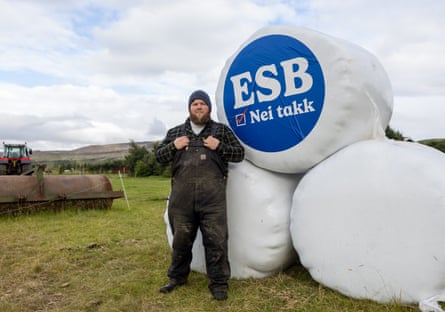 Davíð Clausen Pétursson, a farmer, will be voting ‘nei’ in Iceland’s EU referendum. Photograph: Sigga Ella/The Guardian
Davíð believes joining the bloc could have negative ramifications for farmers all over Iceland, slowing down progress made in the sector and reducing profits.
Across Europe small and medium-sized farms have struggled, with thousands closing each year because of brutal economic circumstances. In Iceland, however, the picture has been somewhat brighter for some farmers who have been able to make a profit and innovate.
Since the government announced that it was bringing forward the planned vote, amid Donald Trump’s efforts to take control of neighbouring Greenland, debate has taken in everything from food security to national identity, defence, housing, inflation, language, and natural resources.
The latest polls show the two sides – which cut across the political spectrum and generations – are neck and neck. According to Thursday’s Gallup poll, the no campaign is slightly in the lead with 51.6% of the vote and yes at 48.4%.
While the yes campaign has strong support, critics of the EU have in some ways been louder in part because a yes vote is less decisive: it is agreeing to begin negotiations, not saying yes to joining the EU.
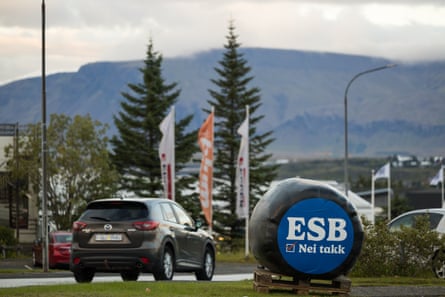 Critics of the EU have in some ways been louder than the yes campaign. Photograph: Sigga Ella/The Guardian
“Of course I am quite invested in how it goes,” says Davíð at his remote farm in Hvammur, south-west Iceland, overlooked by a mountain that features in the Icelandic sagas. “I want at least to build my life around farming for the next 30-40 years and I would also like my kids to be able to do that as well. I am just not sure that it will be possible if we go that route.”
He says a “yes” win would lead to the years of negotiations before the nation votes again on any deal reached, and he fears the resulting uncertainty would put a halt to all the progress and the momentum in farming. Then, they would have to deal with the repercussions of the outcome, where he fears farmers’ interests, drowned out by the more valuable and noisier fishing lobby, would not be prioritised.
As Davíð explained to his nine-year-old son – the vote has been a big talking point at school – a litre of milk currently costs them about 100 ISK to produce, which they can sell for 145 ISK. He worries that joining the EU would mean he would have to significantly decrease the price of his milk and other products.
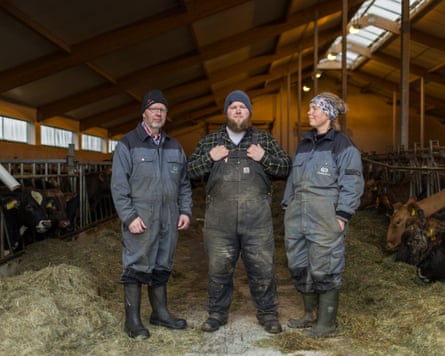 Davíð Clausen Pétursson with his parents, Pétur Benedikt Guðmundsson and Charlotte Clausen, on their farm. Photograph: Sigga Ella/The Guardian
“It is not that I am against anything in the EU at all. I am half Danish, my mother is Danish and we of course buy a lot from Europe,” he says. “The regulations they have there are suitable for countries that live next to each other, but I am fearful that if it is a yes, the uncertainty will make it quite hard for us to see where we are going, so that will put everything at a bit of a halt.”
Iceland’s current farming system was built on the country being a lone independent state in the Atlantic with unique weather conditions, he says. “We can figure it out ourselves. We make trade agreements with everyone around us, we try to take off the tariffs and have free trade with the products we really need, we put tariffs on the products we are trying to produce here.”
He understands that high food costs are frustrating for consumers, but believes it is worth it. “There is a high cost to food security in Iceland. But there is an even bigger cost to losing that and being dependent.”
The EU vote taps into a sense of lament among some in Iceland that in a globalised, highly connected world the country’s foundation in agriculture and fishing – central to life there until a few decades ago – is being rapidly forgotten.
Davíð says that 30 years ago children came to work on the farm in the summer, but machinery and specialisation mean that is no longer possible.
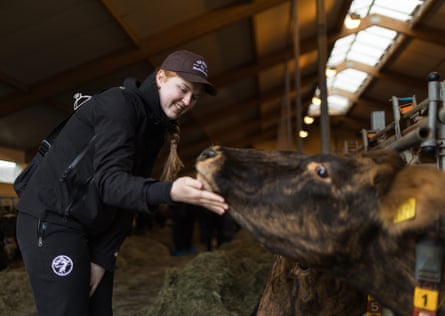 Sigurrós Birta Jóhannsdóttir, an agricultural science student, will also vote no on Saturday. Photograph: Sigga Ella/The Guardian
Sigurrós Birta Jóhannsdóttir, 22, visited the farm on an educational visit with a coach load of other agriculture students. Jóhannsdóttir, who works on a farm that she will take over in the future, will be voting no on Saturday because she believes that negotiations will only slow down progress and cost money.
Supporters believe joining the EU could help bring down the high cost of living and inflation in Iceland, and would be good for the country’s security.
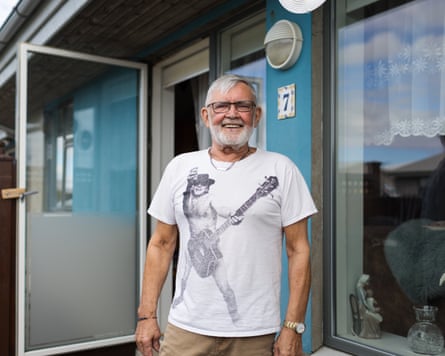 Kári Böðvarsson, a retired fisher, is planning to vote ‘yes’. Photograph: Sigga Ella/The Guardian
At his home by the sea in Þorlákshöfn, Kári Böðvarsson, 79, says he plans to vote yes, despite being right-leaning politically. “It doesn’t matter if you’re on the right or on the left, what your opinion is, people are just voting across politics,” the retired fisher says.
He is an outlier at the gym among his training buddies, where discussions can get quite heated. He enjoys provoking them but he will be glad when the debate is over. “We have to trust these people to negotiate well for us because why shouldn’t they?” he says. “But the ‘no’ people don’t trust them.”
When it comes to fishing, there is not much the EU can do to win back power over fishing quotas from the big fishing companies to individuals, Kári says. But perhaps it could help with housing costs.
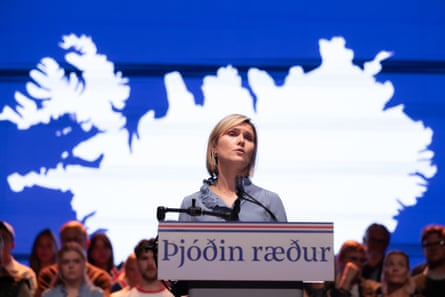 The prime minister, Kristrún Frostadóttir, says Iceland should seize the chance to take the first step to join the EU. Photograph: Sigga Ella/The Guardian
At a public meeting in Reykjavík, the prime minister, Kristrún Frostadóttir, told a packed Icelandic-flag-waving house that joining the EU was a “unique opportunity”.
“Iceland’s sovereignty is not a museum piece that we keep in a cupboard while isolating ourselves from other countries,” she said, to cheers.
She said it was also “good timing” for Iceland’s security – not just in light of the US and its unpredictable economic and geopolitical moves, but also China. “This isn’t about being afraid,” she said. “It’s about being prepared and seizing opportunities when they arise.”
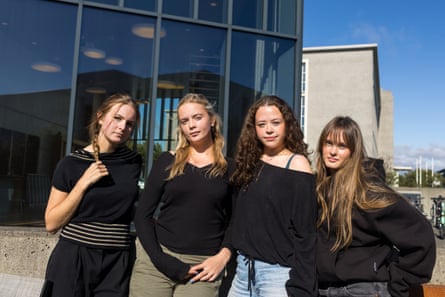 Psychology students at the University of Iceland, Reykjavík. Saga Gautadóttir, right, agrees with arguments on both sides, while Anna María Magnúsdóttir, second left, says she has not yet made up her mind. Photograph: Sigga Ella/The Guardian
But at the University of Iceland in Reykjavík, Kristrún and the yes campaign still have some convincing to do before polling stations open at 9am on Saturday. The first results are expected between 10pm and midnight.
Student Saga Gautadóttir, 20, is considering spoiling her ballot because she agrees with arguments on both sides. Anna María Magnúsdóttir, 20, has not made up her mind yet how to vote, she says, sitting in the sunshine on campus with friends. “I just want the best for our country, whichever one it is.”
Explore more on these topicsShareReuse this content


