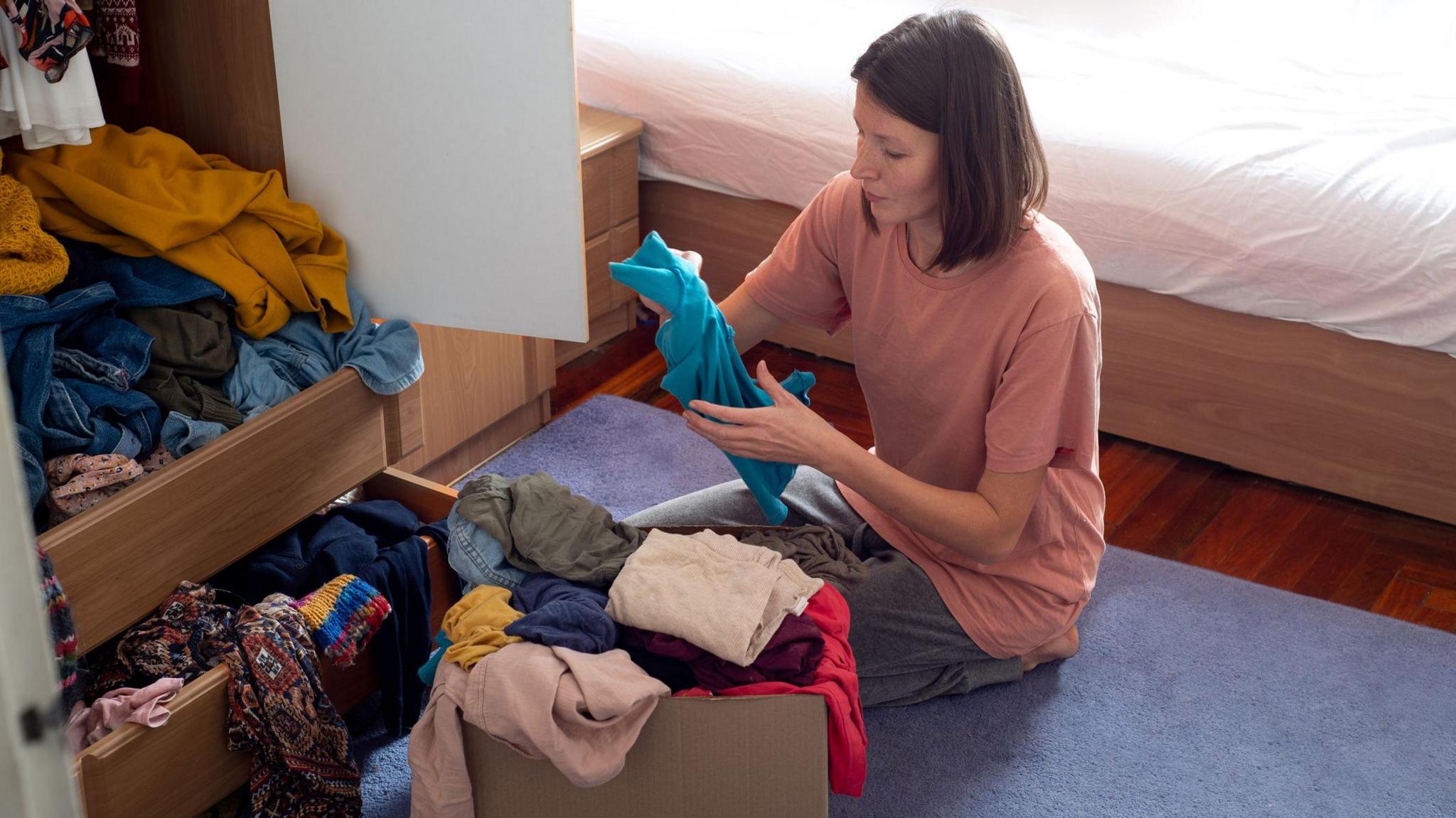
 Image caption,
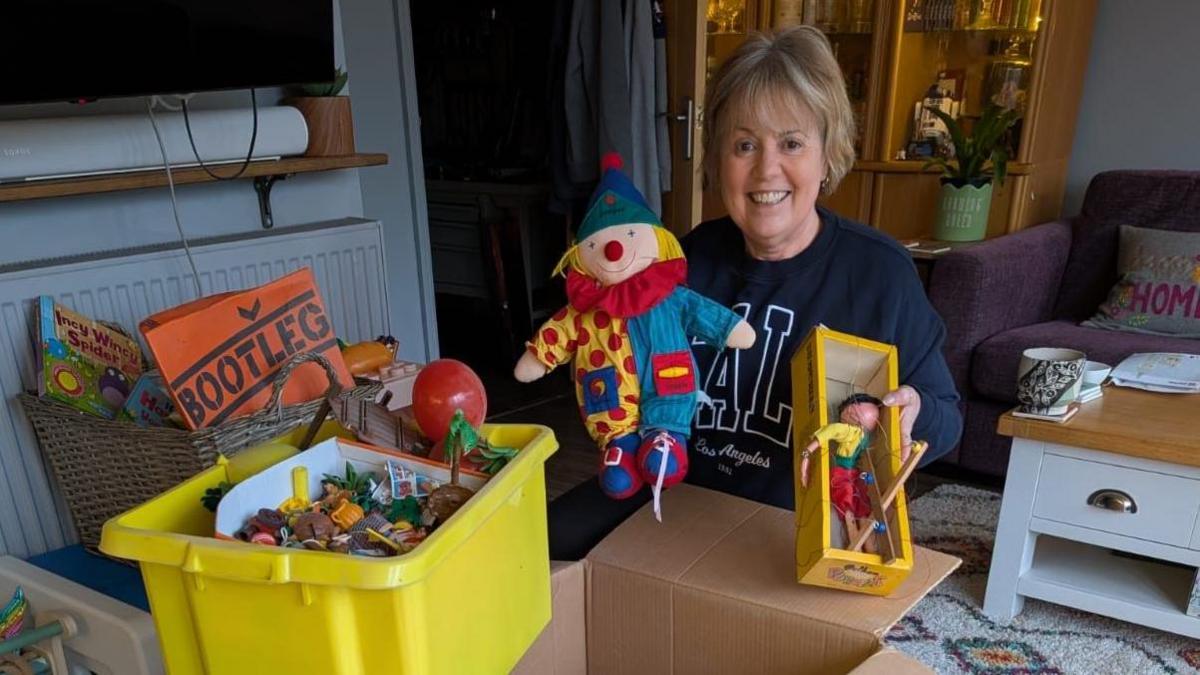
 Tidying expert Dilly Carter started her profession while working as a personal assistant
ByGeorge Sandeman- Published1 hour ago
Decluttering is Dilly Carter's love language.
The tidying expert from BBC One's Sort Your Life Out once helped an ex-boyfriend clear up and organise his mother's home after she died.
"It was a way that I could help him," Carter says. "And in doing that, we ended up getting back together." They're married now.
Growing up in a chaotic home with two working parents, she learned early on that she preferred being tidy and organised.
Carter worked as a PA for business executives and, as well as keeping their diaries in order, began making sure their homes were too.
Sort Your Life Out Unpacked
Tidying expert Dilly Carter chats to celebrity guests about their favourite objects at home and why they are so important to them.
Listen on SoundsWatch on iPlayerIn her new BBC video podcast, Sort Your Life Out Unpacked, she interviews famous faces, including Sophie Ellis-Bextor and Lorraine Kelly, about their favourites items and advises how they can best keep their homes free of clutter.
I asked Carter what she thinks are the four most common cluttering mistakes - and how you can fix them.
Kitchen counters are 'prime real estate'
Bread maker? Air fryer? Blender? Juicer? Mandoline slicer with cut-resistant gloves and hand guard?
The array of kitchen appliances promising to optimise your cooking experience and save you time is endless.
But they need to go somewhere and often that's your kitchen counter top, which - thanks to such clutter- feels increasingly cramped.
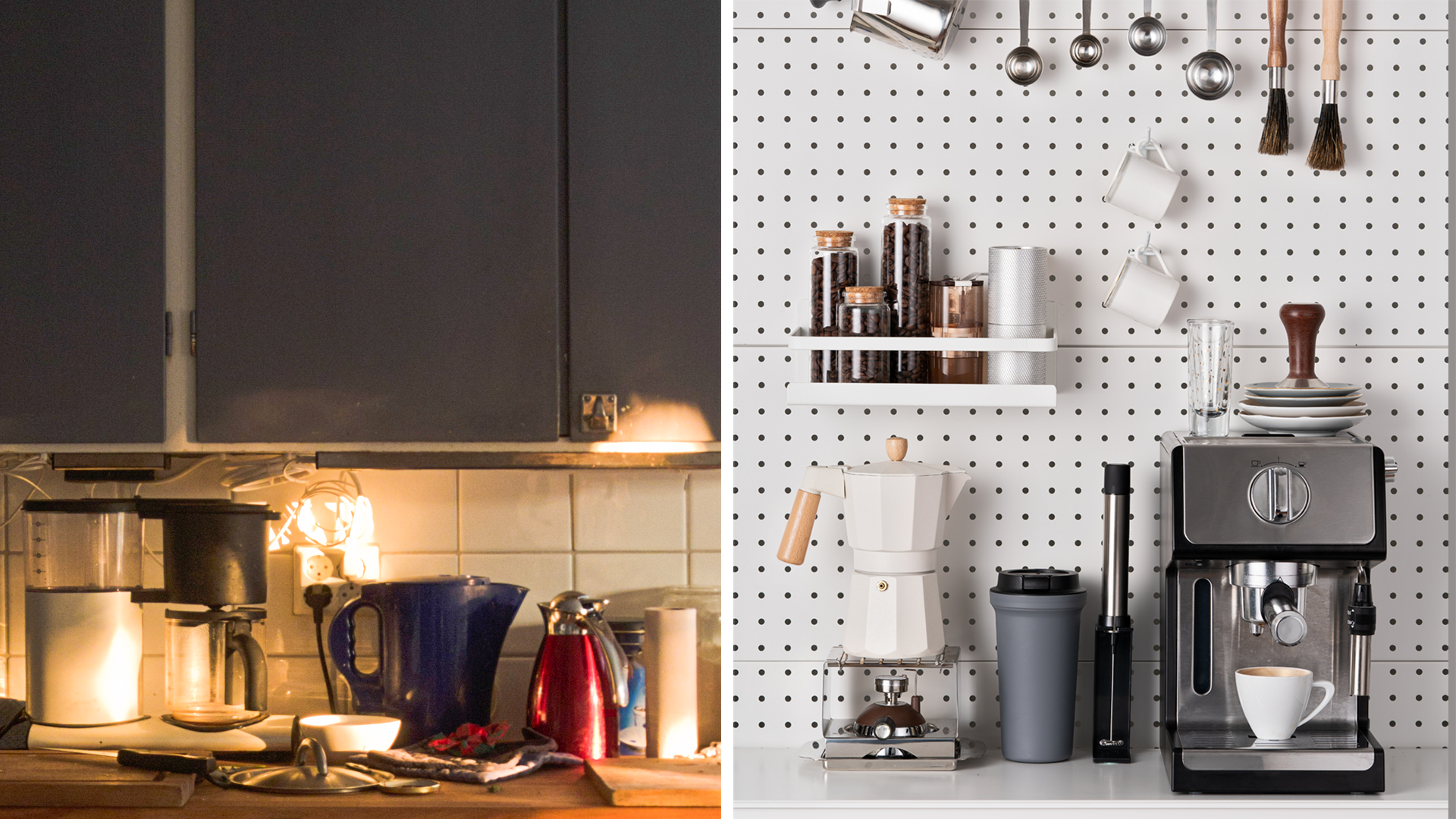 Image source, Getty Images
"I like to think of kitchens as real estate," says Carter. "Everything in your kitchen has to earn its place in there."
She commonly sees kitchens where infrequently used gadgets take up "prime real estate"; things which could be stored in drawers, cupboards or even the loft, if it's something really gathering dust.
"Go through your kitchen regularly and check what you need, see what you use regularly and [what] you don't."
Another tip is not to buy so many kitchen appliances to begin with but, if you do, make sure it's a "multi-use product".
For example, blenders are more versatile than juicers. If you want to make juice instead of a smoothie, you can extract liquid from the blended pulp of fruits and vegetables using a sieve or cheesecloth - no need for a specific gadget only does one thing.
Too many clothes, not enough drawers
Rolling your T-shirts may be an efficient way of getting them into a drawer but you won't be able to see them all when you're picking your outfit for the day.
File folding (where the pile is on its side instead of clothes being stacked on top of each other) ensures you can at least see the colour of the T-shirt even if you can't see the image or design on the front.
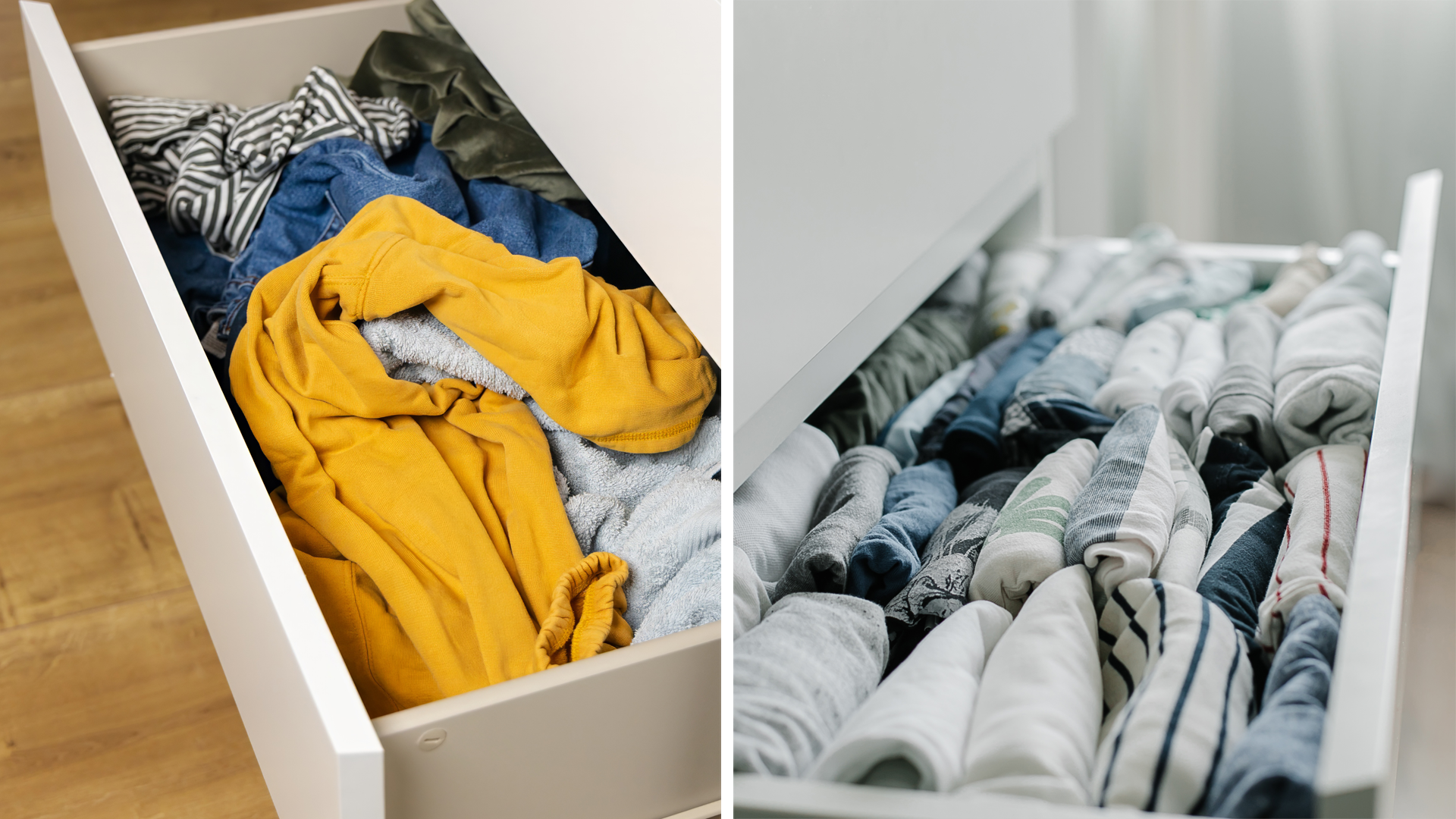 Image source, Getty Images
"We only roll or fold when we're trying to maximise the space of a drawer," says Carter, though you should be careful about which clothes you choose to file fold.
She recommends looking at the age and material of your shirts, blouses and T-shirts before deciding how to store them.
"I would say that your shirts (and blouses) definitely need to be hung, but your T-shirts definitely can be file folded."
One big box for toys won't help you
For families with young children, toys spread all over the floor are an ever-present hazard.
For the sake of convenience, you might be tempted to store them all in one big box that you keep in the corner of the room - but Carter thinks that's unwise.
 Image source, Getty Images
"When your child is trying to look for that one toy, how are they going to find that toy? They're not going to find it easily because they have to chuck out everything else [in the box] to find it," she explains.
"And then you're going to be stressed because all the other toys are now all over the place."
She suggests having a few different, smaller toy boxes around your home that are categorised.
They will help your child find the toy they're looking for more quickly and mean a smaller mess for you to clear up afterwards.
"Whether it's cardboard boxes, baskets, clear containers - it has to be a system that makes sense for you and so that your children can find their toy."
Don't let paperwork piles get overwhelming
Another peril of trying to keep a tidy home is dealing with all the paperwork related to having a house to begin with - utility bills, council tax, TV licence, and all the other things in life that need paying for.
Unlike the toy problem, Carter thinks keeping all of this together in one place is the solution as it makes it easier to deal with mentally.
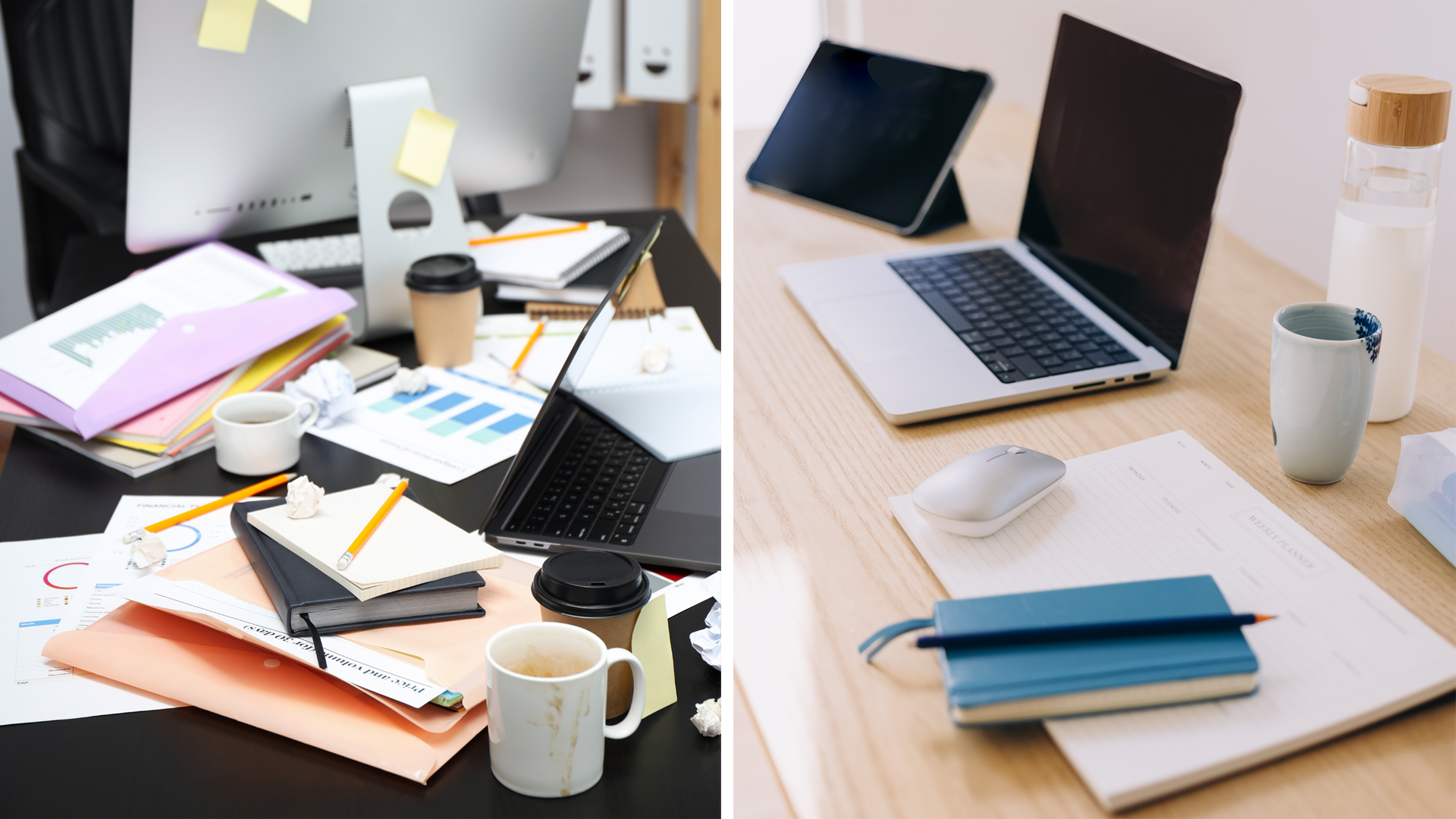 Image source, Getty Images
"For a lot of people, paperwork [is something] negative... it's bills, it's invoices, it's things you have to do," she explains.
"So when it's spread across the house - it's on the kitchen counter, it's on the side table, it's in your bedroom, it's in your handbag - [it feels] like 15 different piles of things that you have to deal with."
Gathering it all in one place makes it feel less like its encroaching on your life.
"It feels like, OK, well, I've only got this one box of paperwork to deal with now - so I'm going to sit and just go through it. It makes it much easier."
For Carter, the positive mental benefits of an organised and tidy home are clear.
But what if you left it untidied? "Well, all clutter does is look back at us - doesn't it?"
Related topics
How we decluttered our home and you can too
- Published4 February
How Stacey Solomon decluttered our homes back from the brink
- Published8 October 2025

Why now is time to declutter and four ways to get started
- Published16 September 2025