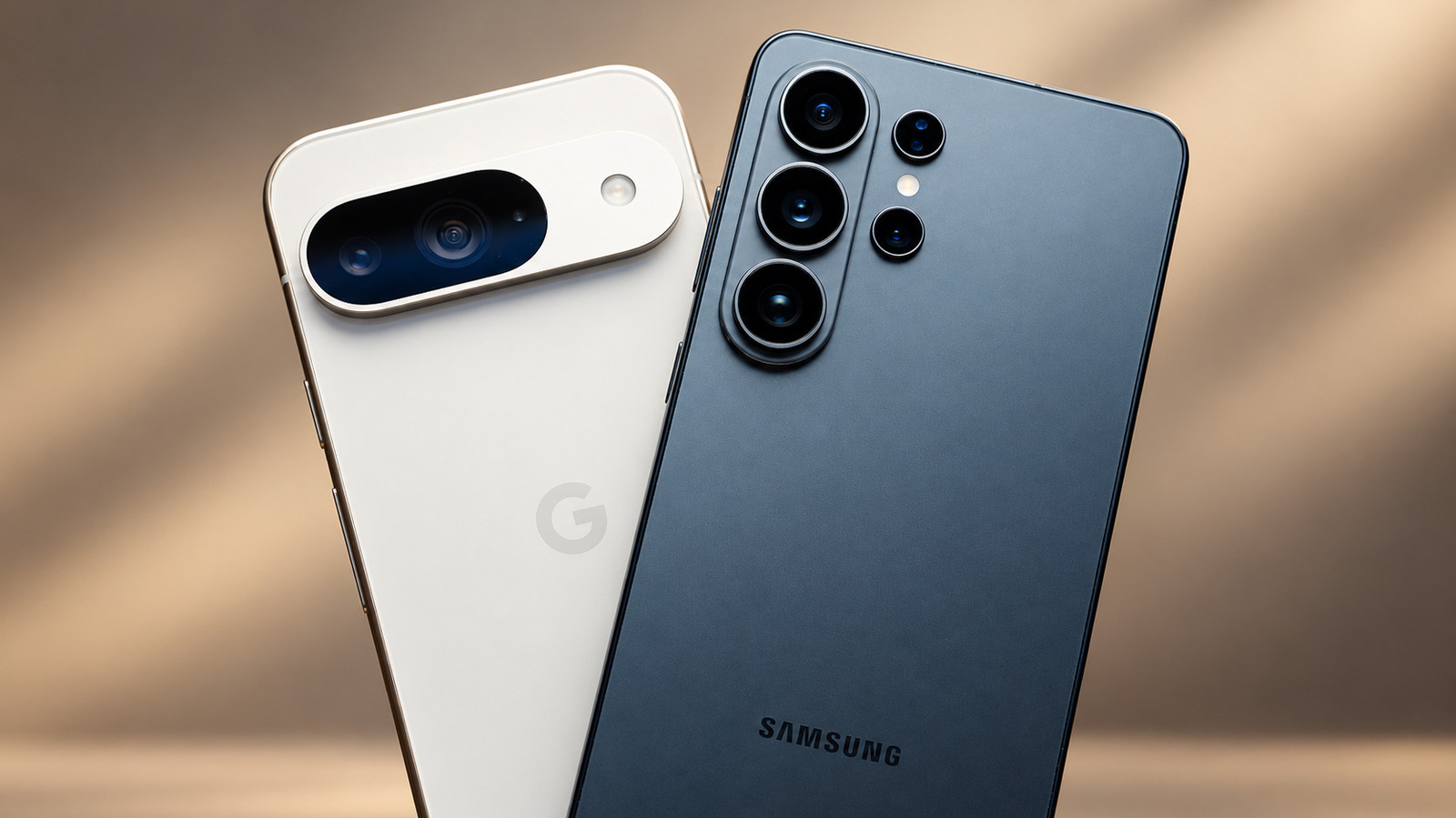
Samsung offers more choice and customization, but Pixel's cleaner software and strong cameras make switching a tougher call.
By Husain Parvez Nov. 14, 2026 10:30 am EST Husain Parvez for Engadget Add Engadget on Google: Preferred Source Google Discover
Deciding whether to switch to a Samsung Galaxy from a Google Pixel comes down to which model you buy, what it would do for you relative to its cost, and core software and hardware philosophies. In our reviews, the Pixel 11 scored higher than the Galaxy S26, while the Pixel 11 Pro and S26 Ultra were much closer.
Switching from a Google Pixel to a Samsung Galaxy opens up a wider choice of phones, deeper customization and hardware perks like the S Pen or a flip-style foldable. It also involves getting used to Samsung's busier take on Android.
Although Samsung's bigger lineup has its merits, Pixel users have plenty of reasons to stick around thanks to Google's cleaner software and terrific cameras. Your Google apps will still work on a Galaxy, but some Pixel-specific conveniences won't make the cut. Google's Call Screen, for example, isn't included with your data, but Samsung has a screening feature on compatible phones. You might also need to rethink notification settings, default apps and shortcuts that have become second nature.
Building a case for switching to the Galaxy
 Sam Rutherford for Engadget
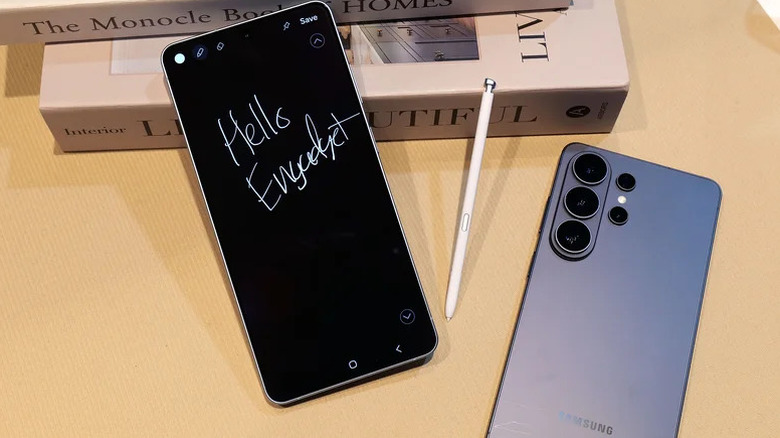
Samsung's biggest advantage is choice. Google's US storefront presents a smaller selection, with seven main Pixel product listings: Pixel 10, Pixel 10 Pro Fold, Pixel 10 Pro, Pixel 10a, Pixel 11, Pixel 11 Pro Fold, and Pixel 11 Pro. Samsung's US storefront, meanwhile, lists 15 distinct Galaxy models across its A, S, and Z series. The Galaxy A37 and A57 are budget-to-mid-range devices situated below the S25 and S26 families, while the Z Flip8 and Z Fold8 are for those who prefer a folding phone. However, just because you get more choices doesn't mean they all support the same features. For example, the A37 doesn't support DeX or wireless charging, but it does have a 45W wired charging rating, which is higher than the regular S26's 25W.
Regarding customization, you can personalize the interface of Pixels, but Samsung's Good Lock allows you to make more precise adjustments to the Quick Settings and lock screen. Furthermore, Galaxy's Modes and Routines feature can automatically trigger these custom system settings for you based on your daily routine.
While compatible Galaxy phones support DeX for a desktop-style experience on an external screen, supported Pixels now offer desktop windowing, too. Still, if you're seeking exclusivity, Galaxy S26 Ultra users receive features like an integrated S Pen and a Privacy Display preventing onlookers from snooping.
I moved from a Pixel 10 Pro XL to an S26 Ultra recently, and the additional speed, battery life, S Pen and charging speed have been welcome additions. Samsung's AI experience has been pretty good, too. For instance, Photo Assist can delete unwanted objects from photos, and Note Assist can summarize notes in Samsung Notes. What I haven't liked is its zeal to promote Samsung alternatives to Google applications that I already use. I also miss Pixel's clean Android UI and the early access to Google's new features, but at least it's much easier to find cases for the Ultra.
Why staying with Pixel might can make more sense
 Nathan Ingraham for Engadget
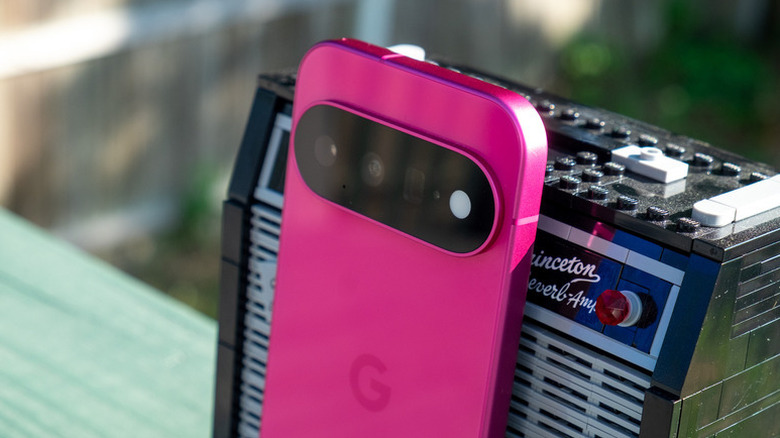
Google's appeal goes beyond a tidier app drawer. As with the Pixel 10 and S25 last year, the Pixel 11 scored higher than the Galaxy S26 in our reviews (92/100 to 80/100). The Pixel 11 has a 5x optical telephoto camera (compared to the S26's 3x), and built-in magnets for Pixelsnap accessories. Galaxy S26 owners need a compatible case for similar magnetic convenience. The Pixel 11 Pro and Galaxy S26 Ultra both achieved a score of 90/100 in our reviews, making the decision between the two models less clear.
The Pixel 10a is also an option, with wireless charging and seven years of software updates. In comparison, the Pixel 10a's primary comparable competitor, the Galaxy A37, features a slightly larger 6.7-inch screen while supporting faster 45W wired charging and six years of updates.
Prices between these rival phones also change based on release timing. Samsung's main Galaxy S flagships arrive months before Google's late-summer Pixels, giving them more time to pick up discounts. For instance, the 256GB S25 dropped from $860 to $660 during an October 2025 sale.
The Pixel 10a now lists for $599, compared with $490 for the Galaxy A37 and $600 for the A57. Just note that Samsung raised the S26's US list price from $899 to $999 in October, putting it $100 above the Pixel 11's $899 starting price. Both phones receive aggressive promotions from major carriers, with the right choice depending on specific model and trade-in terms.
Lastly, Samsung's Smart Switch can transfer photos, messages and supported apps, but private app data and game progress may not transfer. Before trading in your Pixel, check whether your apps need separate backups or fresh logins. Otherwise, you may end up reconfiguring apps and settings just to replace one capable Android phone with another.