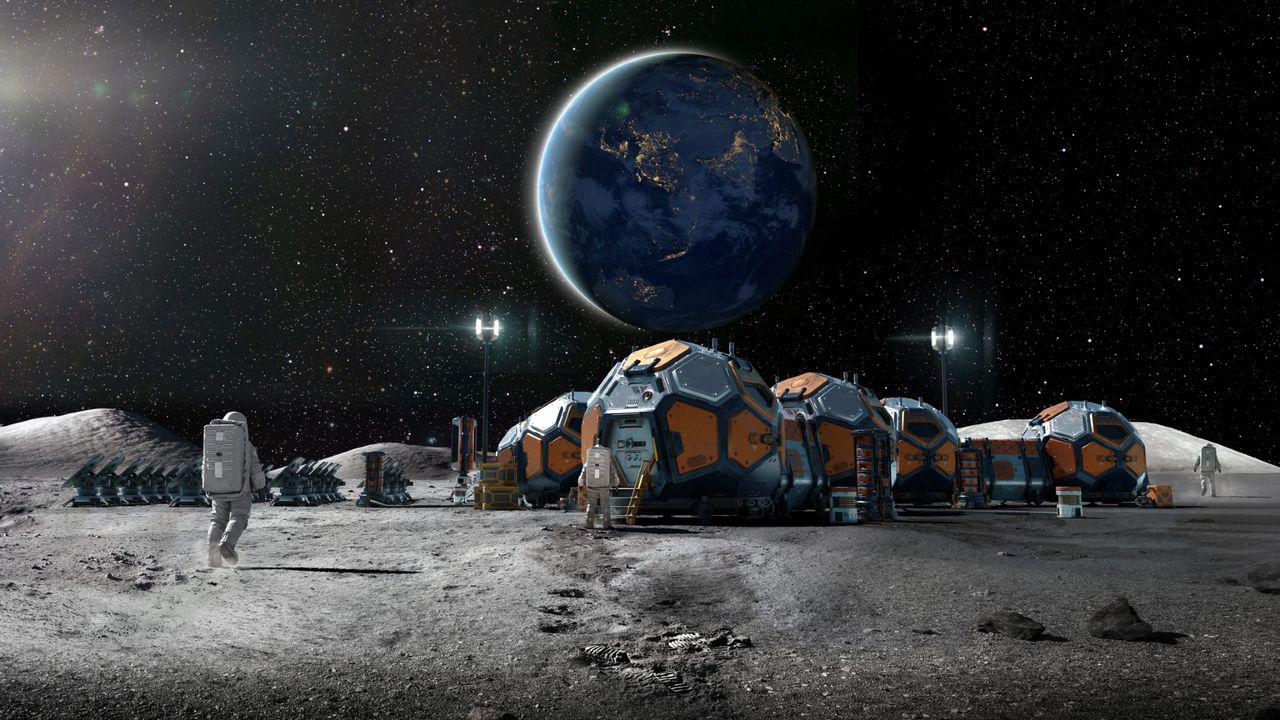
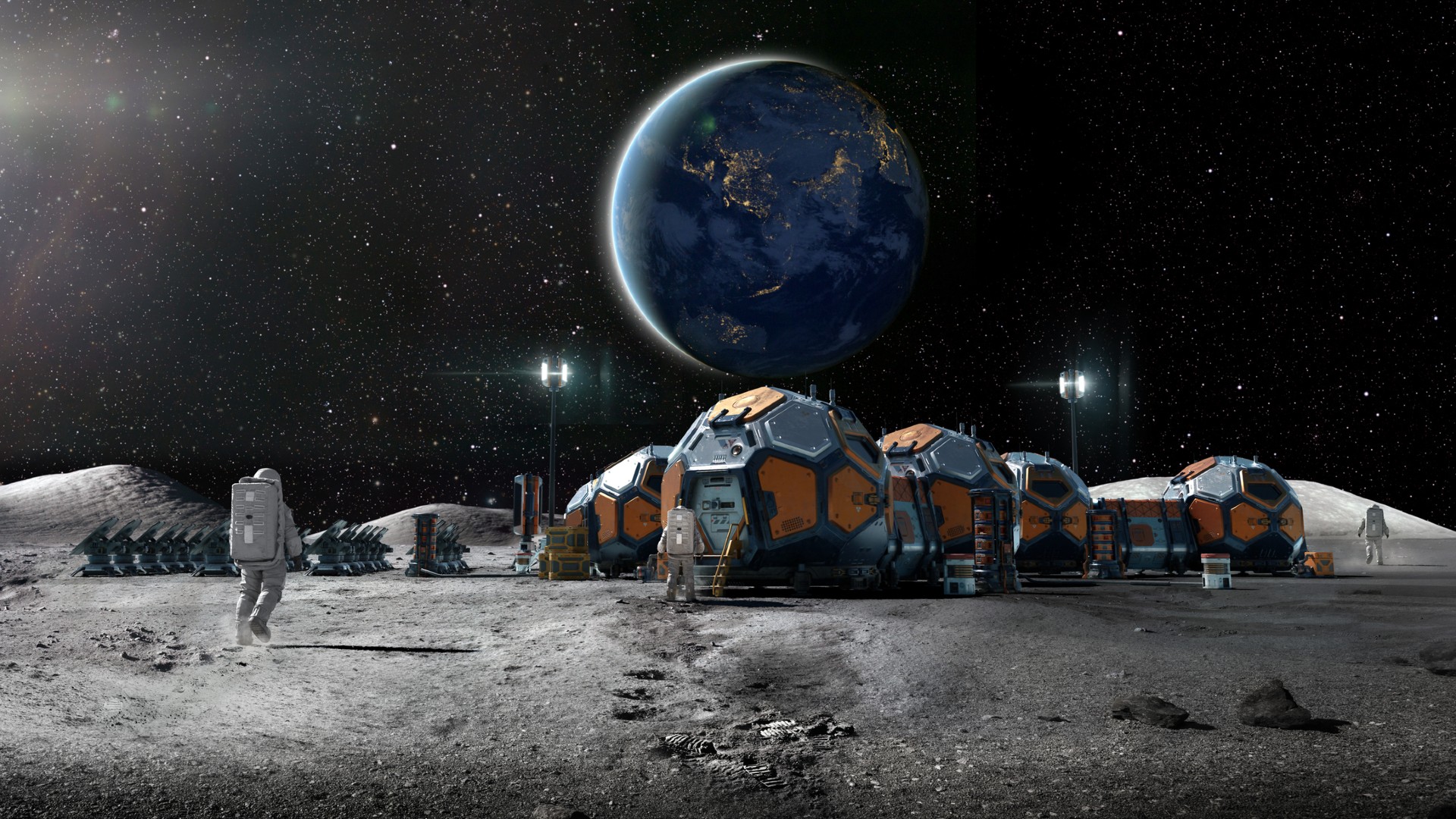
 Scientists propose that a moon base could act as an isolated first line of biological defense against extraterrestrial samples that might be harmful to Earth's biosphere. (Image credit: peepo/Getty Images) Share this article 0 Join the conversation Add us as a preferred source on Google Newsletter Subscribe to our newsletter
 A team of researchers is advocating to use the moon as a secure site for biocontainment of extraterrestrial samples, particularly those from Mars, but also from other potential worlds like Enceladus, a moon of Saturn.
The researchers contend that our moon offers a naturally sterile and isolated environment that can act as humanity's first line of biological defense against organisms perhaps harmful to Earth and its life.
Making the case for a laboratory planted on the moon — perhaps tended robotically — is Frederick Moxley, director of the Strategic Threat Analysis and Research (STAR) Laboratories, a technical consultancy located in Star, Idaho, along with Anthony Ricciardi of McGill University in Canada. Moxley and Ricciardi caution that the introduction of any novel form of life to the Earth's biosphere would pose "unpredictable ecological consequences." They detail their concerns in a newly published paper in Ambio, a journal of environment and society.
Planetary protection measures
"It's no secret that there is a race between the United States and China to build a base on the moon," Moxley tells Space.com. "However, whoever gets there first will likely determine where it will be located and how it will be operated among other things. Elements as to architectural components for each are still a work in progress," he said.
China's moon base effort is known as the International Lunar Research Station, or ILRS for short. A memorandum of intent has been signed between China and Russia to build a nuclear reactor in support of its construction by 2035, Moxley said, but very little is known as to their architectural details.
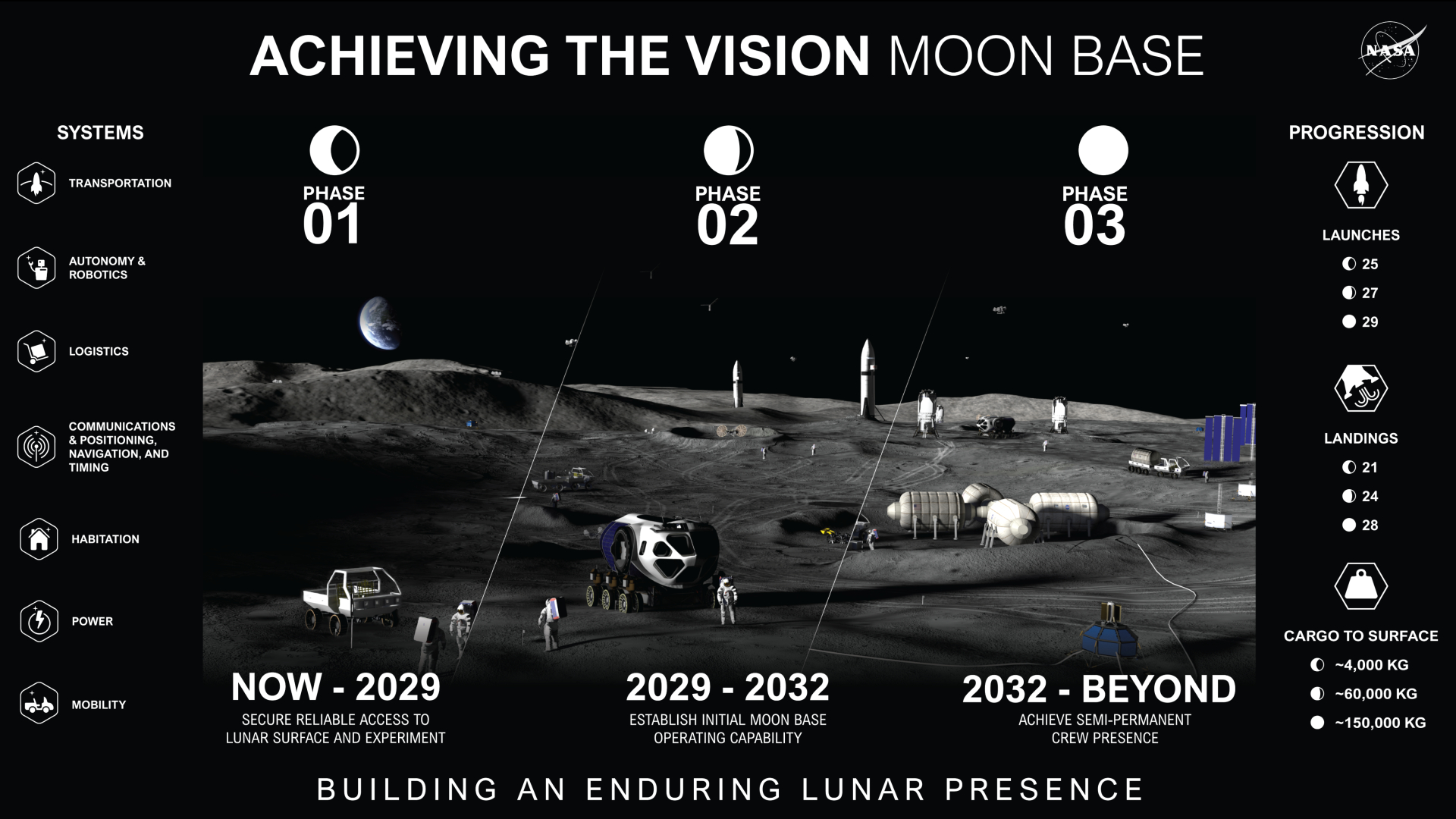
Meanwhile, NASA's administrator, Jared Isaacman, recently indicated that the next phase of the Artemis program is now underway. Isaacman and other NASA leaders recently announced the moon base will cover hundreds of square miles and will be tended by rovers and robots while being built in three distinct phases.
"Unfortunately," Moxley said, "none of their efforts have described how they will deal with planetary protection measures."
This new study comes amid growing international and commercial competition in space exploration, with government agencies and private aerospace companies rapidly expanding missions beyond Earth orbit.
According to the authors, this increasingly crowded and competitive environment makes rigorous biosafety standards more urgent than ever.
Firewall facility
The two scientists are calling for a critical addition to the agency's lunar ambitions: an extraterrestrial biocontainment facility designed to protect Earth from potential contaminants from space.
Ricciardi and Moxley argue that all extraterrestrial material collected from the moon, Mars, or beyond should first be transported to a secure lunar-based quarantine and research facility — rather than directly to Earth.
"Humanity is entering a new era of space exploration, but our planetary protection strategies have not kept pace with the risks associated with returning extraterrestrial samples to Earth," Moxley said. He further noted that the proposed facility would essentially act as "a firewall between Earth and any potentially hazardous live organisms" that could accompany returning future space missions.
Invasive species
The authors of the research paper recommend that all incoming extraterrestrial samples be handled exclusively through advanced robotic systems within the lunar facility, minimizing the possibility of human exposure and accidental release.
While the existence of extraterrestrial life remains unconfirmed, Moxley and Ricciardi point to the history of invasive species on Earth that serves as a warning.
"Decades of research on invasive species have demonstrated how an organism introduced to the wrong place at the wrong time can spread uncontrollably with potentially devastating and irreversible long-term impacts on ecosystems," said Ricciardi, an expert on biological invasions.
"This research justifies a strong precautionary approach against introductions of extraterrestrial origin," Ricciardi said.
Rebound contamination
Ricciardi told Space.com that there is a plausible scenario outcome given their research.
"Let's call it 'rebound contamination' where we introduce a microbe to Mars or another extraterrestrial body, and it subsequently mutates and evolves functional distinctiveness, and then is brought back to Earth as a novel organism," said Ricciardi. "We describe this scenario in our paper as sequential forward and back contamination."
For example, strains of the bacterium Enterobacter bugandensis that have been isolated from the International Space Station have mutated, thus becoming genetically and functionally distinct from populations found on Earth, Ricciardi and Moxley observe in their new research paper.
By gaining new traits, these altered organisms might pose a novel invasion threat to Earth, if introduced through the transfer and insecure containment of contaminated samples.
"I would cite this plausible threat as part of a counterargument against assertions that back-contamination risk is negligible and does not justify extreme precautionary measures," said Ricciardi.
Strategically ideal location
Among the concerns raised in the study are catastrophic scenarios involving the crash or malfunction of a spacecraft carrying contaminated material or astronauts exposed to extraterrestrial environments.
The researchers argue that no existing facility on Earth can guarantee absolute containment, eradication, or control of an unknown alien microorganism in the event of an accident.
By contrast, the moon's isolation from Earth would provide what the authors describe as a "natural quarantine barrier" - a strategically ideal location for studying potentially hazardous extraterrestrial material while safeguarding Earth's ecosystems.
The research team concludes that while the search for life beyond Earth could become one of humanity's greatest scientific achievements, the risks associated with that search must be addressed proactively.
"The moon," Moxley and Ricciardi argue, "may become humanity's first line of biological defense."
View MoreYou must confirm your public display name before commenting
Please logout and then login again, you will then be prompted to enter your display name.
Logout Leonard DavidSpace Insider Columnist
Leonard David is an award-winning space journalist who has been reporting on space activities for more than 50 years. Currently writing as Space.com's Space Insider Columnist among his other projects, Leonard has authored numerous books on space exploration, Mars missions and more, with his latest being "Moon Rush: The New Space Race" published in 2019 by National Geographic. He also wrote "Mars: Our Future on the Red Planet" released in 2016 by National Geographic. Leonard has served as a correspondent for SpaceNews, Scientific American and Aerospace America for the AIAA. He has received many awards, including the first Ordway Award for Sustained Excellence in Spaceflight History in 2015 at the AAS Wernher von Braun Memorial Symposium. You can find out Leonard's latest project at his website and on Twitter.