To play this video you need to enable JavaScript in your browser.
This video can not be played
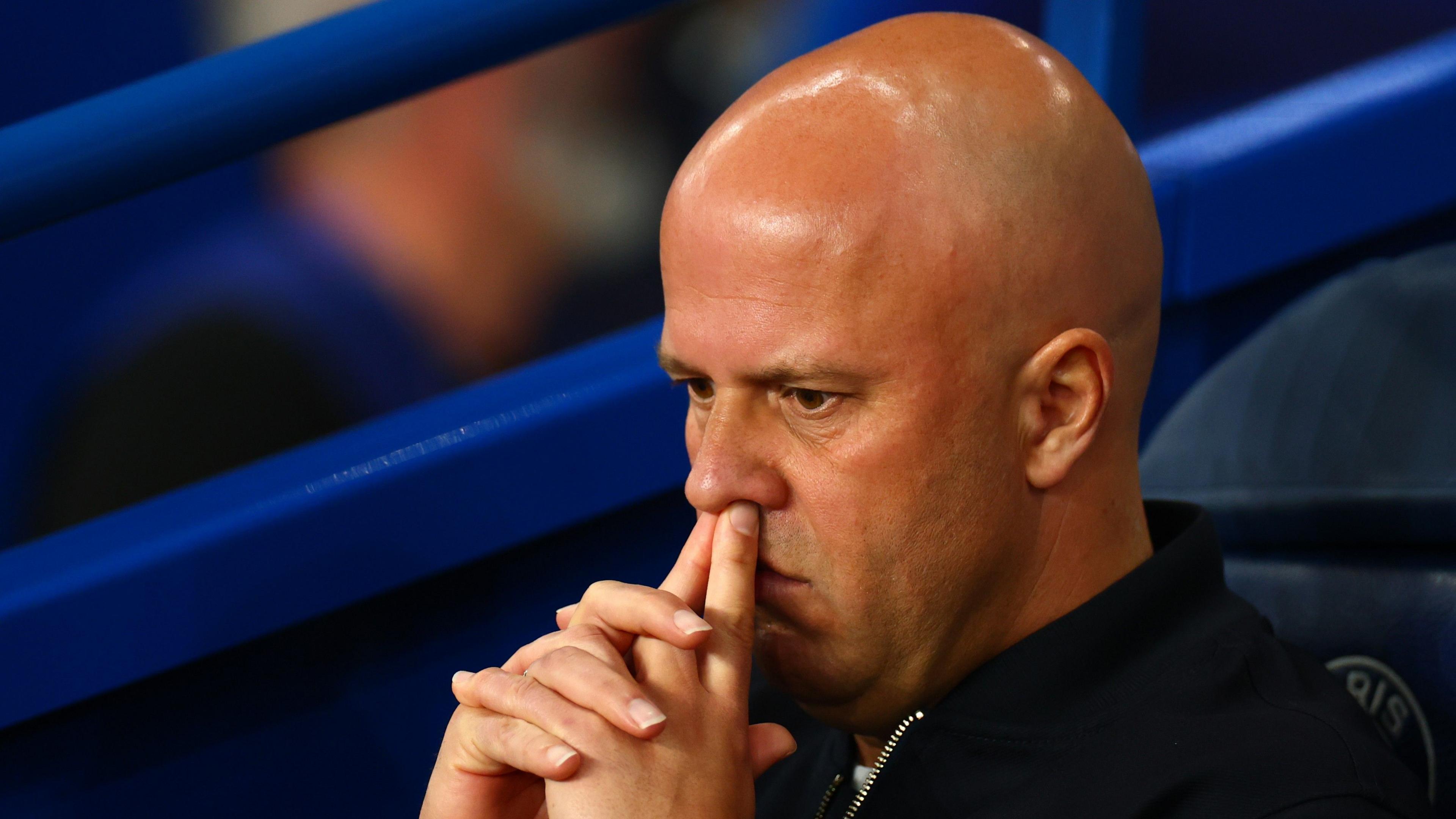
Media caption,How will Roberto de Zerbi try to transform Spurs?
ByUmir IrfanFootball tactics correspondent- Published55 minutes ago
- 76 Comments
Clubs at risk of relegation tend to hire pragmatic coaches.
But that is not how you would describe new Tottenham boss Roberto de Zerbi.
The Italian is known for his attacking style of possession-based football, and has stayed true to his footballing ideas throughout his managerial career.
Three years after starting in management in Italy's fourth division, De Zerbi was in charge of Serie A side Palermo, where he struggled to showcase his initial potential. When he was sacked, newly promoted Benevento hired him, but relegation followed.
Despite that, De Zerbi's reputation was boosted - and he has enjoyed much success since.
The 46-year-old's quality is clear but his system relies on smart and technical players more than most tactical plans.
So what tactics will De Zerbi implement at Spurs, and will this relegation-threatened group of players be able to execute them?
De Zerbi's high-risk high-reward style on the ball
Looking at De Zerbi's Brighton and Marseille sides, you soon notice how often they repeat certain patterns of play.
When building up, the idea is to draw opponents towards defenders on the ball before using quick passing routines to find free players facing forward. They are better positioned to play the ball up the pitch quickly into the attackers.
When it works, De Zerbi's sides turn possession in their own half into shots near the opposition's goal within a few seconds. It's an electrifying watch - but the level of potential attacking reward comes with great risk.
De Zerbi's approach requires defensive players to take responsibility with the ball - delaying actions until they have forced opponents to press them.
In a recent training clip,, external he was seen coaching his new players through concepts to make his tactics easier to implement. For central defenders under no pressure, the advice was to take many touches. De Zerbi's centre-backs often provoke opponents by placing their studs on top of the ball - a sort of psychological trick that causes a striker to leave their shape and engage.
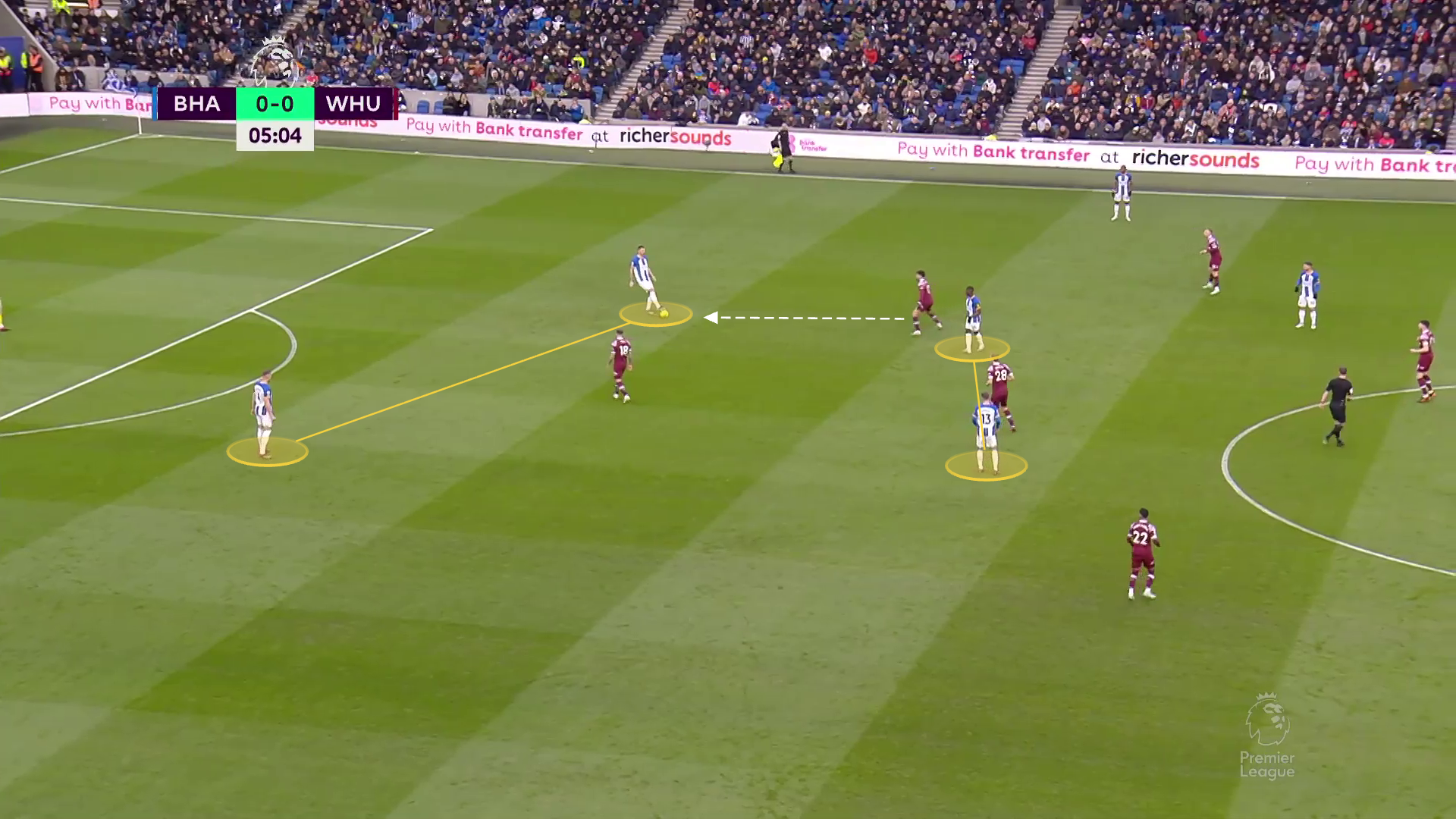 Image caption,
 Brighton's centre-backs under De Zerbi often trapped the ball as seen here. This drew opponents out before passes were played into midfielders.
Two central midfielders are usually in close proximity to the central defenders. The midfielders receiving passes are often tightly marked, and De Zerbi's advice for them this week was to take one or two touches.
The ball doesn't stay with these players long to minimise the risk of losing the ball in dangerous areas. They instead act as a wall to bounce the ball off to nearby team-mates, who have lost their marker and can play forward under less pressure.
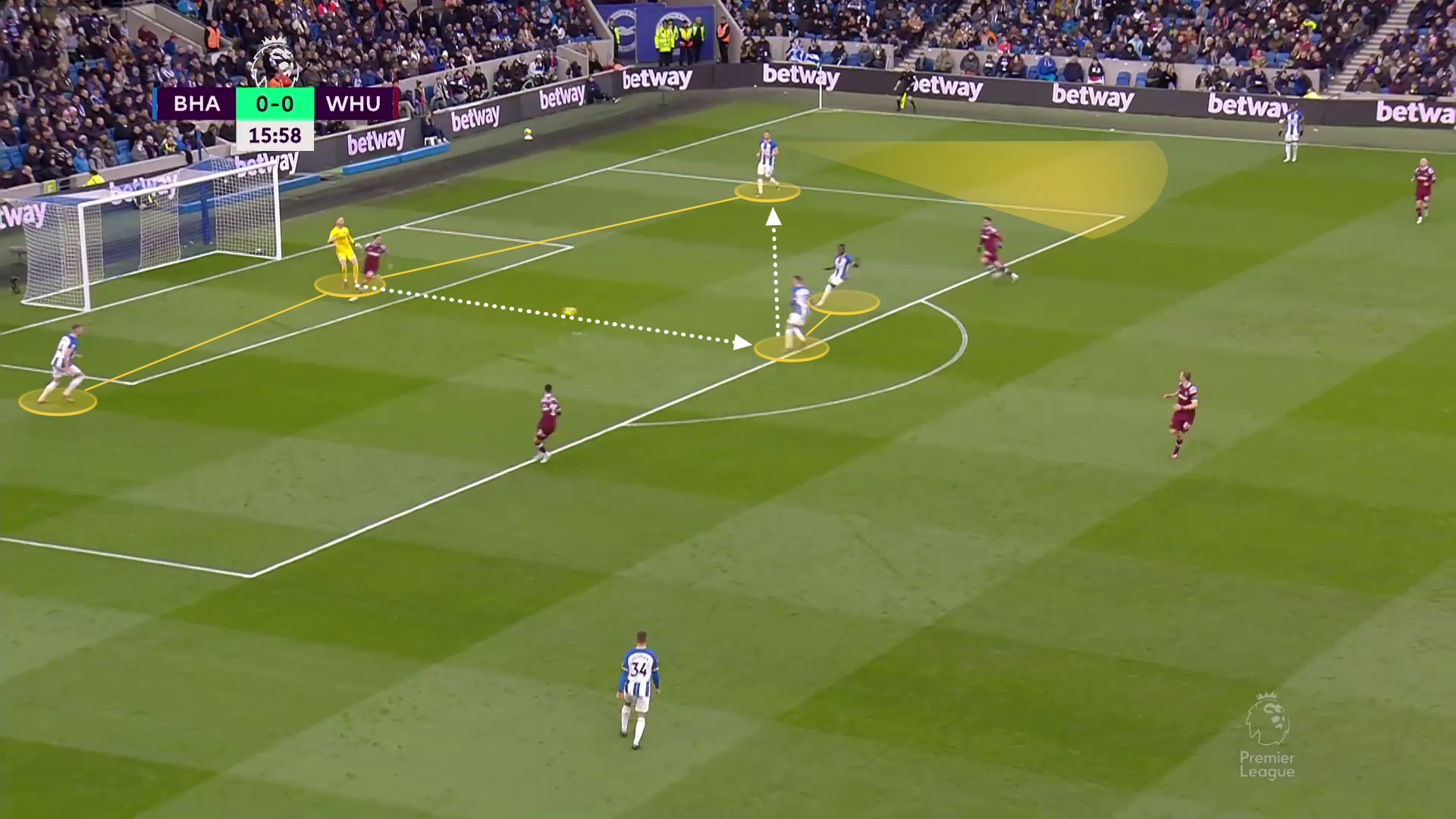 Image caption,
 The midfielders are key to De Zerbi's system. They often position themselves close together and the goalkeeper looks to find them often. With one touch, they bounce the ball under pressure to the centre-back in space facing forwards.
How De Zerbi's style compares to his predecessors
De Zerbi echoed the sentiments of Manchester City boss Pep Guardiola and Arsenal counterpart Mikel Arteta when he spoke to his team this week - highlighting the abundance of man-to-man defensive schemes in the Premier League.
His teams, like the rest of the league, will face tight pressure across the pitch and - through these choreographed passing routines - the aim is to accept that intense pressure is inevitable and look for solutions through it, rather than avoiding it.
It is the opposite approach to that of Thomas Frank, who was named Spurs boss in the summer but was sacked in February.
Frank's Spurs opted to build up almost exclusively down the sides of the pitch. Instead of playing four or five players close together in the middle, Spurs usually had two central defenders and one midfielder in the centre.
The flanks, meanwhile, were overloaded with three or four players and long balls were often played into the channel, where Spurs were more likely to win it.
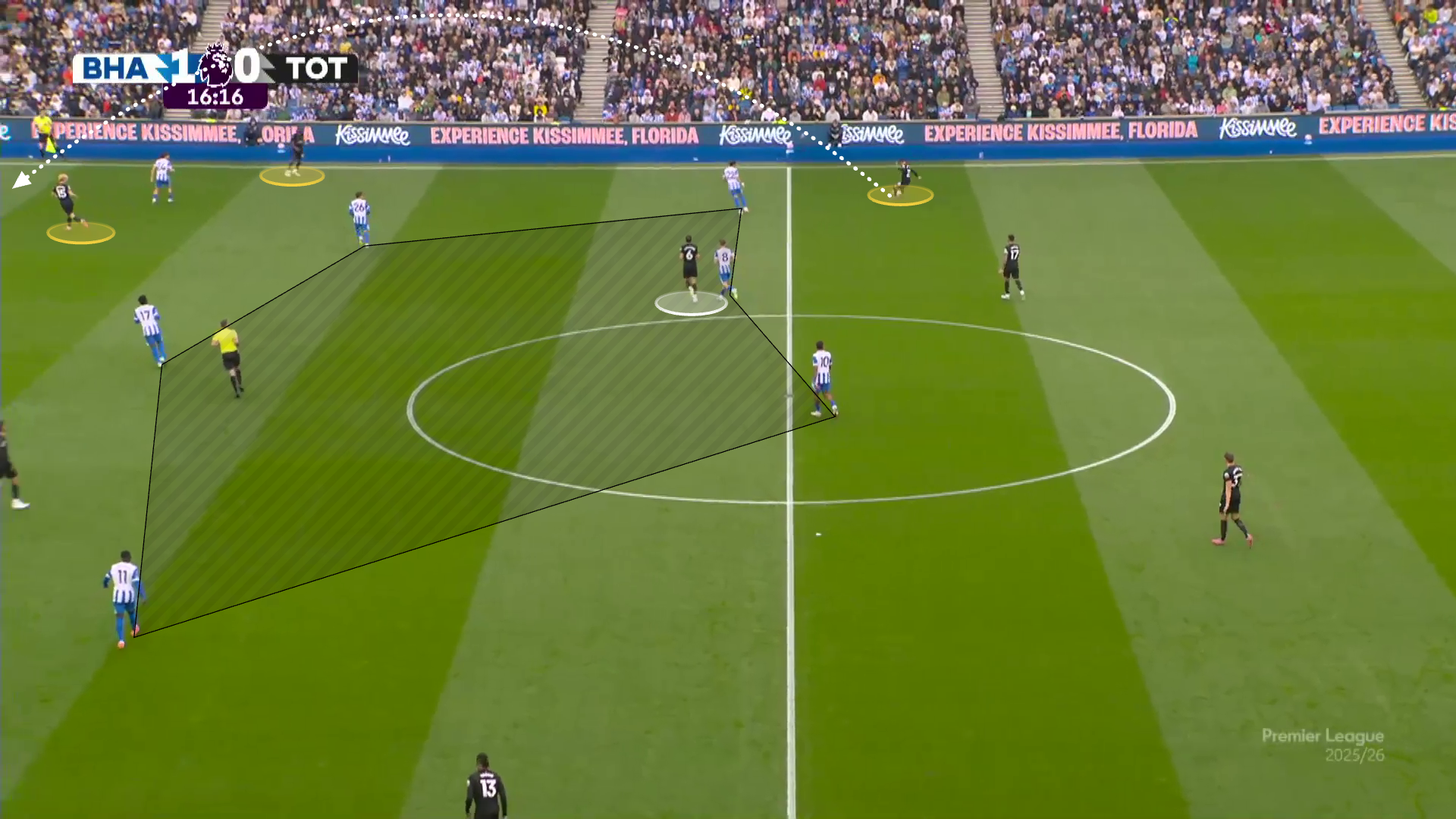 Image caption,
 Under Thomas Frank, the middle of the pitch was often avoided. Here the ball is progressed down the right, where Spurs have three players.
Frank's wide build-up minimised the risk associated with playing through the centre.
Brighton under De Zerbi accepted that risk, conceding the second-most high turnovers that led to an opposition shot (48) during his first season.
Frank's approach results in fewer dangerous chances being created in open play, but it it is a risk De Zerbi is willing to accept for the quality of chances his sides can create when it works.
Comparing that Brighton squad with the current Spurs squad, we see fewer players capable of thriving technically under pressure in small spaces - but the likes of Lucas Bergvall, Xavi Simons and Archie Gray may relish the challenge.
And we should keep in mind that Ange Postecoglou - Frank's predecessor - will have drilled habits into his players that will be helpful under the new regime.
Like De Zerbi, Postecoglou opted for a risky short-passing game that looked to penetrate teams through central play. Goalkeepers have been key for both men's systems - commonly becoming a third defender in possession, looking to break lines and find midfielders down the middle of the pitch.
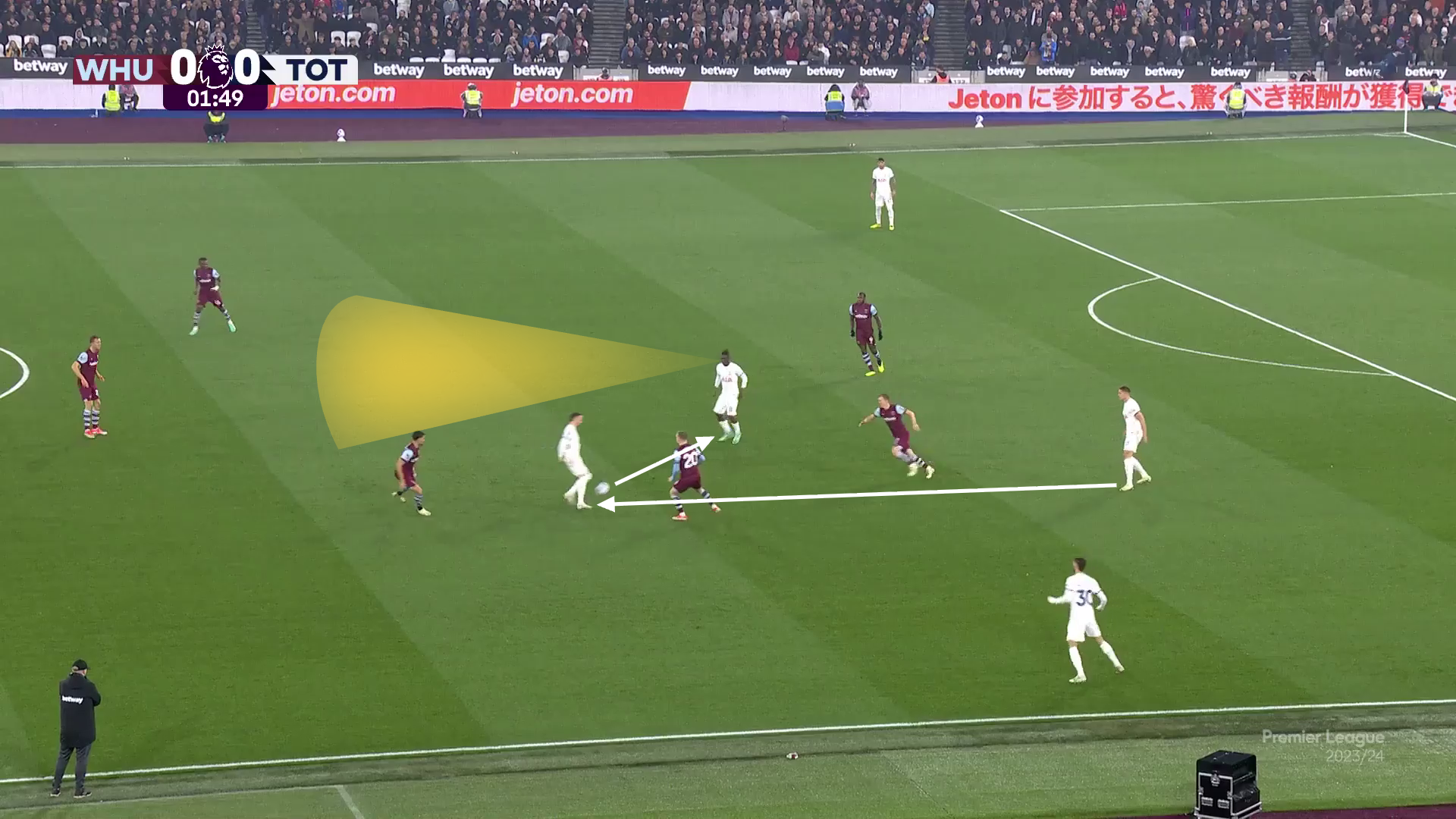 Image caption,
 This example illustrates what Postecoglu did similarly to De Zerbi. Note the narrow midfielders close to the defenders receiving passes in the middle of the pitch. James Maddison finds his team-mate here on the ball, facing forwards.
There are differences, of course - one being Postecoglou's use of inverted full-backs as the central players receiving the ball from the centre-backs.
The underlying principles remain, though - keep possession of the ball, draw pressure and play passes to team-mates nearby through the middle of the pitch before speeding up the play to find team-mates in space upfield.
De Zerbi's system takes time to master but Spurs fans will hope the remnants of Postecoglou's system remains in the players' minds and they have fond memories of a more proactive and front-footed style of play.
Can De Zerbi improve Tudor's defensive tactics?
Off the ball, De Zerbi's tactics are equally front-footed.
At Brighton, he often asked his teams to engage in a man-to-man press. A pass back from the opposition was often a trigger for his teams to aggressively apply pressure.
Igor Tudor, who succeed Frank on an interim basis but lasted just seven matches, obviously struggled at Spurs but what he did do was to introduce man-to-man marking as their main defensive tactic.
It wasn't particularly successful, but the work he did with the players means De Zerbi has a better base to build from than had he succeeded Frank.
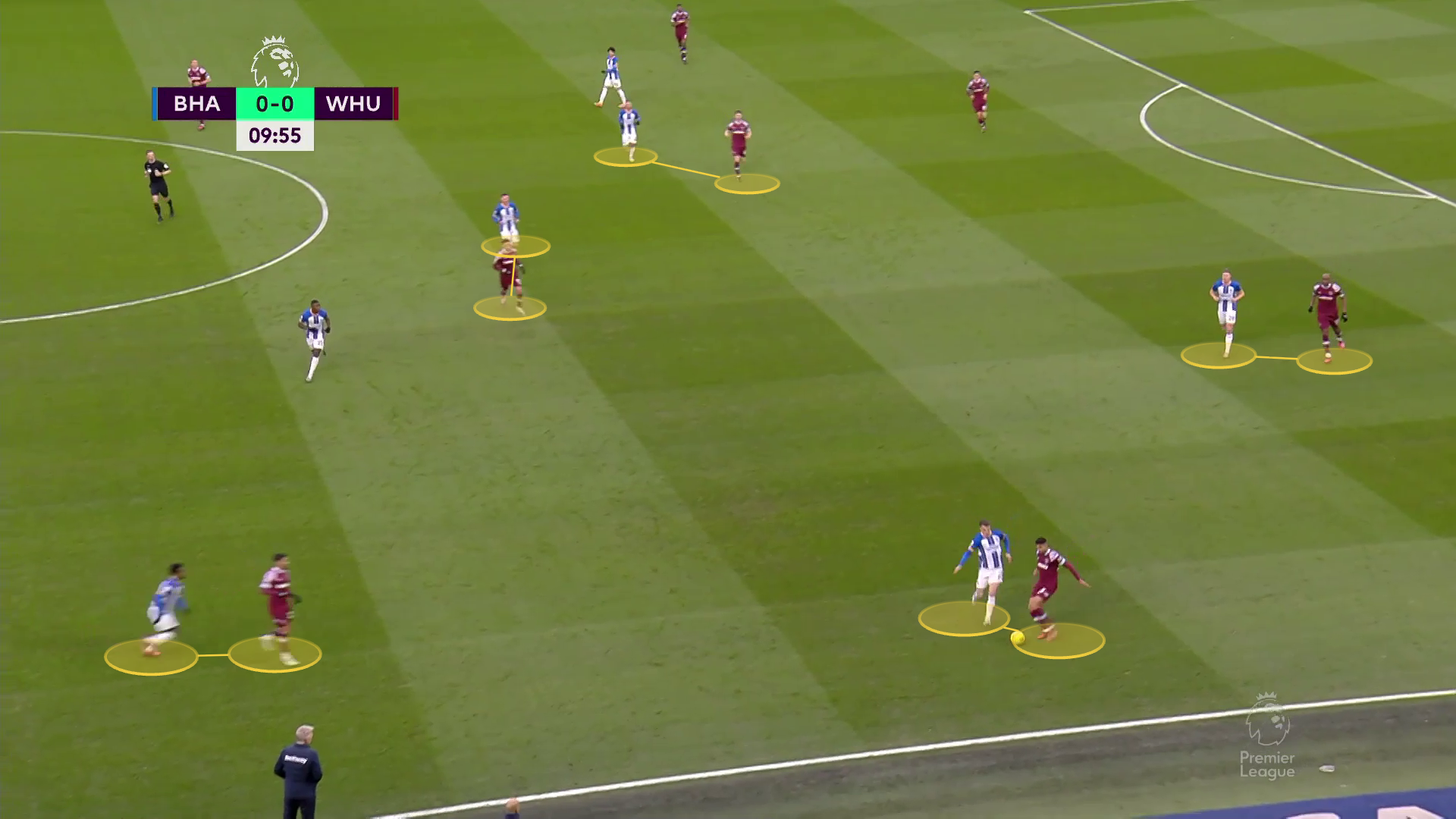 Image caption,
 Following a back pass, Brighton aggressively applied pressure across the pitch in a co-ordinated manner.
As Manchester United discovered with Ruben Amorim, it is a gamble to bring in a coach known for moulding teams to a system he has in mind rather than adapting his system to the players he has at his disposal. That is exacerbated when the team is in the midst of a relegation battle.
But of the managers available to Spurs at this moment, De Zerbi has arguably reached the highest peak in recent years - and Guardiola has called him "one of the most influential managers in the last 20 years".
The swinging pendulum of managerial styles Spurs have had over the past 12 months adds another thread of uncertainty, but by building on the attacking principles Spurs adopted under Postecoglou, and the defensive ideas Tudor tried but failed to implement, De Zerbi may not be starting from scratch.
For a fragile Spurs side seemingly out of ideas, perhaps his choreographed style of play can simplify the decision-making process for players, and help them pick up the points they desperately need to survive.
Related topics
More from Umir
How fluid PSG exposed Slot's back-five tweak
- Published8 hours ago