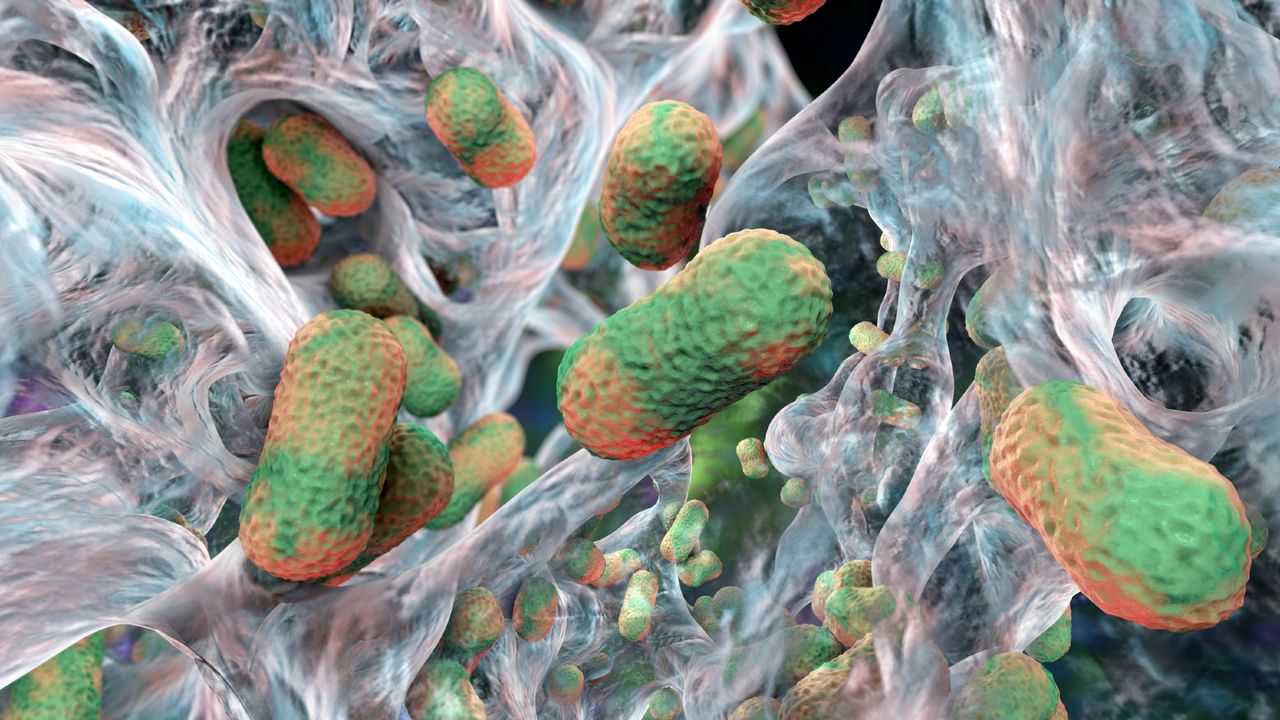
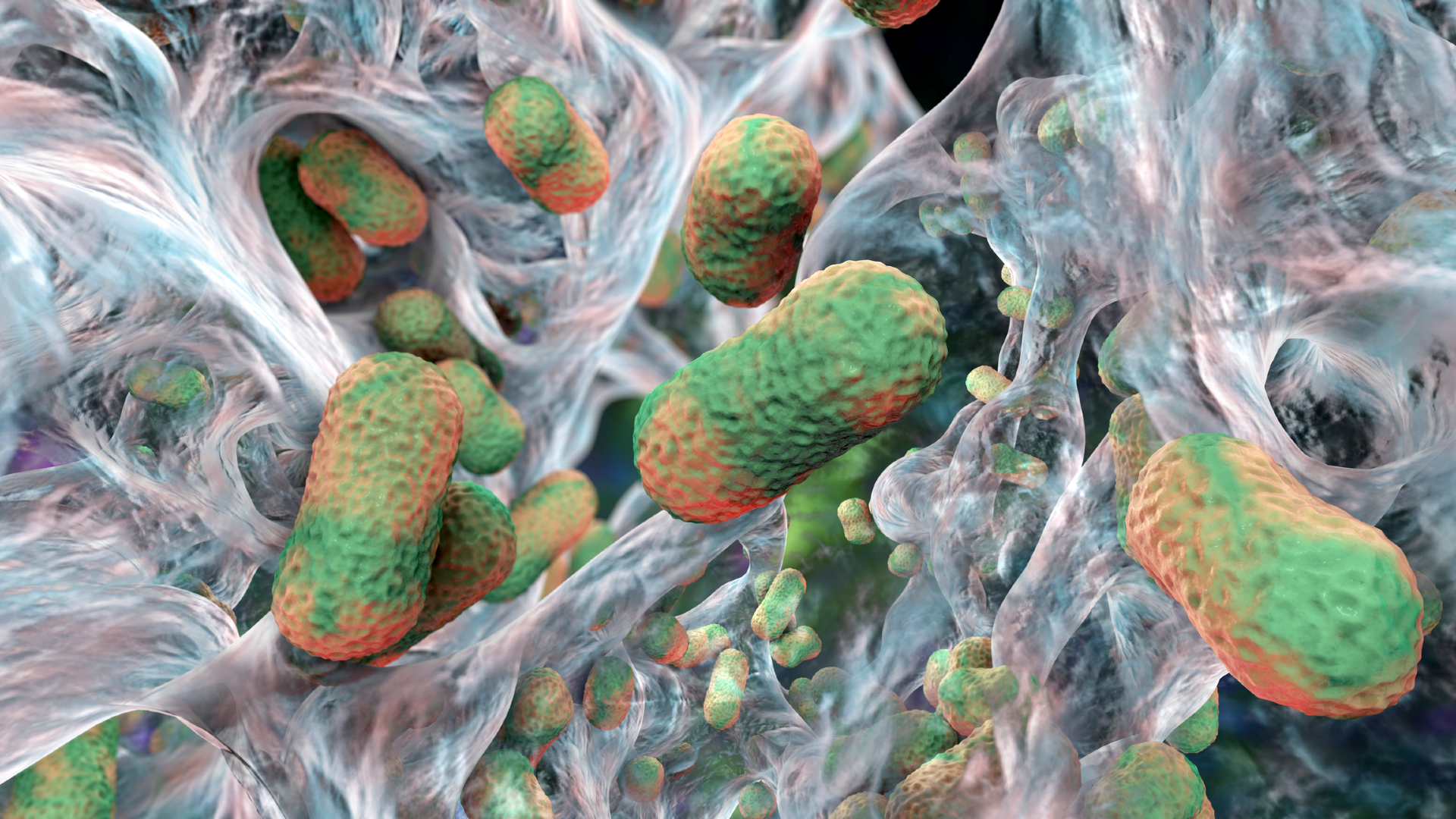
 Scientists have uncovered a potential weakness in antibiotic-resistant bacteria, including Acinetobacter baumannii (pictured), which often causes infection in hospital settings. (Image credit: Dr_Microbe via Getty Images) Share this article 0 Join the conversation Follow us Add us as a preferred source on Google Newsletter Sign up for the Live Science daily newsletter now
 Get the world’s most fascinating discoveries delivered straight to your inbox.
Become a Member in Seconds
Unlock instant access to exclusive member features.
Contact me with news and offers from other Future brands Receive email from us on behalf of our trusted partners or sponsors By submitting your information you agree to the Terms & Conditions and Privacy Policy and are aged 16 or over.You are now subscribed
Your newsletter sign-up was successful
Want to add more newsletters?
Join the club
Get full access to premium articles, exclusive features and a growing list of member rewards.
Explore An account already exists for this email address, please log in. Subscribe to our newsletterAntibiotic-resistant bacteria may have an Achilles' heel: a unique sugar molecule found only on the outsides of bacterial cells.
Targeting this molecule can make the bacteria vulnerable to the immune system, which can then destroy the germs and clear infections, recent research in mice shows.
If the same effect can be demonstrated in humans, targeting this sugar molecule could offer a new approach to tackling a wide array of superbugs — including notorious species like Acinetobacter baumannii, Helicobacter pylori, and Campylobacter jejuni. That's according to the researchers behind the study, which was published Feb. 4 in the journal Nature Chemical Biology.
"The next stage in the development of this concept is to produce an antibody that is suitable for use in humans," said study co-author Ethan Goddard-Borger, who studies the role of sugars called glycans in disease at the Walter and Eliza Hall Institute of Medical Research in Australia.
This would involve either "humanizing" the antibody used in their mouse study or identifying a human equivalent that is similarly potent, Goddard-Borger told Live Science in an email.
Sugars on superbugs
Antibiotic-resistant bacteria pose a critical threat worldwide, and Gram-negative bacteria are a particular problem. Bacteria within this group sport tough protective layers that make them especially hard to treat with many existing drugs. The pathogens A. baumannii, H. pylori and C. jejuni belong to this group.
These bacteria often employ a "sugar coat" to help them evade the immune system and resist the effects of antibiotics. The sugar coating essentially mimics sugars seen on human cells, tricking the immune system into ignoring the bacteria.
Sign up for the Live Science daily newsletter nowContact me with news and offers from other Future brandsReceive email from us on behalf of our trusted partners or sponsorsPast research showed that a sugar called pseudaminic acid (Pse) is found exclusively on the outsides of bacterial cells, and that it differs significantly from sugars found on human cells. Theoretically, this could make Pse a safe way to target infections that are resistant to antibiotics, by helping flag the bacteria as "foreign" so the immune system can attack them.
However, previous research was limited in that scientists struggled to extract enough of the sugar to study it effectively. So in the new study, the researchers made Pse sugar molecules in the lab.
They used the tailor-made molecules to develop specialized proteins that latch onto them. These proteins, called monoclonal antibodies, act like a highly specific biological targeting system, designed to home in on the Pse sugars.
In lab experiments, the team tested these antibodies against H. pylori, C. jejuni, and A. baumannii and found that they tightly bound Pse across all of those bacterial species. The antibodies worked even when the sugars differed in structure between the bacteria.
So while this antibody may hit some specific strains across different bacterial species, additional work would be needed to show that these antibodies bind a high percentage of clinical isolates tested for this specific antibody to be reasonably considered as a potential therapeutic.
Brian Luna, the University of Southern California
Next, they tested the sugars in mice with antibiotic-resistant A. baumannii infections. They found that tagging Pse with antibodies made the infections visible to the immune system, enabling immune cells to find, engulf, and destroy the bacteria.
In an experiment, 10 mice that didn't receive the antibodies died of their infections within a day. Mice treated with the antibodies had 100% survival through a full week of observation.
A new approach to beat antibiotic resistance?
The study authors think that, in the future, these antibodies could be given to vulnerable hospital patients to help prevent infections. Since Pse is absent in human cells, they expect such a therapy would specifically target bacteria without harming healthy human cells.
In the long term, the authors propose, these antibodies could potentially be utilized to develop vaccines that offer broad protection against Gram-negative bacteria.
RELATED STORIES—Dangerous 'superbugs' are a growing threat, and antibiotics can't stop their rise. What can?
—Antibiotic resistance is the 'silent pandemic' — here are four steps to stop it
—Superbugs are on the rise. How can we prevent antibiotics from becoming obsolete?
The immediate next step, though, involves adapting these antibodies for potential human use. "I do think that it may be possible to develop monoclonal antibodies that target shared sugars across multiple bacteria to be used as a therapeutic," said Brian Luna, assistant professor of molecular microbiology and immunology at the University of Southern California, who was not involved in the study.
"However, the main limitation is that the sugars, including pseudaminic acid in this case, are not expressed on all bacteria," Luna told Live Science in an email. "So while this antibody may hit some specific strains across different bacterial species, additional work would be needed to show that these antibodies bind a high percentage of clinical isolates tested for this specific antibody to be reasonably considered as a potential therapeutic."
In short, much more work is needed to demonstrate that such antibodies could help treat and prevent a wide range of bacterial infections in people.
DisclaimerThis article is for informational purposes only and is not meant to offer medical advice.
Article SourcesTang, A. H., Soler, et al. (2026). Uncovering bacterial pseudaminylation with pan-specific antibody tools. Nature Chemical Biology. https://doi.org/10.1038/s41589-025-02114-9
 Sayan TribediLive Science Contributor
Sayan Tribedi is a freelance science writer based in Kolkata, India. He holds a bachelor's degree in chemistry from the University of Calcutta and a master's in bioinformatics from Pondicherry University. With research experience in protein-protein interactions, he brings a strong scientific foundation to his writing. Sayan enjoys translating complex scientific ideas into accessible, engaging stories for the general public. His work has appeared in The Hindu and Science Reporter, among other publications.
View MoreYou must confirm your public display name before commenting
Please logout and then login again, you will then be prompted to enter your display name.
Logout LATEST ARTICLES 1Quantum computers need just 10,000 qubits — not the millions we assumed — to break the world's most secure encryption algorithms
- 2Artemis II timeline: 12 key steps that will take NASA astronauts to the moon and back
- 3Artemis II launch LIVE: NASA prepares for Wednesday launch of historic space mission
- 4Scientists discover potentially huge freshwater reservoir hidden beneath Great Salt Lake
- 5Concentric rocky rings adorned with ancient artwork wear a magma 'hat' in the Sahara