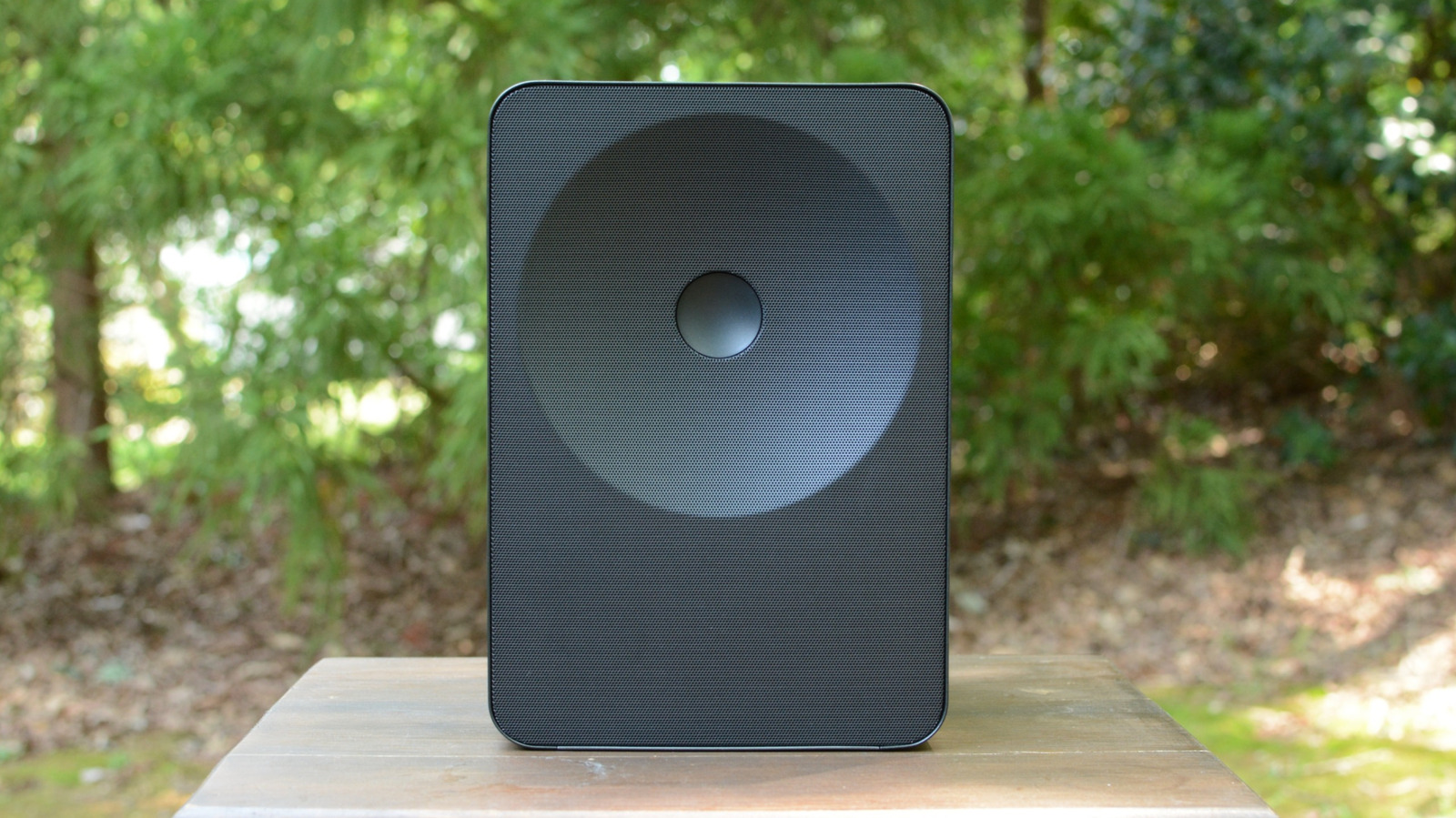
The company’s $500 speaker is well-equipped to pull double duty.
By Billy Steele June 30, 2026 9:00 am EST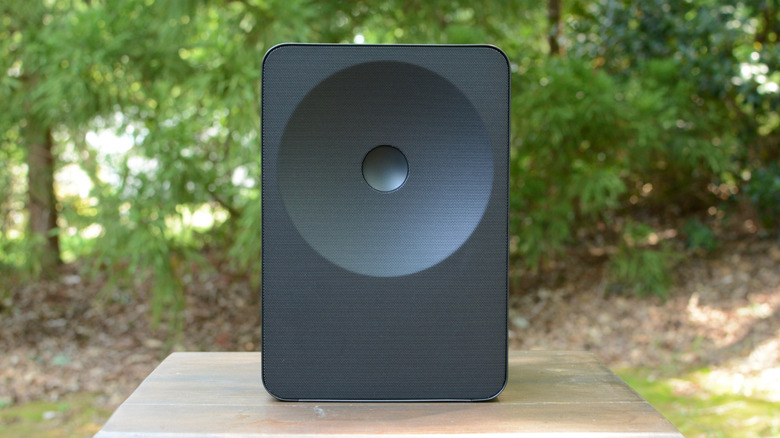 Billy Steele for Engadget RATING : 8.9 / 10 Pros
 - Excellent clarity and immersive sound
- Plenty of features
- HDMI eARC connection
- Great design
- Some features require a Samsung TV
- Size is a consideration
- Turntables need an adapter for wired use
If you're still waiting for the Galaxy Home, I'm sorry to tell you it's well past time to move on. Thankfully, Samsung has other options, including the two Wi-Fi speakers the company revealed at CES. One of those is the Music Studio 7 ($500), a premium-looking, premium-sounding device that's capable of pulling double duty, either on a shelf or flanking your TV. With a full collection of the company's audio features onboard, including an HDMI port, the Studio 7 is well-equipped to take on the likes of category leader Sonos for both music and TV audio.
Design and features
 Billy Steele for Engadget
 The Music Studio 7 is one of two speaker collaborations between Samsung and French artist Erwan Bouroullec. The other is the Music Studio 5. The team-up resulted in a minimalist aesthetic, with both speakers looking more like sculptures than audio gear. Samsung explains that the refined designs are meant to blend in with home decor, but I'd argue the Studio 7's rectangular shape keeps it from doing so. It's obviously a speaker, even with the elevated overall look.
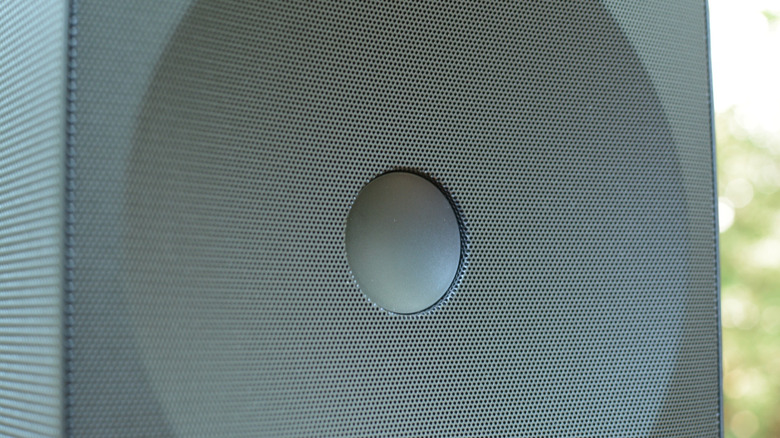
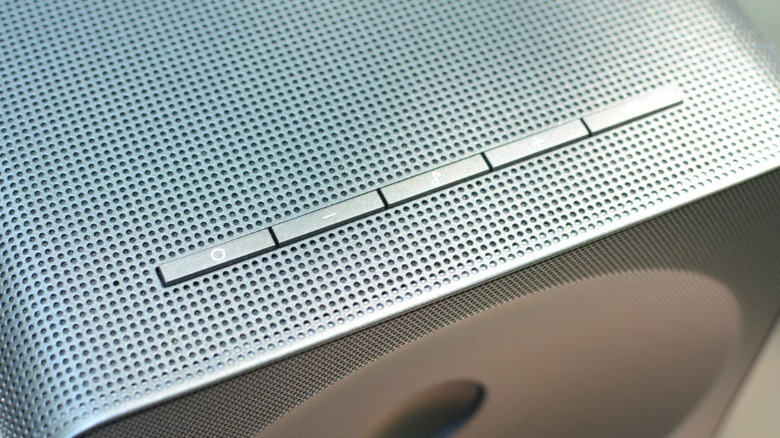
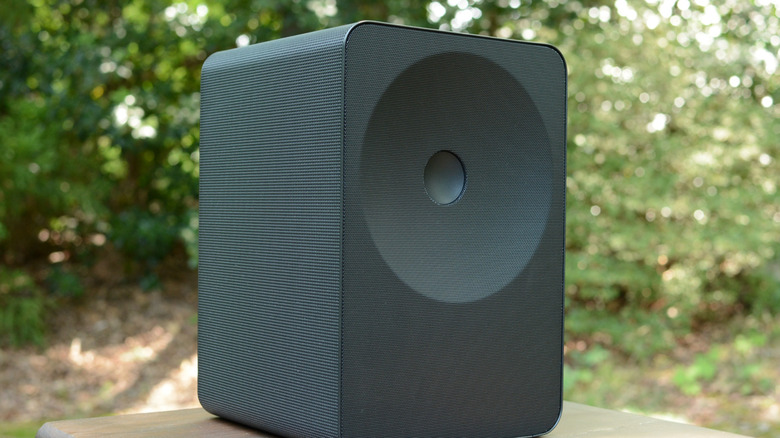
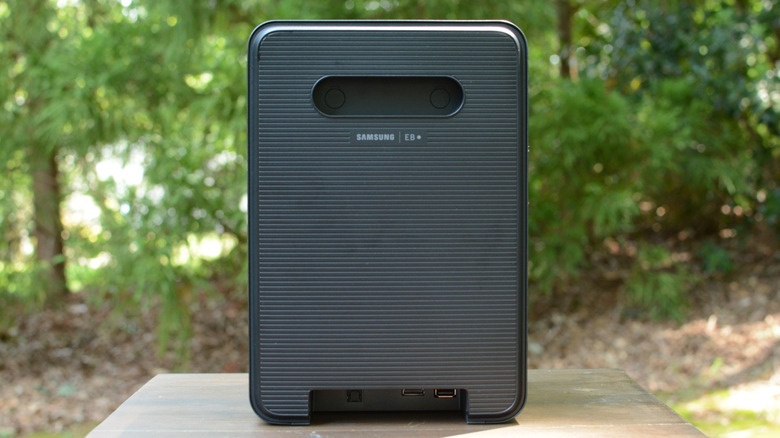
Bouroullec and Samsung opted for solid panels on all sides, adorned with a dot pattern to allow sound to pass through. There are no mesh speaker grilles here. On the front, a concave circle sits at the top, centered on the Studio 7's front-facing driver. There's an LED indicator at the edge of the circle that lights up for various modes and statuses — like volume adjustments, for example. On the top of the speaker, a row of buttons gives you access to the audio inputs, volume, playback controls and muting the microphone. Around back, there are optical and HDMI (eARC) ports (both rare finds) alongside a USB-A socket for service purposes.
Inside, five drivers power the 3.1.1-channel setup. That's three main channels — left, right and center — along with a built-in woofer and one up-firing channel. That last one means that the Studio 7 can deliver real Dolby Atmos audio without the need for any virtualization tricks. The driver arrangement here allows the speaker to beam sound in four directions, blasting audio from every panel except the rear and bottom.
 Billy Steele for Engadget
 Samsung managed to cram a full suite of audio features into the Music Studio 7. There's SpaceFit Sound Pro room calibration, content-based Adaptive Sound, AI Dynamic Bass Control, Active Voice Amplifier dialogue boost, Group Play and high-resolution audio support (up to 24-bit/96kHz). If you have a compatible Samsung TV, you can use a pair of Studio 7s in the living room with the company's Q-Symphony feature to use the television's speakers for more robust sound. Q-Symphony works with up to five Samsung speakers (including a soundbar), just in case you want to put the Studio 7 elsewhere in your home theater setup.
That list of bonus features is long, and most of them are thankfully self-explanatory, with the exception of Group Play. This feature allows you to connect up 10 Wi-Fi-enabled Samsung speakers to play synchronized sound. The company doesn't say exactly which models support Group Play, only that you can use it with the new Music Studio 5 and 7, along with the Music Frame. The Studio 7 also supports wireless Dolby Atmos, if you have a compatible TV, and Google Cast and AirPlay 2 are onboard as well.
The Samsung Sound app is where you'll set up the Studio 7 and adjust any settings. The app handles everything from automatic recognition of the speaker to connecting it to your Wi-Fi network and running initial room calibration. You can also build more robust speaker groups here, syncing the Studio 7 with other Samsung speakers and soundbars (if compatible, of course). In terms of customization, the app offers an EQ alongside sound modes for Standard, Music and AI Adaptive Sound. Channel levels, woofer output, voice enhancement, night mode and audio sync can all be tweaked. Plus, an Ambient Sound feature reduces loud effects and ungroups speakers so they can provide background music for parties.
The Music Studio 7 as a standalone speaker
 Billy Steele for Engadget
 With a five-driver setup that's configured for immersive sound, the Music Studio 7 is an excellent standalone speaker. When testing just one unit, I put it on the top shelf of a bookcase, where I'd typically have my turntable speakers. This gave the Studio 7 ample room to send sound in every direction.
Out of the box, I noticed the Studio 7 lacked bass in certain genres in AI Adaptive Sound mode (ironic!) — like metal, rock and electronic tunes. Thankfully, the EQ in the Sound app actually made a difference and I was able to adjust the low-end tone to my liking. That's really my only gripe with the sound here, and it's not a huge one because Standard mode doesn't require any tweaks (just stay away from Music mode). In terms of detail and overall soundstage, the Studio 7 performs well, and it allows you to hear intricacies and textures you might miss on other speakers.
I primarily used one Studio 7 with AirPlay, but I made sure to test the other inputs and encountered no issues. AirPlay was quick to connect from Apple Music, which was nice since other speakers I've tested took longer to do so. I'll note that Samsung says you can use the Studio 7, or most likely a pair of them, with a turntable. However, your connections are limited to either Bluetooth or using an analog-to-digital adapter with the optical input. While those might be okay for some, purists will mourn the lack of support for analog audio there. I wasn't able to test either of these as my turntable doesn't have Bluetooth and I don't own one of the requisite adapters.
Using the Music Studio 7 with your TV
 Billy Steele for Engadget
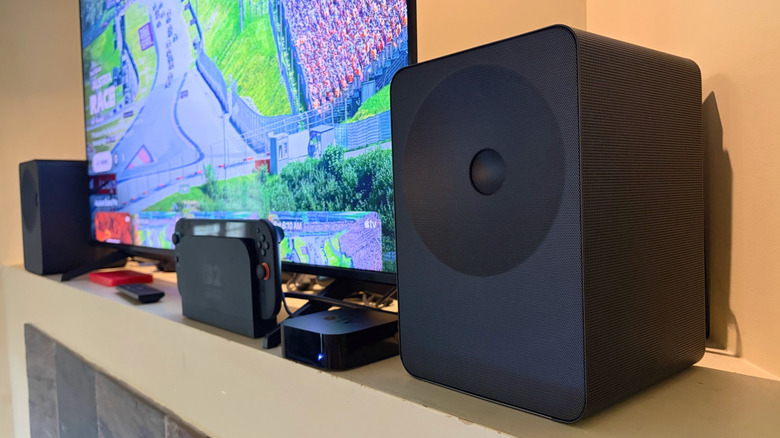
 While the Studio 7 is great on its own, it really shines as a stereo pair. More specifically, it performs well as a soundbar alternative for your living room. Thanks to that HDMI eARC port, you can connect a Studio 7 directly to your TV for Dolby Atmos and DTS:X audio. You can then add a second Studio 7 in the Sound app and the two speakers will wirelessly sync for home theater use. The app allows you to adjust left and right channels, if needed, and any settings tweaks are applied to both speakers when they're part of the group.
Since my TV doesn't support wireless Dolby Atmos, the HDMI eARC port was a welcome surprise. Most living room speakers these days operate wirelessly, with a soundbar or the same company's TV serving as the lead unit. With HDMI and optical connections, a pair or Studio 7s would make a great soundbar substitute for anyone who'd rather not have a long, large speaker sitting under their TV. What's more, the audio performance of two Studio 7s was just as good as a premium Atmos soundbar on its own.
I usually have a Sonos Arc Ultra in my living room, mostly due to the fact that the company's newer bass tech means I don't need a subwoofer for ample low-end tone. With a pair of Music Studio 7s, there's bass aplenty for TV use. Two Studio 7s are also a clear upgrade sonically over the Arc Ultra, as the driver setup in Samsung's speaker further enhanced the directional sound of Dolby Atmos in Drive to Survive. I also felt more enveloped in the broadcast audio for live sports, with stadium noise during World Cup matches and College World Series games wrapping around my living room. What's more, the dialogue, whether it was commentary or just people speaking, was always clear and never got lost in the action.
I don't have a Samsung TV, so I wasn't able to test Q-Symphony. However, the side-firing drivers on the Studio 7 made it seem like some of the audio was coming from my TV. I can appreciate that more speakers are likely better, especially for the sake of dialogue clarity, but I don't think Q-Symphony's performance here would be so good that you'd miss it. I'll also note that you can actually use four Studio 7s in your living room, with the additional pair serving as rear speakers.
The competition
 Billy Steele for Engadget
 When it comes to standalone and living room Wi-Fi speakers, Sonos is typically the first name that comes to mind. In terms of a direct comparison for the Music Studio 7, the company's Era 300 ($479) is the closest competitor. That speaker houses four tweeters (front-, side- and up-firing) and two angled woofers, along with six digital amplifiers. Features-wise, you get Sonos' Trueplay room calibration, multiroom compatibility and the option of using Era 300s alongside a soundbar. With a line-in adapter, you can connect a turntable via the Era 300's USB-C port.
The caveat here is that the Era 300 isn't really meant to be used in a stereo pair with your TV. There's no optical or HDMI eARC port, so you'd have to rely on wireless audio from an Apple TV 4K. This works, but you may encounter audio syncing issues. Plus, this workaround isn't an option for other devices that are connected to your TV — like game consoles.
I also need to mention Samsung's own Music Studio 5 as an alternative. You get almost everything on the Studio 5 that you do on the Studio 7 — for $200 less. The biggest differences, aside from the more circular design, are the lack of HDMI eARC on the Studio 5 and that it has three fewer drivers. The Studio 5 still has an optical port for wired connection to a TV, but wireless Dolby Atmos is the better method here. I'll withhold judgement on the Studio 5's three-driver array versus the Studio 7's five-unit setup until I'm able to review the former, but my initial concern is that you'll lose some of the 7's immersive effects with fewer components.
Wrap-up
The Music Studio 7 is a great standalone speaker with plenty of features and connectivity to satisfy most users. It's even better when you put two of them together for a formidable soundbar alternative. In fact, I'd argue the audio from two Studio 7s surpasses Samsung's best soundbar, and at $1,000 for the pair, you might even save some money over other premium soundbars. Even if you only opt for one, you won't be disappointed in the mix of sound quality and features Samsung packed into this speaker.