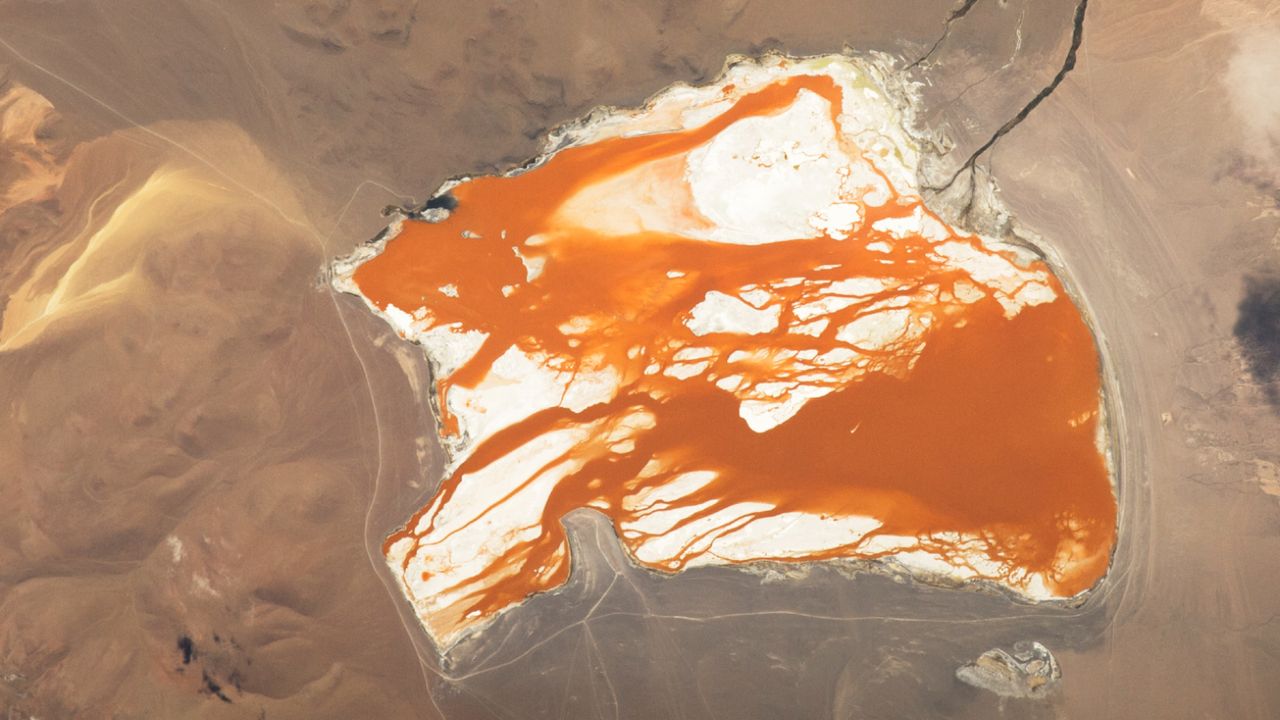
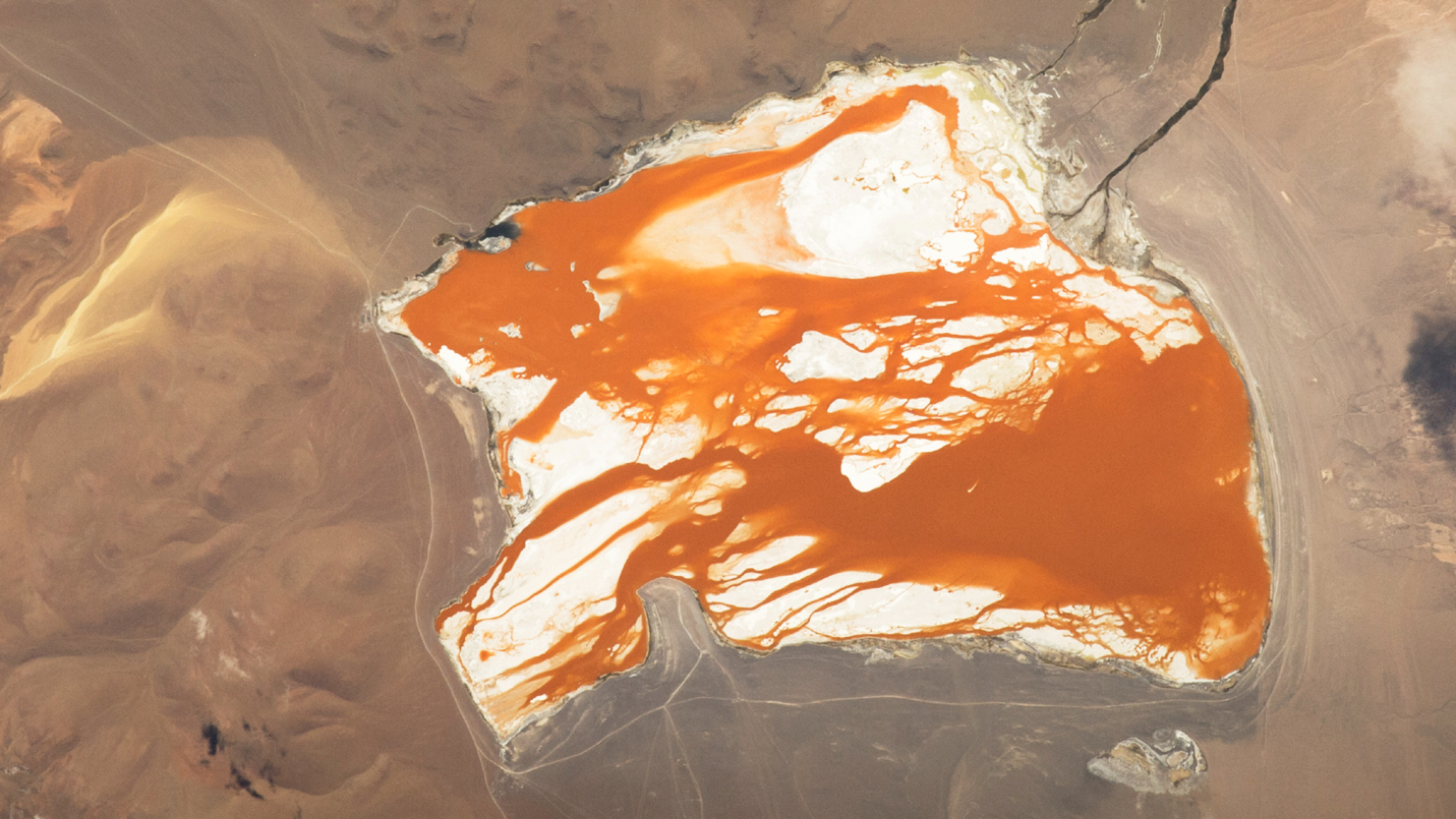
 Bolivia's Laguna Colorada has colorful, algae-rich waters that appear to "bleed" across its brilliant, salty white bed when viewed from space. (Image credit: NASA/ISS program) Share this article 0 Join the conversation Add us as a preferred source on Google Newsletter Subscribe to our newsletter QUICK FACTS
Where is it? Laguna Colorada, Altiplano, Bolivia [-22.19489413, -67.77420764]
What's in the photo? Rust-colored water appears to bleed across a salt bed
Who took the photo? An unnamed astronaut on board the International Space Station
When was it taken? April 16, 2015
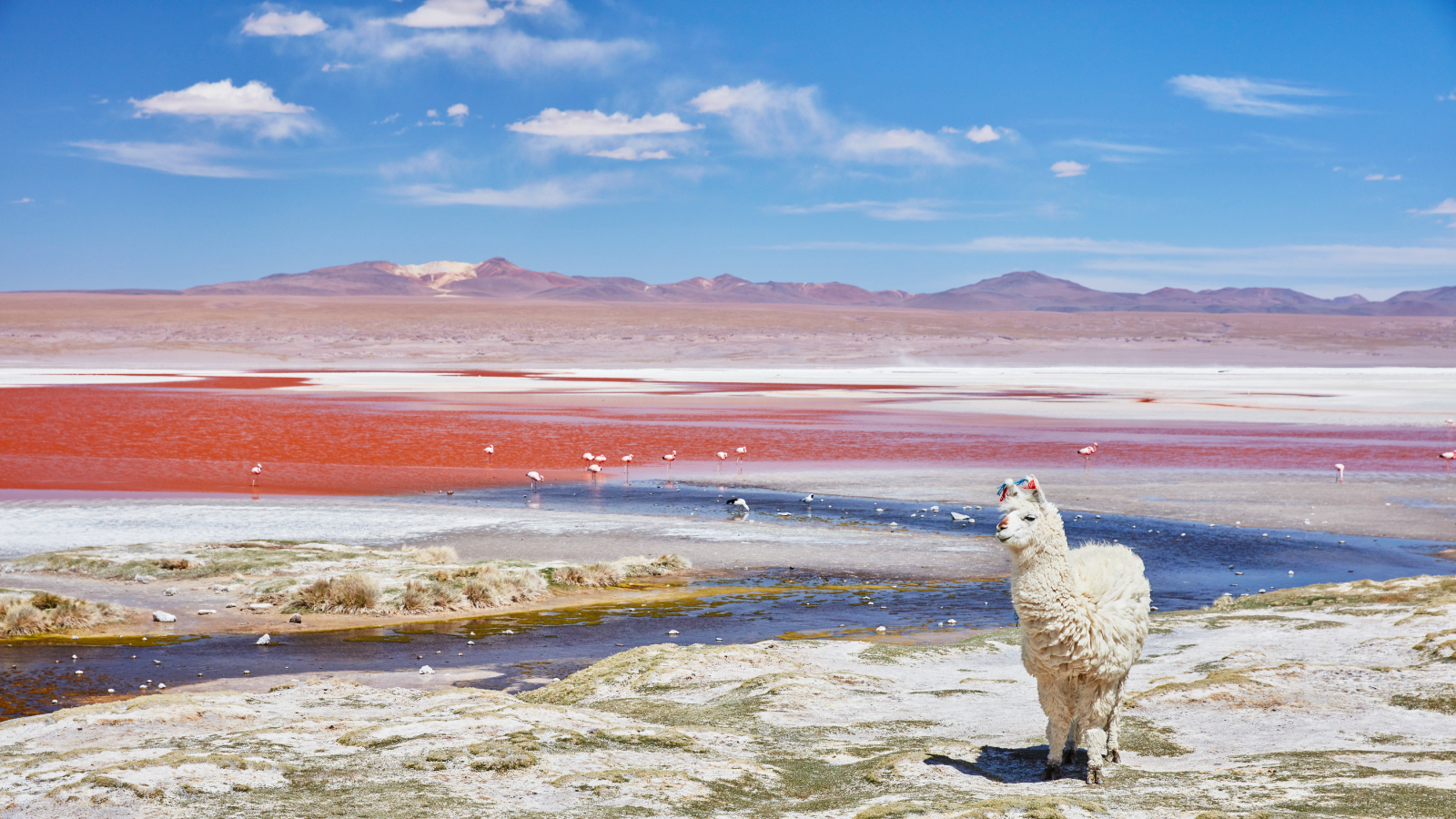
The area surrounding the lagoon is home to a number of animals, including llamas.
(Image credit: Getty Images)Sign up for the Live Science daily newsletter nowContact me with news and offers from other Future brandsReceive email from us on behalf of our trusted partners or sponsors 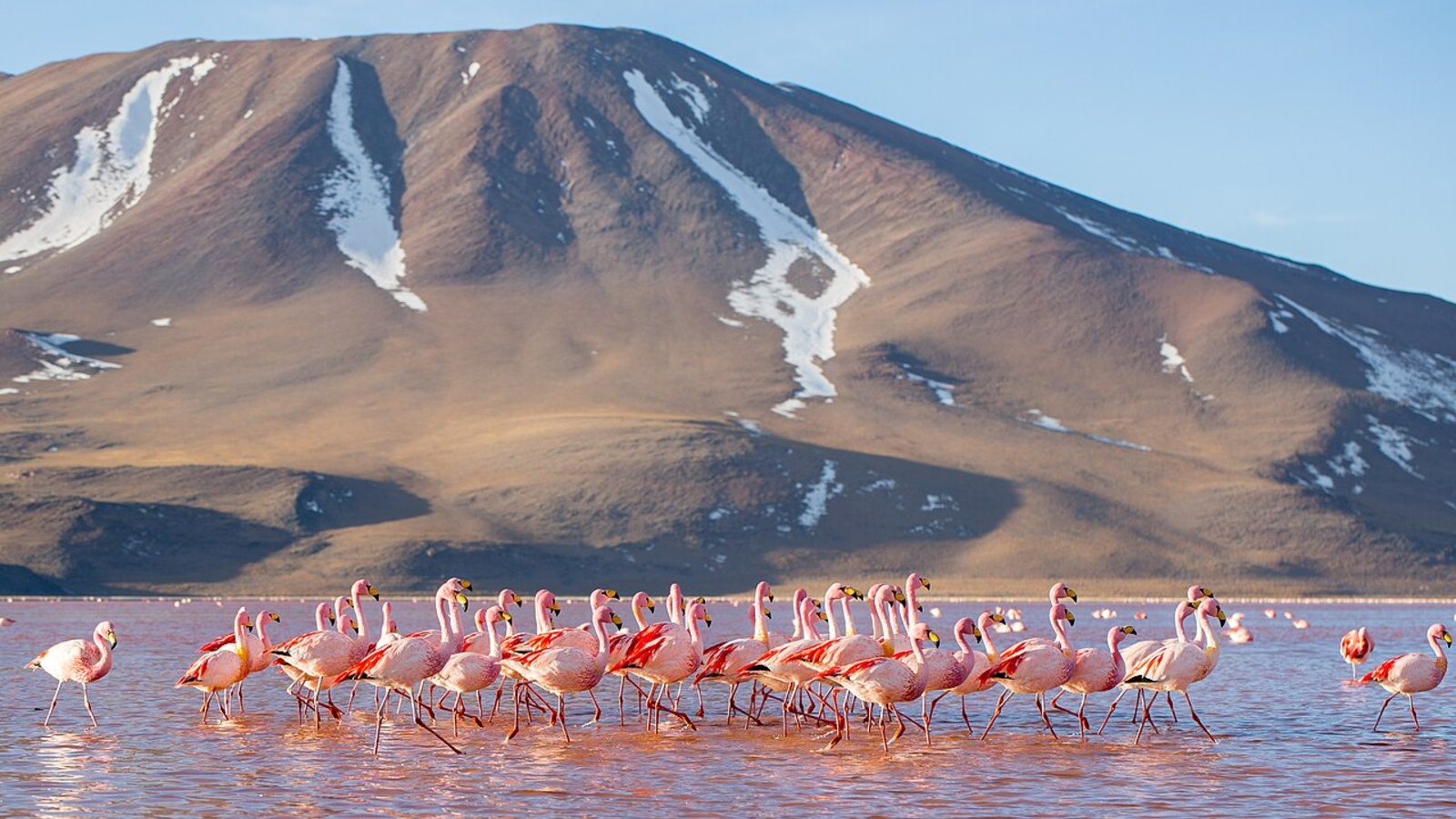
The lagoon is frequented by at least three different species of flamingo, which get their vibrant pink hues from the algae in its waters.
(Image credit: Havardtl/Wikimedia)See more Earth from space
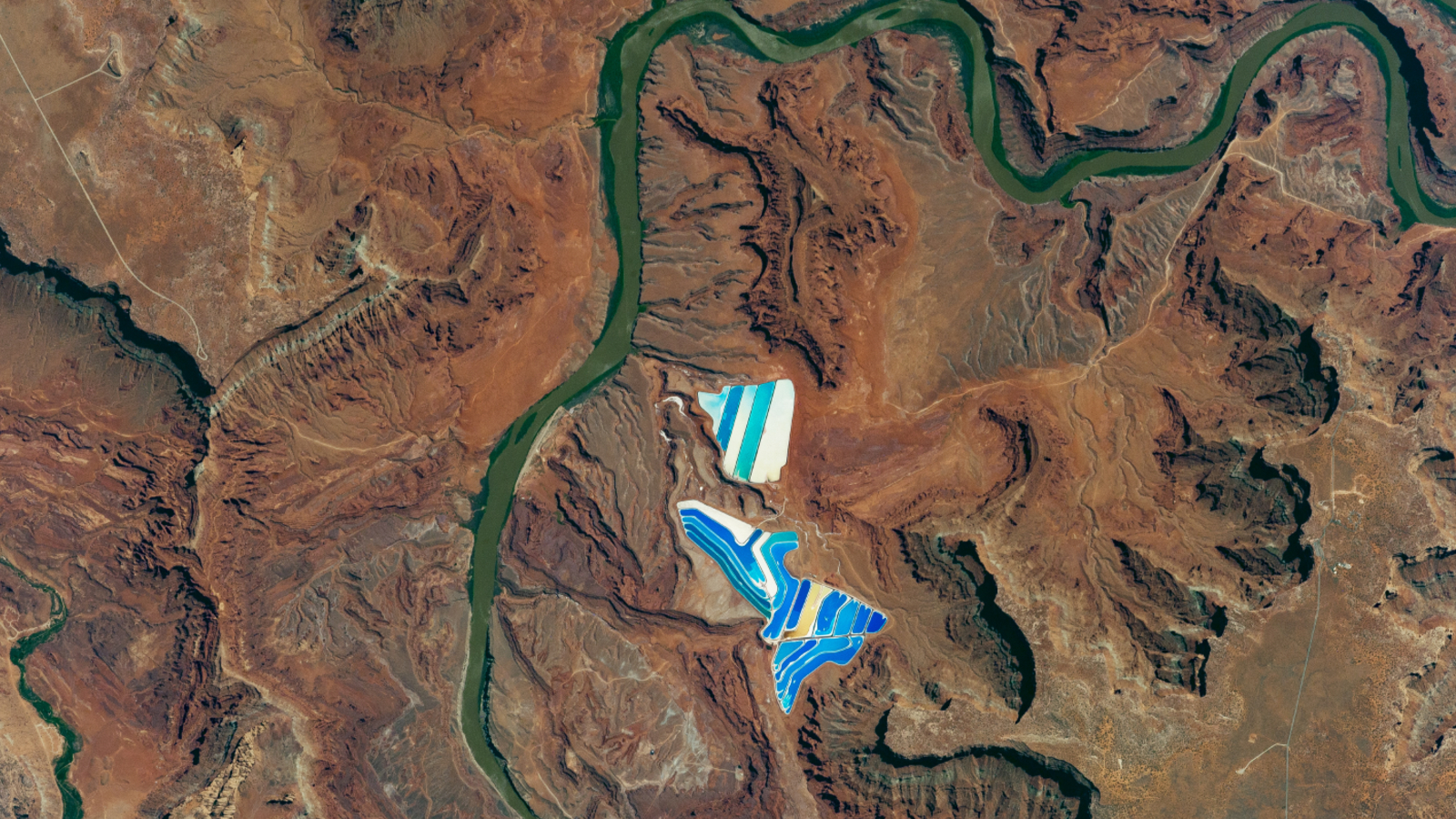 Bright-blue 'potash ponds'
A 2017 astronaut photo shows two sets of solar evaporation ponds alongside the Colorado River. The stripy structures are used to refine potassium chloride, or "potash," which is mined nearby.
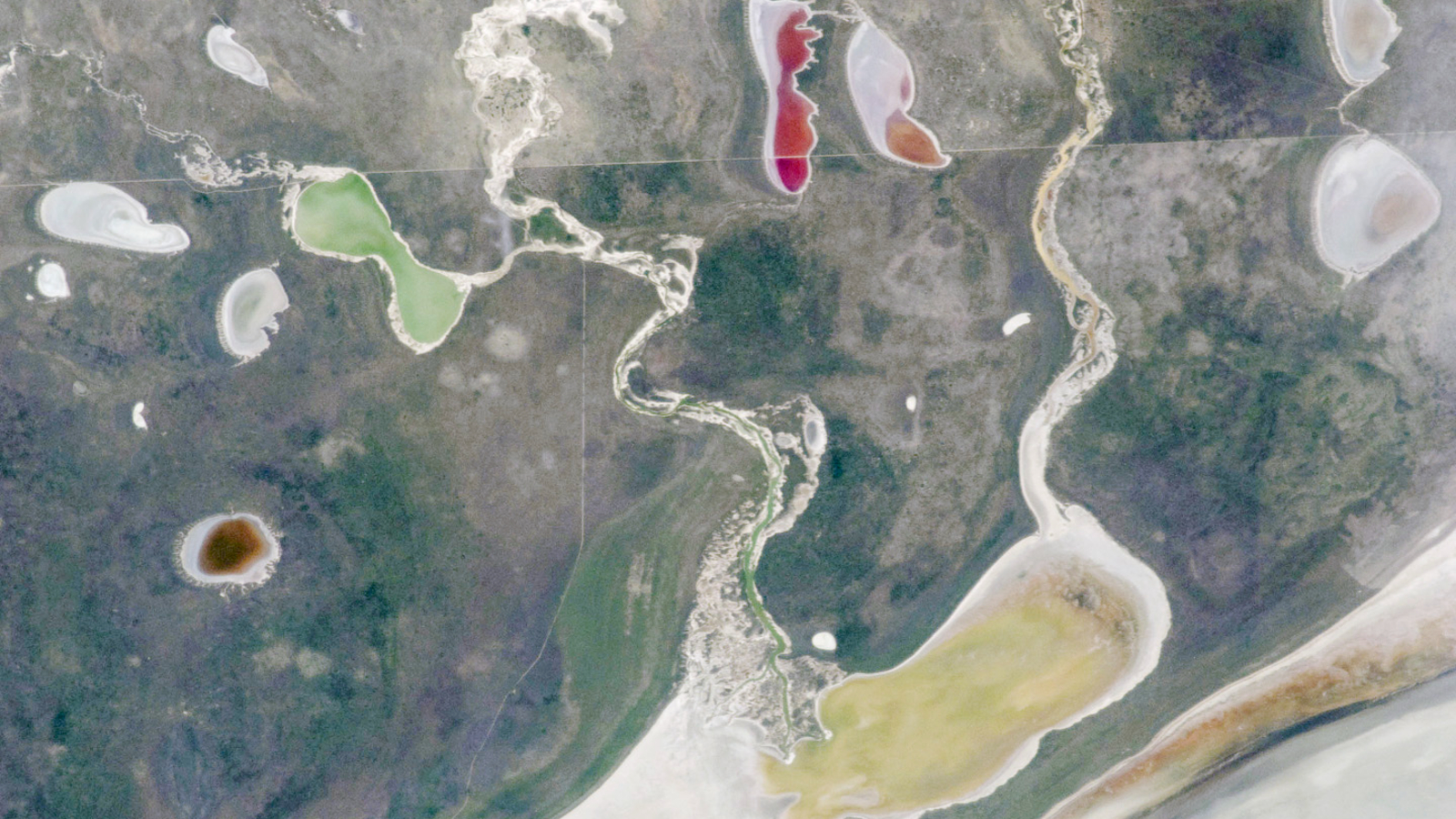 Rainbow-colored 'phantom lakes'
A 2011 astronaut photo shows off a series of colorful mini-lakes that appeared around the edge of a giant salt flat, known as the Etosha Pan, following a major flooding event.
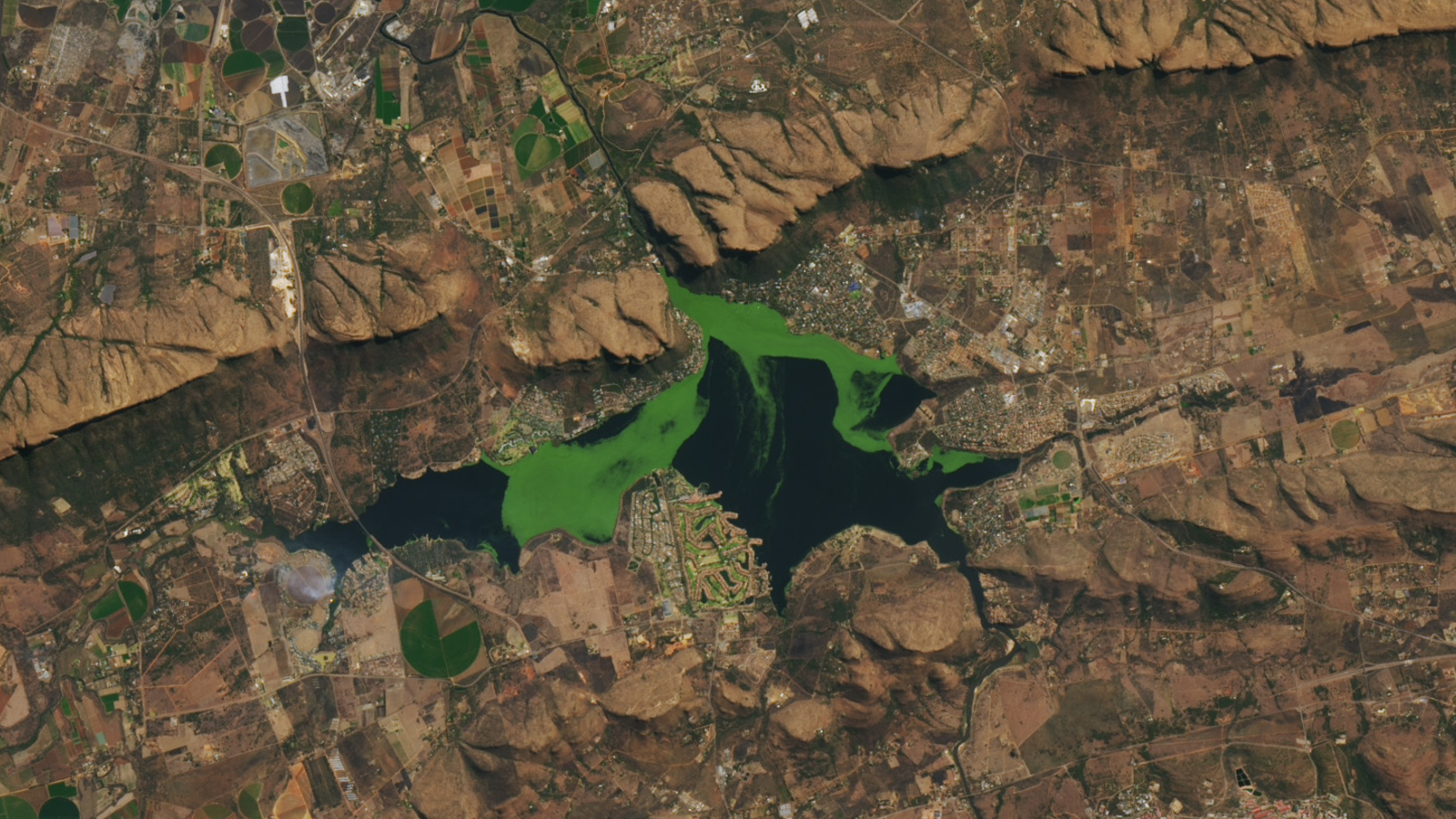 Deadly green mass in reservoir
A 2022 satellite photo shows a thick mat of blooming algae and invasive aquatic plants spreading across the surface of the reservoir at South Africa's Hartebeespoort Dam. The verdant mass is both toxic and capable of depleting the water's oxygen levels.
TOPICS Harry BakerSenior Staff Writer
Harry is a U.K.-based senior staff writer at Live Science. He studied marine biology at the University of Exeter before training to become a journalist. He covers a wide range of topics including space exploration, planetary science, space weather, climate change, animal behavior and paleontology. His recent work on the solar maximum won "best space submission" at the 2024 Aerospace Media Awards and was shortlisted in the "top scoop" category at the NCTJ Awards for Excellence in 2023. He also writes Live Science's weekly Earth from space series.
View MoreYou must confirm your public display name before commenting
Please logout and then login again, you will then be prompted to enter your display name.
Logout