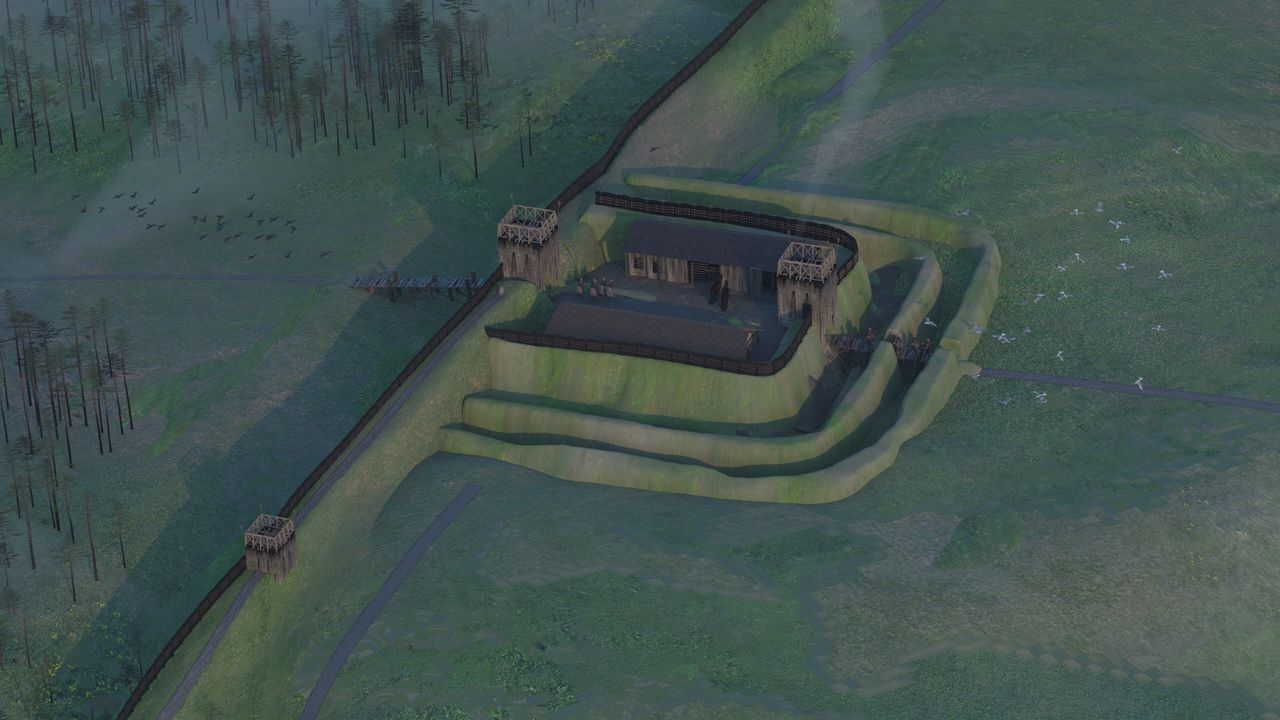
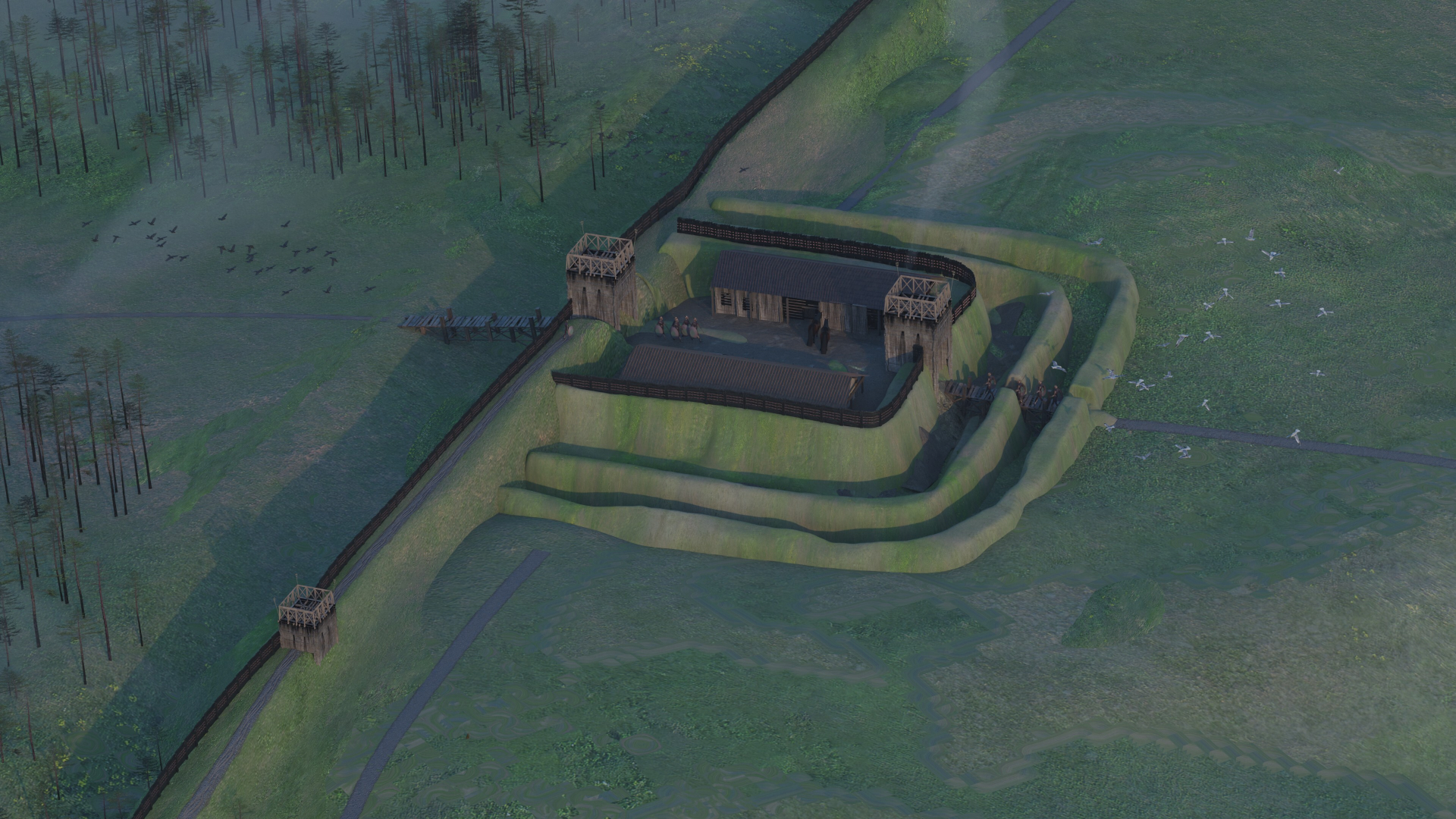
 This digital reconstruction of the fortlet shows how it would have provided a good vantage point to view land north of the wall. (Image credit: Image by Eduardo Pérez-Fernández) Share this article 0 Join the conversation Follow us Add us as a preferred source on Google Newsletter Get the Live Science Newsletter
 Get the world’s most fascinating discoveries delivered straight to your inbox.
Become a Member in Seconds
Unlock instant access to exclusive member features.
Contact me with news and offers from other Future brands Receive email from us on behalf of our trusted partners or sponsors By submitting your information you agree to the Terms & Conditions and Privacy Policy and are aged 16 or over.You are now subscribed
Your newsletter sign-up was successful
Want to add more newsletters?
Join the club
Get full access to premium articles, exclusive features and a growing list of member rewards.
Explore An account already exists for this email address, please log in. Subscribe to our newsletterArchaeologists in Scotland have discovered the remains of a Roman "fortlet" that was built beside a massive wall that ran across Scotland.
Known as the Antonine Wall, the defensive border separated what is now southern Scotland, which had been conquered by the Romans, from the unconquered northern Scotland. The 38-mile-long (62 kilometers) wall was made largely of turf, or earthen materials, and its construction started in A.D. 142 on the orders of Roman emperor Antoninus Pius (reign A.D. 138 to 161) following the Roman conquest of southern Scotland.
Article continues belowThe newly discovered fortlet dates to the mid-second century to the mid-third century A.D., radiocarbon dating revealed. It was built on the southern side of the Antonine Wall in the town of Bearsden, about 5 miles (8 km) northwest of Glasgow, and spans the gardens of three private residences on an "area of high ground right next to the Antonine Wall," archaeologists from Guard archaeology said in a statement. "It had commanding views over the landscape, particularly to the north, which was beyond Roman control."
The fortlet also had a good view of a nearby Roman fort and could potentially have signalled the garrison if they spotted an enemy force. Most fortlets along the Antonine Wall could house between 20 and 50 soldiers at a time, the team noted.
The base of a wall of the fortlet that was found in Bearsden, Scotland. (Image credit: © GUARD Archaeology Ltd)RELATED STORIES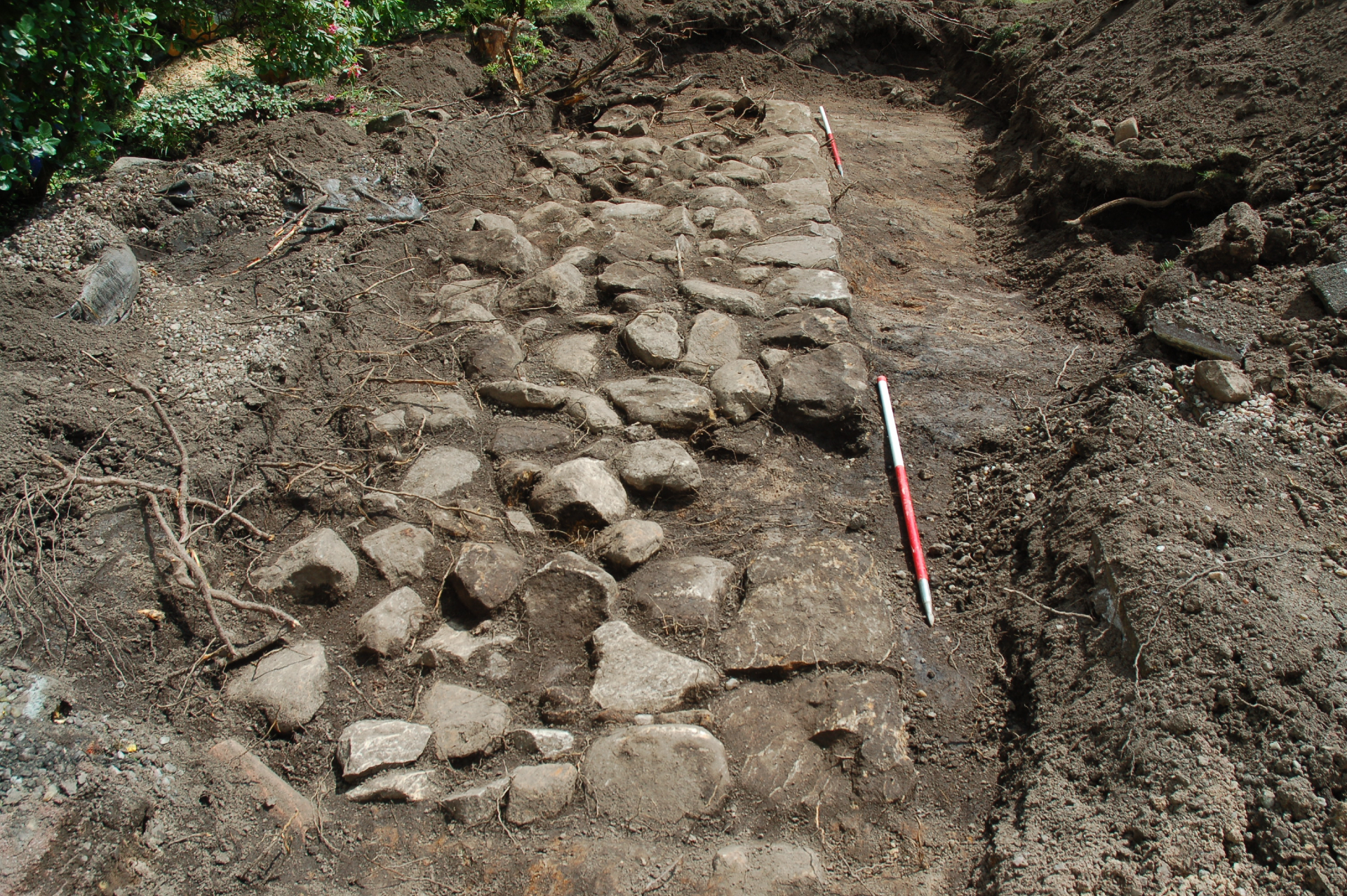
—'Lost' 2nd-century Roman fort discovered in Scotland
Archaeologists initially discovered the fortlet in 2017 in the backyard of a private residence that was having an archaeological survey done ahead of construction work. The team later conducted a larger excavation and recently published the findings in the journal Archaeology Reports Online.
The fortlet was built on a stone base, the archaeologists wrote in the journal article. There was also a ditch located just outside the fortlet that may have helped defend it.
Sign up for the Live Science daily newsletter nowContact me with news and offers from other Future brandsReceive email from us on behalf of our trusted partners or sponsorsGuard Archaeology created a digital reconstruction of the fortlet, which shows two buildings that could house a small garrison of Roman troops along with two watchtowers and a series of ditches and walls to protect them.
The fortlet would likely have been "an integral part of the Roman Wall defences which included forts and fortlets along its length" the archaeological team wrote in the journal article.
Article SourcesC. Kilpatrick, M. (2026). Discovery of an Antonine Wall Roman Fortlet at Boclair Road, Bearsden. Archaeology Reports Online. https://archaeologyreportsonline.com/reports/2026/ARO65.html
Roman Britain quiz: What do you know about the Empire's conquest of the British Isles?
 Owen JarusLive Science Contributor
Owen Jarus is a regular contributor to Live Science who writes about archaeology and humans' past. He has also written for The Independent (UK), The Canadian Press (CP) and The Associated Press (AP), among others. Owen has a bachelor of arts degree from the University of Toronto and a journalism degree from Ryerson University.
View MoreYou must confirm your public display name before commenting
Please logout and then login again, you will then be prompted to enter your display name.
Logout LATEST ARTICLES 1Reading AI summaries makes people more likely to buy something — despite alarming 60% hallucination rate
- 2Garmin Venu 4 smartwatch review: Sleek and sporty
- 3Can you see Earth's shadow?
- 4Microplastics that accumulate in the body may 'clog up' immune cells
- 5Top 5 mistakes when using air purifiers during hay fever season