Breaking space news, the latest updates on rocket launches, skywatching events and more!
Contact me with news and offers from other Future brands Receive email from us on behalf of our trusted partners or sponsors By submitting your information you agree to the Terms & Conditions and Privacy Policy and are aged 16 or over.You are now subscribed
Your newsletter sign-up was successful
Want to add more newsletters?
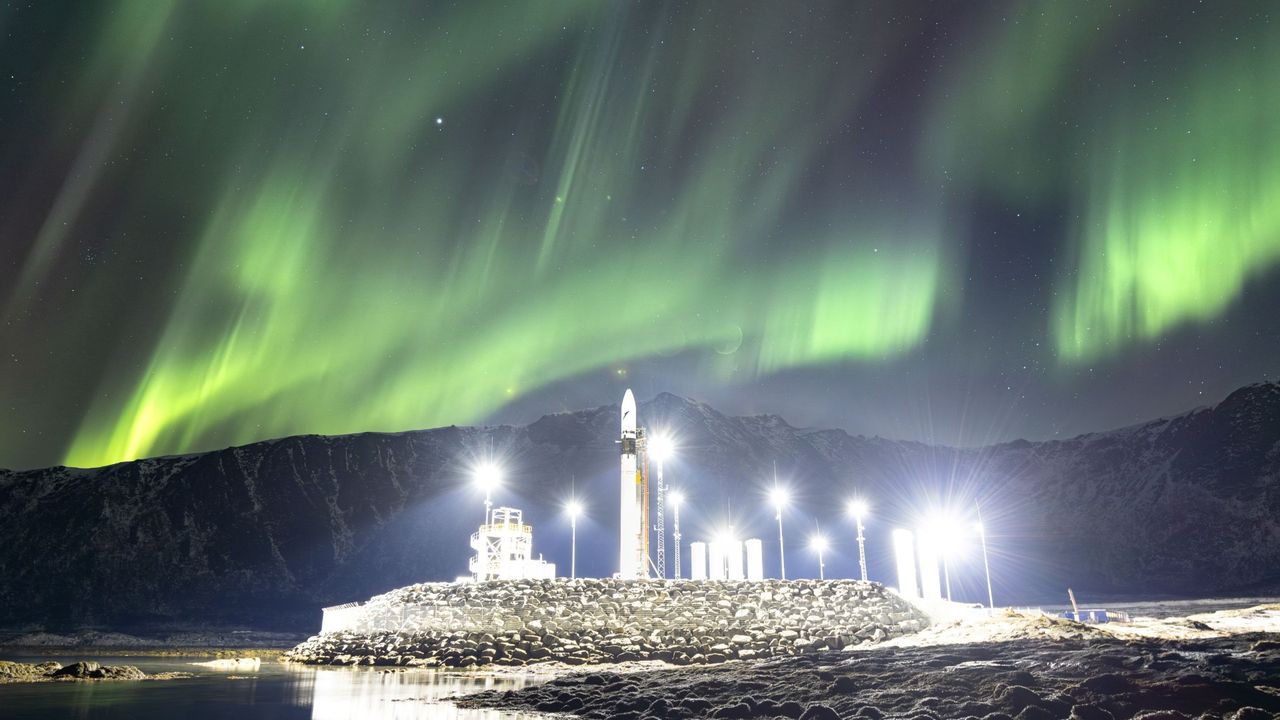
An account already exists for this email address, please log in. Subscribe to our newsletter Isar Aerospace's Spectrum rocket on the launch pad at Andøya Spaceport in northern Norway. (Image credit: Isar Aerospace)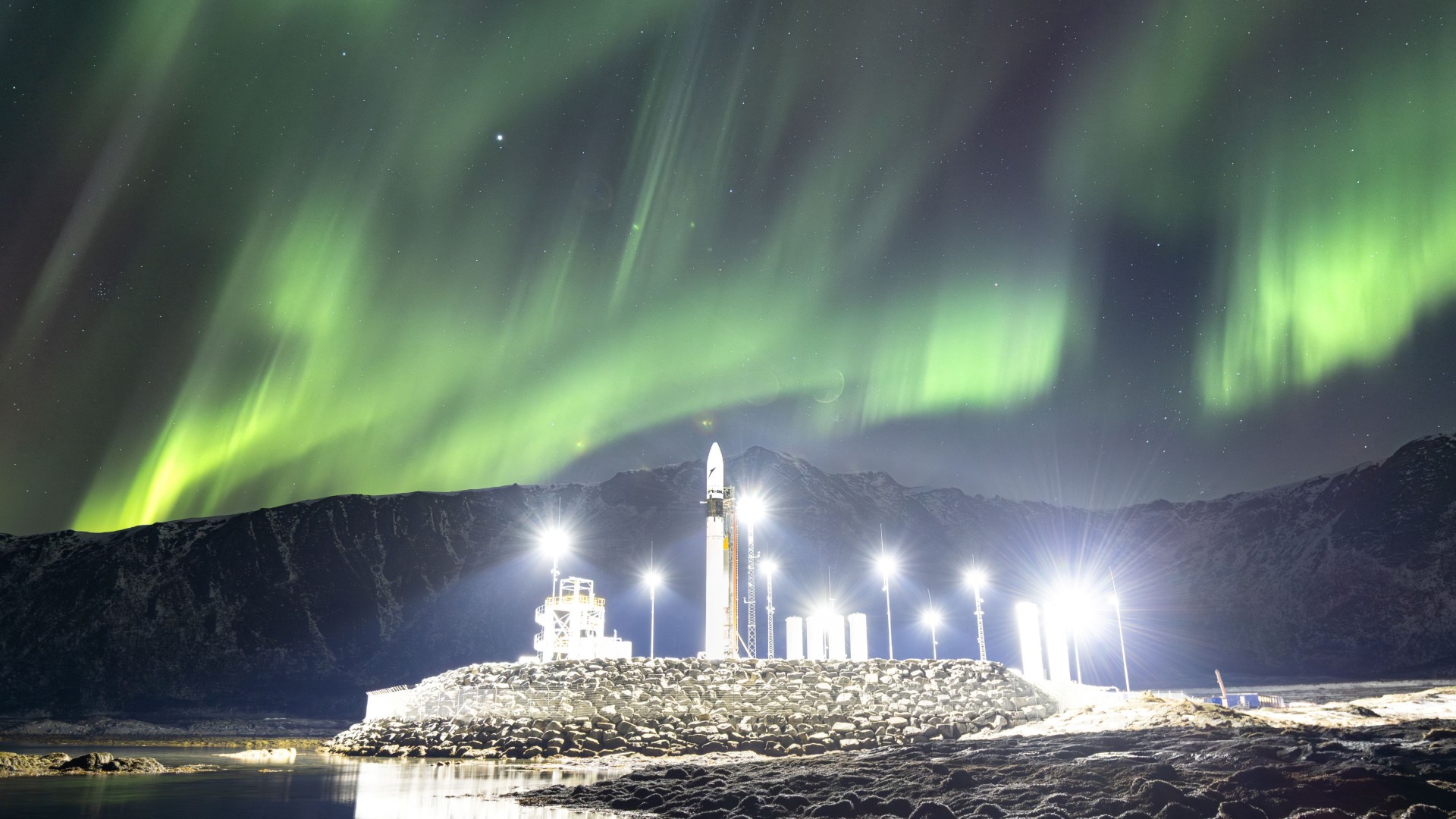
A gorgeous new photo shows the northern lights rippling across the night sky above Isar Aerospace's Spectrum rocket.
What is it?
Isar Aerospace, based in Germany, is attempting to launch Spectrum into orbit on Wednesday (March 25) from Andøya Spaceport in northern Norway. If it is successful, it will become the first rocket to reach orbit from European soil.
The rocket's first flight in March 2025 saw Spectrum lift off and clear the pad, only to crash spectacularly less than a minute later. Still, Isar hailed the test flight as a success.
Article continues belowWhile the first flight carried no payloads, this second flight, which Isar has named "Onward and Upward," will attempt to put five cubesats and one scientific experiment in orbit.
Why is it amazing?
In this photo, tendrils of green light appear in the sky over the Spectrum rocket upright on its launch pad, thanks to the northern lights, or aurora borealis. This stunning phenomenon occurs when charged particles from the sun collide with atmospheric gases like oxygen and nitrogen in Earth's atmosphere, exciting the atoms in these gases and releasing energy in the form of light.
Earth's magnetic field funnels charged particles from the sun towards the poles, making arctic locations like Norway's Andøya Spaceport prime locations for viewing the northern lights.
Isar Aerospace shared this photo on March 18, close to the March 20 spring equinox for the Northern Hemisphere. Earth's tilt during equinoxes orients the planet's magnetic field in such a way that it strengthens auroras at these times.
Get the Space.com NewsletterContact me with news and offers from other Future brandsReceive email from us on behalf of our trusted partners or sponsors Brett TingleyManaging Editor, Space.com
Brett is curious about emerging aerospace technologies, alternative launch concepts, military space developments and uncrewed aircraft systems. Brett's work has appeared on Scientific American, The War Zone, Popular Science, the History Channel, Science Discovery and more. Brett has degrees from Clemson University and the University of North Carolina at Charlotte. In his free time, Brett enjoys skywatching throughout the dark skies of the Appalachian mountains.
View MoreYou must confirm your public display name before commenting
Please logout and then login again, you will then be prompted to enter your display name.
Logout MORE FROM SPACE...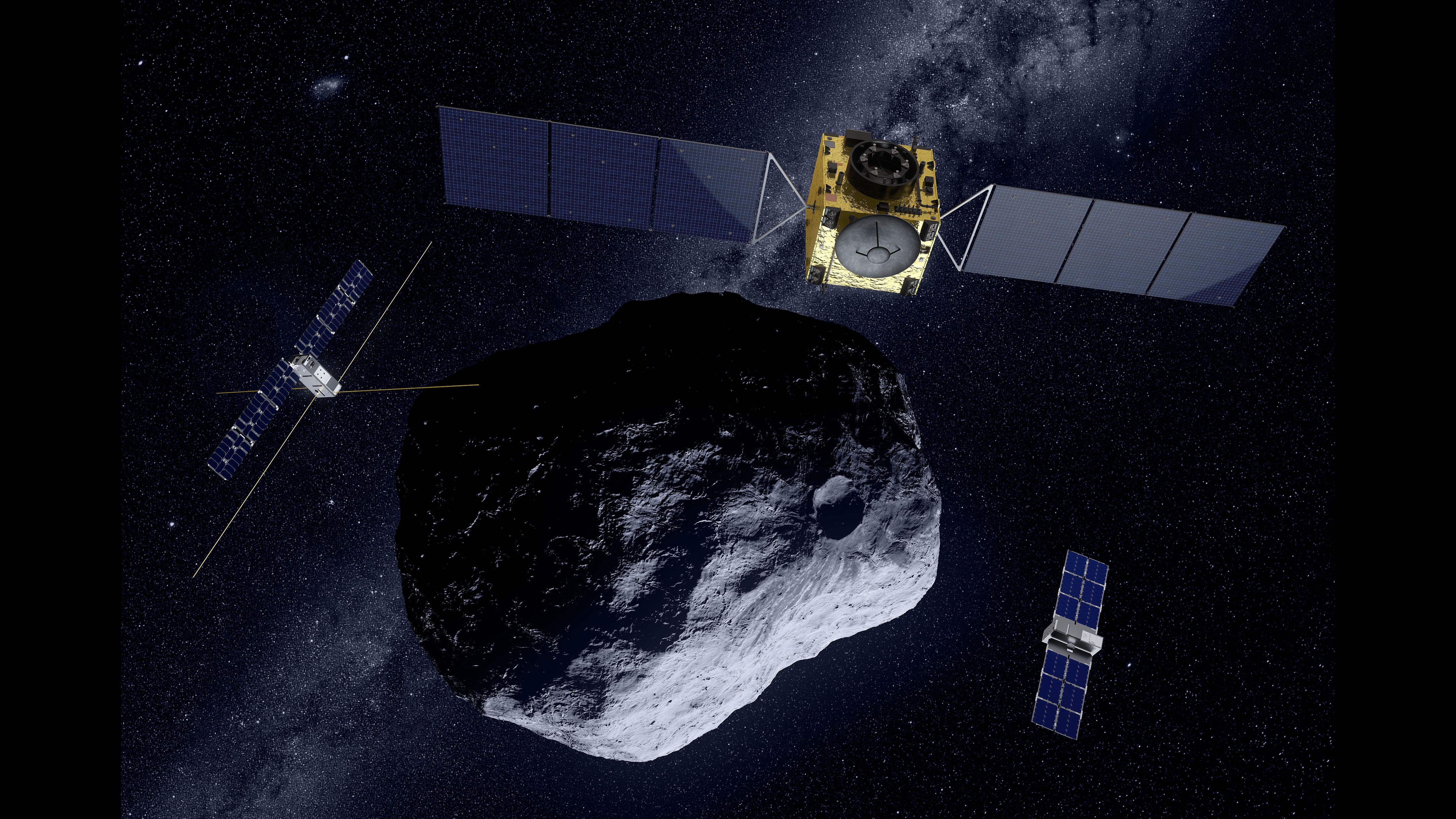 1Like 'accelerating from stationary to supersonic flight': Europe's Hera probe boosts speed, stays on course for November asteroid rendezvous
- 2Europe plans EPIC SpaceX mission to send 4 astronauts to the ISS before its retirement
- 3Scientists finally solve century-old mystery of star with unexpected X-ray emissions
- 41 week away! NASA gearing up to launch Artemis 2 astronauts around the moon on April 1
- 5Amazon Spring Sale deals for stargazing 2026: Huge savings on telescopes, binoculars and cameras