Cunningham's absence will affect more than just the Pistons
 By Sam Quinn Mar 19, 2026 at 12:25 pm ET • 7 min read
  Imagn Images
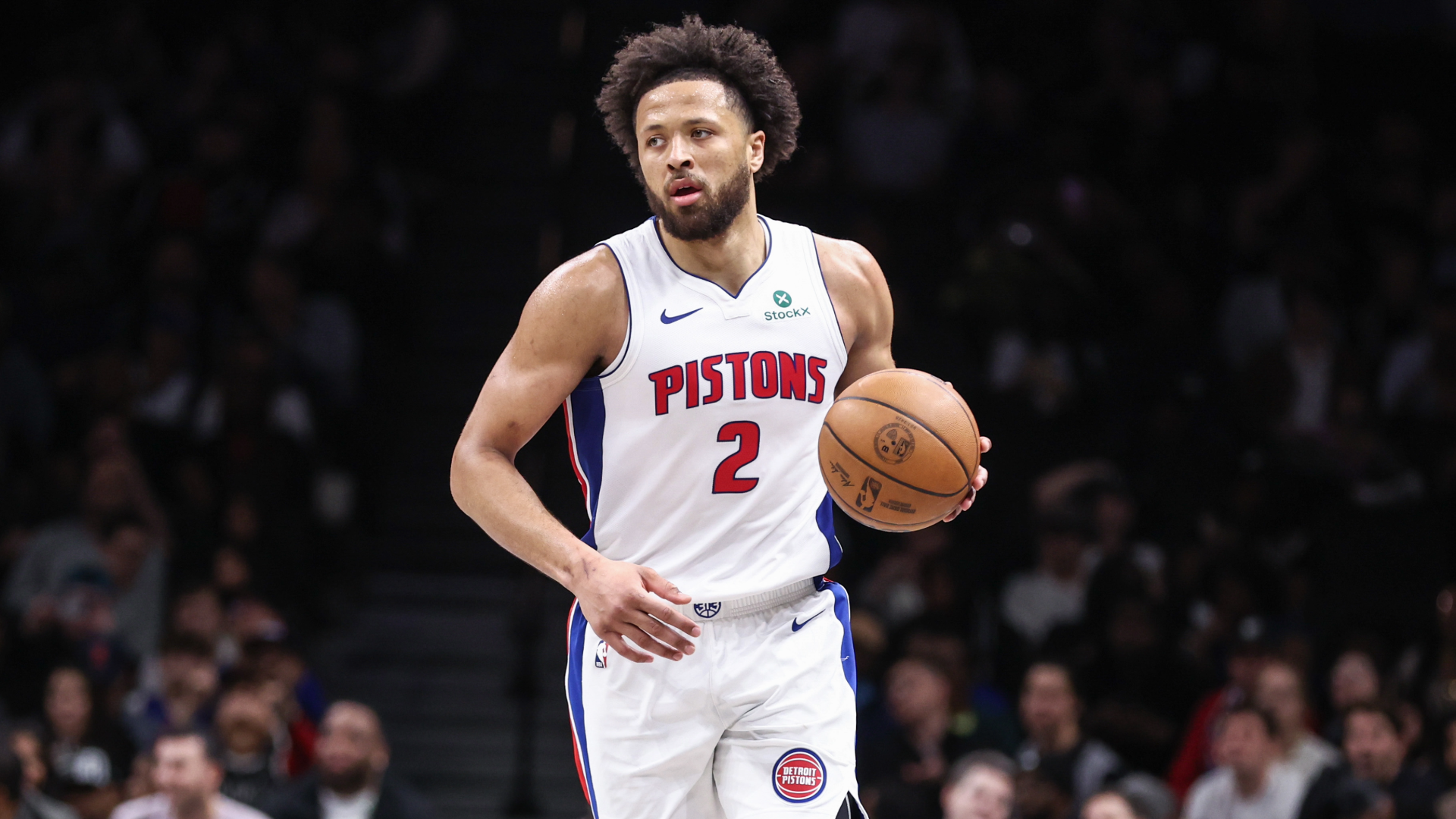
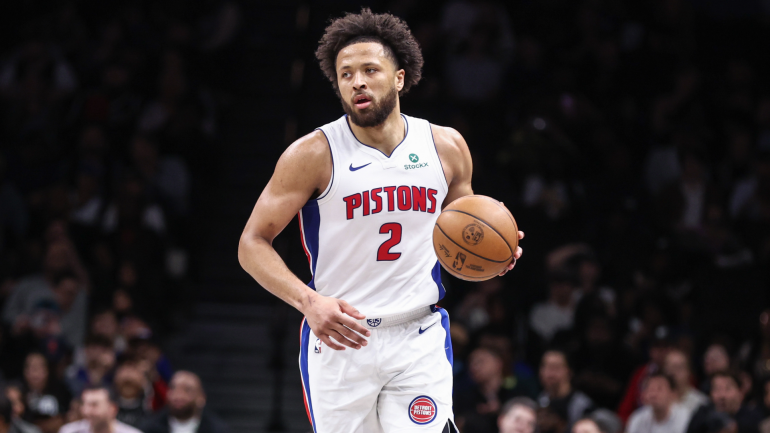
 There's something particularly frantic about a major March injury. Had Cade Cunningham suffered a collapsed lung in, say, December, the Detroit Pistons -- and the rest of the NBA, for that matter -- would have had time to process his absence. The Pistons might have traded for another ball-handler. They likely would have faded in the standings, and their expectations, as well as everyone else's, would have adjusted. The awards picture would have developed differently.
But the playoffs start in less than a month. There's not all that much the Pistons can do to help themselves at this point. The trade deadline is long gone. So is the March 1 deadline to sign a player and have him be eligible for the postseason. They've spent the whole season believing this is possibly a championship year. Now they could get knocked out before their best player even returns (the Pistons said Thursday he'll be re-evaluated in two weeks, which theoretically could have him back by early April). Maybe he'll return in time to salvage their season. Maybe he'll be compromised for a playoff run. Maybe their season is well and truly over.
When an injury comes this late in the year, it just throws a curveball into the entire rest of the season. Yesterday, the Pistons were among the Eastern Conference favorites. Today, their future is unclear, and everyone else's is muddled. For now, Cunningham will be re-evaluated in two weeks, but given the severity of the injury and its rarity in the NBA, there's little we can say beyond that. So let's get into the enormous potential ripple effects of Cunningham's absence for not just the Pistons, but the entire rest of the NBA.
Pistons' Cade Cunningham suffers collapsed lung: What missed time could mean for Detroit's playoff chances Jack Maloney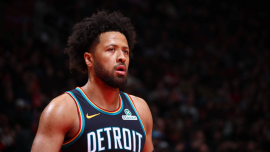
The Celtics have a real chance at the No. 1 seed
As of right now, the Celtics trail the Pistons by 3 ½ games in the standings for the Eastern Conference's top seed. Now, Detroit fortunately does not have any head-to-head games left against Boston, and the Celtics have a harder schedule down the stretch. But Boston was already playing better of late. Their only losses since Jayson Tatum's return were a road game in San Antonio in which Jaylen Brown was ejected and a two-point road loss to the Thunder without Tatum or Derrick White.
Meanwhile, the Pistons are probably going to struggle to generate offense without Cunningham. Detroit's offense dips by 11.2 points per 100 possessions when Cunningham sits and any lingering effectiveness is coming on the offensive boards. The Pistons have an effective field goal percentage of just 52% without Cunningham, a disastrously low figure. And remember, these possessions are mostly short stints within games that Cunningham plays in. Replacing someone for 10-15 minutes is one thing. Doing so for whole games is another. Detroit traded for Dennis Schröder last season, but he's now in Cleveland. Former No. 5 pick Jaden Ivey might have been up to the task, but he plays for the Bulls. As far as shot-creating guards go, it's Daniss Jenkins, Caris LeVert and not much else here.
So, say Boston does sneak up to No. 1. Now the entire top of the bracket looks different. The expectation until now had been that Boston at No. 2 would likely get a rematch with the Knicks at No. 3. That's not exactly a good matchup for New York, but the Knicks won that series a year ago and have tools that specifically bother Boston.
They've had no answer for Detroit whatsoever this season. In three games, the Pistons have outscored the Knicks by 84 points. So if Detroit dips, but Cunningham returns, that's potential trouble for the Knicks, who may have been hoping for Cleveland to knock off Detroit for them in the second round. Instead, in this scenario, Cleveland and Boston would duke it out in the second round. If Cunningham remains out, this turns into a major win for New York, which could get an easier path to the conference finals while its two chief competitors trade punches on the other side of the bracket. Of course, it's not just the top half of the bracket that's watching this.
Some Play-In team has a direction-altering opportunity
There's a glut forming in the middle of the Eastern Conference. The gap between the No. 5-seeded Raptors and the No. 9-seeded 76ers is just 2 ½ games, and while the Charlotte Hornets are two games behind the pack, that's mostly the result of their 4-14 start. They've been a playoff-caliber team ever since. All six teams would obviously prefer a top-six seed and the right to avoid the Play-In Tournament, of course, but the top four in the Eastern Conference seemed so impenetrable that the long-term implications of this race seemed minimal. Everyone would be out by the end of April anyway.
But now, with a vulnerable team in either the top spot or potentially No. 2, a whole lot changes. Could a team like Orlando plausibly win the East just because of Cunningham's absence? No. But that's not the point. Teams in the Play-In range tend to be at something of an organizational crossroads. The Magic were expected to contend this season. That hasn't materialized, and it's made Jamahl Mosley's head-coaching seat awfully hot. Could an unexpected series victory help get him some job security?
How about Philadelphia's brain trust? The 76ers are still dealing with the day-to-day embarrassment of Jared McCain's renaissance in Oklahoma City, and a Play-In loss might have led to some changes there. Imagine instead a scenario in which the 76ers score the No. 8 seed, beat the vulnerable Pistons, and then go into a second-round series with a healthy Joel Embiid. They're probably not making the Finals, but they're potentially saving some jobs.
The Hornets don't need to save jobs, but they're an ascending young team that probably harbors real 2027 ambitions. A real playoff run in 2026 might give them the playoff experience they need to achieve those ambitions. Atlanta has won 11 games in a row. Those wins have come against enormously weak opponents, but couldn't that also describe the Pistons without Cunningham?
Some Eastern Conference team might have a very interesting opportunity in front of it a month from now, yet there's very little any of these teams can do to set themselves up for it. Given the likelihood that the Pistons earn the No. 1 seed, to draw them in the first round, you'd have to finish at No. 8. No team is intentionally taking that risk if a top-six regular-season seed is available, and no one would tank the first Play-In game to try to chase a specific opponent. If someone benefits here, it's either going to be the Hornets because of the initial hole they dug themselves or it's going to be one of the teams in this glut that struggles the most down the stretch.
Is this the end of the 65-game rule?
There might not be a more unpopular rule in all of basketball than the 65-game awards minimum right now. Calls for its abolition started in earnest when Nikola Jokić's MVP candidacy was threatened and they have only grown louder with each passing injury. Think about where we now stand for All-NBA. Giannis Antetokounmpo has long been out of the running. Jokić and Victor Wembanyama are a few absences away from ineligibility. Stephen Curry is out. The recent injury suffered by Anthony Edwards may knock him out.
And now, Cunningham's injury seems to be something of a tipping point. He has played in 60 eligible games, with his 61st not counting because he didn't play enough minutes. In those games, he led Detroit to a likely No. 1 seed while averaging just under 25 points and 10 rebounds on very strong defense. If that isn't an All-NBA player, I don't know who is. Yet if this injury drags on, Cunningham will miss out.
This has historical implications, of course. All-NBA is a legacy driver. So are MVP votes even when a player doesn't win. But there are practical issues at play here as well. The All-NBA system is meant to honor a season's best 15 players. When a number of obvious selections miss out because of injury, the number of available slots doesn't shrink. We just move down the list. Now, instead of the 15th-best player serving as the cutoff, it's the 18th-best player, or the 22nd-best player, or the 25th-best player. This could mean quite a bit as an All-NBA selection under the right circumstances can trigger either Rose Rule or supermax eligibility. Some team could get stuck overpaying a player because Cunningham suffered a fluke injury.
The cynical read on the 65-game rule was that it was instituted as a measure to help convince possible media partners that if they paid for the right to air NBA games, the best players would actually play in them. Well, the media rights deal is done. Mission accomplished. All the league has now is an enormously unpopular rule making life harder for teams and diluting the historic impact of its awards. This might be the straw that breaks the camel's back and ends this unnecessary rule once and for all.
Join the Conversation comments