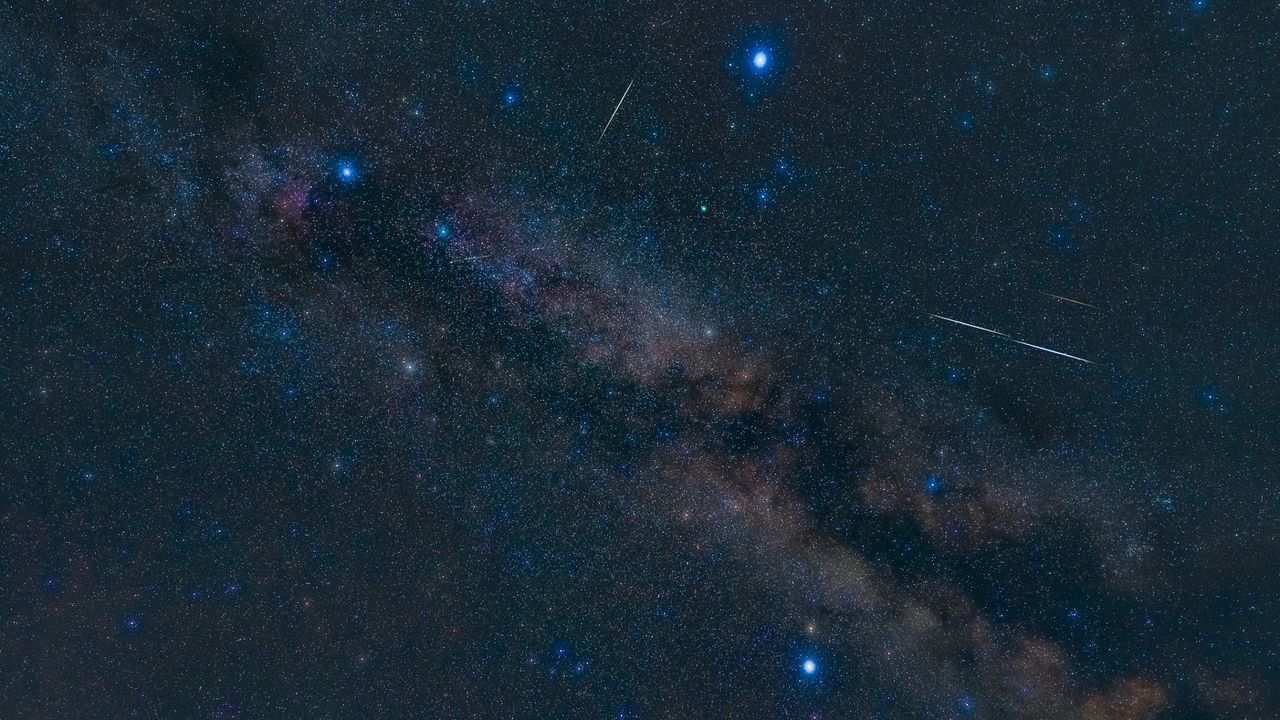
 A hefty meteor exploded in the daytime skies over Ohio shortly after entering Earth's atmosphere on March 17. This photo, taken in Pennsylvania, shows the smoke trail leftover by the "fireball." (Image credit: megan b. via AMS) Share this article 0 Join the conversation Follow us Add us as a preferred source on Google Newsletter Get the Live Science Newsletter
 Get the world’s most fascinating discoveries delivered straight to your inbox.
Become a Member in Seconds
Unlock instant access to exclusive member features.
Contact me with news and offers from other Future brands Receive email from us on behalf of our trusted partners or sponsors By submitting your information you agree to the Terms & Conditions and Privacy Policy and are aged 16 or over.You are now subscribed
Your newsletter sign-up was successful
Want to add more newsletters?
Join the club
Get full access to premium articles, exclusive features and a growing list of member rewards.
Explore An account already exists for this email address, please log in. Subscribe to our newsletterAn extremely rare "daytime fireball" meteor was recently spotted streaking across sunny blue skies over the eastern U.S. after a fridge-size space rock exploded and triggered a powerful sonic boom. The unusual event, which was also visible from space, may have rained tiny meteorite fragments across the local area, experts say.
The 6-foot-wide (1.8 meters) asteroid entered Earth's atmosphere on Tuesday (March 17), at approximately 8:57 a.m. EDT, and began to burn up in the skies over Lake Erie in northern Ohio at a speed of around 40,000 mph (64,400 km/h), according to a NASA report. The flaming space rock, which weighed around 7 tons (6.4 metric tons), then broke apart around 30 miles (48 kilometers) above the town of Valley City near Akron, creating a bright flash that lasted for up to seven seconds.
Multiple eyewitnesses and security cameras recorded the explosion, and at least 200 people — from states including Ohio, Pennsylvania, Delaware, Illinois, Indiana, Kentucky, Maryland, Michigan, North Carolina, New Jersey, New York, Wisconsin, Virginia, West Virginia and the District of Columbia, as well as parts of Canada — reported seeing the event to the American Meteor Society (AMS).
Article continues belowSeveral people along the meteor's path reported hearing a loud bang coming from the sky, which was later confirmed to be a sonic boom from the fragmenting space rock, according to a post on the social platform X by the Cleveland branch of the National Weather Service.
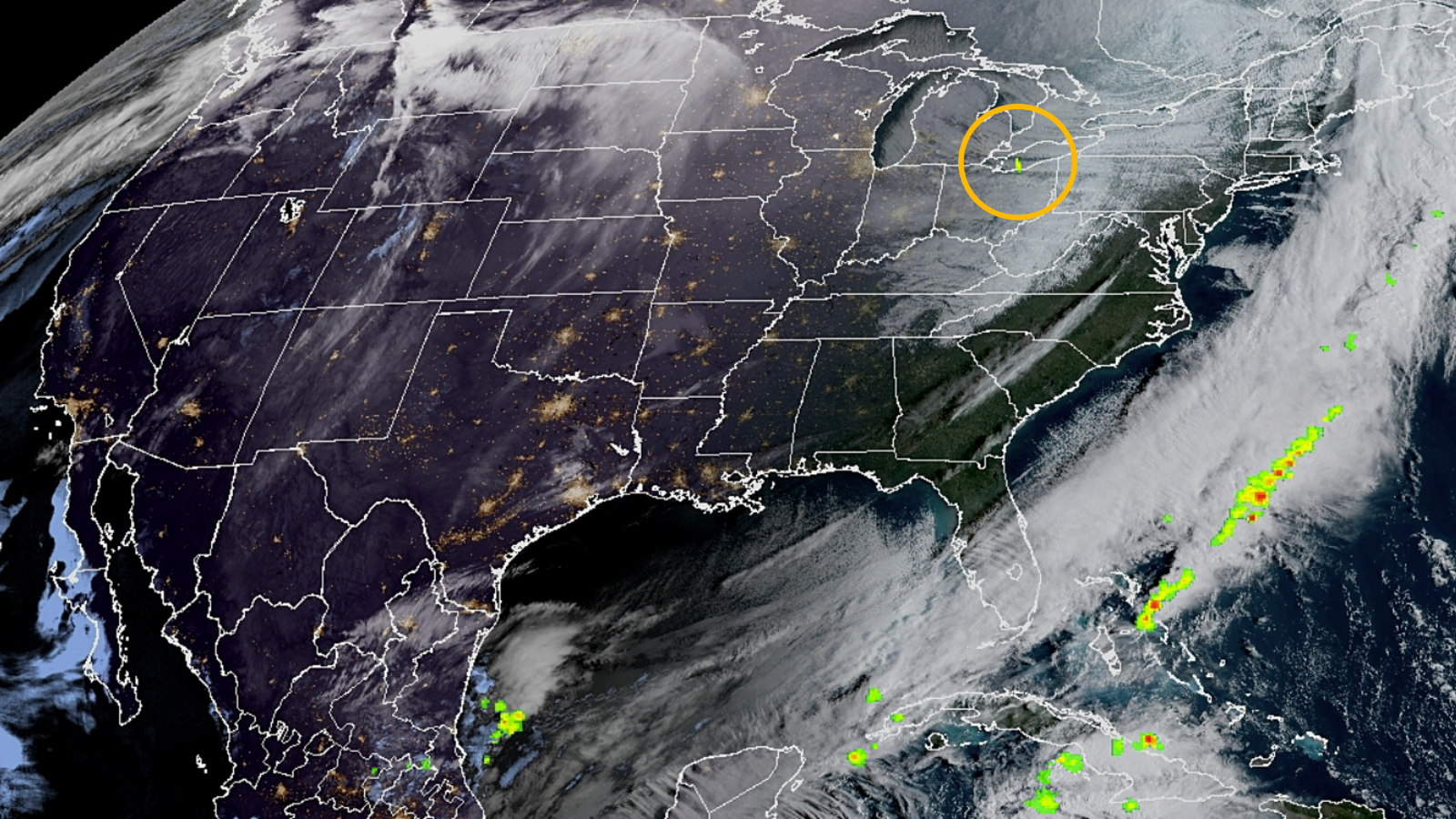
The streaking fireball was also visible from space and was caught on camera by the National Oceanic and Atmospheric Administration's (NOAA) GOES-19 weather satellite, which orbits Earth at an altitude of around 22,000 miles (35,500 km), Live Science's sister site Space.com reported.

Fireball meteors occur when falling space rocks are superheated due to high levels of friction from the surrounding air, according to AMS. This eventually causes the object to break apart, which creates a bright flash of light.
These explosions can be extremely powerful. The latest fireball, for example, likely exploded with the equivalent force of 250 tons (227 metric tons) of TNT and unleashed pressure waves that "may have shook houses" on the ground, according to the NASA report.
Sign up for the Live Science daily newsletter nowContact me with news and offers from other Future brandsReceive email from us on behalf of our trusted partners or sponsorsMost fireball meteors are spotted at night, when they are much more visible. However, the light shows can be so bright that they briefly outshine the sun in the daytime sky. These super-bright "daytime fireballs" are often reported alongside sonic booms.
The majority of fireball fragments burn up before they reach the ground or are too small to be noticed. However, particularly hefty space rocks, like the one that exploded over Ohio, can produce meteorites that impact Earth's surface.
"When an extraordinarily large meteor (beach ball size or larger) enters the atmosphere, it often survives down to the lower atmosphere where the air molecules are dense enough to carry sound," Robert Lunsford, a meteor observer with AMS, told Space.com. Therefore, the sonic boom heard during this incident is "a good indication that the fireball produced fragments on the ground."
RELATED STORIES—100,000 mph 'comet fragment' explodes in green fireball over Great Lakes, eerie videos show
—Eerie green fireball detected hours before smashing into Lake Ontario in the dead of night
If there were meteorites, AMS simulations suggest that they most likely landed somewhere "in the vicinity of Akron," Lunsford added.
Most fireball fragments land in unpopulated areas and therefore pose little threat and can be very hard to find. But this isn't always the case. For example, just nine days prior to this incident, on March 8, around a dozen meteorites fell on a town in Germany during a bright fireball event — one of which punched a sizable hole through the roof of a family home.
The boom heard around Northeast Ohio: Meteor shakes the region - YouTube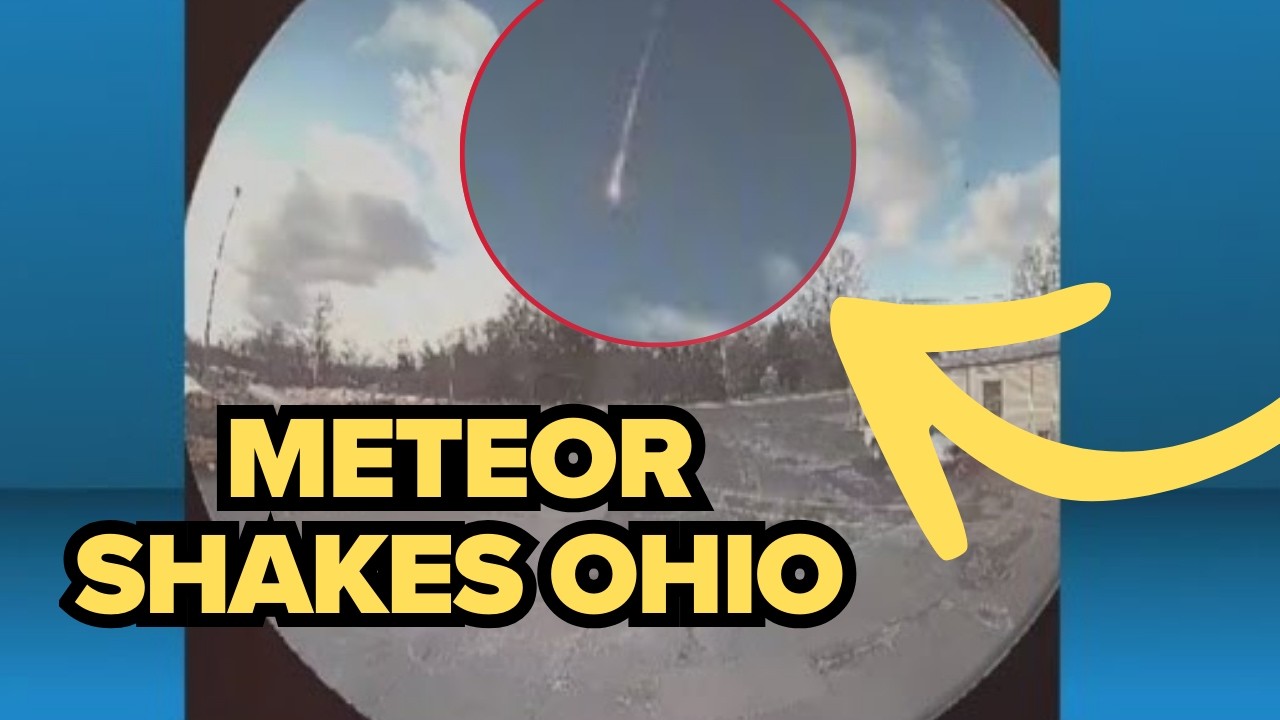 Watch On
  Harry BakerSenior Staff Writer
Harry is a U.K.-based senior staff writer at Live Science. He studied marine biology at the University of Exeter before training to become a journalist. He covers a wide range of topics including space exploration, planetary science, space weather, climate change, animal behavior and paleontology. His recent work on the solar maximum won "best space submission" at the 2024 Aerospace Media Awards and was shortlisted in the "top scoop" category at the NCTJ Awards for Excellence in 2023. He also writes Live Science's weekly Earth from space series.
View MoreYou must confirm your public display name before commenting
Please logout and then login again, you will then be prompted to enter your display name.
Logout LATEST ARTICLES 1New AI image generator runs using 10 times fewer steps than today's best models — and it's coming to smartphones and laptops
- 2Enjoy 'Born to be Wild' and all your favorite nature documentaries on your travels with this best-ever ExpressVPN deal
- 3Best sports earbuds 2026: For runners, swimmers and other fitness enthusiasts
- 47 best deep-sky targets to observe this galaxy season
- 5Live Science Today: Meningitis is back and Iran war fertilizer shock