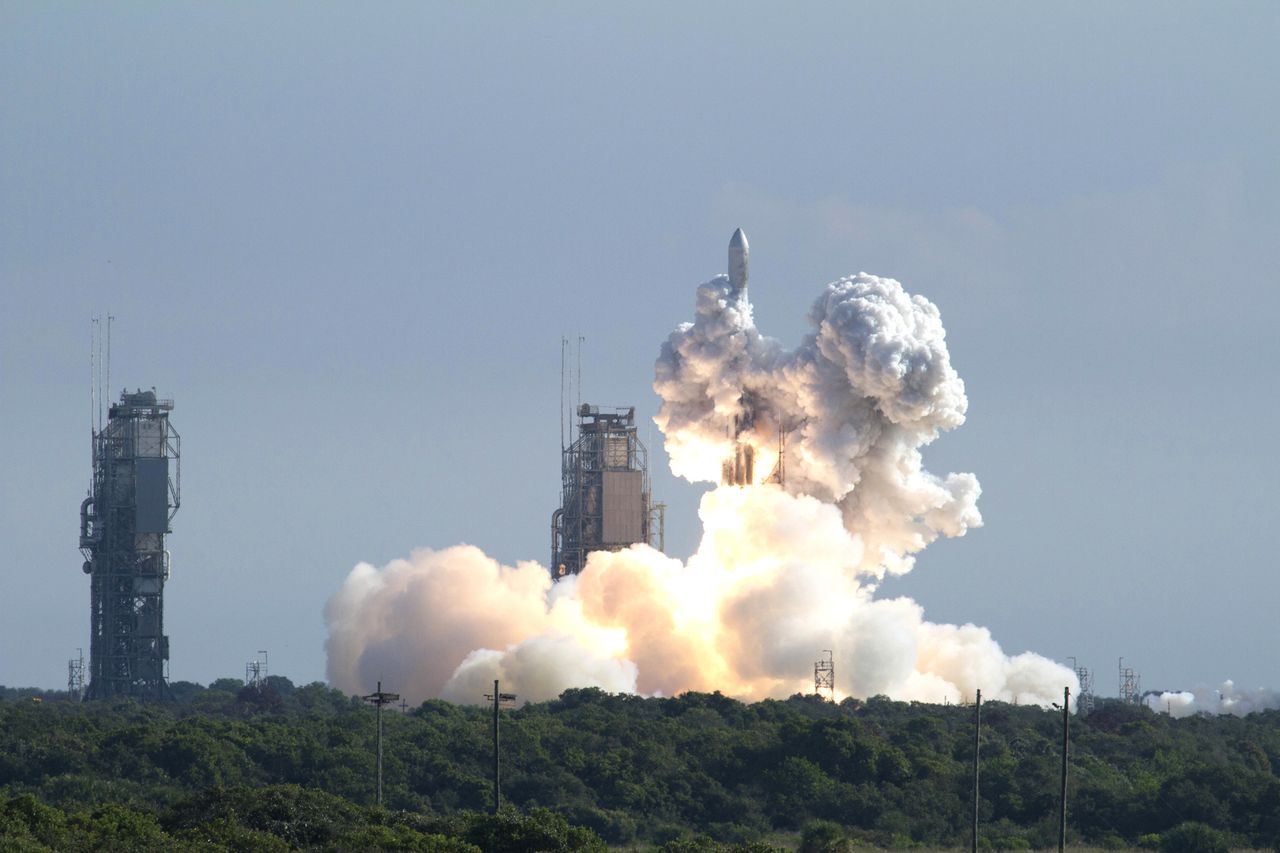
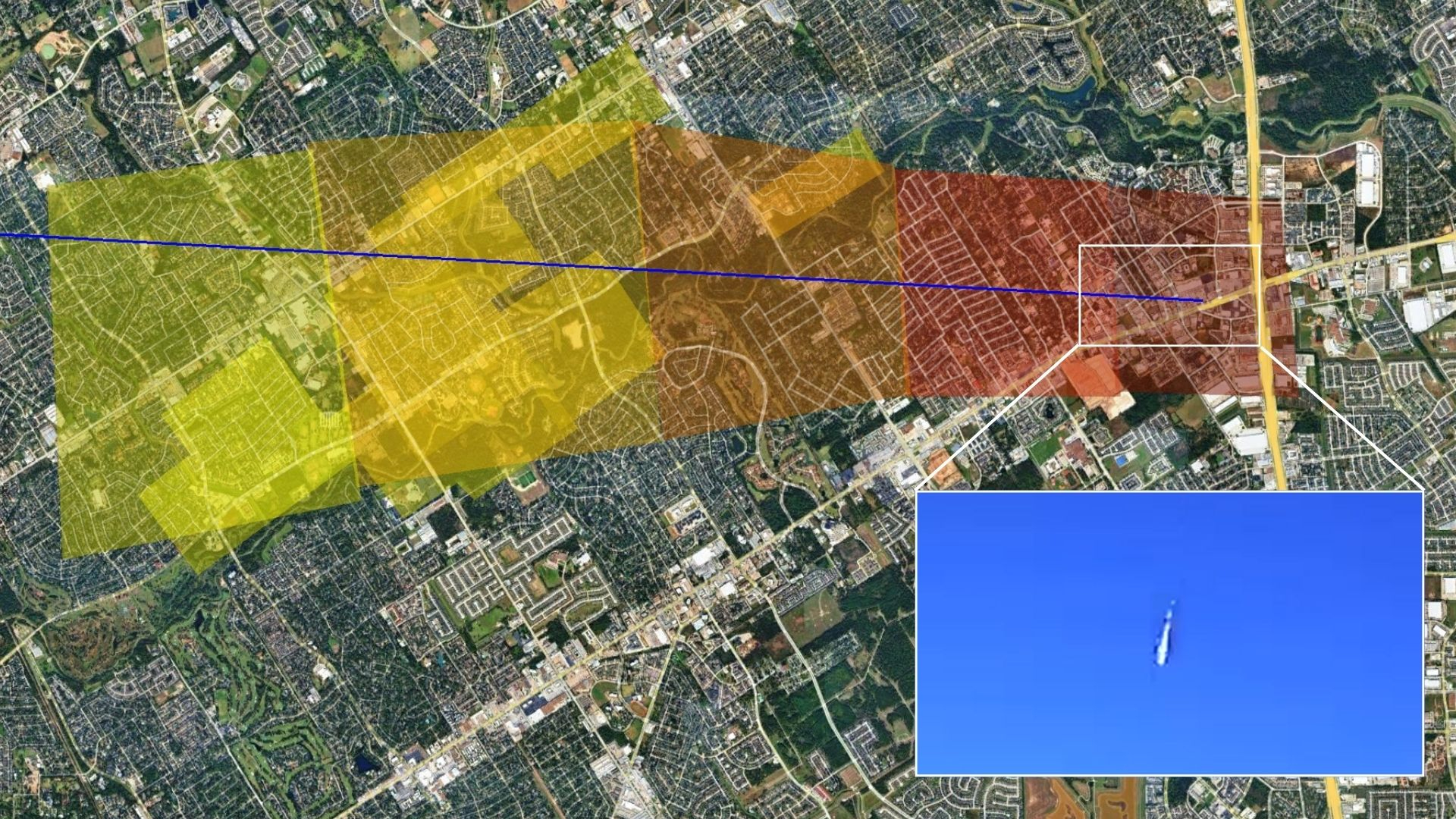
 The fireball could have scattered meteorites across a populated urban area north of Houston. (Image credit: NASA, Google Earth, © JakeFromStateFarm) Share this article 0 Join the conversation Follow us Add us as a preferred source on Google Newsletter Get the Space.com Newsletter
 Breaking space news, the latest updates on rocket launches, skywatching events and more!
Contact me with news and offers from other Future brands Receive email from us on behalf of our trusted partners or sponsors By submitting your information you agree to the Terms & Conditions and Privacy Policy and are aged 16 or over.You are now subscribed
Your newsletter sign-up was successful
Want to add more newsletters?
An account already exists for this email address, please log in. Subscribe to our newsletterNASA has released a "strewn field" map of where meteorites may have fallen after a rare daytime fireball explosively disintegrated in the skies over Houston on Saturday (March 21) evening — with the force of 26 tons of TNT.
Houston residents reported hearing loud booms as pressure waves brought about by the meteor's demise reached the ground at 5:40 p.m. EDT (21:40 GMT), following its brief but fiery descent.
Article continues below"Most of the mass of an object like this is reduced to atoms and fine droplets during the fireball and only a few percent of the total mass survives to reach the ground, scattered across a range of meteorite sizes," according to a post from NASA's Astromaterials Research and Exploration Science Division (ARES).
Where did the meteorites fall?
Scientists detected meteor fragments falling through the Texas skies for eight minutes following its destruction 29 miles (46.6 kilometers) above the community of Bammel in Harris County on the evening of March 21. The fragments may have come to rest on a swathe of densely populated land between Willowbrook and Northgate Crossing.
A strewn field map showing where meteorites of differing sizes may have fallen during the March 21 event. (Image credit: NASA, Google Earth)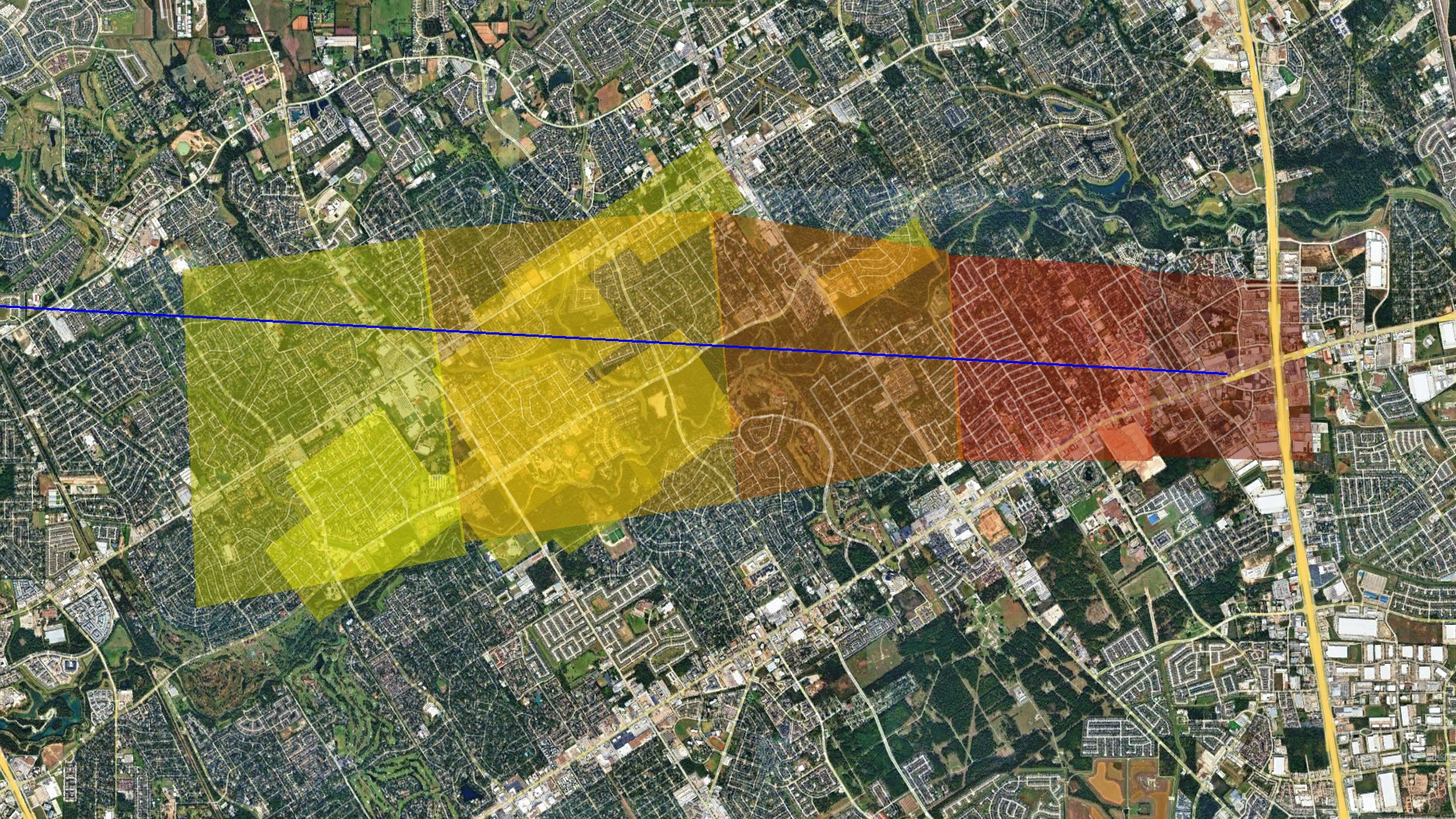
In the image above, the potential distribution of the meteor fragments can be seen visualized in a strewn field map created by NASA's Ares division. The colors overlaid on the map indicate where you're likely to find larger or smaller meteorites, with red marking the zone where the heaviest (around 2.2 pounds, or 1 kilogram) shards may have fallen, and yellow where the lightest (around 0.04 ounces, or 1 gram) samples may be found.
ARES notes the map is provisional and subject to being updated when a discrepancy is resolved between its model of the event and another made by NASA's Meteoroid Environment Office. The agency also cautions potential meteorite hunters not to trespass on private property during their search.
Get the Space.com NewsletterContact me with news and offers from other Future brandsReceive email from us on behalf of our trusted partners or sponsorsThink you've found a meteorite? Your first step should be to compare it to images of confirmed meteorites online before contacting your local university's geology department for advice and potential verification. You can also take a look for yourself using our handy home guide to identifying meteorite features? Try not to handle it too much with your bare hands, as the oils contained in your skin can degrade precious samples contained within the ancient meteorite, which dates back to the formation of the solar system.
This fireball incident follows hot on the heels of a separate daytime fireball event that rattled houses over northern Ohio on the morning of March 17, scattering meteorites in the vicinity of Medina County. Both fireballs are likely isolated events and aren't associated with major meteor showers.
 Anthony WoodSkywatching Writer
Anthony Wood joined Space.com in April 2025 after contributing articles to outlets including IGN, New Atlas and Gizmodo. He has a passion for the night sky, science, Hideo Kojima, and human space exploration, and can’t wait for the day when astronauts once again set foot on the moon.
View MoreYou must confirm your public display name before commenting
Please logout and then login again, you will then be prompted to enter your display name.
Logout MORE FROM SPACE...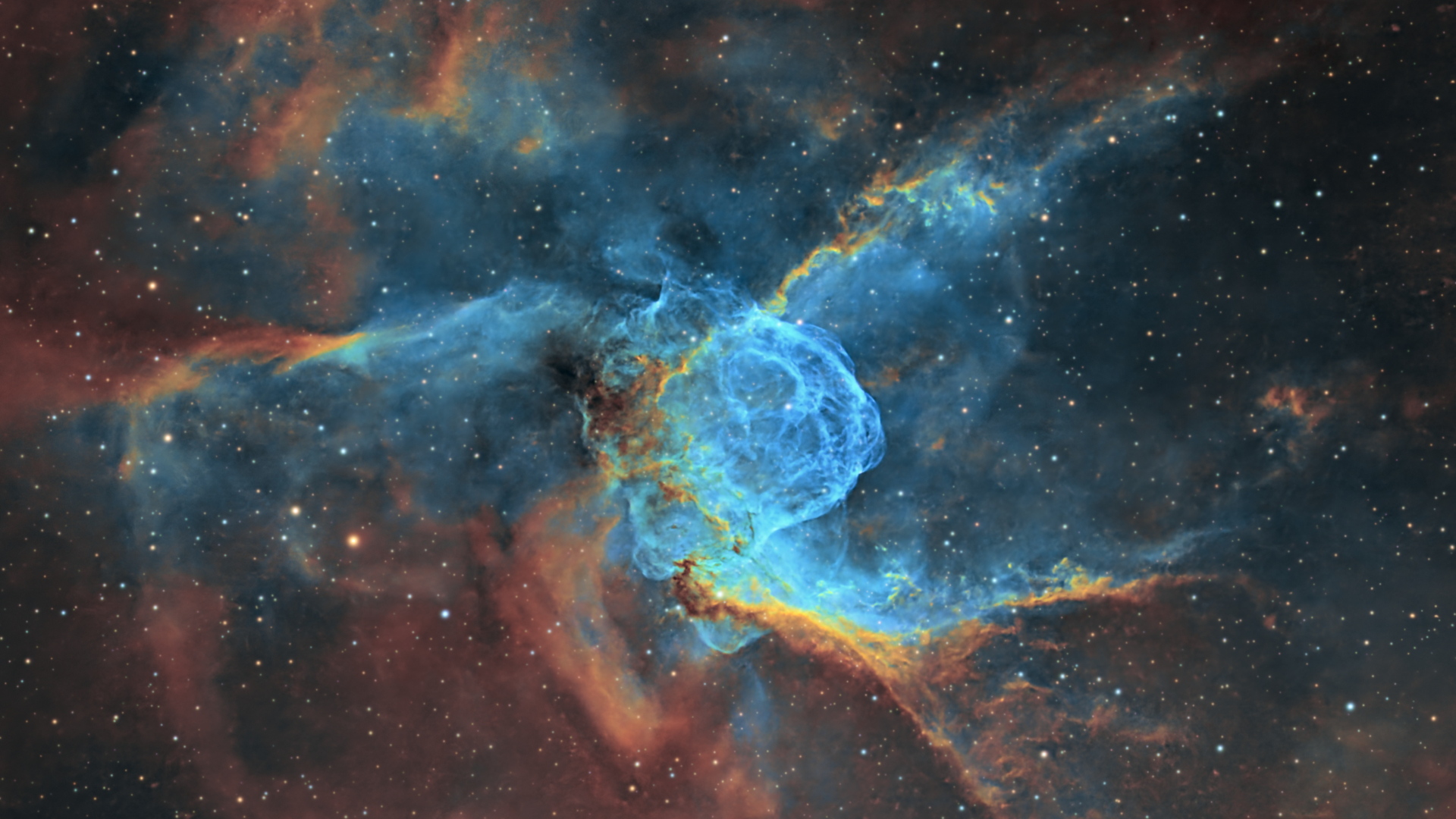 1Astrophotographer spies Thor's Helmet shining 15,000 light-years away in spectacular photo
- 2Triangulum Galaxy dazzles in psychedelic color | Space photo of the day for March 23, 2026
- 3Northern lights dazzle worldwide as strong G3 geomagnetic storm sparks stunning show (photos)
- 4Are mysterious 'Little Red Dots' discovered by the James Webb Space Telescope actually baby galaxies under construction?
- 5Could our universe exist because black holes ate up all the antimatter?