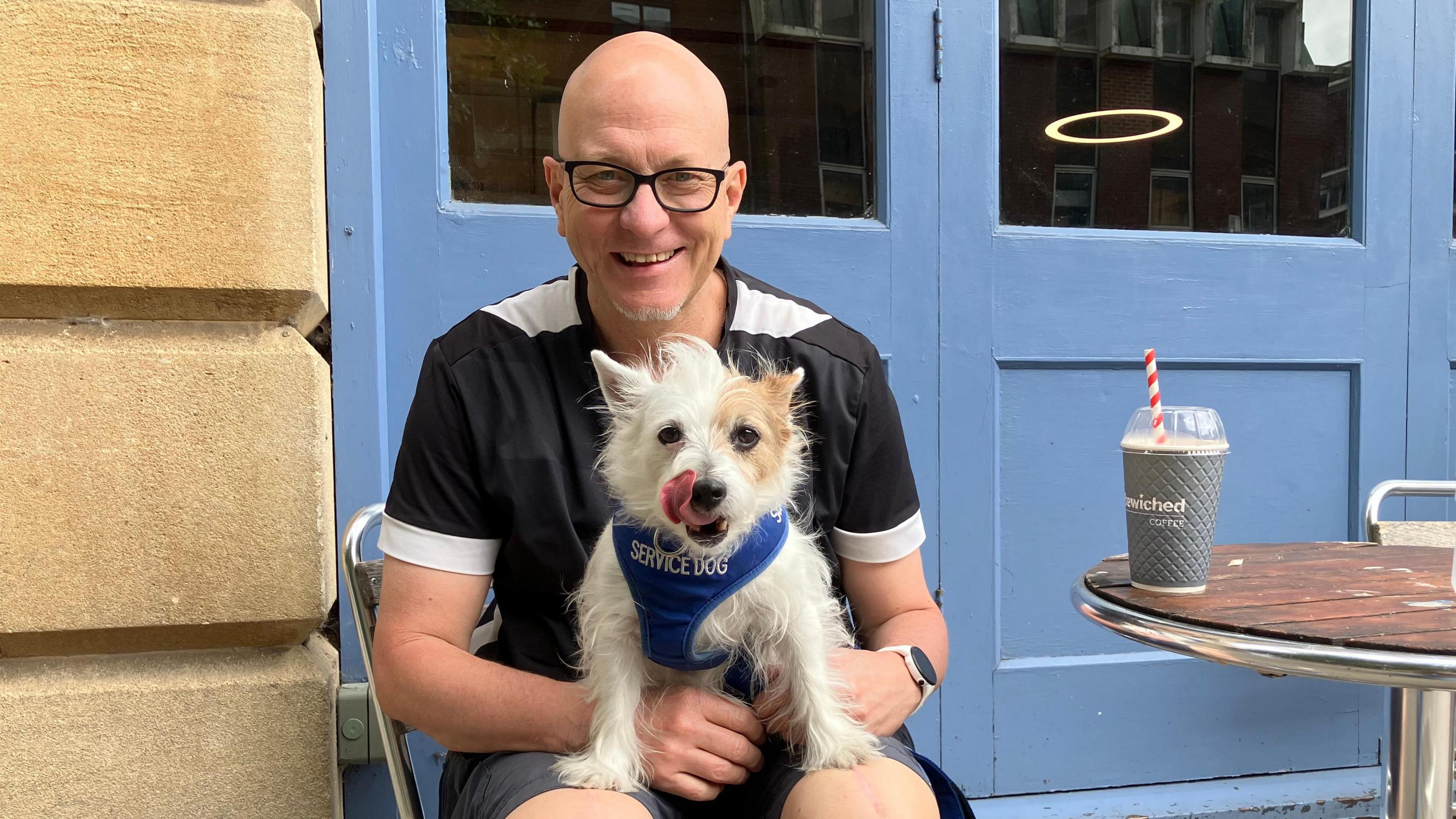
Image source, Donna MarklewImage caption,
Donna Marklew from Finham, Coventry, was diagnosed after tests following a hysterectomy
ByLorna Bailey, Reporting fromBBC CWR and Alec Blackman, Reporting fromWest Midlands- Published11 minutes ago
Donna Marklew had to undergo a hysterectomy to treat complications caused by childbirth.
But the operation led the Coventry mum to receive a life-changing diagnosis when tests later revealed she had a rare form of cancer.
She was diagnosed with neuroendocrine cancer, external, which was only discovered after tissue removed during a hysterectomy at Warwick Hospital was analysed following a uterine prolapse.
"I was very shocked because I'd never heard of neuroendocrine cancer," she said.
"[I] was left with not much information because it wasn't known to anybody, and then trying to explain to people [that] I've been diagnosed with neuroendocrine cancer, you're kind of met with blank faces."
The rare cancer, which starts in the nerve and cell glands that make and release hormones, is estimated to affect 6,000 people in the UK every year, according to the charity, Neuroendocrine Cancer UK.
Lisa Walker, the chief executive of Neuroendocrine Cancer UK, said that the average time between people experiencing a first symptom and getting a diagnosis is five years.
"That is because the symptoms could be other conditions, and then people find themselves perhaps going down a different route and then needing to go back when the symptoms change or other symptoms are added in, which then start to look more like neuroendocrine cancer," she explained.
Marklew is now trying to raise awareness of the disease, which coincides with World Neuroendocrine Cancer Day , externalon Tuesday.
She said that the disease is actually a group of cancers that develop in hormone-producing cells throughout the body.
Diagnosis can be particularly difficult, especially for women, she added.
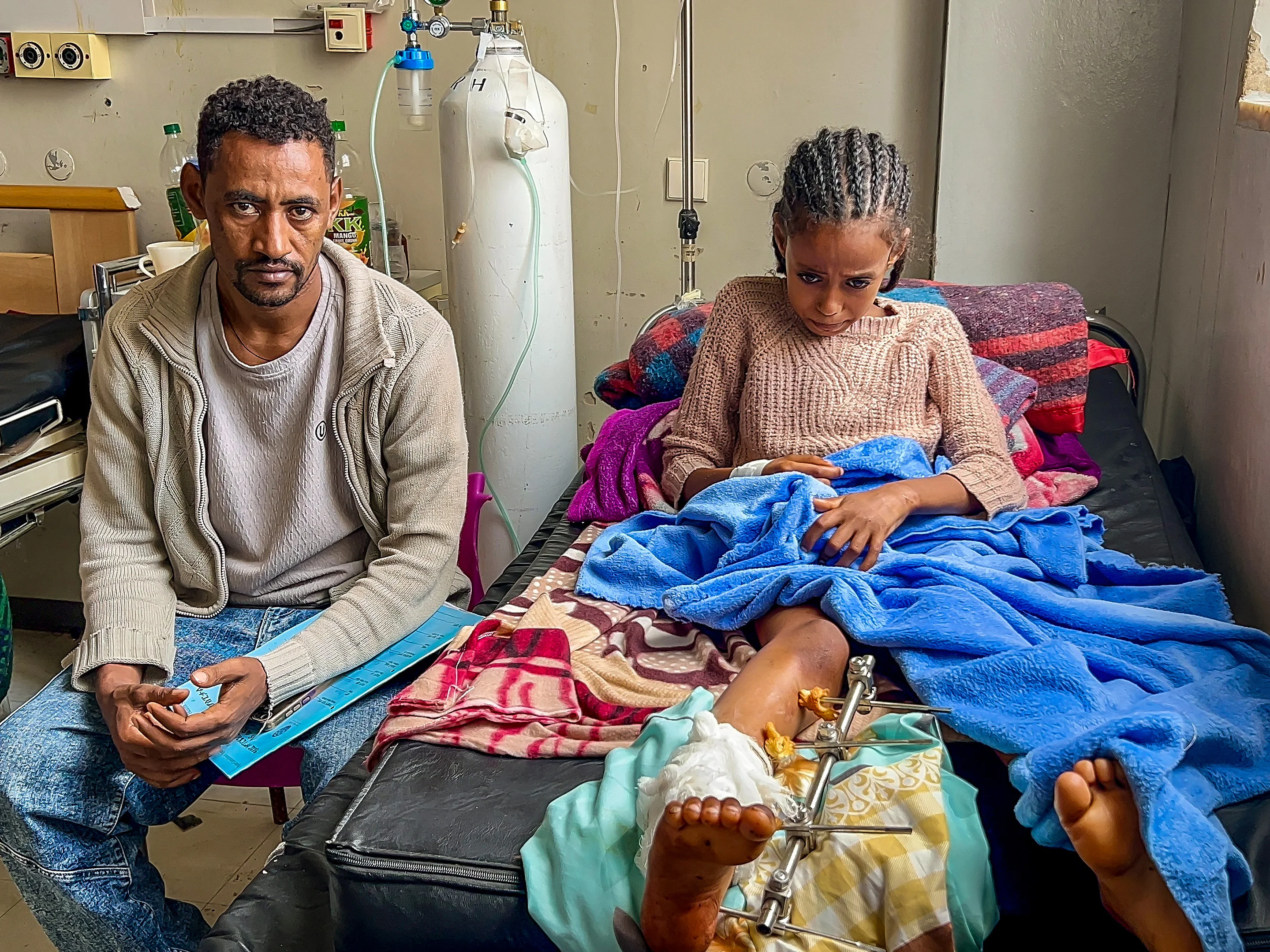
 Image source, Donna MarklewImage caption,
Donna underwent a nine hour operation in 2025 to remove as many tumours as possible
Marklew, an occupational therapist who works in Leicestershire, said that after she was diagnosed, scans revealed tumours were discovered in her appendix, Fallopian tubes and surrounding tissue.
In March 2025, she underwent a nine hour surgery at Warwick Hospital to remove as many tumours as possible.
However, surgery alone has not been enough, and Marklew has to have three injections every week to try and keep the cancer under control.
She has also just started Peptide Receptor Radionuclide Therapy (PRRT), external which is administered four times a week, every two months.
"The tumours are slow growing, which is one of the benefits of this type of cancer.
"There's a different type of neuroendocrine as well, which can be more aggressive. but fortunately for me, mine are grade two, which means that they grow quite slowly, although mine are still growing."
However, Marklew, 44, said while she is able to live a normal life during her treatment, the disease has had a huge mental impact.
"'I've got four young children and my husband, my mum and my friends, and I think the reason why I've really wanted to get up and shout about it is because I just don't want anyone to have people feel so vulnerable when you find out that you have this diagnosis because nobody knows about it [the condition]."
More news from Coventry and Warwickshire
Boy saved by cannabis oil faces fresh fight as supplier collapses
- Published1 day ago
Medal gifted anonymously to Bradley Lowery charity
- Published1 day ago
Region honours the fallen on Remembrance Sunday
- Published1 day ago
Walker added: "It's a complex and diverse cancer and can develop in any part of the body, which is one of the things that makes detection difficult.
"It develops in the neuroendocrine cells. They produce and release the hormones that essentially regulate our different body functions and are found throughout the body.
"So it can affect any organ. Most commonly it does affect the lungs, the digestive tract, and the pancreas, but it can be found anywhere."
'Invaluable resource'
Marklew said that prior to her hysterectomy, she had no identifiable symptoms, although looking back, she thinks a trip to Scotland may have been an indicator.
"I was anxious and had palpitations during a trip to St Andrews for my first wedding anniversary, but my GP suggested that was down to me being perimenopausal."
She said unlike other cancers, because neuroendocrine is not as obvious or as widely known as others, few people understand how she feels.
"I could talk to my friends and family all day long, but no one will understand what it is like to live with this condition.
"It's really really hard and because it's invisible everybody will say - oh you look great."
She said she reached out to the charity Neuroendocrine UK, external for support and advice.
"They're an absolutely invaluable resource for people that have been diagnosed and they have patient groups in other areas, so I said I'd really like to set one up.
"We did one in September and one other person came along, which was nice because it was a nice opportunity for me and her to have a couple of hours conversation along with one of the nurses as well.
"Then we [did] it bi-monthly, we had six people and it felt so good".
Get in touch
Tell us which stories we should cover in Coventry & Warwickshire
Contact formContact formFollow BBC Coventry & Warwickshire on BBC Sounds, Facebook, external, X, external and Instagram, external.
Related topics
Crowds turn out to mark woman's 1,000th daily dip
- Published6 July

Second annual swim raises awareness of rare cancer
- Published11 October 2025
'Running helped save me after my cancer diagnosis'
- Published1 July 2025